
 English
 中文简体
中文简体 Español
 English
 中文简体
中文简体 Español
The Touch Screen Air Fryer Pizza Oven, Judged by the Crust
A pizza is the harshest test a countertop appliance can face. Here is what a touch panel genuinely changes, what a pizza mode really does, and which numbers on the spec sheet decide whether the base browns before the cheese splits.
Slide a chilled 12-inch pizza onto the plate of a 1,500 W air fryer, set 200 °C for twelve minutes, and the result depends far less on the badge on the front than on three things: how close the top element sits to the cheese, how much air moves beneath the base, and whether the appliance holds its set temperature for the whole bake. A touch screen helps with the third. It cannot rescue the first two.
That single distinction explains most of the disappointment people describe with combination appliances. So the rest of this article separates what a touch screen genuinely delivers from what it merely promises, and then works through the physical limits of a countertop pizza.
Why the Touch Screen Matters More Than the Wattage
Two air fryers with identical 1,500 W elements and identical 4.5 L baskets will bake different pizzas if one holds 200 °C and the other drifts between 185 °C and 212 °C. Digital control is the entire argument.
A mechanical dial is a thermometer with an opinion. A touch panel wired to a digital thermostat is a thermometer with a number. In day-to-day use, the panel buys four concrete things:
- Temperature set in 5 °C or 10 °F steps, so a recipe is repeatable rather than approximate.
- A countdown accurate enough to time a ten-minute bake without opening the drawer to check.
- Presets that pair one temperature with one fan speed for pizza, fries, reheat or dehydrate.
- A sealed, flat surface that wipes clean, with no knob recesses for flour and oil to collect.
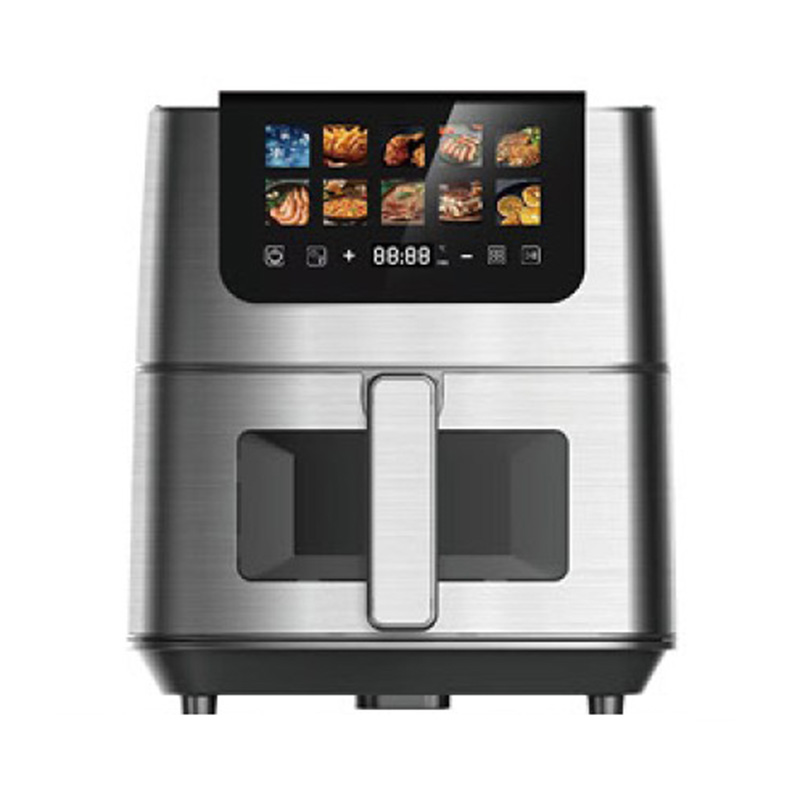
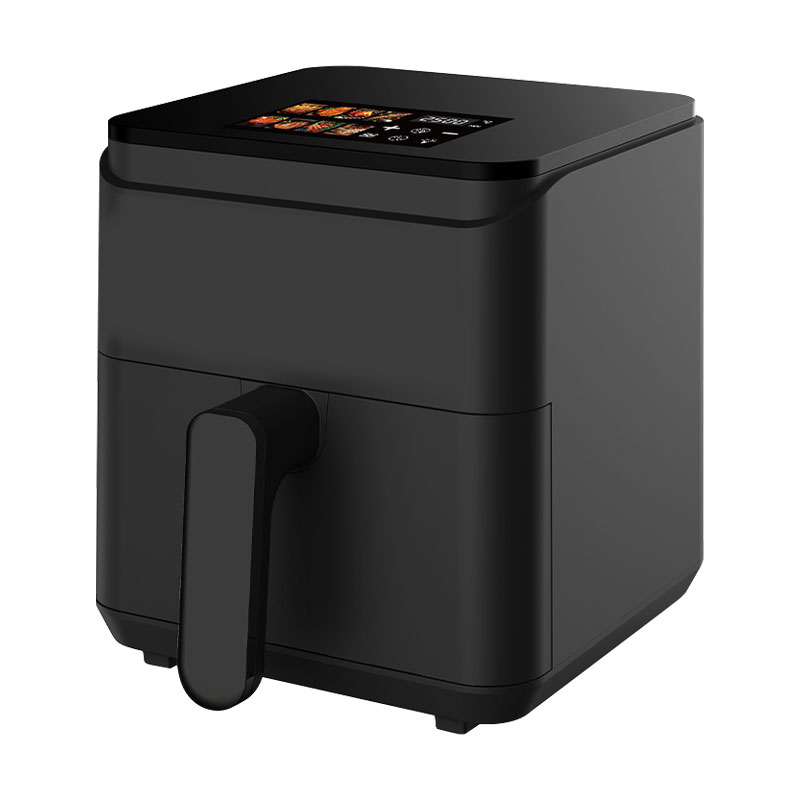
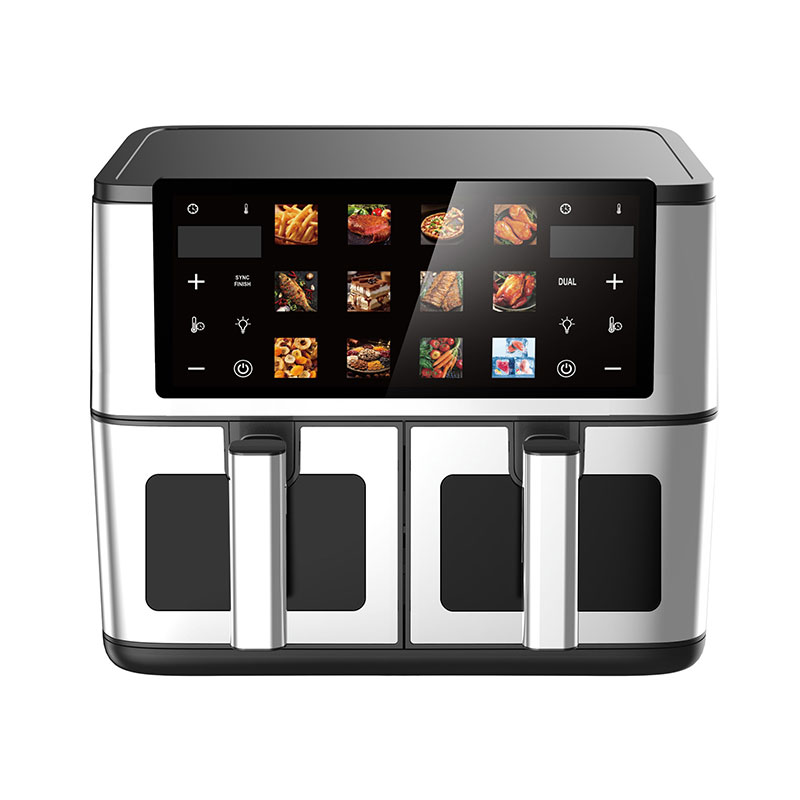
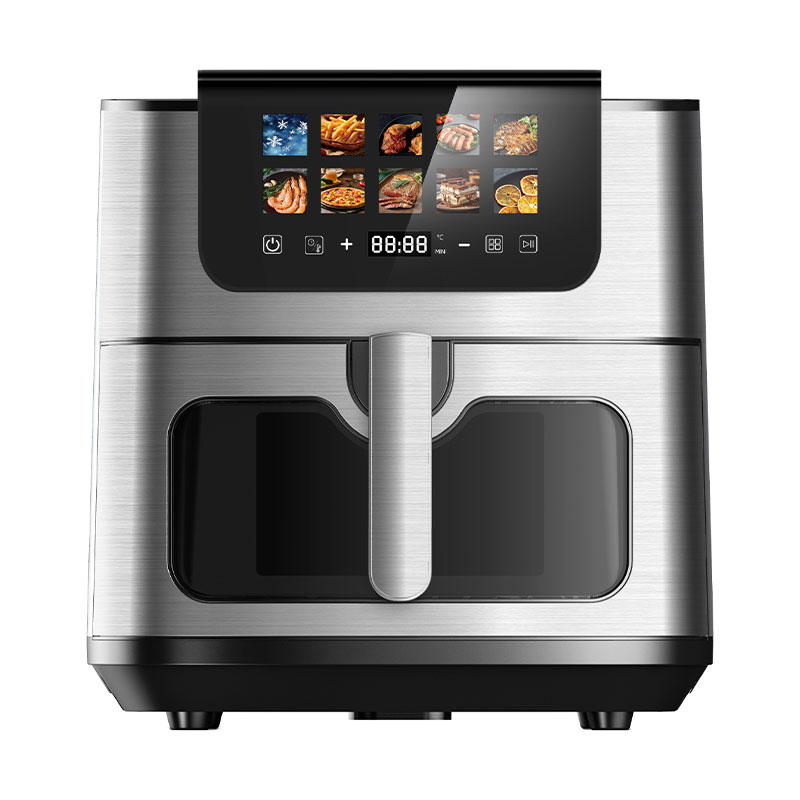
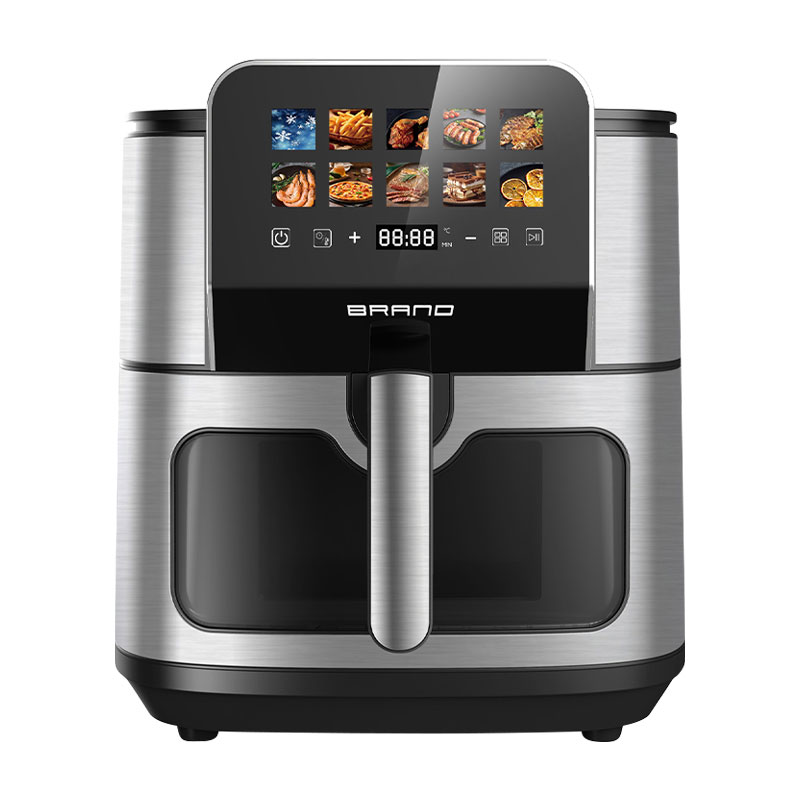
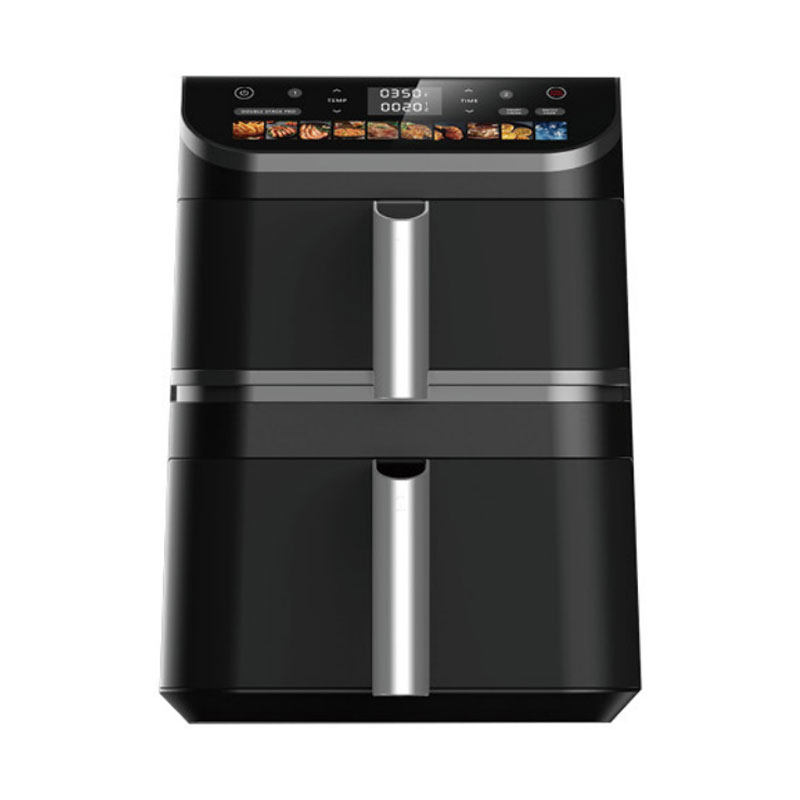
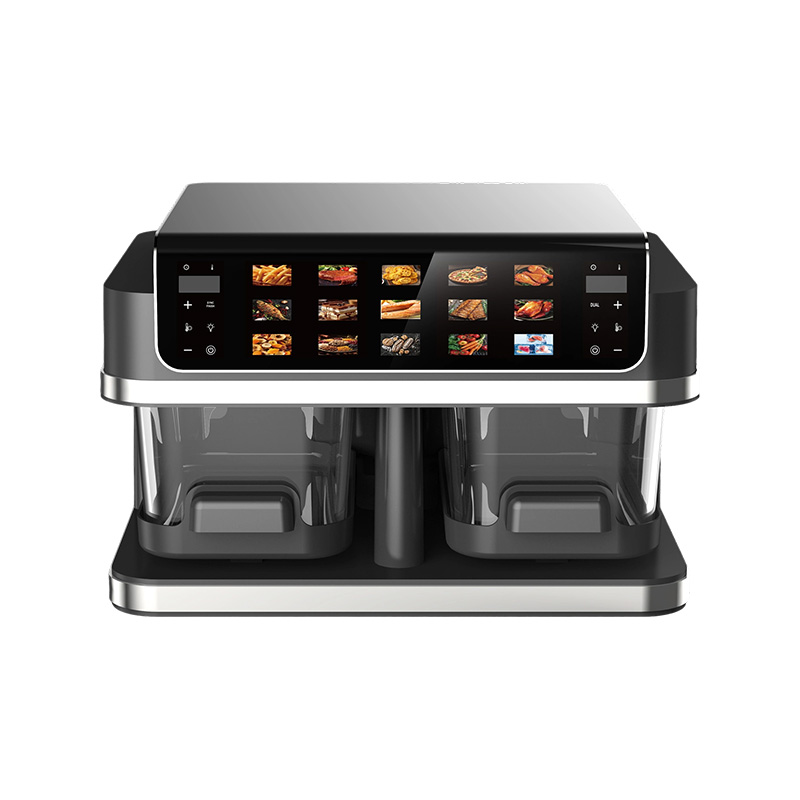
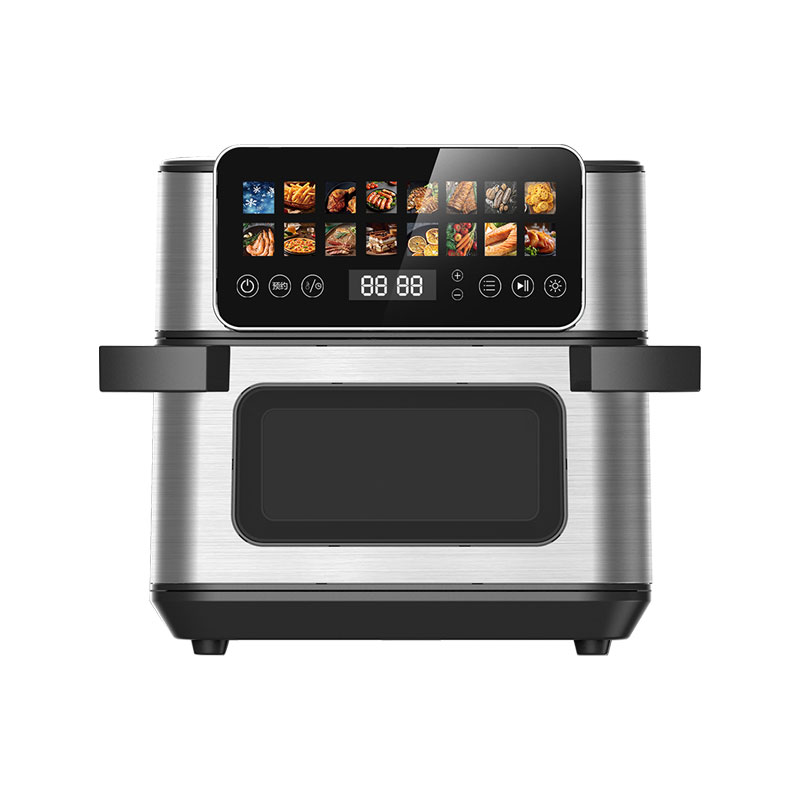
The trade-offs are real. Touch electronics cost more, and a cracked panel is a service event rather than a parts swap. Panels also behave differently with damp fingers, which matters when you stretch dough and then reach straight for the display. Smart touch screen air fryers are usually specified with capacitive glass and a tolerance of roughly two to three millimetres of surface moisture before a command fails — worth testing on a sample before committing to a retail programme.
The useful question is not whether the panel is a touch screen. It is whether the panel sets temperature, fan speed and time as three independent variables.
What Pizza Oven Actually Means in a Countertop Air Fryer
Almost nothing on a kitchen counter is a pizza oven in the Neapolitan sense. A wood-fired deck runs its floor at 400 °C and above; an air fryer circulates air at 180–220 °C. What a pizza preset does is reorganise that airflow so the base gets a fair chance.
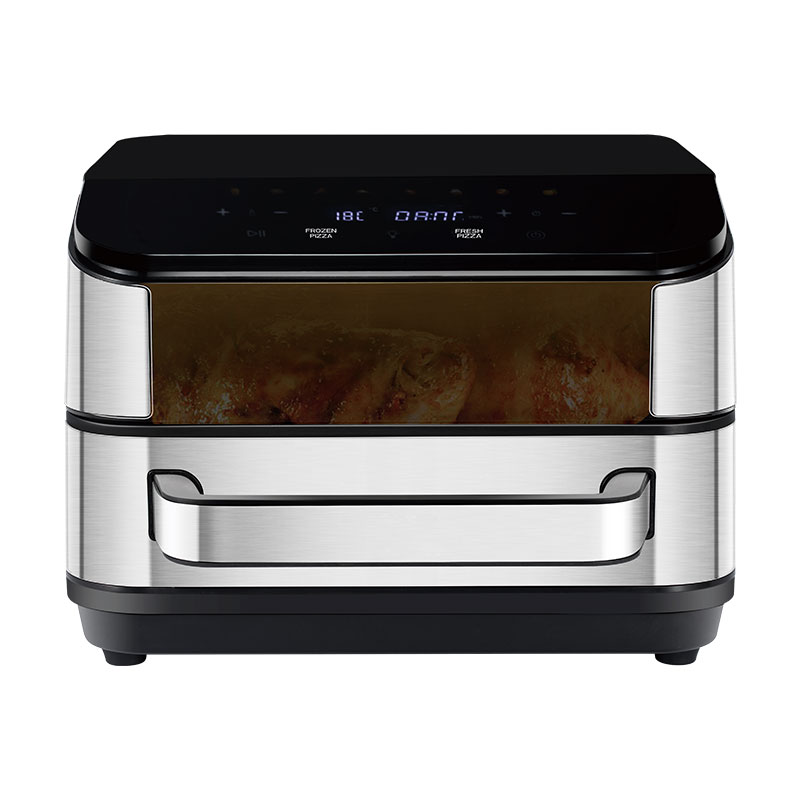
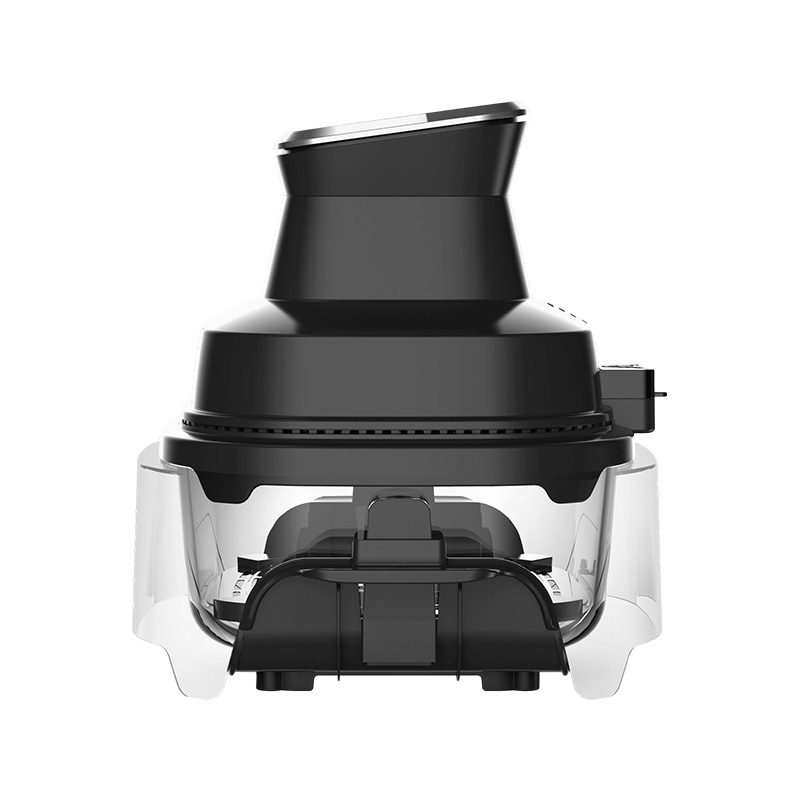
In a deep basket, moving air reaches the top of a pizza easily but touches the underside only through a perforated tray. In a flat-plate design, the plate itself is a heated surface, the element sits close above it, and the fan often runs slower so a light topping is not lifted off the cheese. That difference in geometry does more for the crust than any control panel.
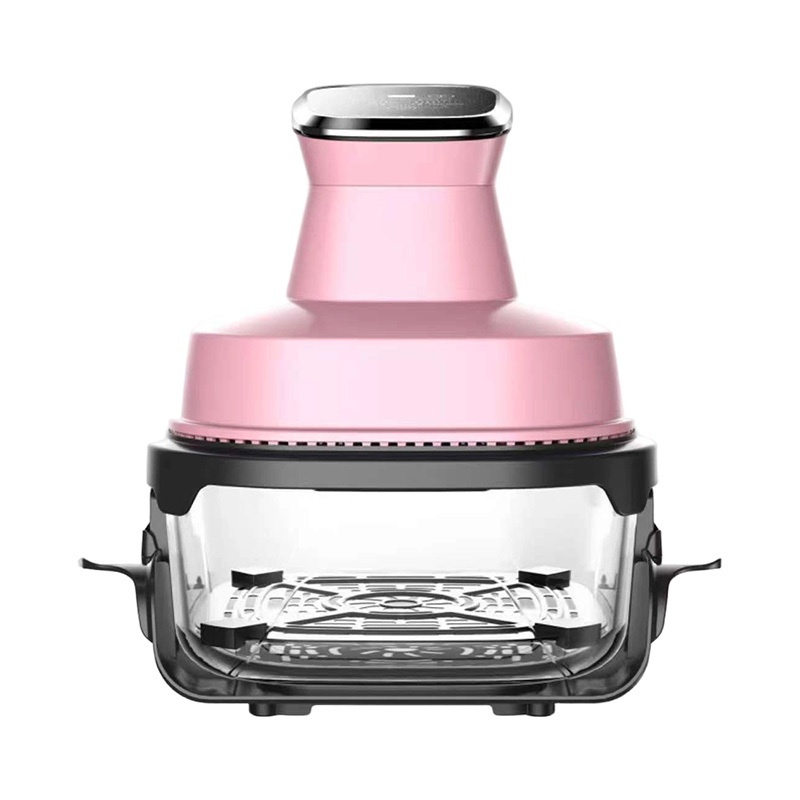
This is why units built around rapid air circulation under the food tend to produce a crisper base than deep-basket models of the same wattage. Preheat the plate for five minutes, keep the pizza inside the plate diameter rather than inside the box dimensions, and use perforated parchment when the dough is wet or heavily topped.
The Numbers That Decide Whether a Pizza Actually Fits
Most buying mistakes happen at the measurement stage, not the cooking stage. A twelve-inch pizza needs roughly 30 cm of usable flat surface, which is a different figure from the litre rating printed on the carton.
| Specification | Realistic range | What it decides for pizza |
|---|---|---|
| Usable flat plate or tray diameter | 18–22 cm in a 4.5 L basket; 26–32 cm on flat-plate models | Whether a full-size pizza fits at all |
| Temperature ceiling | 190–210 °C on most pizza presets | Whether the base sets before the cheese splits |
| Preheat time to 200 °C | 3–6 minutes | Crisp base versus a soggy centre |
| Fan behaviour | Fixed, or two to three speeds | Fast air browns the top; too much air lifts loose toppings |
| Power draw | 1,200–1,800 W | Recovery time after a cold pizza lands on the plate |
| Timer accuracy | ±30 seconds on digital, ±1–2 minutes on mechanical | Repeatability between one bake and the next |
Read the table as a filter rather than a ranking. If pizza is a weekly event, the first two rows decide the purchase; if it is an occasional experiment, a basket model with a steady thermostat will be perfectly serviceable.
Touch Screen or Mechanical: Where Each One Wins
Neither control type is better in the abstract. They fail in different ways and suit different owners.
- Touch screen wins on repeatability, presets, low-temperature work such as proofing dough, and cleaning.
- Mechanical wins on cost, on operability with wet or gloved hands, and on repairability in a busy kitchen.
- Touch screen loses points for panel damage, firmware-dependent behaviour and higher unit cost.
- Mechanical loses points for dial drift of 10–15 °C and timers that are advisory rather than precise.
For a household that bakes the same pizza every Friday, the panel pays for itself in consistency. For a rental flat, a staff canteen or any environment where appliances are treated roughly, a mechanical control with a good thermostat is the lower-risk choice and often the better long-term buy.
What to Check Before You Buy
- Measure the plate, not the carton. Bring a tape measure and check the flat interior surface.
- Confirm the temperature ceiling. A preset named pizza that tops out at 180 °C will not brown a base.
- Look at where the element sits. A close top element plus a heated plate is the combination that works.
- Check the accessory set. A stone, a perforated plate or a rack changes results more than a preset does.
- Test panel response with slightly damp fingers before you buy, especially if you cook from scratch.
- Check the certification and cleaning claims on the label and the manual, not only on the listing page.
Warning: a pizza label on a deep-basket air fryer usually describes a preset, not a redesigned cooking chamber. Ask for the flat plate diameter in writing before you order in volume.
Info: an inexpensive oven thermometer placed on the plate for two bakes tells you more about real temperature accuracy than any specification sheet will.
Danger: never line the basket or plate with foil that blocks the airflow path around the base. Restricted circulation overheats the element and is one of the most common causes of premature failure.
Success: once you record the temperature, fan setting and time for one good bake, every later pizza repeats without guesswork. That record is the real value of a digital panel.
Matching the Appliance to the Space and the Cook
Counter depth matters as much as capacity. A compact 3–4 L unit suits one or two people and a narrow worktop; a 5–8 L model fits a family but needs roughly 15 cm of clearance behind and above it, plus a heat-resistant surface underneath. Anything larger belongs on a dedicated shelf rather than under a wall cabinet.
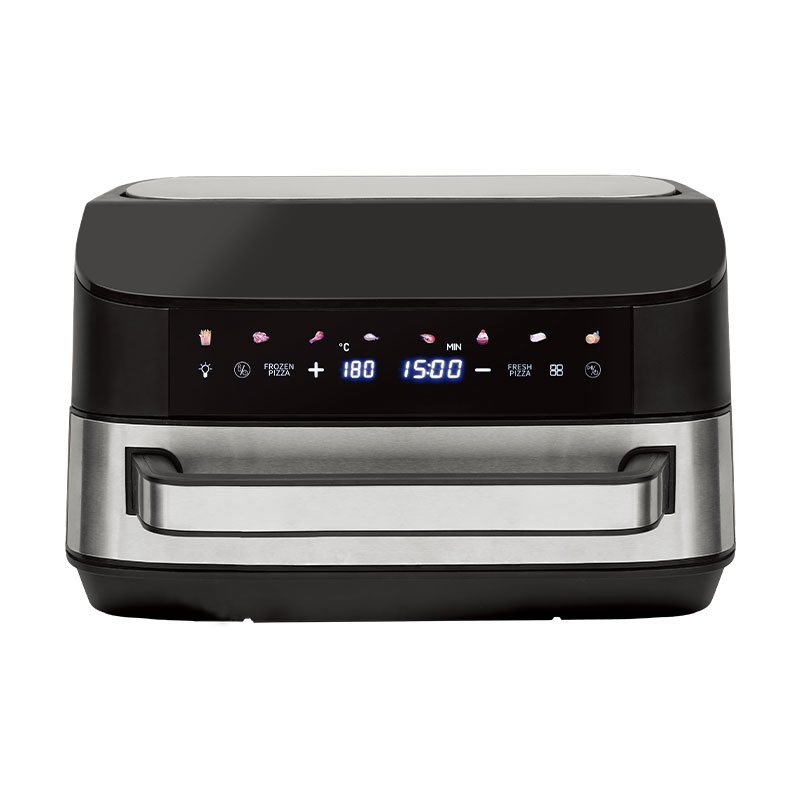
If pizza is the priority rather than reheating, start from the plate size and work backwards to capacity. Flat-plate pizza models with a digital panel cover the widest range of uses, from a 12-inch margherita to reheated slices and small roasts, without needing a second appliance for the same counter space.
For buyers specifying these units for retail programmes, the practical checks are certification, dishwasher-safe parts, spare basket availability and whether the panel survives a wipe-down with a damp cloth without losing its printed legends.
The Short Version
A touch screen makes a pizza oven repeatable; it does not make it hotter or faster. If pizza is the reason you are buying, put your budget into a flat plate of at least 28 cm, a temperature ceiling of 200 °C or above, and enough power to recover quickly when a chilled dough hits the surface. Choose the control type afterwards, based on who will use the appliance and how roughly it will be treated.
Everything else — presets, lighting, the shape of the handle — is a preference rather than a performance factor. Measure first, set temperatures in writing, and the crust will look after itself.