
 English
 中文简体
中文简体 Español
 English
 中文简体
中文简体 Español
United States Market Notes
Touch Screen Air Fryers in the USA: What Decides Whether the Panel Sells
A lit panel with twelve presets helps a shopper pick a unit off the shelf. Certification, temperature accuracy and the return rate decide whether the program earns a second order.
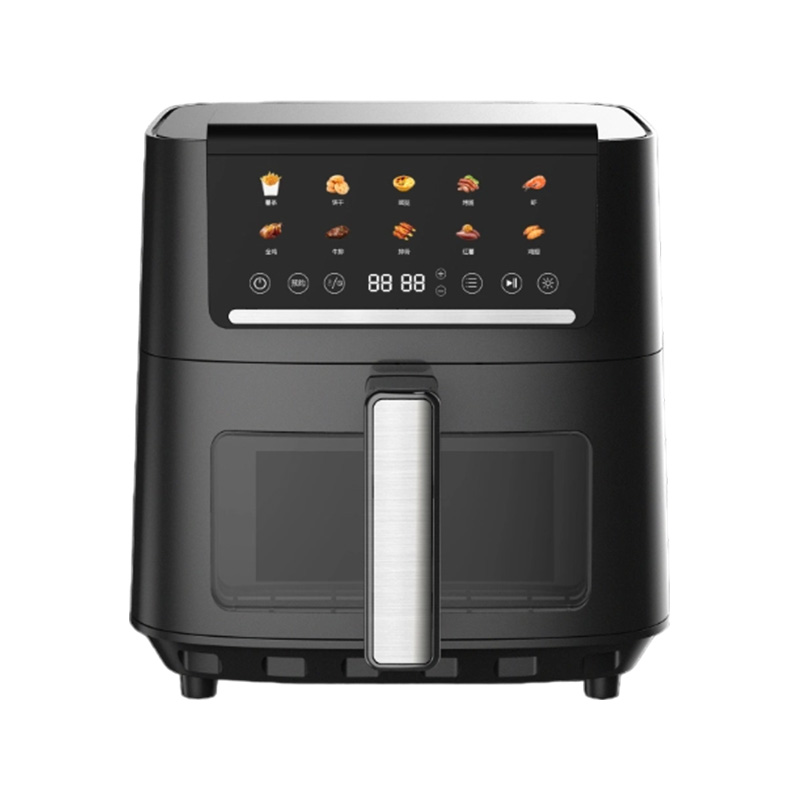
Walk the small-appliance aisle of a US retailer and one pattern is easy to read: most air fryers above the entry price tier now carry a glass panel, a digital readout and a row of preset icons. The touch screen is what a shopper notices. It is not what the retailer measures. Retailers measure returns, complaint codes and how many units come back with a dead panel after ten months of daily use.
That gap shapes how a touch screen air fryer should be specified for the United States. The electronics have to survive heat, grease, steam and a 120 V kitchen circuit shared with a coffee maker. The interface has to be readable without the manual. And the model has to arrive with the documents a US buyer needs before a purchase order is signed.
The sections below cover what changes when a dial becomes a control board, how the main architectures compare, which US requirements are checked first, and where touch models fail in the field.
What a Touch Screen Really Changes in Daily Use
A mechanical air fryer sets time with a spring timer and temperature with a bimetal dial, and both drift as the appliance ages. A digital touch unit replaces them with a thermistor, a micro-controller and a fixed temperature table, so a setting of 375 °F stays near 375 °F through the cycle instead of sliding with ambient temperature and dial wear.
The gains that matter to a household are practical rather than decorative:
- Temperature steps of 5 °F, so a recipe can be repeated instead of guessed.
- One-touch presets for what American households actually cook: frozen fries, wings, nuggets, fish, vegetables and reheating leftovers.
- Auto shut-off and a cool-touch housing, which matter in homes with children and in small apartments.
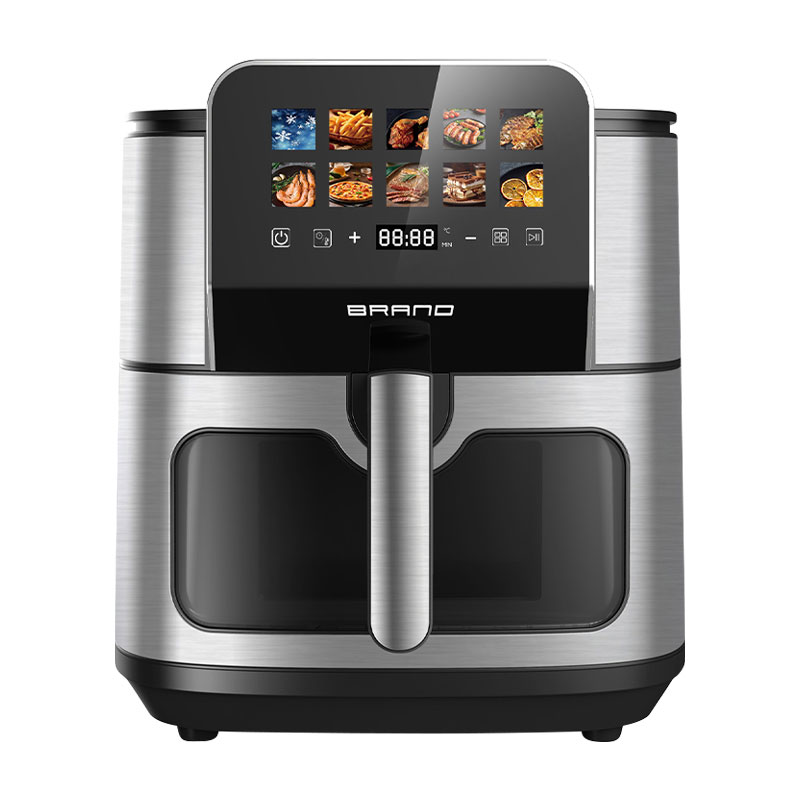
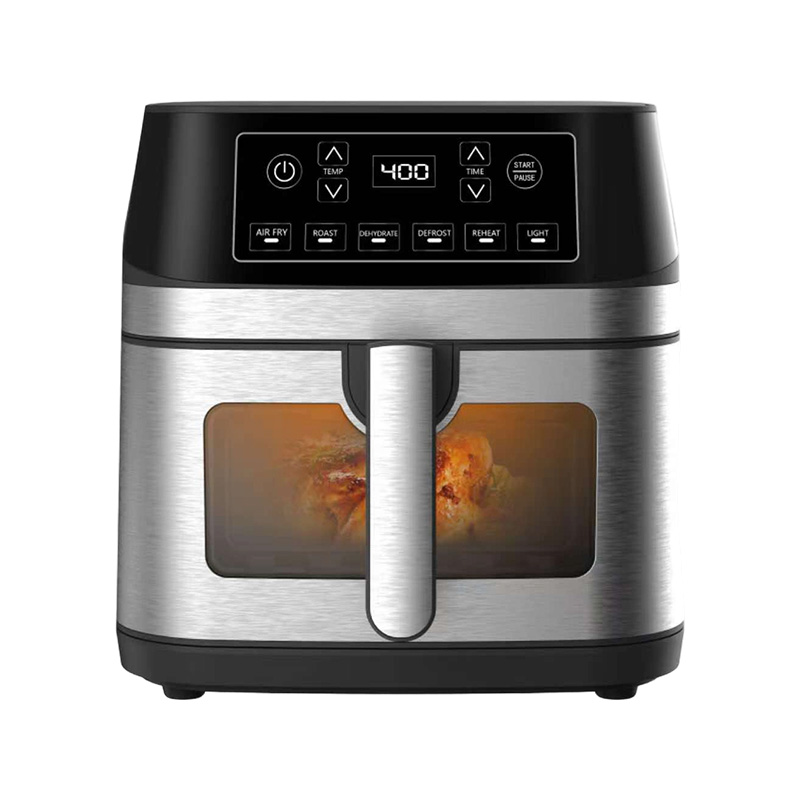
- A shake reminder or a visual window, which reduces the most common air frying complaint: crisp outside, cold in the middle.
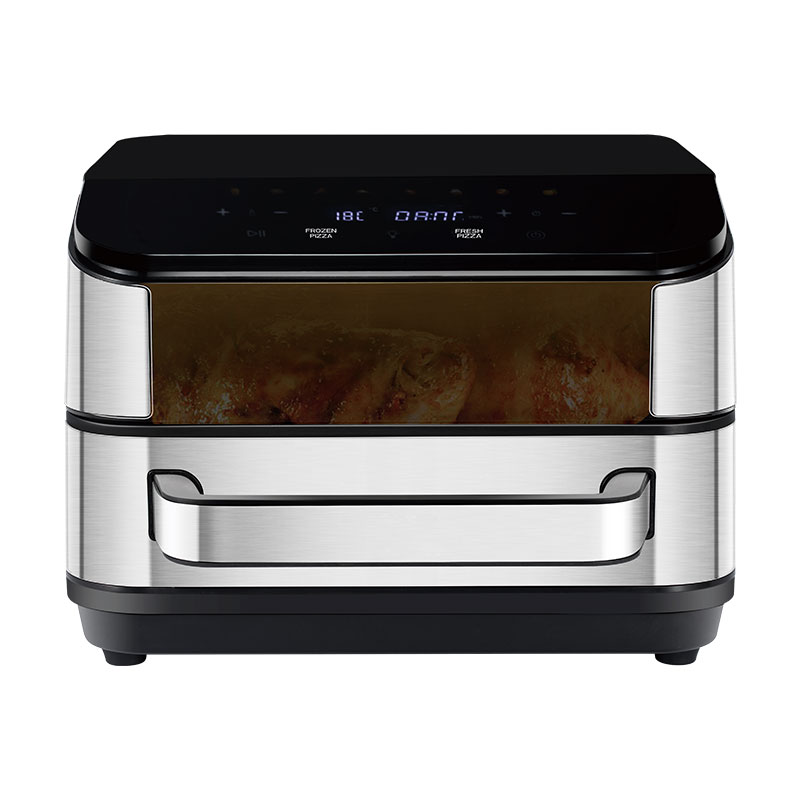
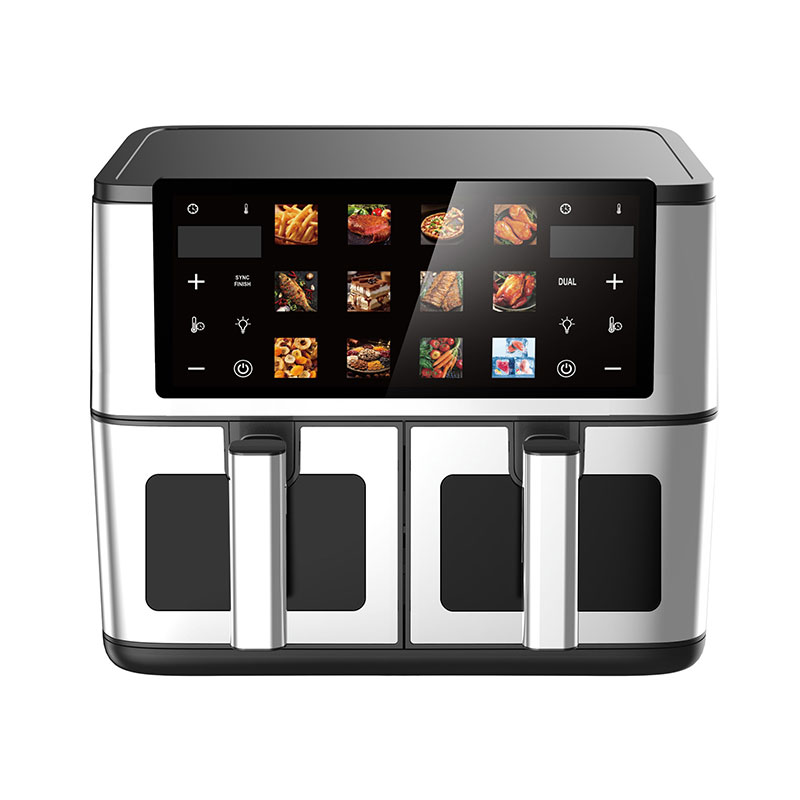
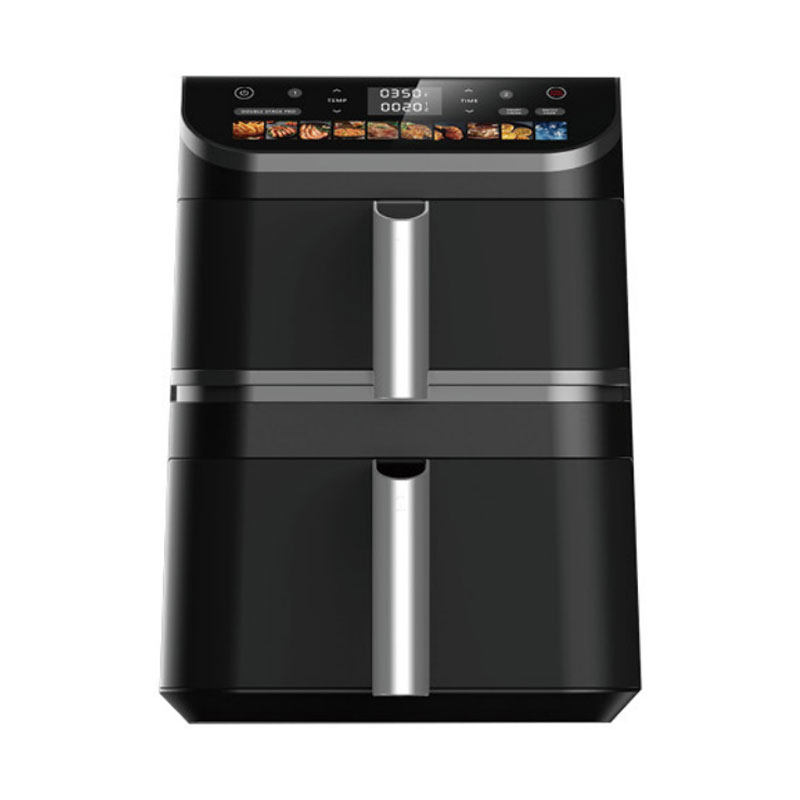
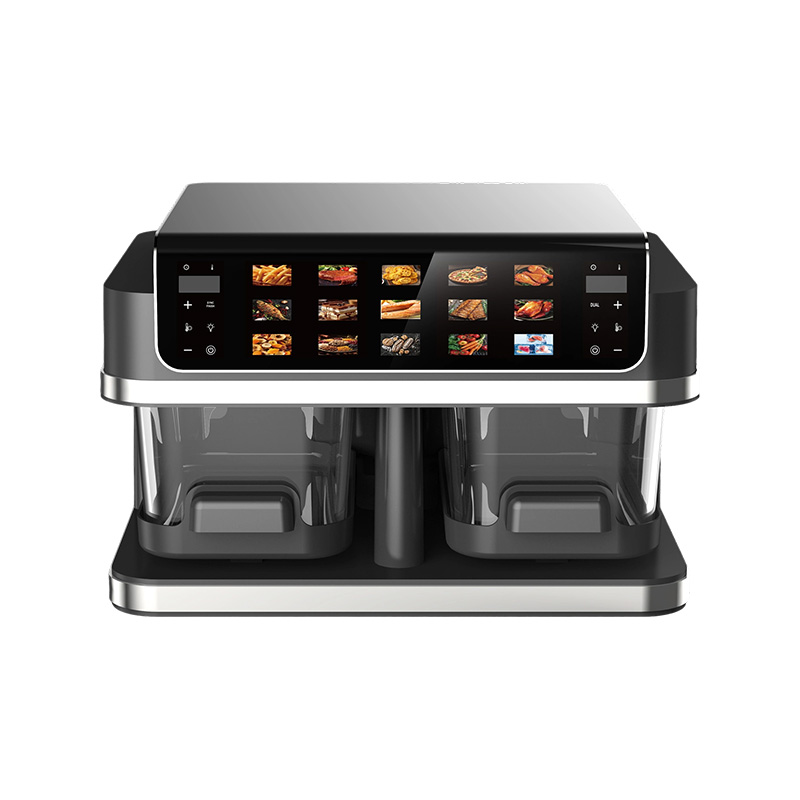
- Independent zones on dual-basket models, where two foods cook at different temperatures at the same time.
For a sourcing team, the difference appears on the specification sheet rather than in the shopping experience. A touch screen air fryer is an electronic appliance with firmware, a display and either a membrane or a capacitive sensor, and it is tested as one. The sample plan therefore covers the touch screen control platform, the calibration of the sensing circuit and firmware behavior, not only the basket coating.
Comparing Control Architectures Before You Commit
Four architectures cover almost every air fryer sold in the United States today. They differ less in appearance than in how much electronics the customer is asked to trust.
| Control type | Temperature accuracy | What the user sees | Typical field risk | Best fit |
|---|---|---|---|---|
| Mechanical dial and timer | Wide spread, roughly ±20 °F once the dial wears | Two dials, no display | Broken knobs, complaints about uneven results | Entry price points and low-return channels |
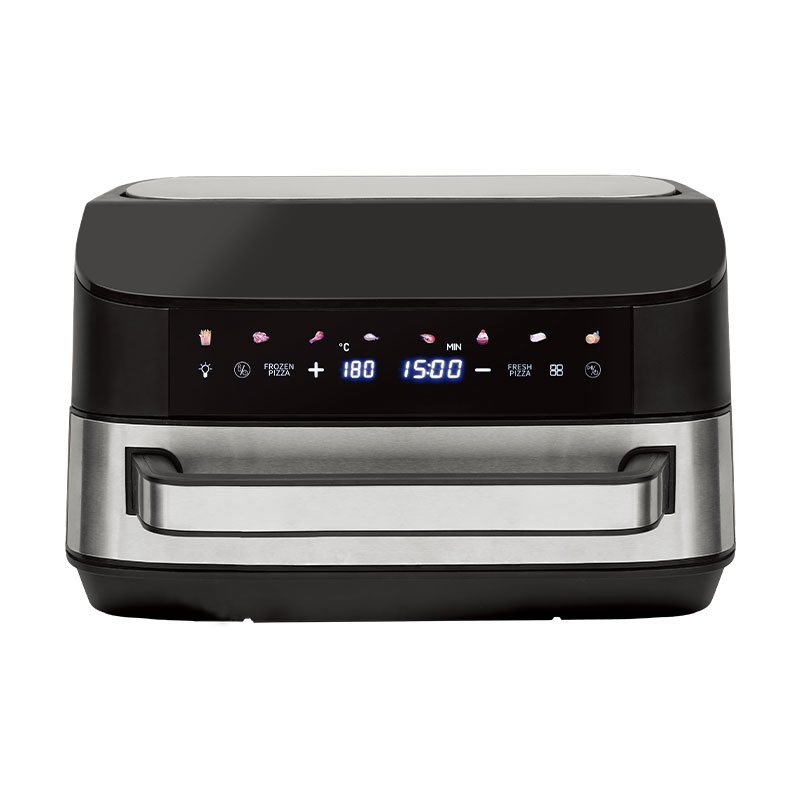
| Membrane touch with LED | About ±8 °F with a calibrated thermistor | Icon strip and digital timer | Membrane cracking, moisture near the sink | Mid-tier retail and private label |
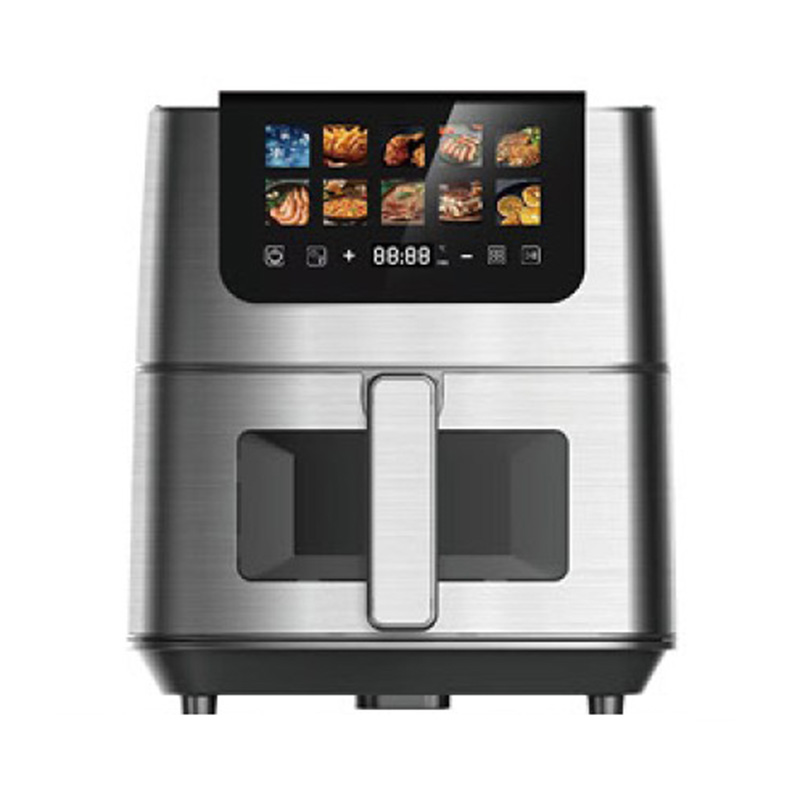
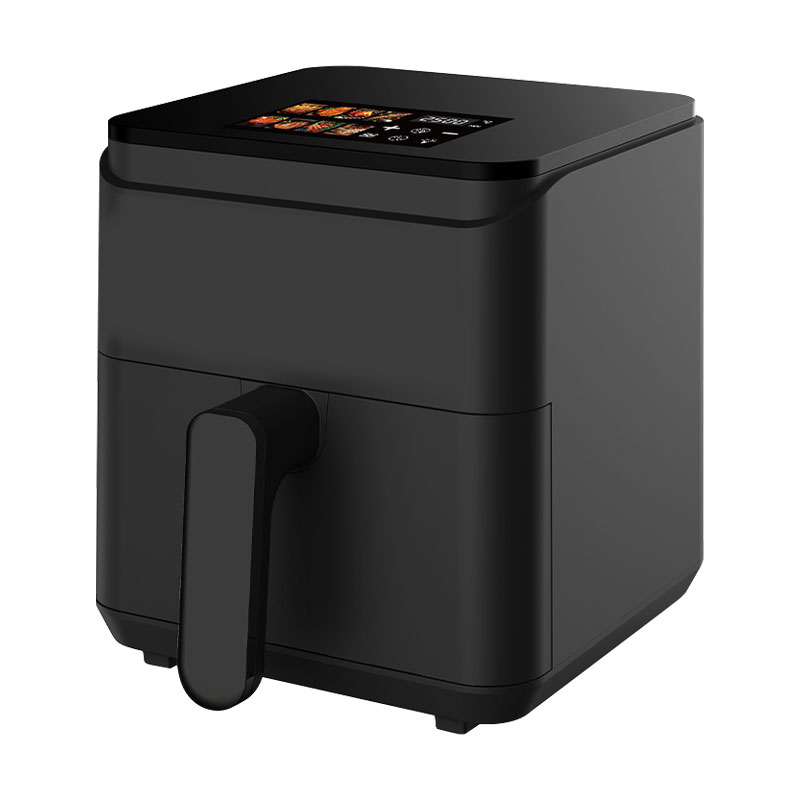
| Capacitive touch with LCD presets | About ±5 °F with a calibrated thermistor | Full menu, preset icons, countdown | Board heat damage if the sensor sits too close to the heater | Branded programs at higher price tiers |
| Knob plus touch hybrid | About ±5 °F, dial for temperature and touch for presets | One dial and a small display | Fewer electronics, slightly higher tooling cost | Buyers who want fewer service calls |
The table points to one conclusion. Accuracy comes from the sensing circuit and the calibration routine, not from the surface of the panel. A capacitive glass panel paired with an uncalibrated thermistor will disappoint a customer more than a plain dial that holds its temperature, and the return is recorded against the touch model either way.
US Requirements to Confirm Before Approval
Compliance is usually the first filter in a US purchase decision, and very little of it is negotiable once a program moves from sample to production.
- Electrical rating: 120 V and 60 Hz, with a grounded or polarized plug as the channel requires. Full-size US air fryers typically land between 1200 W and 1700 W.
- Listing: an ETL or UL mark from a recognized testing laboratory, covering the appliance and the cord set. Serious buyers ask for the file number rather than the logo on the carton.
- Electronics: the touch board is an unintentional radiator, so FCC Part 15 Subpart B applies. Models with Wi-Fi or Bluetooth need the additional authorization and an FCC ID on the label.
- Food contact: the basket coating, rack and any silicone part should be backed by food-contact documentation, with BPA-free claims in writing rather than in marketing copy.
- State rules: California Proposition 65 statements and related packaging warnings are reviewed whenever a model is placed with a national retailer.
- Labeling: a rating label showing model, voltage and wattage, plus English instructions with a US service contact.
Circuit reality checkA 1500 W air fryer draws roughly 12.5 A at 120 V. On a standard 15 A kitchen circuit it will trip the breaker if it runs beside a 1500 W coffee maker or toaster. One short note in the instruction manual prevents a share of complaints that have nothing to do with the appliance itself.
Inside the Panel: Where Touch Models Fail
Sensing Method and Sealing
Membrane panels are printed circuits under a flexible overlay. They are inexpensive and dependable when the overlay is sealed against the housing and the tail is strain-relieved. Capacitive panels tolerate wiping and look more premium, but they need a stable ground plane and a controller that ignores a wet fingertip; without that filtering, a splash of water becomes an unwanted command.
Heat, Grease and Steam
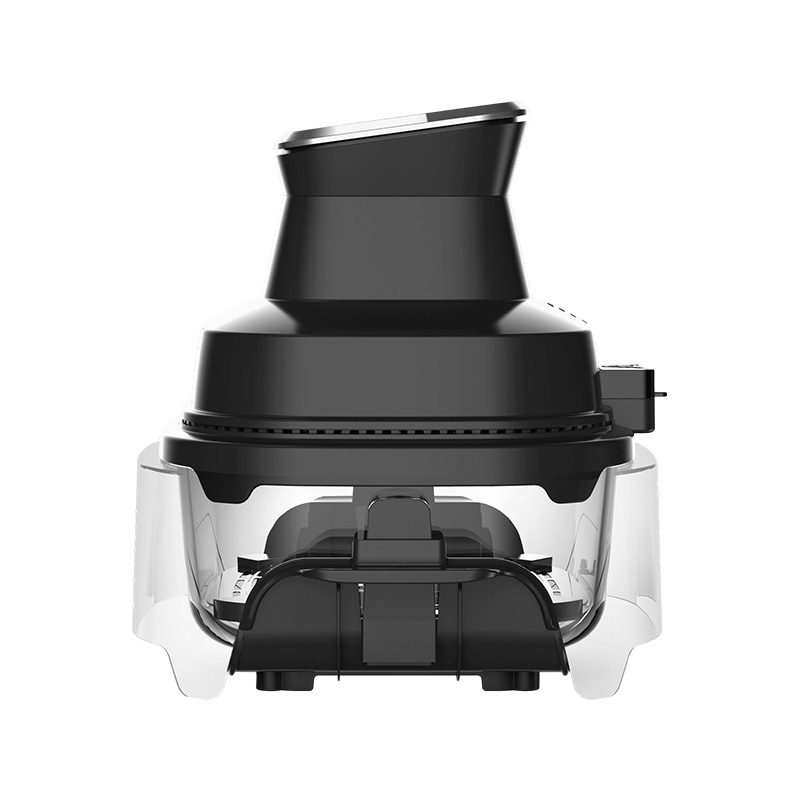
The control board usually sits at the top or the front of the cavity, a few centimeters from the heater. If it sits in the rising air path without a deflector, electrolytic capacitors dry out and the display dims long before the warranty ends. A conformal coating, a thermal barrier and a burn-in at maximum temperature catch most of this at the factory rather than at the returns desk. How an opaque touch screen air fryer keeps heat distribution even is a useful parallel case, because a panel is only as stable as the airflow behind it.
Firmware and Presets
Presets that do not match local cooking habits become dead icons. A preset table written for the US market is short and specific: frozen fries, chicken wings, nuggets, pizza, vegetables and reheat. Each one should be verified against a fixed load, so the result in a test kitchen matches the result in a customer's kitchen.
A panel does not cook anything. It only tells the customer whether the machine is under control, and that impression is what comes back as a review.
Capacity, Wattage and the American Countertop
US shoppers think in quarts, and the useful range for a touch model runs from about 2 quarts for one person to 10 quarts for a family with a freezer full of fries. Two sizes dominate listings: a single basket of 5.8 to 6 quarts, and twin-basket units of roughly 4.5 liters per side.
Sizing guidanceA 6-quart basket holds about 2 lb of fries or a 4 lb chicken. A twin 4.5 L unit cooks two foods at once but occupies the footprint of a microwave, which matters in apartments and small kitchens.
Beyond volume, four physical details decide how the appliance feels in a real kitchen:
- Countertop clearance, including the space needed to open the basket and pull it clear of the housing.
- Noise level, since low-noise designs are now a stated selling point rather than an afterthought.
- Dishwasher-safe parts and a removable base, which cut cleaning time and reduce the chance of a coating being scrubbed away.
- Whole-chicken capacity, including any rotisserie accessory, a common reason for upgrading from a smaller unit.
Pre-Shipment Checks for Touch Models
None of the following is exotic. It is the routine a US importer expects when the appliance contains a control board instead of a dial.
- Incoming inspection of the panel overlay, LCD and touch controller against a sealed golden sample.
- Temperature calibration of the thermistor against a reference probe at 300 °F, 375 °F and 400 °F, with deviation recorded per batch.
- Full function testing of every preset, including the shake reminder, auto shut-off and recovery after a power interruption.
- Electrical safety testing on 100 percent of units, covering high-pot and ground continuity, with leakage current checked on a sample.
- A 30-minute burn-in at maximum temperature under load, watching panel temperature and display stability.
- Drop and vibration testing of the packed unit with the basket installed, because a cracked panel found at the retailer is a return rather than a repair.
Building a Touch Screen Program
The shortlist for a US program should stay small: two or three platforms covering the target price tier, capacity band and control style. Beyond that, the deciding factors are the compliance file, tooling and minimum order, the spare-part plan, and whether the factory can hold a calibration tolerance across a long production run.
This is where a manufacturer's own history matters more than a catalogue. Cixi GSTAR Electric Appliance Co., Ltd., founded in 2009 in Cixi, Zhejiang, designs and builds small kitchen appliances for retail chains in the United States and Europe. The company moved into an 18,000 square meter facility in 2018 with around 150 employees, including a ten-engineer development team and a ten-person quality department, and its air fryer range now spans mechanical, membrane touch, capacitive touch and hybrid controls, from compact personal units to dual-basket family models.
For buyers, that breadth means the panel can be matched to the channel instead of the channel being matched to the panel.
Touch screen air fryers sell on appearance and stay on the shelf because of three things that never appear in a product photo: electronics that survive heat and steam, a calibration routine that respects a recipe, and paperwork that clears a US retail audit on the first pass. A buyer who verifies those three items will find that the panel itself is the easy part.
Before approving a sampleConfirm that the listing file covers the control board, request the thermistor tolerance report, run a 30-minute burn-in at maximum temperature, test every preset with a fixed load, and keep a sealed golden sample for future shipments.