
 English
 中文简体
中文简体 Español
 English
 中文简体
中文简体 Español
Search for a touch screen air fryer manufacturer in China and you will find no shortage of suppliers claiming the capability. The glossy pages look interchangeable, but the engineering reality is not. This article explains what separates a factory that can develop a touch screen air fryer from one that simply assembles components, and how to verify the difference before you sign anything.
The short version: choose a manufacturer that controls the full chain, from firmware to final inspection. Everything else is price leverage.
What Defines a Touch Screen Air Fryer Manufacturer
A touch screen air fryer is more than a basket with a digital face. The panel sits at the front of a wider control system: a capacitive display, a control board, firmware, temperature sensors, and heating elements. Every preset touch sends a command through that chain, which must turn it into a stable cooking temperature. A weakness anywhere means slow response, temperature drift, or uneven browning.
Firmware and temperature accuracy
Most factories can source a standard LCD display. Far fewer can write firmware that maps presets to the correct heating curve, or calibrate the sensor so the displayed value matches real cavity air. A five-to-ten-degree deviation sounds small, but it decides whether fries come out crisp or soggy, and whether consumers trust your brand.
The touch screen is the most visible part of an air fryer and the least reliable indicator of its quality. Engineering decides whether the product feels premium or frustrating.
Thermal and mechanical integration
The touch interface also changes the thermal layout. Display, wiring, and control board must tolerate the heat of a cavity that runs at 200°C while the housing stays cool to the touch. Cable routing, board placement, and insulation need model-specific design. Factories with genuine R&D teams pull ahead here; trading companies run out of answers.
A supplier with a dedicated smart touch screen air fryer line has invested in this layer of engineering. Ask how the control architecture changes between its mechanical, digital, and touch screen models; the answer says more than any brochure.
A Supplier Checklist That Filters Real Factories
Because touch screen competence is hard to judge from a spec sheet, use a structured checklist.
| Area | What to verify | Why it matters |
|---|---|---|
| Factory structure | Own production lines or a trading intermediary | Trading companies cannot iterate quickly on firmware |
| R&D team | Engineers dedicated to air fryer development | Touch work needs in-house engineering capacity |
| Tooling ownership | Who holds the moulds for housing and basket | Determines whether housing customization is possible |
| QC process | Incoming inspection, inline checks, final sampling | Touch panels fail early more often than switches |
| Compliance certificates | Valid ETL, CE, CB or other market-specific marks | Certification delays are the top cause of missed launches |
| Production capacity | Monthly output and current line loading | A loaded factory may push your order to second shift |
A fast filter: ask who writes the firmware and where control boards are assembled. If both answers sit outside the factory, you inherit coordination risk.
- Check whether the factory runs an ageing test station where units run at rated power before packing.
- Compare QC headcount with line workers. A mid-sized factory of roughly 150 employees typically keeps ten people in quality control.
- Ask for a live video call to the production floor, not just photos.
This verification takes a few days; discovering the problem after the container arrives costs far more.
Customization: Making the Product Yours
Once engineering depth is confirmed, the conversation moves to customization. Touch screen models offer more variables than mechanical ones because the interface is software-driven. Capacity, housing shape, panel position, display style, presets, color, and finish can align with your brand.
Capacity comes first. Square and round basket models usually range from 3.8 liters for small kitchens to six liters and beyond for family use. Larger models handle whole chickens and need longer cooking curves.
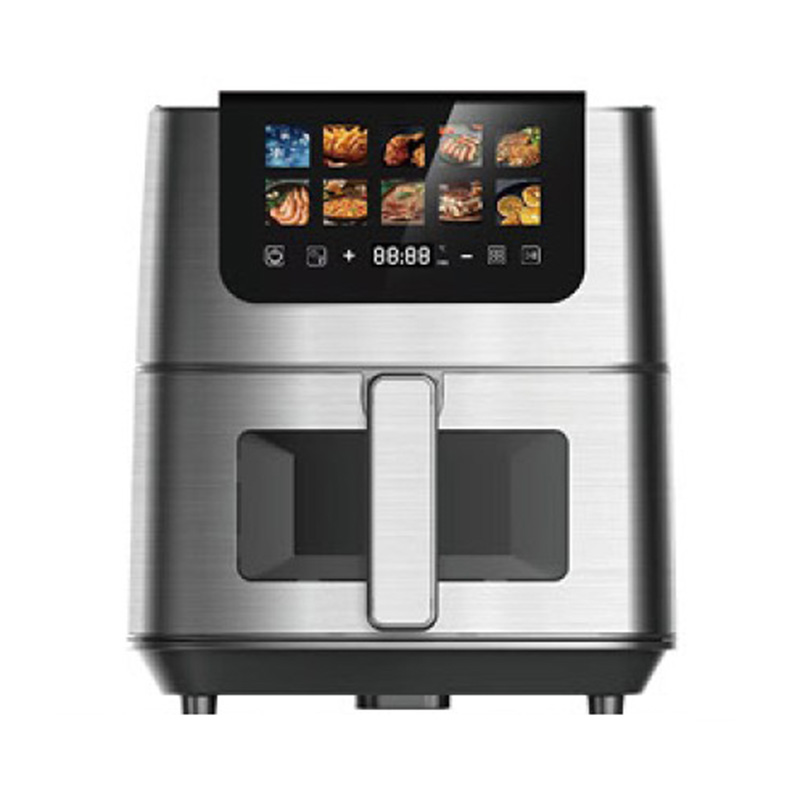
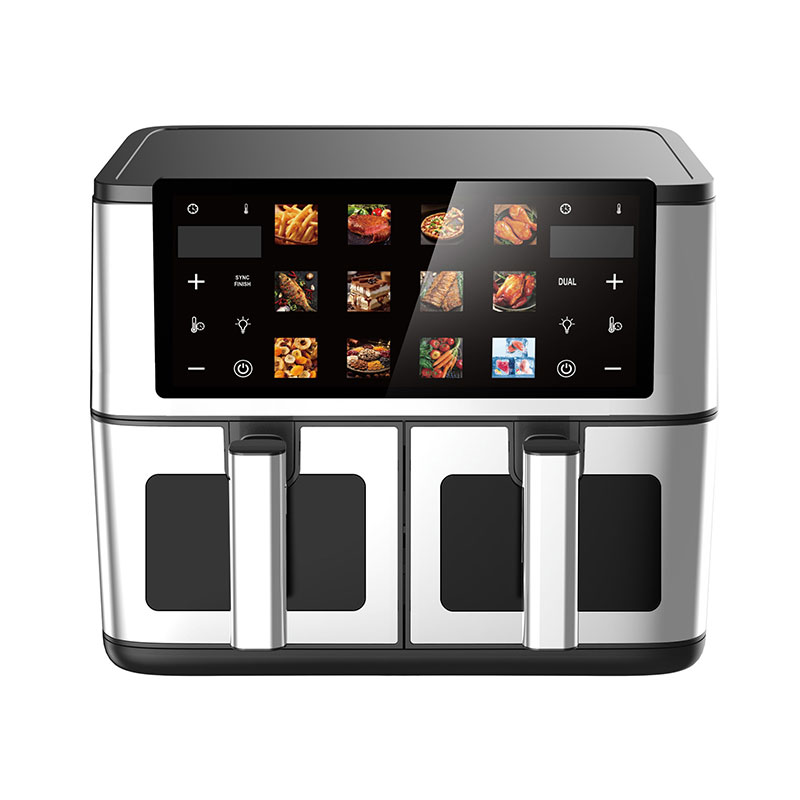
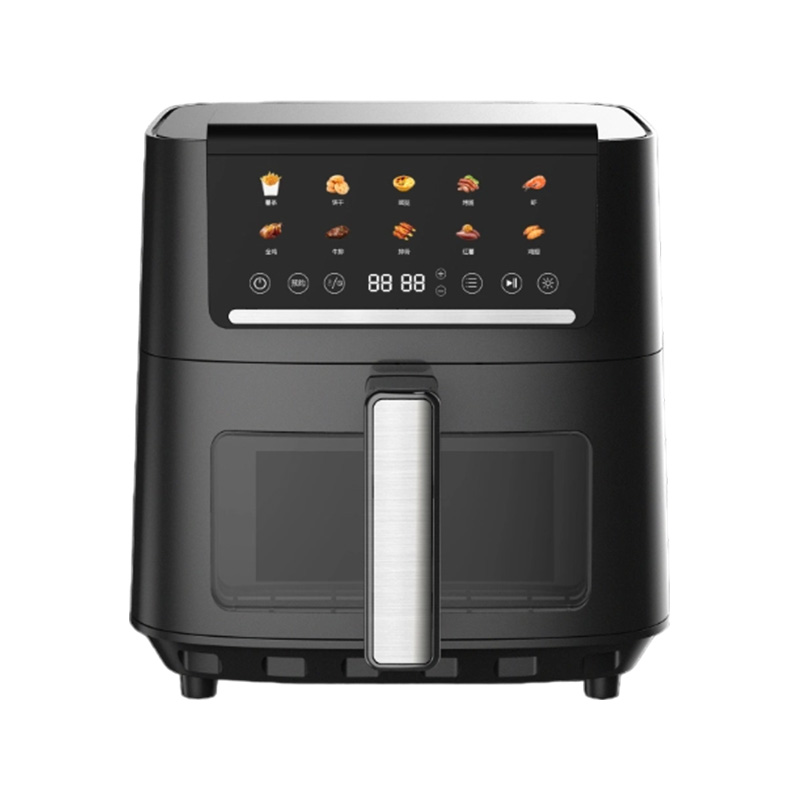
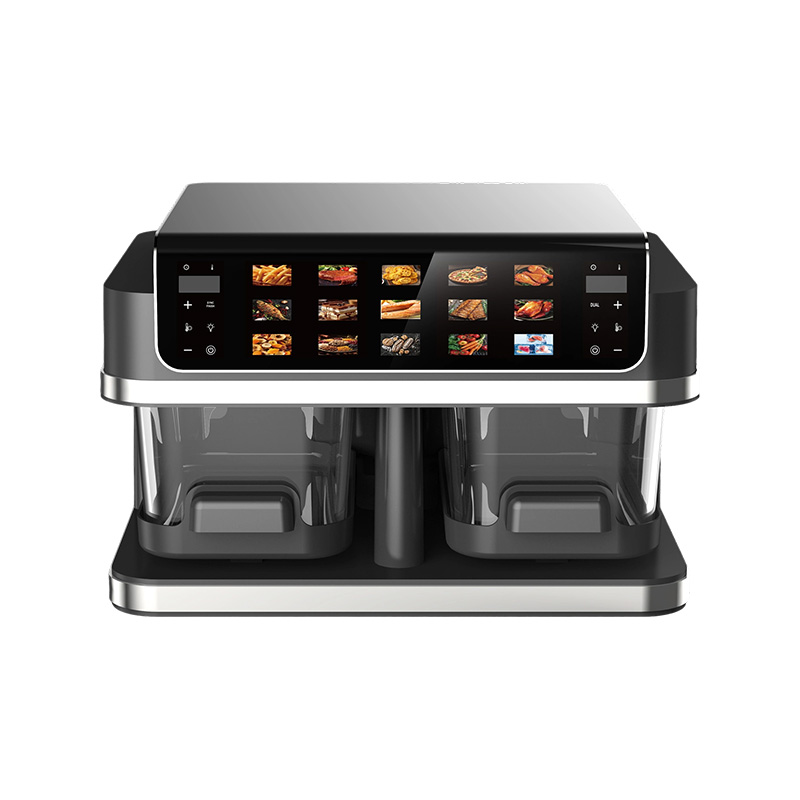
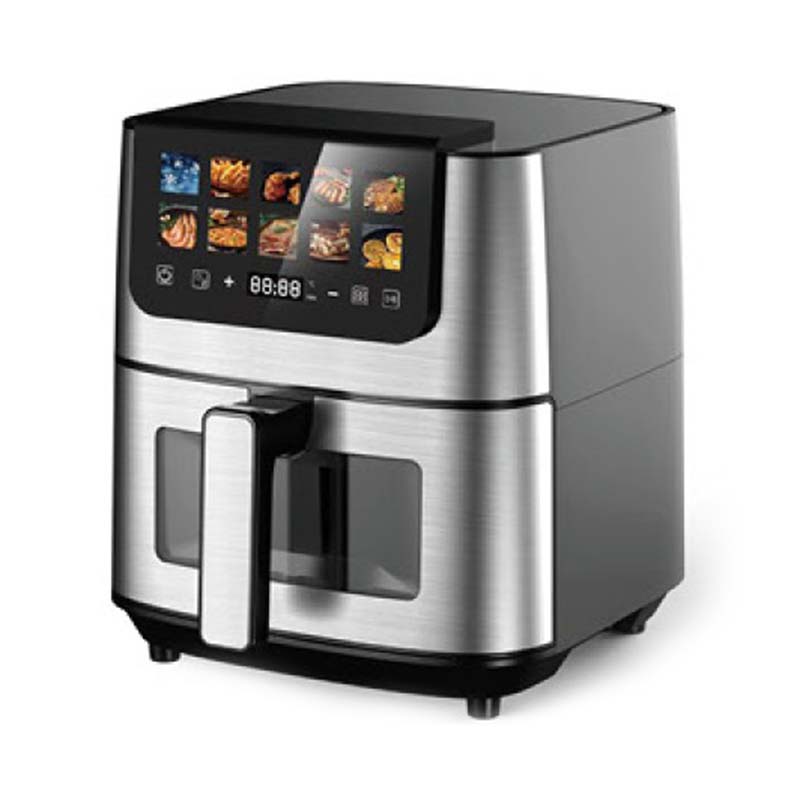 Top LCD Touch Large-Capacity Air FryerThis model pairs a top-mounted LCD touch panel with a large cooking chamber, matching the article's focus on capacity-first choices and readable controls for low-cabinet placement.View Product →
Panel position follows. A top-mounted LCD touch panel suits low cabinets; a front panel is easier to read at standing height. The choice shapes the housing design.
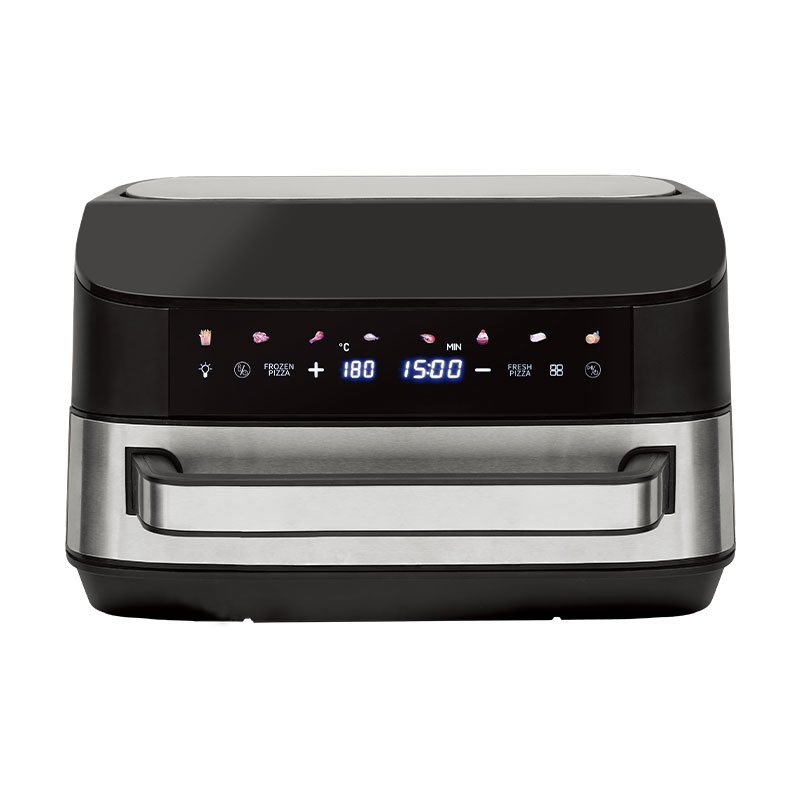
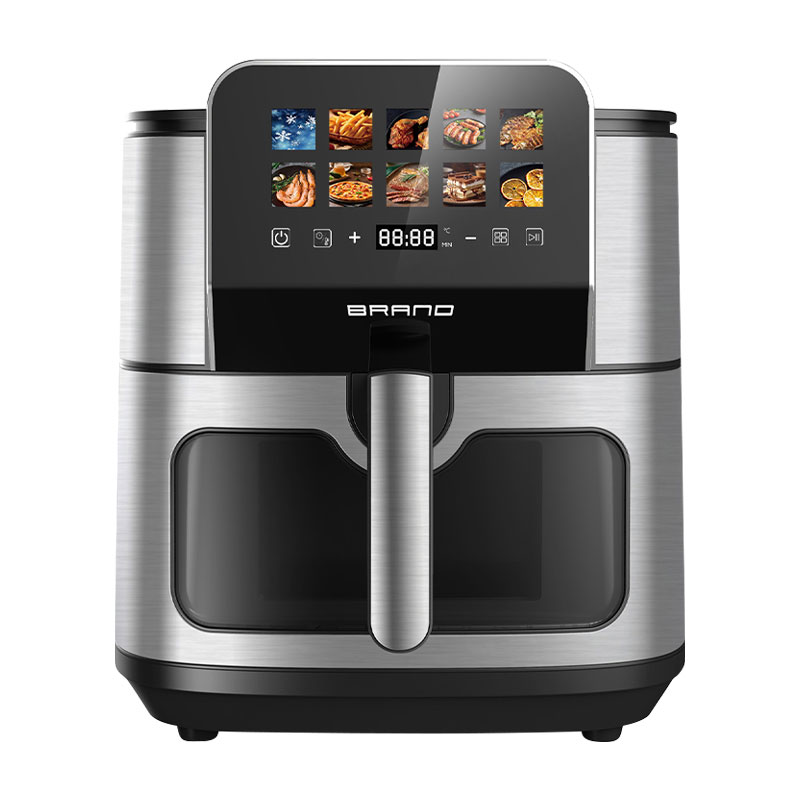
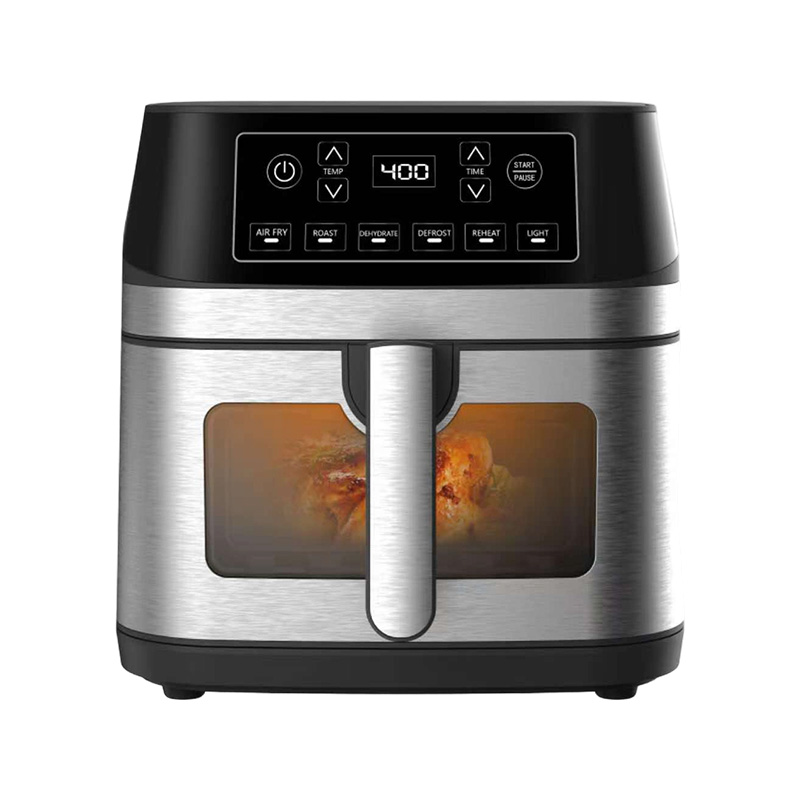
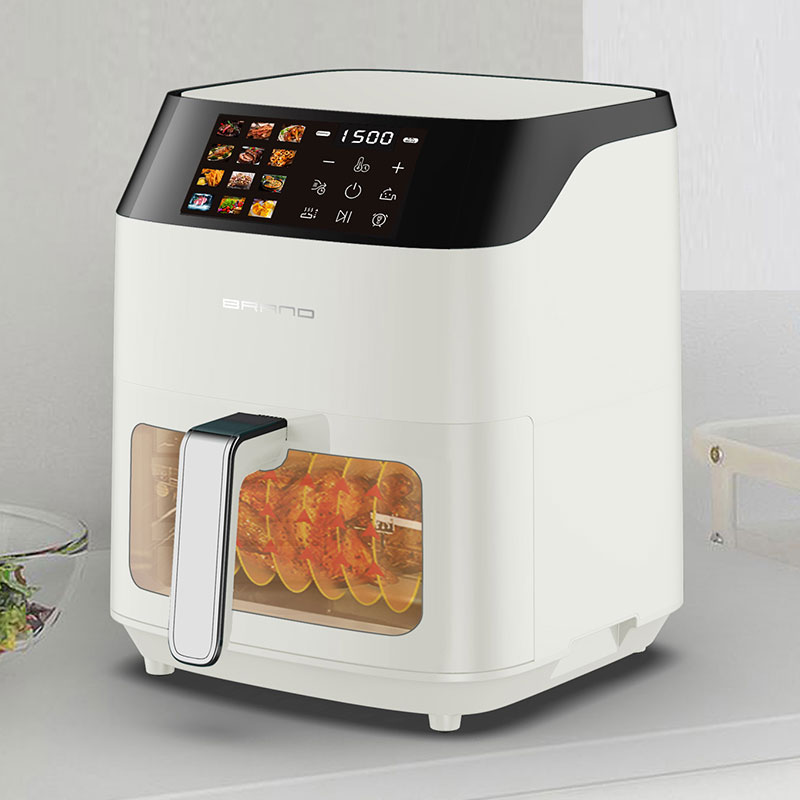 Beveled LCD Digital Air Fryer with WindowWith a beveled, touch-sensitive display and a visible window, this 7L square air fryer makes side-viewing easy and adds a sculpted silhouette, as the article notes for countertop appeal.View Product →
Beveled panels on large square models stay readable from the side as well as above, and give the housing a sculpted silhouette. For a countertop appliance, that visual detail matters.
Preset programming is the widest quality gap between suppliers. Some factories test eight to twelve programs against real food; others copy preset names and heating curves from a reference design. If a factory promotes its one-touch preset air fryer range, ask how the presets were validated and demand a side-by-side cooking test.
Info Order samples in your exact color, with your logo and your proposed preset list, and run them for at least a week. A sample tested only in the factory kitchen tells you less than one tested in your own.
Safety, Materials, and Compliance
Touch screen air fryers carry the same compliance obligations as other air fryers, with extra attention on the electronics. The display board and panel introduce additional components, so insulation, creepage distances, and electromagnetic compatibility need verification by a recognized laboratory.
For North America, ETL or UL listing is the retail gatekeeper. For Europe, CE marking is mandatory, and a CB report simplifies multi-country certification. An experienced manufacturer will tell you which certificates are realistic for a first order.
Warning Be suspicious of unusually short certification timelines. A new touch screen model takes longer to certify than a mechanical version because of extra EMC and safety evaluation.
Materials go beyond the electronics. The basket and tray should be food-grade and BPA-free, and dishwasher-safe parts must survive repeated cycles with aggressive detergents. The housing material, matte plastic or stainless steel, shapes both perception and durability.
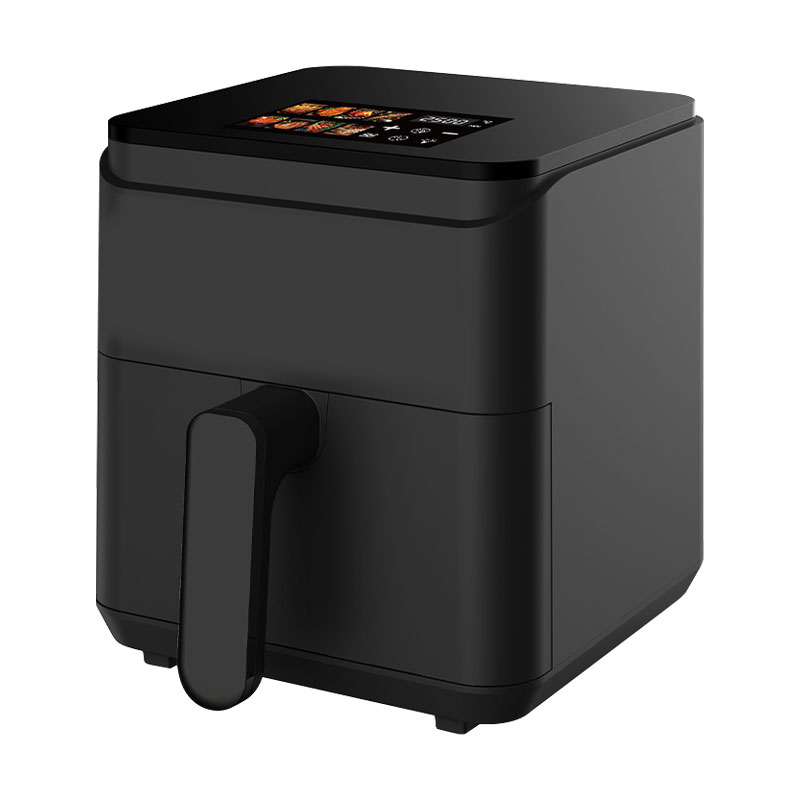
Opaque touch screen models, where the display stays dark until powered, are a quiet trend in premium ranges.
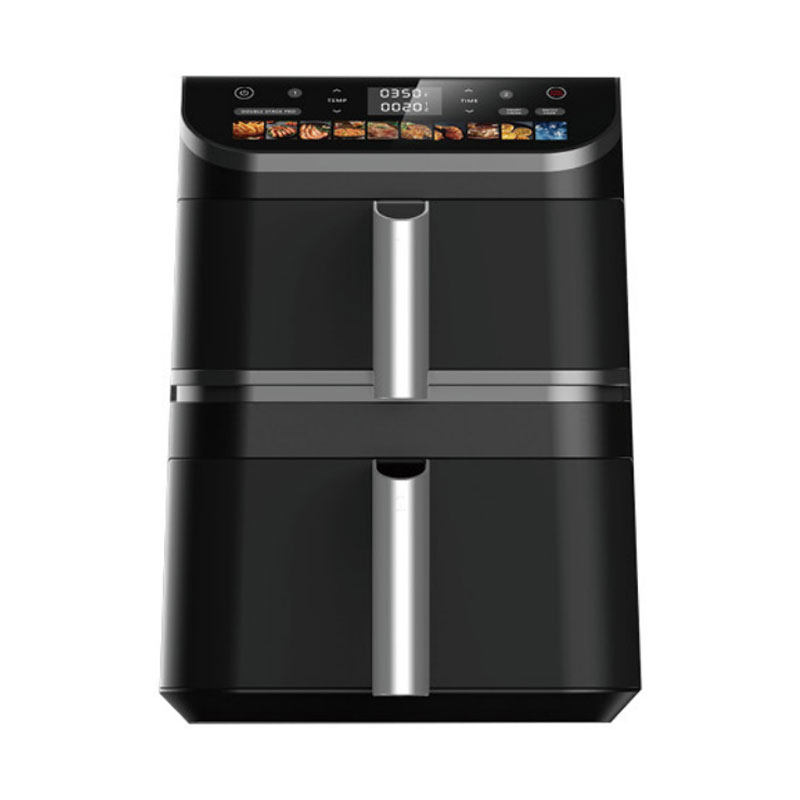
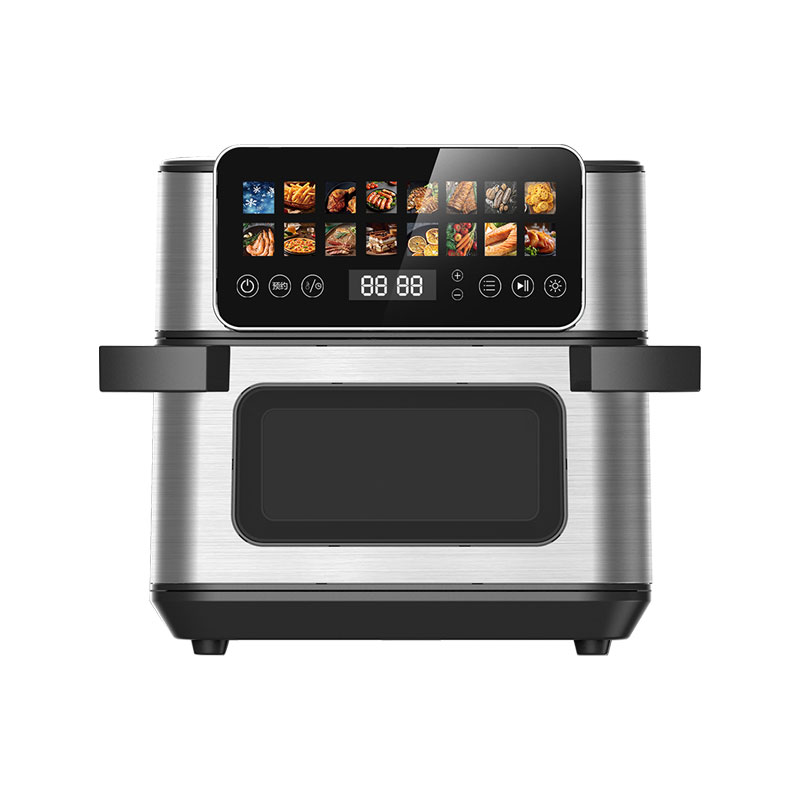
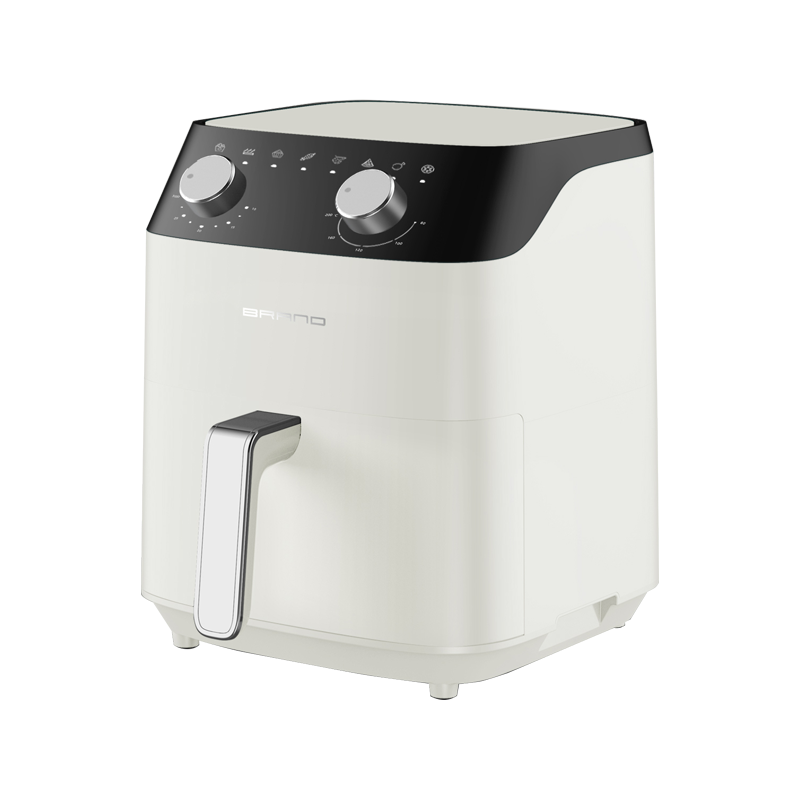 Opaque Touchscreen Stainless Air FryerFeaturing an opaque touch screen that stays dark until powered, this stainless steel model fits the premium trend described, with a white square texture worth evaluating for brightness and fingerprint resistance.View Product →
If this look fits your range, ask how the hidden display behaves in bright light and how the panel resists fingerprints after weeks of daily use.
Success A supplier that shares test reports before you sign a contract has cleared the most expensive hurdle in the import process. Treat that transparency as a positive signal.
MOQ, Delivery, and After-Sales Support
Delivery terms often decide the final choice. Touch screen models generally carry a higher MOQ than mechanical units, because tooling, firmware, and certification costs must be spread across the run. A custom model typically starts around one to three thousand units.
Ask the factory to split the MOQ into tooling and per-unit components. That breakdown reveals where the cost sits and what quantity gives a sensible landed price.
Danger If a supplier refuses to put the production schedule in writing, treat the quoted lead time as an estimate. A missed retail launch window costs more than the saving from a cheaper factory.
Confirm these points in writing before placing an order:
- Sample lead time, and whether the sample uses final production tooling.
- Production lead time after sample approval and deposit.
- Export carton and pallet specifications for long-distance shipping.
- Warranty terms and the defective-unit handling process.
- Spare touch panels and control boards for the product lifecycle.
Experienced air fryer factories also plan around seasonal order patterns. Orders placed before the peak buying months get better line scheduling; last-minute orders invite delays no matter what the salesperson promises.
Choosing a touch screen air fryer manufacturer in China comes down to one question: does the factory control the entire chain from firmware to final inspection? A supplier with owned production, dedicated engineers, documented quality control, valid certificates, and transparent MOQ terms brings your product to market with fewer surprises. Look for a factory that designs air fryers in-house and keeps a ten-person QC team on a roughly 150-person payroll.
Work through the checklist, request samples, audit the line, and compare certificates. The extra weeks of verification protect you from the biggest risk: a product that looks modern on the shelf but fails the moment a consumer touches the screen.