
 English
 中文简体
中文简体 Español
 English
 中文简体
中文简体 Español
UK Kitchen Buying Guide
The Touch Screen Air Fryer in the UK: A Practical Buying Guide
A touch display is easy to admire in a store. What counts is whether it stays useful after a month of frozen chips, roast dinners and busy weeknights. This guide separates the features that make a real difference from the ones that simply look modern on the box.
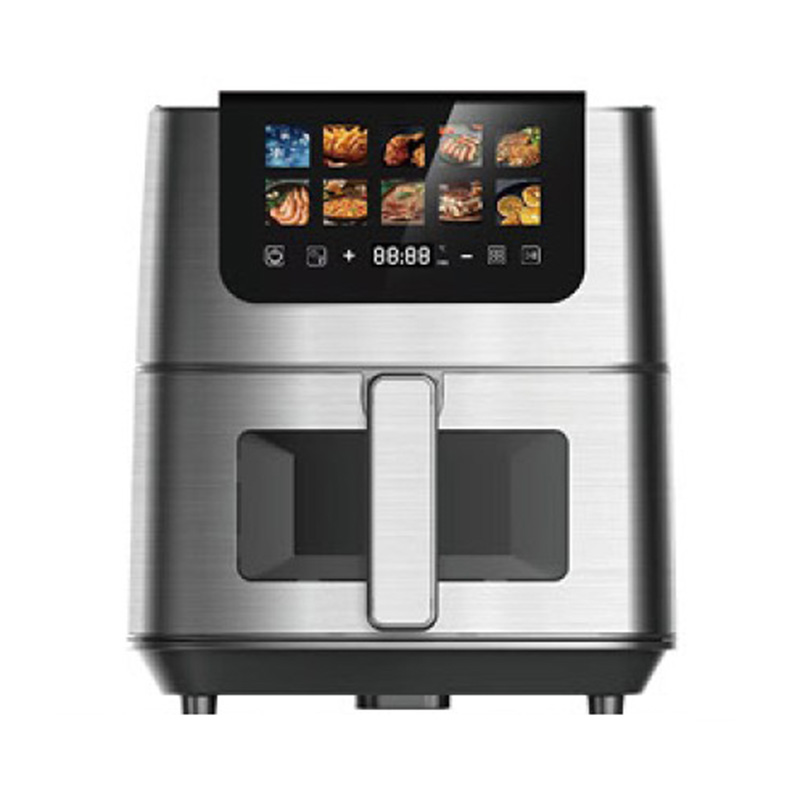
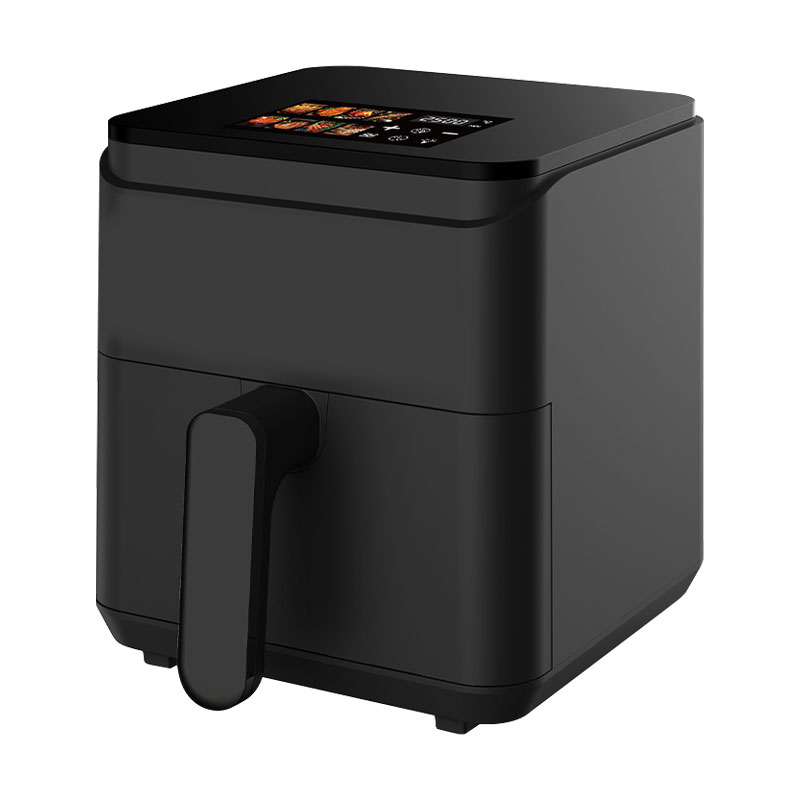
Walk through most UK kitchen retailers and you will see the same pattern. The budget air fryers sit on the lower shelves with two simple dials, while the touch screen models take the front positions. The interface is usually the clearest clue to the engineering underneath: a digital thermostat, controlled air circulation and presets that were tested rather than copied from a spreadsheet.
The honest bottom line is this. A touch screen air fryer is worth choosing when the panel controls genuine heating precision. If the machine holds a steady temperature and reacts quickly when you change a setting, the screen becomes a real convenience. If the digital panel merely sits on an ordinary mechanical thermostat, you are paying extra for a shinier button.
What a touch screen air fryer actually changes
Three differences matter in everyday cooking.
- Temperature stability. A digital thermostat samples the air continuously and holds a narrow band around your setting. For pastry, a whole chicken, or vegetables at a steady 180°C for half an hour, the result shows in the colour of the crust.
- Presets that actually work. A good preset sets a sensible temperature for the food type and a realistic time for the basket size. A well-programmed smart touch screen air fryer cooks chips, reheats leftovers and crisps frozen food without touching the temperature dial. A poorly programmed one burns the outside and leaves the middle cold.
- Feedback. A clear display shows the current temperature, not just the target. That matters when you adapt a recipe written for a conventional oven, because you can see how quickly the fryer recovers after you open the basket.
None of this requires a giant screen. It requires honest electronics: the screen is the part you see; the thermostat is the part you taste.
The UK checklist: voltage, counter space and running costs
Reviews written for the American market often miss a few details that matter on a UK worktop. Check the basics first.
Voltage and plug
UK sockets supply 220–240 V. Most touch screen air fryers sold here run between 1500 W and 2200 W with a standard three-pin plug. Check for UKCA marking and a clear wattage rating on the label.
Counter space
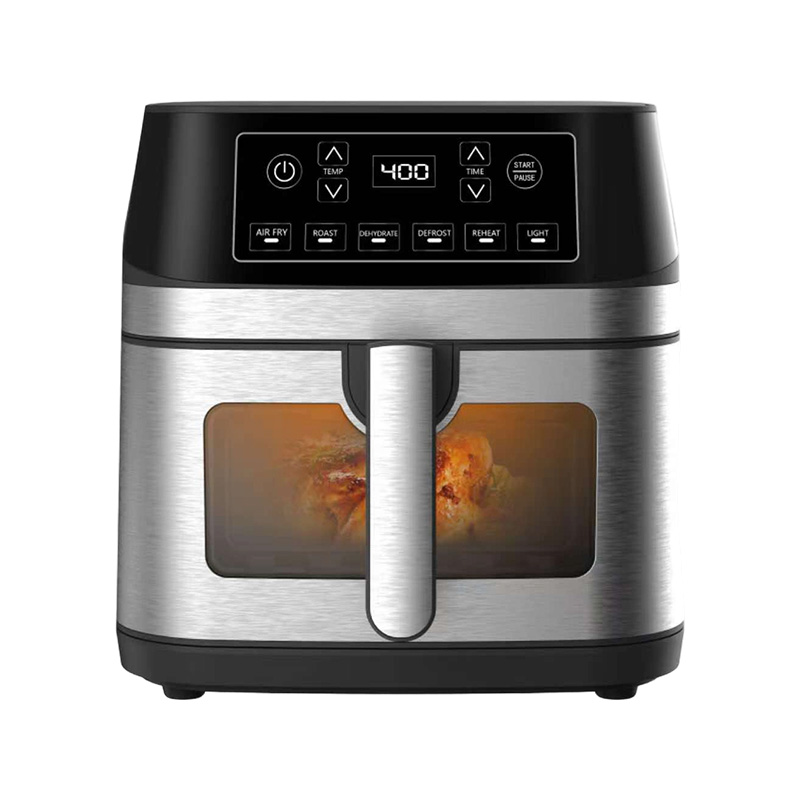
A 5-litre air fryer is roughly the size of a kettle beside a toaster. Measure the space before you order; a forward-tilted touch panel needs a little more depth than a plain dial.
Running costs
An air fryer heats a small cavity with a high-speed fan, so it reaches temperature much faster than a full-size oven. For a meal for one or two, it usually uses less electricity than the main oven. The saving depends on wattage and cooking time, not the screen size.
Info. A touch screen adds a small standby draw when plugged in but not running. Switch it off at the socket after use to keep bills low.
| Specification | Mid-range norm | Larger or dual-basket norm |
|---|---|---|
| Basket capacity | 4–5 litres | 7–8 litres, or two 4-litre baskets |
| Power rating | 1500–1700 W | 1800–2200 W |
| Temperature range | 80–200°C | 40–220°C with a wider span |
| Touch panel | Digital touch with presets | Touch plus LCD temperature readout |
| Dishwasher-safe parts | Basket and tray | Basket, tray and divider insert |
Capacity, baskets and real cooking performance
The figure on the box is dry capacity, not the weight your family can eat. A 5-litre basket holds roughly a kilogram of chips in a single layer, or a medium chicken. A 6 to 8 litre model fits a whole bird and a tray of vegetables at the same time.
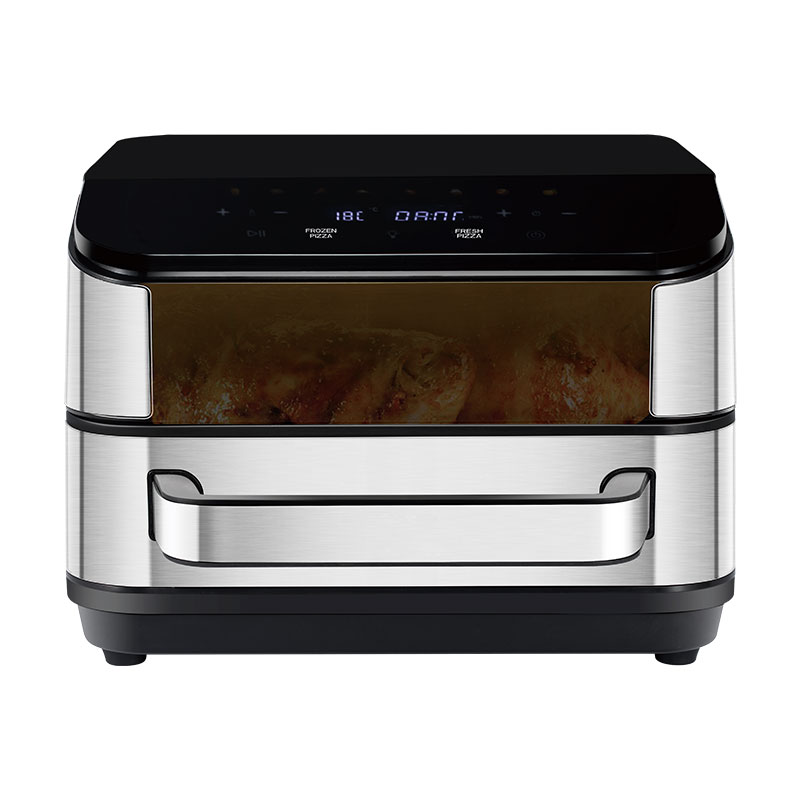
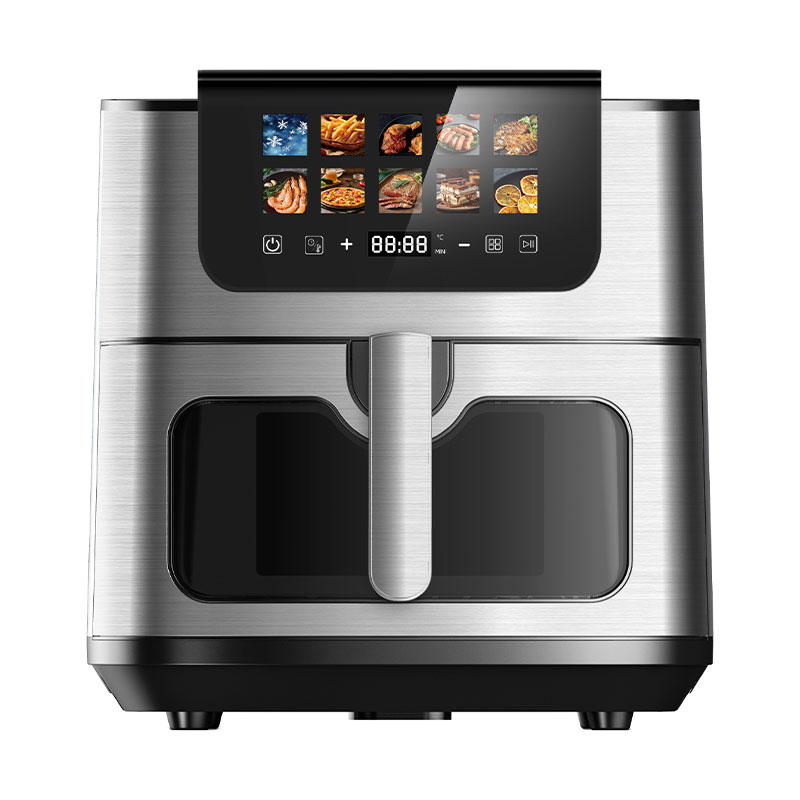
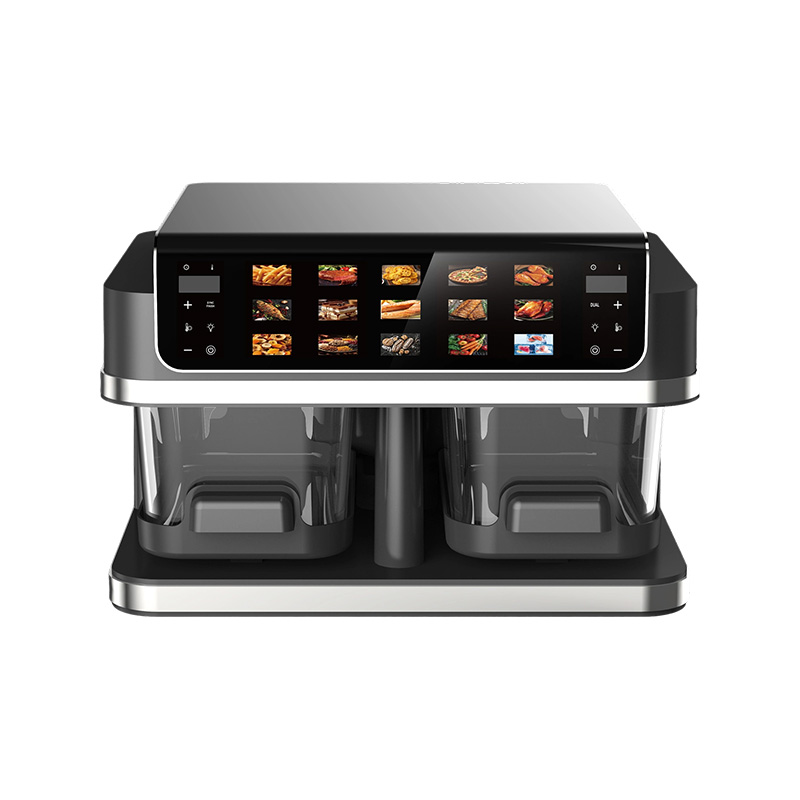
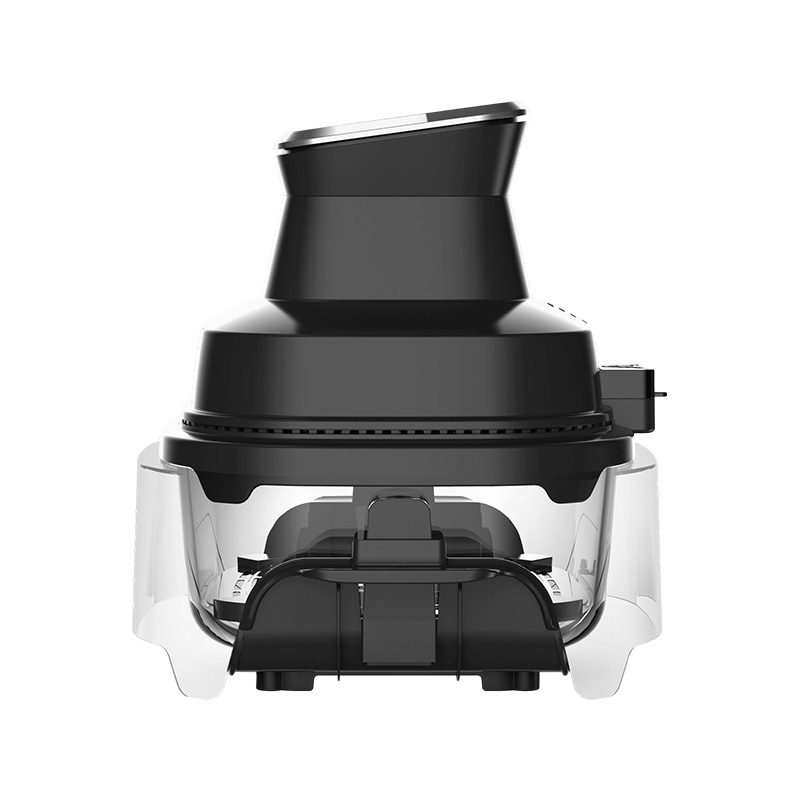
For a household of four or more, a dual-basket design is often more practical. You can cook fish at 160°C in one drawer and chips at 200°C in the other, finishing both together. The touch screen earns its place here, because you can set each drawer independently without juggling two dials.
Whatever the capacity, look for even air circulation. The test is simple: frozen food should come out crisp, with no pale patch in the middle. That depends on basket shape, fan position and motor power — not on the gloss of the panel.
A design engineer once put it plainly: anyone can build a large basket. The hard part is making the airflow touch every chip in that basket at the same speed. That is what you are actually paying for.
Touch controls, daily use and cleaning
Three things decide whether the panel stays pleasant to use.
- Responsiveness. A good panel registers a light touch and changes the setting immediately. A sluggish one feels like waiting for an old lift button. If you can test the fryer in a shop, run through the presets.
- Fingerprints and glare. Glossy panels show every mark. A matte finish hides smudges better, and a slightly tilted display is easier to read from above.
- Cleaning. The basket is the weekly chore. Confirm it is dishwasher-safe and check the non-stick coating. A one-touch preset air fryer saves thinking time, but it will not save scrubbing time if the coating is weak.
Success. Wash the basket while it is still warm. Ten minutes with warm soapy water beats an overnight soak and protects the non-stick surface better than harsh abrasives.
Build quality, safety and the parts you cannot see
A touch screen is the visible difference between models, but long-term satisfaction comes from the hidden parts: the heating element, the fan, the insulation and the certification.
Materials
Plastic that touches food should be BPA-free. The non-stick surface should be food-safe and durable; ceramic coatings are generally more resistant than basic PTFE. The outer housing should stay cool, especially if there are children in the kitchen.
Safety approvals
UKCA marking means the product meets UK regulations. Independent marks such as GS or ETL add confidence because they involve third-party testing. A responsible manufacturer states which standards a model complies with.
Noise
An air fryer is not silent. A well-insulated model sits around 50–60 decibels, roughly the level of normal conversation. Quieter machines use smoother fans and better padding.
Warning. Leave at least 10 cm of open space around the vents. The electronics behind a touch panel need airflow to stay cool. If you push the fryer against the wall, you shorten the life of the panel and trigger the overheat cut-off more often.
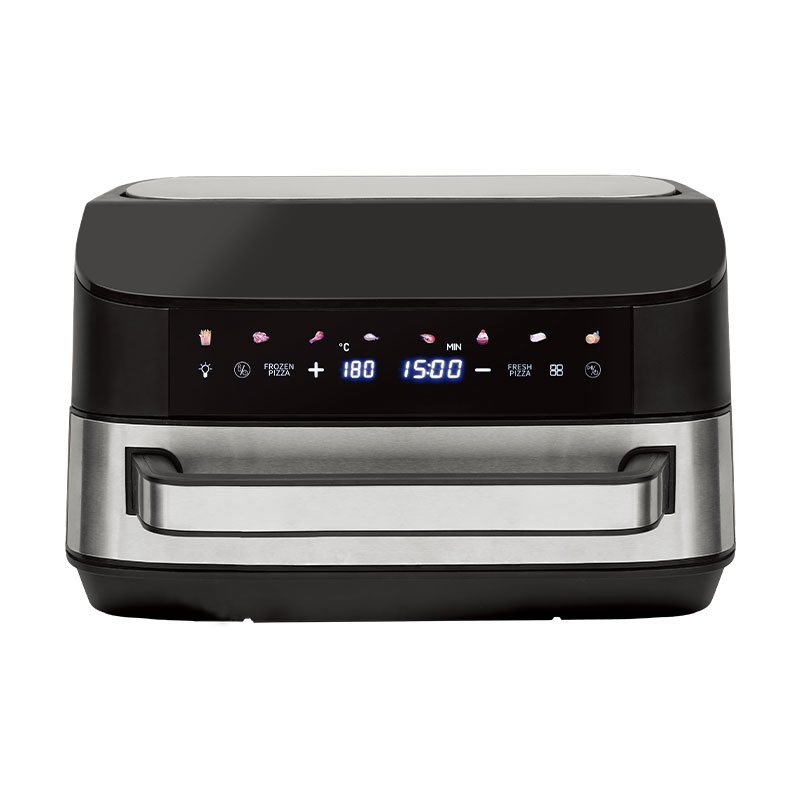
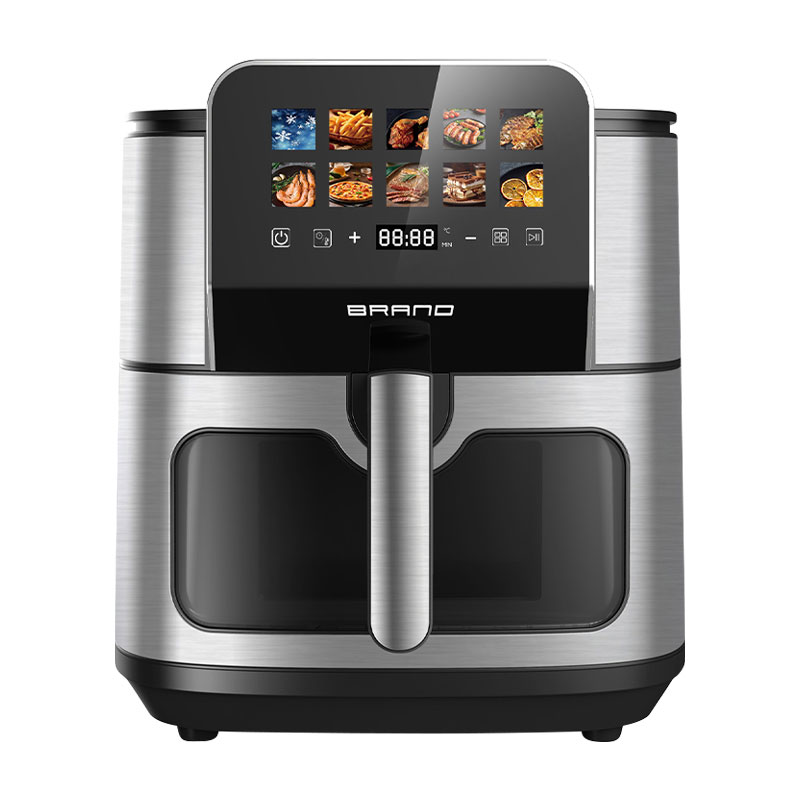
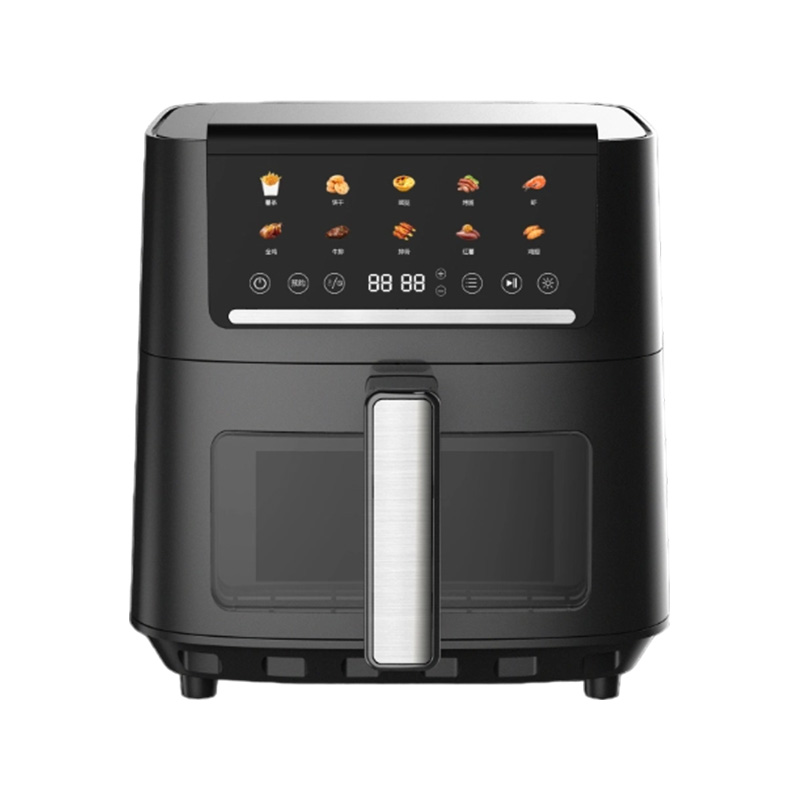
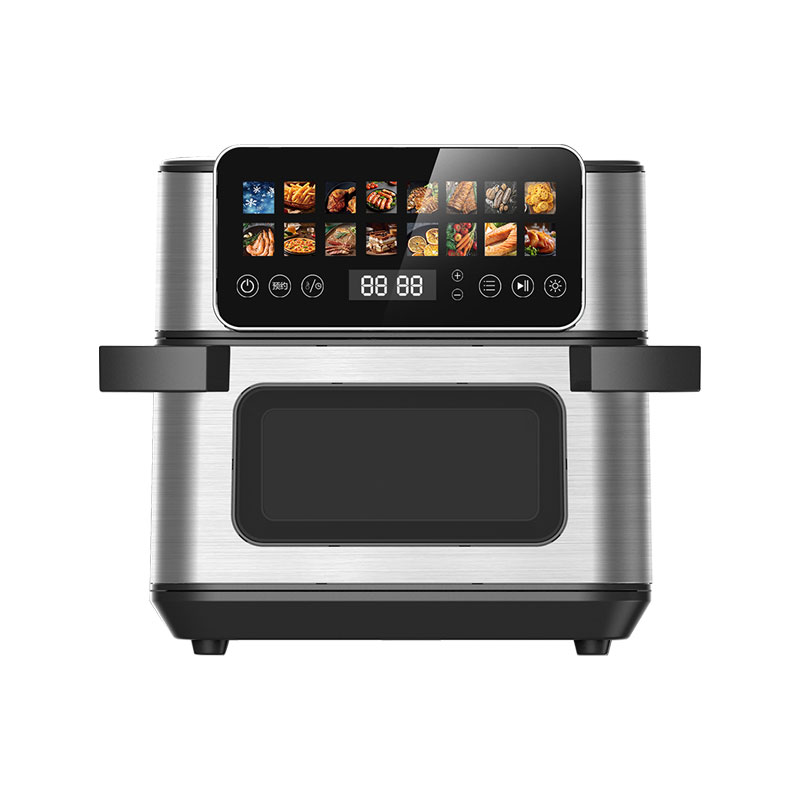
Larger households can find the same digital accuracy in a bigger format. A top-mounted LCD touch control keeps the display at eye level and removes the need to bend down when you set a large-capacity basket.
What a UK retailer or importer should verify
If you are buying for a shop shelf rather than your own kitchen, the same checklist applies in a stricter form. Customers will not take the appliance apart, but they will notice when the coating wears after six weeks or the panel freezes mid-dinner.
Retailers and importers should ask for the documents they would demand from any appliance source: a UKCA declaration of conformity, a test report for the exact model, and confirmation of a UK 13 A plug. Touch screen models add a control board and firmware, so ask how the manufacturer handles firmware updates and display spares. These questions separate a factory that ships boxes from a partner that supports a product after the container leaves port.
Danger. Selling air fryers without valid UKCA or CE paperwork is a safety problem and a commercial one. Stock can be stopped at customs, rejected by retailers and flagged by marketplace checks. Verify the documents before you order.
A manufacturer with its own engineering and QC teams can usually answer these questions faster. GSTAR, a Chinese factory that has designed and assembled kitchen appliances since 2009, keeps a dedicated quality team involved from production to pre-shipment inspection. For a touch screen model, that continuity matters, because the electrical design, the coating and the firmware all need to work together.
The final choice
The rule for buying a touch screen air fryer in the UK is simple: buy the temperature control, not the screen. Let the panel prove itself through the precision it delivers, the presets it actually uses and the cleaning routine it survives.
Decide capacity first, then wattage, then controls. If two models look equally capable, choose the clearer display and the more honest specification sheet. The best touch screen air fryer is the one that disappears into your routine.
- Most UK menus sit between 80°C and 200°C; a wider span is useful for dehydration and reheating.
- Dishwasher-safe parts and a durable non-stick coating matter more than the number of presets.
- Give the fryer space, a switched socket, and a quick wash while the basket is still warm.