
 English
 中文简体
中文简体 Español
 English
 中文简体
中文简体 Español
Buying Guide · Kitchen Appliances
Touch Screen Air Fryer in Thailand: A Practical Buying Guide for Home Cooks
A no-nonsense look at how touch screen models behave in real Thai kitchens, what their controls actually change, and which specifications deserve your attention before you pay.
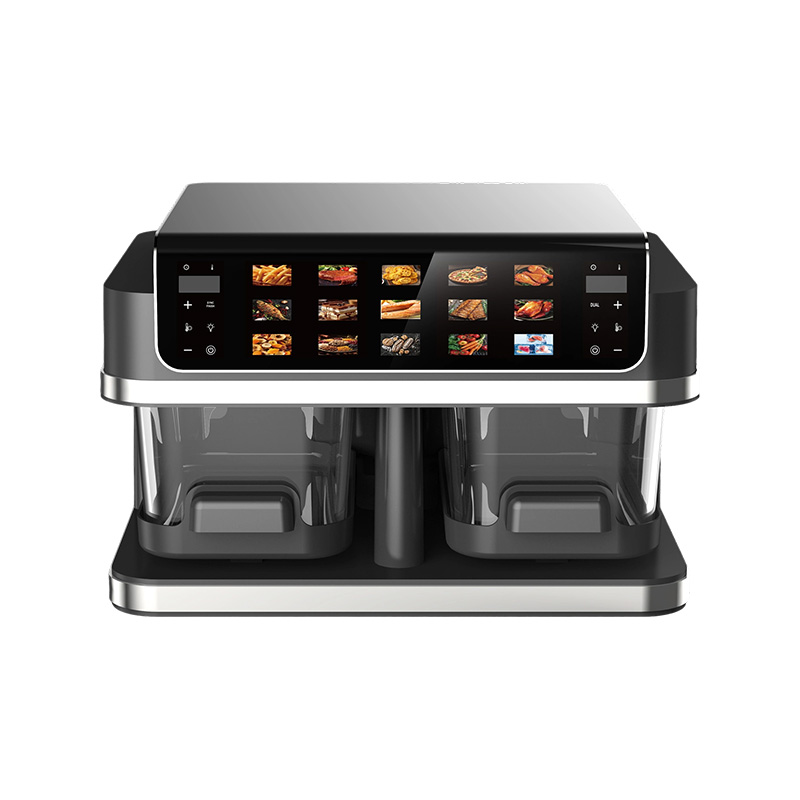
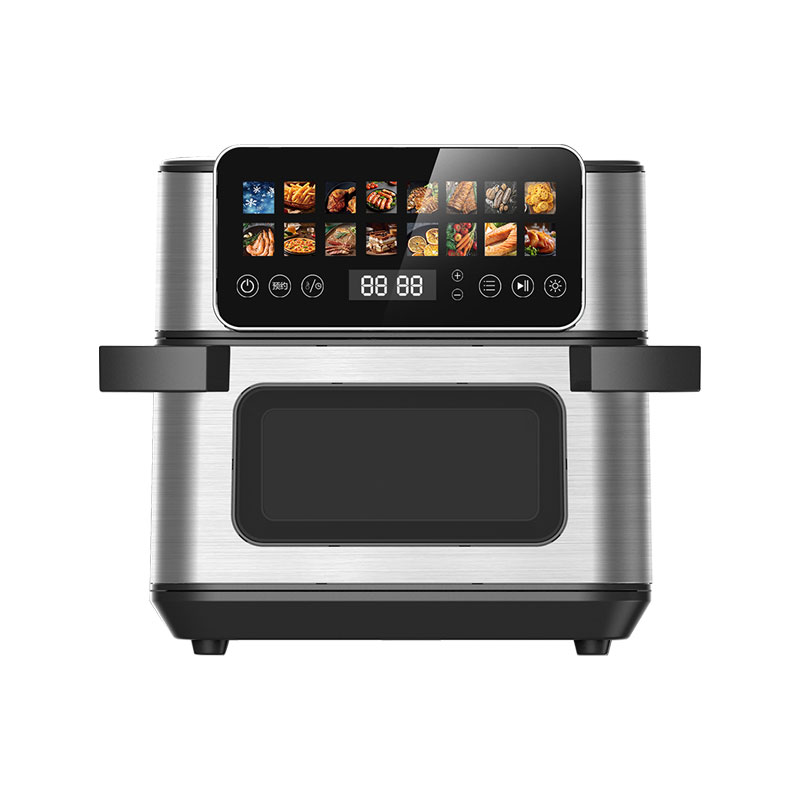
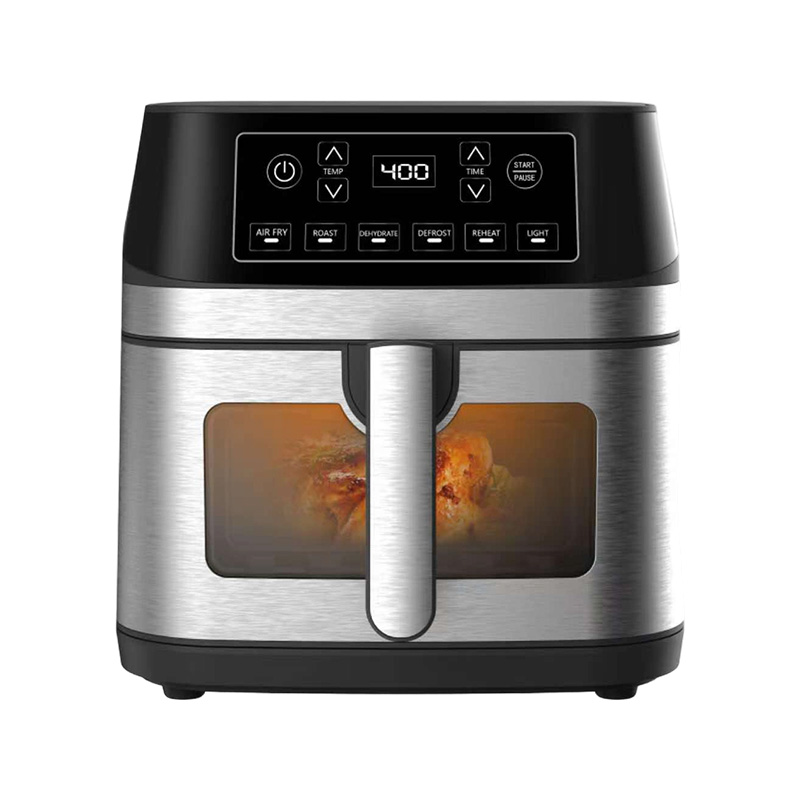
Air fryers have become a fixture in Thai kitchens, from compact condo counters in Bangkok to larger family kitchens upcountry. Touch screen versions are the ones sales staff reach for first: glossy glass panels, digital displays, one-touch presets. The real question is whether a touch screen air fryer in Thailand serves you better than a simpler machine. The short answer is yes, when the electronics, capacity, and control panel are chosen carefully.
This guide covers the practical points ordinary reviews miss: how touch panels behave in humid conditions, how capacity fits the way a Thai household eats, and which certifications make an imported model worth trusting.
What a Touch Screen Actually Changes in the Kitchen
The move from mechanical dials to a touch panel is not cosmetic. A touch screen connects directly to a digital thermostat that holds the temperature inside the basket far more consistently than the bimetallic strip in a dial model. When you select 180°C for fish cakes or spring rolls, the heat stays within a few degrees of the set value instead of drifting.
The second change is cleaning. A flat touch panel has no rotating knobs or raised seams where oily vapour settles and hardens. A quick wipe with a damp cloth after each use keeps the control area presentable. In a Thai kitchen, where fans and open windows spread more airborne grease than a sealed Western kitchen, that flat surface saves noticeable effort every week.
Touch controls also bring practical functions dials cannot offer:
- One-touch presets cover the most repeated jobs: french fries, chicken, fish, frozen snacks, and reheating leftovers.
- An exact digital readout shows the remaining minutes, so no one has to guess when dinner is ready.
- A child-lock function is common on better touch models, a genuine benefit in households with curious small hands.
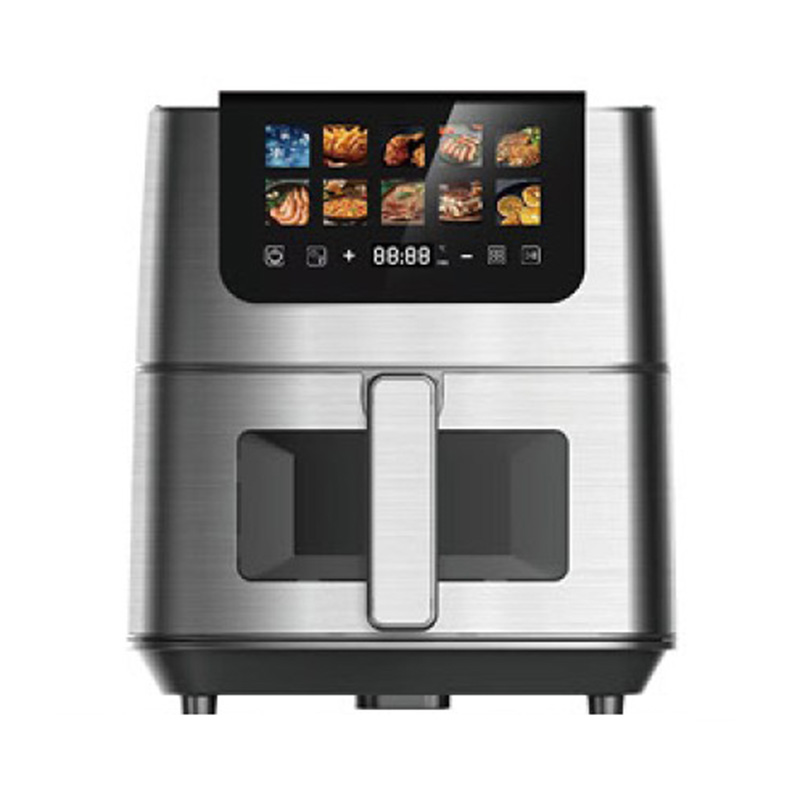
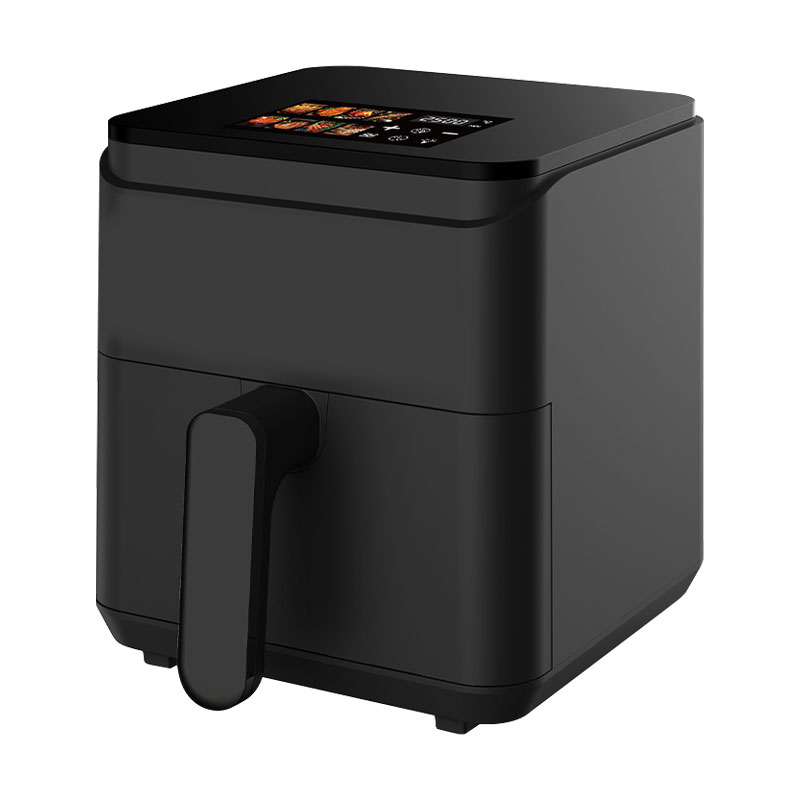
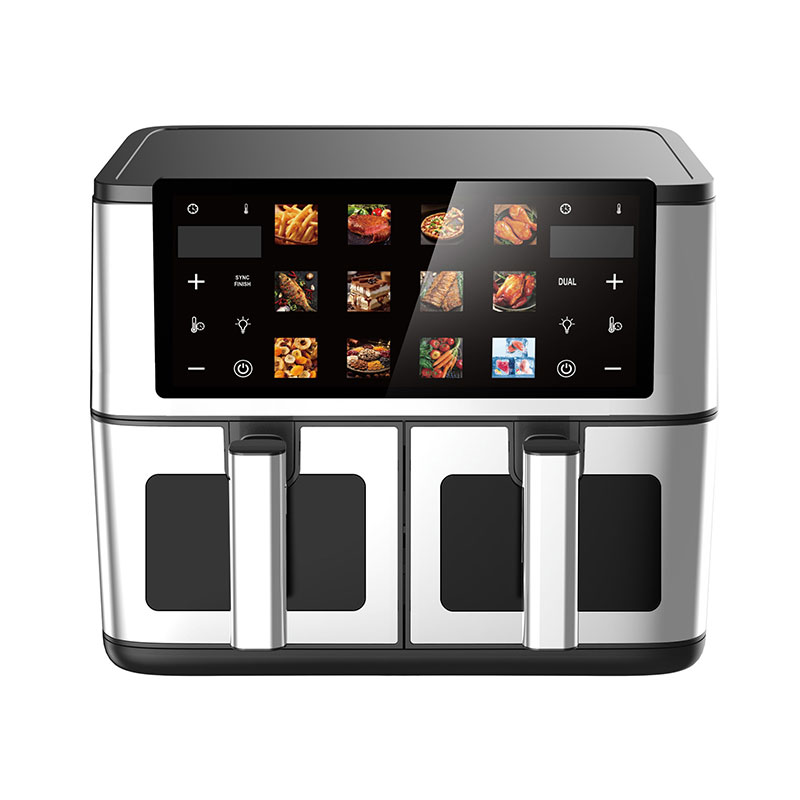
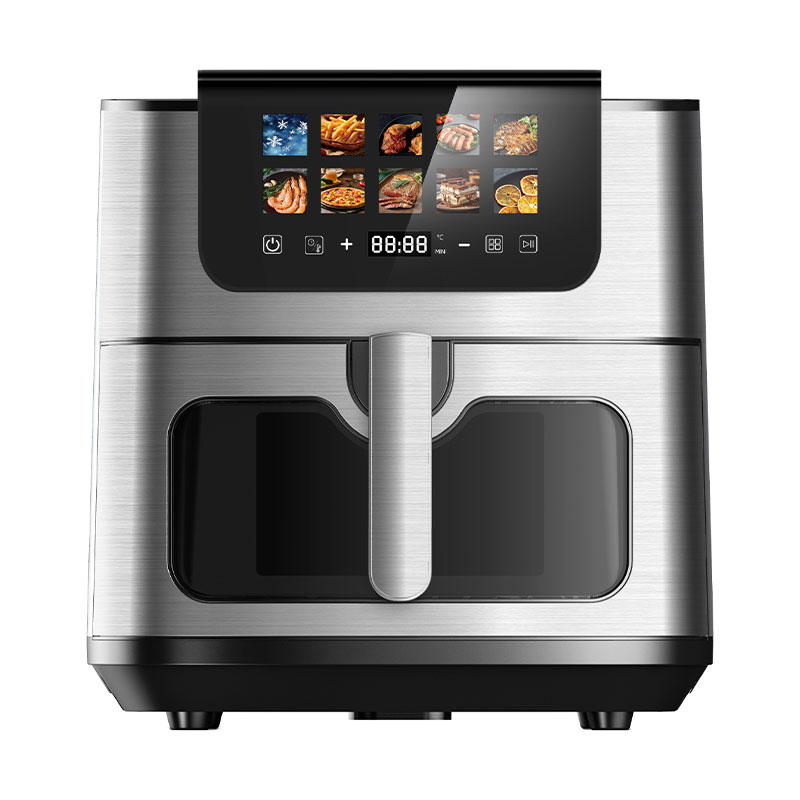
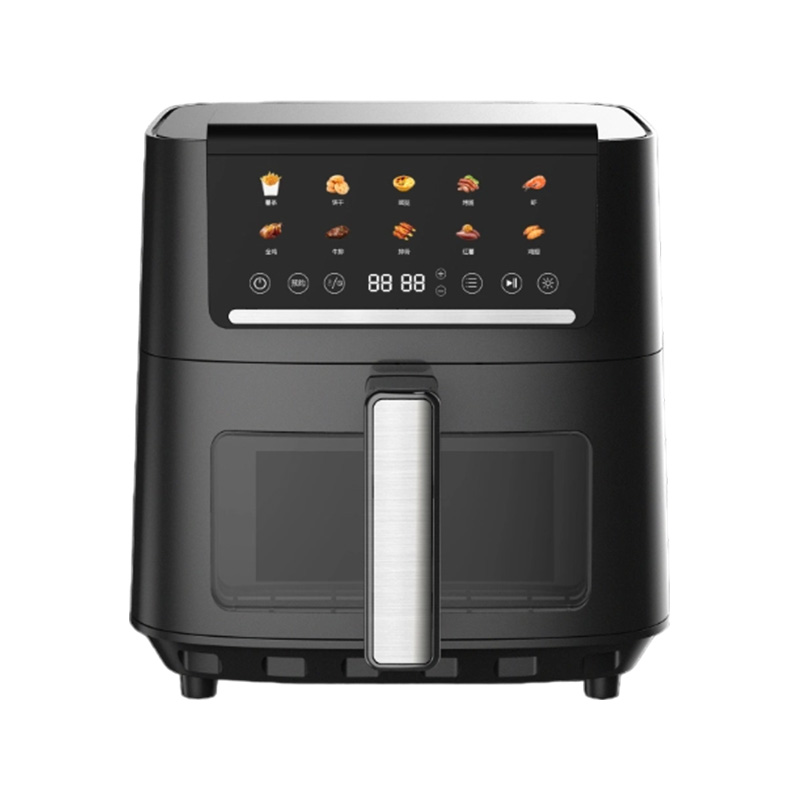
If you want to see how far this control style has come, a smart touch screen air fryer is the clearest example. Just make sure the display stays readable in daylight, since many compact Thai kitchens rely on natural light.
Underneath every glossy touch panel sits a thermostat, a heating element, and a fan. The touch screen makes the machine pleasant to use; the other three components make it worth owning.
Heat, Humidity, and Electronics: What Thailand’s Climate Demands
Thailand’s climate is harder on electronics than the temperate conditions product designers typically assume. For much of the year, daytime temperatures stay above 30°C, and cooking steam pushes indoor humidity higher. A touch screen air fryer placed near the stove will absorb moisture into its control panel over months of use. That does not rule touch screens out; it makes panel sealing and electronic quality more important than the number of presets.
Confirm the touch layer fits flush into the housing. A poorly fitted panel collects condensation, and once moisture reaches the contacts, buttons drift or stop responding. Position the fryer away from the stove’s direct steam path, and leave a hand’s width of clearance around the vents.
Voltage Note Thailand’s mains supply is 220–240V at 50Hz, the same standard used in China, where most air fryers are made. A correctly labelled 220–240V model runs without a transformer. Avoid 110V-only units and verify the rating plate before plugging in.
Power draw matters too. Most touch screen models draw 1,400 to 1,800 watts. A 25-minute meal at 1,500W consumes about 0.6 kWh, roughly one-fifth to one-third of what a conventional oven uses, which in Thai electricity pricing means just a few baht per meal.
Cool-touch housing also becomes essential in this climate. When the countertop is crowded and the machine is running at 200°C, the exterior surfaces of a well-designed fryer stay cool enough to touch safely. It is a small specification with a large consequence in a household with children.
Capacity: Match the Basket to the Way Your Household Eats
Capacity is where most buyers go wrong. A volume such as 5.8 litres sounds abstract until you try to arrange a whole fish, a family portion of wings, or fries for four plates. In a Thai household, the air fryer normally works beside the rice cooker: the fryer handles the grilled or fried dish while the rice steams.
| Basket volume | What fits realistically | Best suited to |
|---|---|---|
| 2.5–3.5 L | A small fish, 4–6 wings, one layer of fries | Singles and couples in compact condo kitchens |
| 4–6 L | 8–10 wings, a small whole chicken, family side dishes | Households of 2–4 people, most Thai families |
| 6–8 L | A whole chicken, large batches, double-layer racks | Bigger families, weekend cooks, occasional gatherings |
For most Thai families of three to five, a 5–6 litre basket is the sweet spot. It holds a whole chicken or a generous tray of fish cakes without overcrowding, and overcrowding is the main reason food comes out uneven.
Rule of Thumb If you cook for three to five people several times a week, choose a 5–6L touch screen model. It covers everyday meals and still has room for a weekend whole chicken.
When you evaluate a model, look at the usable basket area, not just the litre figure. Wide, shallow baskets suit fillets and snacks; deeper baskets handle whole birds. Decide based on what you cook most, then confirm the shape matches that habit.
Touch Screen or Mechanical Dial: Which Holds Up Better?
Mechanical dial models remain on sale for good reasons: they cost less, contain fewer vulnerable electronics, and survive rough handling. But their temperature control is looser, and the knobs collect grease in their seams. For most households, the touch screen wins on precision and cleaning.
| Consideration | Touch screen | Mechanical dial |
|---|---|---|
| Temperature accuracy | Tight and digital | Moderate, drifts over time |
| Cleaning | Flat panel, quick wipe | Seams trap oil vapour |
| Durability | Depends on build quality | Simpler, fewer parts to fail |
| Typical price | Higher | Lower |
| Best suited to | Families and frequent cooks | Budget-first buyers |
If you choose a touch model, pay attention to the panel itself. Several ultra-low-cost air fryers sold through online marketplaces use thin glass with poor sensor registration; the buttons ignore light taps and demand an unnatural press. Inconsistent input leads to missed settings and uneven cooking.
Warning If the buttons on a new touch air fryer feel unresponsive on the first day, return it immediately. Screen problems do not improve with use; they get worse.
On better units, the panel registers a light tap every time and the display shows the selected setting clearly. Test this early, whether you shop in a physical store or check the unit immediately after delivery.
Cleaning, Coatings, and Everyday Maintenance
The touch panel is the easiest part to keep clean. The parts that touch food decide long-term satisfaction, because they take heat, oil, and physical wear every day.
Before buying, check the basket coating. A ceramic-coated interior resists scratches and releases food easily, which counts with constant bone-in cooking; a conventional non-stick coating performs well for typical use as long as you avoid metal utensils and never heat the basket while empty. Both should carry a clear food-contact declaration.
A simple rhythm keeps the machine at its best:
- Wait for the unit to cool fully before removing the basket.
- Wash the basket and tray in warm soapy water; use the dishwasher only when the manual says it is safe.
- Wipe the interior with a soft sponge and never use steel wool on the coating.
- Clean the touch panel with a damp microfibre cloth, then dry it immediately.
- After a strong-smelling cook, run the empty unit at 180°C for five minutes with a small heatproof bowl of water and lemon slices inside.
Models that state dishwasher-safe parts on the packaging save real time. A removable base or washable crumb tray also helps; both details are easy to verify from the product page.
Certifications, Warranty, and the Real Cost of a Bargain
Certification separates a machine that passed genuine safety testing from one that merely looks right in product photos. In Thailand, imported appliances circulate across a wide quality range, and the label on a listing page does not always match what is inside the box.
Look for an ETL-listed safety air fryer or an equivalent mark from a recognised laboratory, a visible rating plate on the product body, and documented food-contact materials such as BPA-free plastics. These look like paperwork issues until you remember that the device will run at 200°C on a countertop in 90% humidity.
Danger Counterfeit or self-printed certification labels appear on some unbranded fryers sold through online marketplaces. If the seller cannot show an actual certificate or a clear label photograph, treat the product as unverified. A failed heating element or an overheated housing is not a saving; it is a hazard.
Buy from a channel that provides a warranty you can actually redeem. Local distributors and importers usually offer a one-year guarantee and a spare-parts contact. An unnamed online seller can disappear within weeks, and a three-hundred-baht discount is quickly swallowed by the first repair.
Much of the world’s air fryer supply, including the touch screen models visible on Thai shelves, comes from a small circle of manufacturers in Ningbo, China. Companies such as Cixi GSTAR Electric Appliance have supplied air fryers to supermarket chains in North America and Europe for more than a decade. The brand may be local; the engineering often shares the same source.
The Bottom Line
A touch screen air fryer in Thailand is a sound investment when the capacity matches the size of the household, the certification marks are visibly present on the unit, and the control panel responds accurately from the first switch-on. In return, you get cooking faster than an oven, cleaner results than a frying pan, and temperature precision that a mechanical dial cannot deliver.
Before you pay, check the voltage label, confirm the basket size against your cooking patterns, ask for certification documents, and test the panel thoroughly. Then use the machine often, wipe the screen after every cook, and let precise heating handle the meal while you enjoy the table.