
 English
 中文简体
中文简体 Español
 English
 中文简体
中文简体 Español
Food presentation and safe transportation are important parts of home baking, catering, retail bakery operations, and hospitality service. A beautifully decorated cake can lose its visual appeal quickly if it is exposed to dust, moisture, accidental contact, or unstable handling. At the same time, many conventional cake boxes are designed for only one use. They may protect a cake during transport, but they do not always provide convenient storage, serving, or organization after the cake reaches its destination.
The Multifunction Cake Carrier, item GS032, is designed to answer these everyday challenges with one practical tableware product. Made from polypropylene, commonly known as PP, the carrier combines protective food storage with easier transportation and more organized serving. Its reusable structure makes it suitable for households, bakeries, restaurants, cafés, hotels, supermarkets, and catering businesses that need a dependable solution for cakes and other prepared foods.
Unlike disposable cardboard packaging, this carrier is intended to support repeated use. Unlike many single-purpose cake domes, it is developed around multifunctional handling. Its design can help users move cakes from the kitchen to the dining table, store leftovers, protect baked goods between serving occasions, and improve the overall presentation of desserts.
GS032 is supplied by CIXI GSTAR ELECTRIC APPLIANCE CO., LTD., a Chinese manufacturer with experience in innovative household products, kitchen appliances, food preparation tools, and hospitality-related items. Although the company is widely associated with small electric kitchen appliances, its product portfolio also includes non-electric household and food-service solutions. This combination of product development, engineering experience, tooling capability, production management, and quality control provides a strong foundation for manufacturing practical tableware such as the Multifunction Cake Carrier.
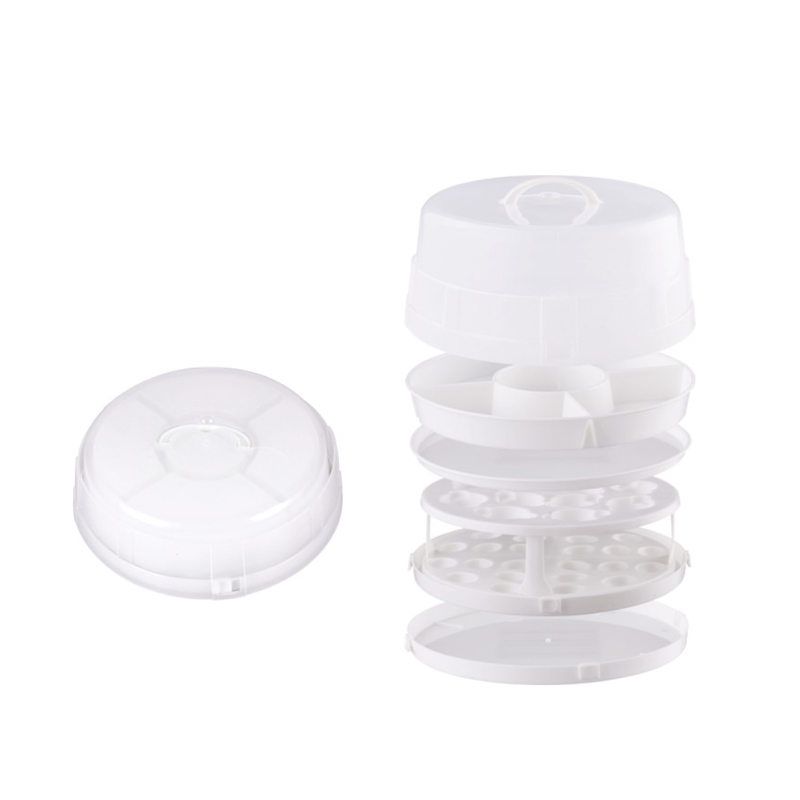
Multifunction Cake Carrier
1. Product Overview
The Multifunction Cake Carrier is a reusable PP food-storage and transport product identified by item number GS032. It belongs to the tableware and daily necessities category and is intended to provide a cleaner, safer, and more convenient way to handle cakes and similar foods.
| Product Detail | Specification |
| Product Name | Multifunction Cake Carrier |
| Item Number | GS032 |
| Category | Tableware |
| Material | PP, polypropylene |
| Carton Quantity | 6 sets per carton |
| Carton Measurement | 39 x 39 x 67.5 cm |
| Net Weight | 11 kg per carton |
| Gross Weight | 12 kg per carton |
| Loading Quantity for 20-Foot Container | 1,680 pieces |
| Loading Quantity for 40-Foot High-Cube Container | 4,000 pieces |
| Minimum Order Quantity | 2,000 pieces |
| Standard Delivery Time | Approximately 30 days |
These specifications make GS032 suitable for wholesale distribution and commercial purchasing. The packing arrangement of six sets per carton helps buyers plan warehouse space, shipping requirements, and retail replenishment. The listed container quantities also provide a useful starting point for importers and distributors preparing purchasing schedules.
The product’s PP construction is particularly suitable for a reusable food carrier. Polypropylene is widely used in household food containers because it offers a practical balance of low weight, toughness, moisture resistance, and processability. The material can be formed into structured components with smooth surfaces and consistent dimensions. This supports both functional performance and a clean appearance on store shelves or dining tables.
2. Why Cake Transportation Requires Better Protection
Cakes are delicate foods. Their outer decoration may include cream, icing, fruit, chocolate, sugar decorations, or other elements that can be damaged by pressure and movement. Even a short journey from a bakery counter to a customer’s home can create problems if the product is carried in an unstable or poorly fitted container.
Open trays provide limited protection from airborne particles and accidental contact. Paper boxes can be economical, but they may soften when exposed to condensation, cream, or liquid ingredients. Plastic wrap may prevent some contamination, but it can touch the surface of the cake and damage decorations. Oversized containers allow a cake to slide, while undersized containers can press against the sides or top.
A dedicated cake carrier addresses these problems by creating a defined protective space around the baked product. A reusable carrier can also reduce the repeated purchase of disposable boxes. For families that bake regularly, this may make cake storage more organized and less wasteful. For commercial users, it can support a more consistent presentation and reduce the number of packaging formats needed for everyday orders.
The carrier also helps separate food from the surrounding environment. When placed on a kitchen counter, dining table, refrigerator shelf, or service area, a covered container can reduce exposure to dust, splashes, and incidental contact. It is not a substitute for proper food hygiene, temperature control, or safe handling procedures, but it is a useful part of a responsible storage routine.
3. Multifunctional Design for More Than One Occasion
The main advantage of GS032 is its multifunctional role. A cake carrier should not become useful only during the few minutes required to transport a cake. A more versatile design can provide value before, during, and after serving.
3.1 Transport from Kitchen to Destination
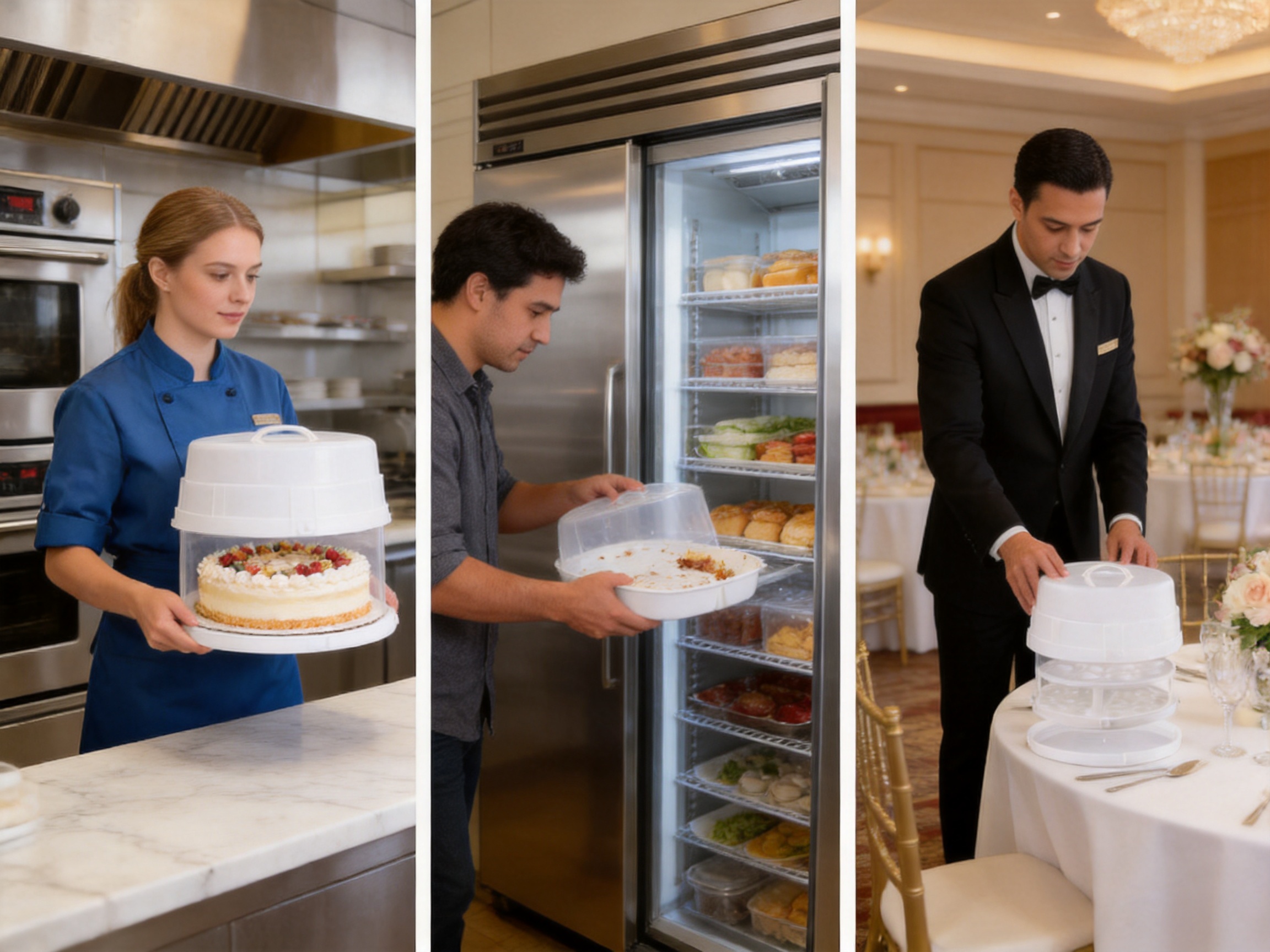
The first function is straightforward transportation. Users can place a prepared cake inside the carrier, close the protective structure, and move it to another location with less concern about environmental exposure. This is relevant for birthday parties, family gatherings, office celebrations, school events, picnics, holiday meals, and professional deliveries.
For bakeries and cafés, a reusable carrier can support local delivery or customer collection. It can be used when a cake must travel from the production area to a display counter, banquet room, hotel dining area, or event venue. The carrier’s structured form helps provide a more controlled environment than an uncovered plate.
3.2 Storage Between Meals
After serving, many cakes still remain. Leaving them uncovered can lead to drying, odor absorption, surface contamination, or accidental damage. A cake carrier can offer a designated place for leftovers, helping keep the cake in better condition until the next serving occasion.
In a household, this makes refrigerator organization easier. In a commercial kitchen, it can help staff identify and separate prepared desserts from other foods. Users should always confirm that the carrier’s dimensions and intended temperature conditions are suitable for their storage practices, particularly when refrigeration is involved.
3.3 Table Presentation
A cake carrier can also become part of the serving experience. Instead of transferring a cake repeatedly between plates and temporary containers, users can bring the protected cake to the table and open it when ready. This can reduce handling and support a cleaner presentation.
For hospitality businesses, presentation is directly connected with customer perception. A tidy, purpose-designed cake carrier can contribute to an organized service environment. It can be used for desserts, celebration cakes, pastries, and other suitable foods, depending on the specific internal space and operating instructions.
3.4 Household Organization
Multifunctional products are valuable when they solve more than one storage problem without occupying excessive space. A reusable food carrier may be used for cakes on one day and other appropriately sized baked products on another. This flexibility can be useful in homes where kitchen storage is limited and every product is expected to perform more than one task.
4. Material Advantages of Polypropylene
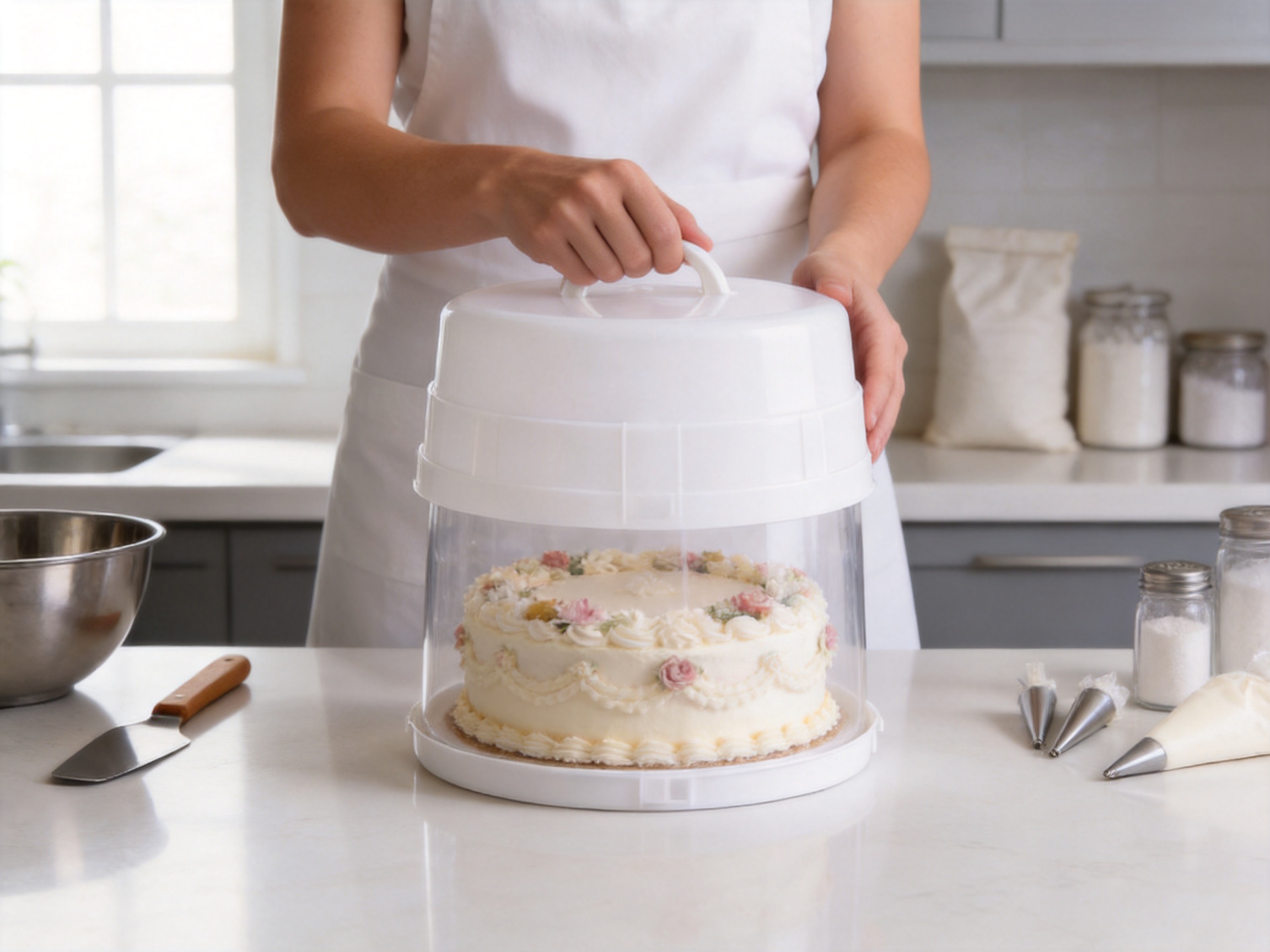
GS032 is manufactured from PP, a material widely recognized for use in food-related household products. The choice of material influences durability, weight, appearance, cleaning convenience, and production consistency.
4.1 Lightweight Handling
Compared with glass, ceramic, and many metal alternatives, polypropylene is relatively lightweight. This makes a cake carrier easier to lift and transport, particularly when the product contains a large or decorated cake. Lower product weight can also support more efficient handling in warehouses, retail stores, and commercial kitchens.
For families, a lightweight carrier is easier for different users to handle. For professional operations, lighter packaging can reduce strain during repeated movement between preparation, storage, service, and delivery areas.
4.2 Practical Toughness
PP offers useful resistance to ordinary impacts and handling stresses when it is properly designed and processed. A carrier made from a suitable PP formulation can be more practical for repeated daily use than a fragile container. Its toughness is important when the product is placed on counters, moved between rooms, loaded into vehicles, or stored with other kitchen items.
As with any household product, performance depends on correct use. Excessive force, sharp impacts, unsuitable temperatures, or overloading may damage the carrier. However, the material is generally well suited to reusable food-storage applications where a balance of strength and low weight is required.
4.3 Moisture Resistance
Cakes, creams, fruits, and other desserts can contain moisture. Polypropylene is not easily affected by ordinary contact with water and many common food residues. This makes it more appropriate for reusable food handling than absorbent materials such as untreated paper or cardboard.
Moisture resistance can also support easier cleaning. Users should follow the manufacturer’s care instructions and use cleaning products appropriate for food-contact items. Thorough drying is recommended before storage to help maintain cleanliness and reduce unwanted odors.
4.4 Smooth, Clean Appearance
Plastic processing allows manufacturers to create smooth surfaces and consistent shapes. A well-finished PP carrier can look clean and modern while remaining practical for everyday use. Consistent molding also supports the fit of connected components, lids, bases, handles, and other structural features where applicable to the final design.
4.5 Efficient Manufacturing
Polypropylene is suitable for high-volume molding processes. This allows manufacturers to produce repeated units with stable dimensions, controlled weight, and consistent surface quality. For wholesale buyers, process efficiency is important because large orders require uniform products across many cartons and production batches.
5. Advantages over Disposable Cake Packaging
Disposable packaging remains common because it is inexpensive and convenient for one-time use. However, a reusable carrier can offer advantages that become more important as users consider product life, presentation, and operating cost.
First, a reusable carrier can be used repeatedly. A bakery, caterer, or household does not need to purchase a new box for every cake if the carrier is returned, cleaned, and maintained properly. The long-term value depends on usage frequency and care, but regular users may find that durability offsets the initial purchase price.
Second, a rigid or semi-rigid carrier can provide more consistent protection than thin disposable packaging. A cardboard box may bend, become damp, or collapse under pressure. A PP carrier retains its basic form more effectively during ordinary handling, helping protect the food inside.
Third, reusable packaging can support a more professional customer experience. Customers receiving a cake in a dedicated carrier may perceive greater attention to product care. The carrier can also be used for repeat orders, event deliveries, or subscription-style bakery services.
Fourth, the carrier can help reduce packaging waste. It does not eliminate the need for responsible cleaning, replacement, or end-of-life management, but repeated use can reduce dependence on single-use boxes and plastic wrapping. Businesses seeking to improve packaging efficiency may consider reusable carriers as part of a wider sustainability program.
Finally, a dedicated cake carrier can provide more than packaging. It can become a storage and serving accessory, whereas many disposable boxes have little practical value after delivery.
6. Advantages over Conventional Cake Plates and Domes
Traditional cake plates and domes can be useful, but they often emphasize display rather than full-function transport. A cake plate may leave the sides of the cake exposed, while a decorative dome may be too delicate or inconvenient for frequent movement.
The Multifunction Cake Carrier is positioned as a more practical alternative for users who need protection, mobility, and storage in one product. A plate can hold a cake, but it may not prevent contact with dust or nearby objects. A carrier creates a more complete enclosure and can be moved as a single unit.
Another advantage is reduced handling. Moving a cake from a plate to a box, from a box to a refrigerator, and then back to a serving plate increases the risk of touching or damaging the decoration. A multifunctional carrier can simplify these transitions and keep the cake in one controlled container for longer periods.
For professional environments, this can improve workflow. Staff can prepare a cake, place it in the carrier, label or organize it as required, and move it through the facility with fewer packaging changes. This may be especially useful during busy seasons, when large numbers of celebration cakes and desserts are prepared at the same time.
7. Suitable Applications
7.1 Household Kitchens
Home bakers can use GS032 for birthday cakes, anniversary cakes, holiday desserts, cupcakes, pastries, and other suitable baked goods. The carrier can be particularly helpful for families that prepare food in advance or transport desserts to relatives, friends, schools, and workplaces.
7.2 Bakeries and Cake Shops
Retail bakeries need packaging that protects products while reinforcing a professional image. A reusable cake carrier can be used for customer pickup, local delivery, product display, and temporary storage. It may also become part of a deposit or return program, depending on the business model.
7.3 Cafés and Restaurants
Cafés and restaurants often prepare desserts in advance and move them between kitchens, counters, storage areas, and dining spaces. A covered carrier can help staff protect prepared food during these movements. It can also be useful for cakes ordered for private events or group dining.
7.4 Hotels and Catering Companies
Hotels and catering businesses manage food across multiple service points. Cakes may need to move from a central kitchen to a banquet room, conference hall, wedding venue, or guest event. Reusable food carriers can support a more organized logistics process and reduce reliance on temporary packaging.
7.5 Supermarkets and Retail Distribution
Supermarkets may offer prepared cakes, seasonal desserts, and private-label bakery products. A robust carrier can support product handling from production to display and customer collection. Wholesale buyers can also evaluate GS032 for promotional bundles, houseware departments, kitchen accessory programs, or seasonal baking campaigns.
7.6 Event and Celebration Services
Event planners and party suppliers may benefit from a product designed for repeated cake movement. Birthdays, weddings, graduations, corporate celebrations, and community events all require reliable dessert transportation. A reusable carrier can form part of an equipment inventory used across multiple events.
8. Manufacturing Strengths Behind the Product
The performance of a household product depends not only on its design but also on how consistently it is manufactured. CIXI GSTAR ELECTRIC APPLIANCE CO., LTD. has developed capabilities across product design, engineering, production, quality control, and international supply.
The company began its manufacturing development with innovative non-electric products and later expanded into small electric kitchen appliances. This background is relevant to GS032 because it demonstrates experience in creating practical consumer products for everyday use. Products such as food preparation tools, pitchers, ice-related items, slicers, graters, and other kitchen accessories require attention to ergonomics, material selection, assembly, packaging, and consumer safety.
8.1 Product Development Experience
Product development involves more than making a basic container. Designers must consider usability, appearance, storage, cleaning, handling, mold construction, packaging, and customer expectations. A manufacturer with experience in both electric and non-electric kitchen products can evaluate the carrier from several perspectives.
The company’s product development history includes innovative household products intended for international markets. Its engineering experience supports the development of items that are practical, distinctive, and suitable for large-scale manufacturing. This is an important advantage for buyers seeking products that can compete beyond the lowest-price segment.
8.2 Engineering and Research Resources
The company reports an R&D department with ten engineers. A dedicated engineering team can support product improvement, design refinement, mold coordination, sample evaluation, and technical communication with customers.
For buyers requiring customized colors, packaging, labeling, or product adjustments, access to engineering resources can make communication more efficient. Technical questions can be reviewed by personnel familiar with production realities, rather than handled only through sales channels.
8.3 Production Facilities
The company has operated from its own factory facilities and reports a production area of approximately 15,000 square meters, with earlier information describing a building area of approximately 18,000 square meters. It also reports more than 200 experienced workers in its expanded operation.
A dedicated facility can offer advantages in production scheduling, material management, assembly coordination, quality inspection, and order control. It can also provide better oversight than a fragmented supply arrangement in which design, production, inspection, and packing are handled by unrelated parties.
8.4 Quality Control Organization
The company reports a QC department with ten personnel. Quality control is especially important for reusable food-related products because buyers expect consistency in dimensions, surface finish, color, assembly, packaging, and overall usability.
Quality control may include incoming material checks, first-piece inspection, in-process inspection, assembly verification, appearance checks, packing inspection, and final sampling. The exact inspection plan may vary according to the customer’s requirements and the product configuration, but a dedicated QC structure provides a foundation for systematic control.
8.5 International Customer Experience
GSTAR has supplied products to international customers and reports business with well-known supermarket, club-store, department-store, home-goods, and retail groups. Experience with international buyers can help a manufacturer understand requirements related to packaging, documentation, labeling, delivery schedules, carton standards, and quality expectations.
For importers, this experience may reduce communication friction during order preparation. It also suggests that the manufacturer is familiar with the importance of repeatable production and shipment coordination in export business.
9. Manufacturing Process Considerations
Although exact production details can vary according to the customer’s order and final product configuration, a PP cake carrier typically requires a controlled sequence from product design through shipment.
9.1 Concept and Functional Design
The process begins with a clear understanding of how the product will be used. Designers consider the intended food type, approximate size, protection requirements, handling method, cleaning expectations, and storage environment. The goal is to avoid unnecessary complexity while providing useful functions.
At this stage, the manufacturer may review the product’s proportions, wall thickness, joining method, closure system, balance, and user touchpoints. A cake carrier must be large enough for the intended food but not so oversized that the contents move excessively or the product becomes difficult to store.
9.2 Engineering and Mold Preparation
After the design is established, engineering teams convert it into production-ready drawings and mold specifications. Molds must support efficient material flow, controlled cooling, clean part release, and repeatable dimensions. Proper mold design also affects the appearance of surfaces, the location of visible marks, and the stability of the finished component.
Engineering review can identify potential problems before mass production begins. These may include warping, uneven wall thickness, weak connection points, difficult ejection, or areas that are difficult to clean. Resolving such issues early helps control production costs and improves the reliability of the final product.
9.3 PP Material Preparation
Polypropylene resin is prepared according to the product specification. Colorants or approved additives may be incorporated where required. Material handling must be controlled to support consistent appearance and processing behavior.
For food-related products, buyers should confirm the applicable material and compliance requirements for their target market. The manufacturer and importer should agree on relevant documentation, testing, and declarations before final production.
9.4 Injection Molding
Many PP household products are produced through injection molding. In this process, the material is heated until it becomes flowable and is injected into a prepared mold under controlled pressure. The molded part is then cooled and released.
Important process variables may include material temperature, mold temperature, injection pressure, holding pressure, cooling time, and cycle time. Stable control of these variables helps maintain consistent dimensions and surface quality. Excessive variation can lead to defects such as sink marks, flash, short shots, deformation, or color inconsistency.
9.5 Trimming and Finishing
After molding, components may require gate trimming, edge inspection, cleaning, or other finishing operations. The aim is to remove unwanted material and ensure that contact surfaces are smooth and suitable for normal handling.
Finishing is particularly important for products used around food. Rough edges, loose particles, or poorly finished areas can affect user confidence and product performance. Visual inspection and controlled finishing help maintain a clean, uniform appearance.
9.6 Assembly and Functional Inspection
If the carrier includes multiple components, assembly personnel check that each part is properly fitted. Closures, handles, bases, supports, and other elements must operate as designed. A carrier should remain stable during ordinary handling and should not require excessive force for routine opening or closing.
Functional inspection may include checking fit, alignment, stability, component engagement, and general appearance. Sampling plans can be established for mass production, while first articles and pre-production samples may receive more detailed review.
9.7 Packing and Shipment Preparation
Once inspected, products are packed according to the approved carton arrangement. For GS032, the listed packing quantity is six sets per carton. Carton measurement, net weight, and gross weight are important for logistics planning and warehouse handling.
Export packing should protect the product from abrasion, compression, moisture, and movement during transportation. Clear carton identification can help buyers manage receiving, stock rotation, and distribution. The standard delivery time is listed as approximately 30 days, although actual timing should be confirmed according to order quantity, customization, production schedules, and shipping arrangements.
10. Quality and Compliance Priorities for Buyers
Wholesale buyers should evaluate the Multifunction Cake Carrier according to the requirements of their market and intended use. The following points are useful during product approval and purchasing.
Material confirmation should be completed before mass production. Buyers may request information about the PP grade, color masterbatch, additives, and intended food-contact application. Market-specific food-contact requirements can differ, so the importer remains responsible for confirming the regulations applicable to the destination.
Dimensional checks help ensure that the carrier fits the intended cake sizes and that components assemble correctly. Buyers may define acceptable tolerances for height, width, diameter, wall thickness, lid fit, and closure performance.
Appearance standards should address color consistency, surface marks, molding lines, flash, scratches, deformation, and contamination. These standards are particularly important if the carrier will be sold in retail stores or used as part of a premium bakery service.
Packaging inspection should confirm the number of units per carton, carton markings, inner protection, labeling, and barcode requirements where applicable. A clear approval sample can help reduce disagreements between buyer and manufacturer.
Performance evaluation can include ordinary handling tests, stability checks, opening and closing cycles, cleaning assessment, and transport simulation. The exact tests should reflect the buyer’s market, product positioning, and customer expectations.
11. Commercial Benefits for Wholesale Customers
GS032 has a minimum order quantity of 2,000 pieces, positioning it for distributors, retailers, importers, hospitality suppliers, and commercial users rather than very small one-time purchases. This order scale can support coordinated launches, regional distribution, promotional activity, and private-label programs.
The listed loading quantity of 1,680 pieces for a 20-foot container and 4,000 pieces for a 40-foot high-cube container provides preliminary planning information. Actual loading may vary depending on packaging, pallet use, container regulations, and the final product configuration. Nevertheless, these figures help buyers estimate purchasing volume and freight requirements.
The carton data also supports landed-cost analysis. Importers can combine product pricing with carton quantity, shipping volume, insurance, duties, warehouse expenses, and local distribution costs. A reusable carrier may have a higher unit cost than a disposable box, but its repeated-use potential can improve value over time.
Retailers can position the carrier as a household baking accessory, a seasonal gift item, a celebration product, or a practical kitchen-storage solution. Commercial suppliers can offer it to bakeries, restaurants, and hotels as part of a broader food-service equipment range.
Customization may also be considered. Depending on the order and manufacturing evaluation, buyers may discuss color, logo application, packaging design, instruction materials, and regional labeling. Any customization should be confirmed in writing, including artwork approval, additional costs, mold conditions, lead time, and minimum order requirements.
12. Comparison with Common Alternatives
| Option | Main Strength | Common Limitation | Potential Advantage of GS032 |
| Disposable cardboard box | Low initial cost and easy distribution | May soften, deform, or provide limited reuse | Reusable PP construction and stronger long-term utility |
| Open cake plate | Simple serving and display | Limited protection during transport and storage | More suitable for covered movement and storage |
| Glass cake dome | Premium appearance and display | Heavier and more vulnerable to breakage | Lightweight PP handling and practical durability |
| Plastic wrap | Low cost and flexible use | Can touch decoration and does not provide rigid protection | Dedicated protective structure for cakes and desserts |
| Single-purpose food container | Designed for one storage task | Limited flexibility after the original use | Multifunctional role for transport, storage, and serving |
This comparison does not mean that one product is suitable for every application. Disposable boxes may remain appropriate for certain delivery models, while glass domes may be preferred for premium display. The strength of GS032 is its balance of reusable construction, practical handling, protection, and multifunctional use.
13. Care and Responsible Use
To obtain the best service life, users should handle the carrier according to the supplied instructions. Before first use, the product should be cleaned using a suitable method for food-contact tableware. After use, food residues should be removed promptly, and the carrier should be dried thoroughly before storage.
Users should avoid placing foods inside the carrier if their size, temperature, weight, or consistency exceeds the product’s intended application. Hot foods should not be stored unless the product has been specifically approved for that use. The carrier should also be kept away from sharp objects and rough surfaces that may scratch or weaken components.
When transporting a cake, the carrier should be placed on a stable, level surface. Drivers and delivery staff should avoid sudden movement, excessive speed, and unsecured placement. A carrier can provide protection, but safe transportation also depends on vehicle conditions, cake preparation, and careful handling.
Cleaning procedures should be selected according to the manufacturer’s instructions. If a dishwasher is considered, buyers should confirm whether the specific product configuration and temperature conditions are suitable. Improper heat exposure may deform plastic components, even when the base material is generally durable.
At the end of its useful life, responsible disposal or recycling should be considered according to local waste-management systems. Reuse is normally the first way to extend value, followed by appropriate material recovery where available.
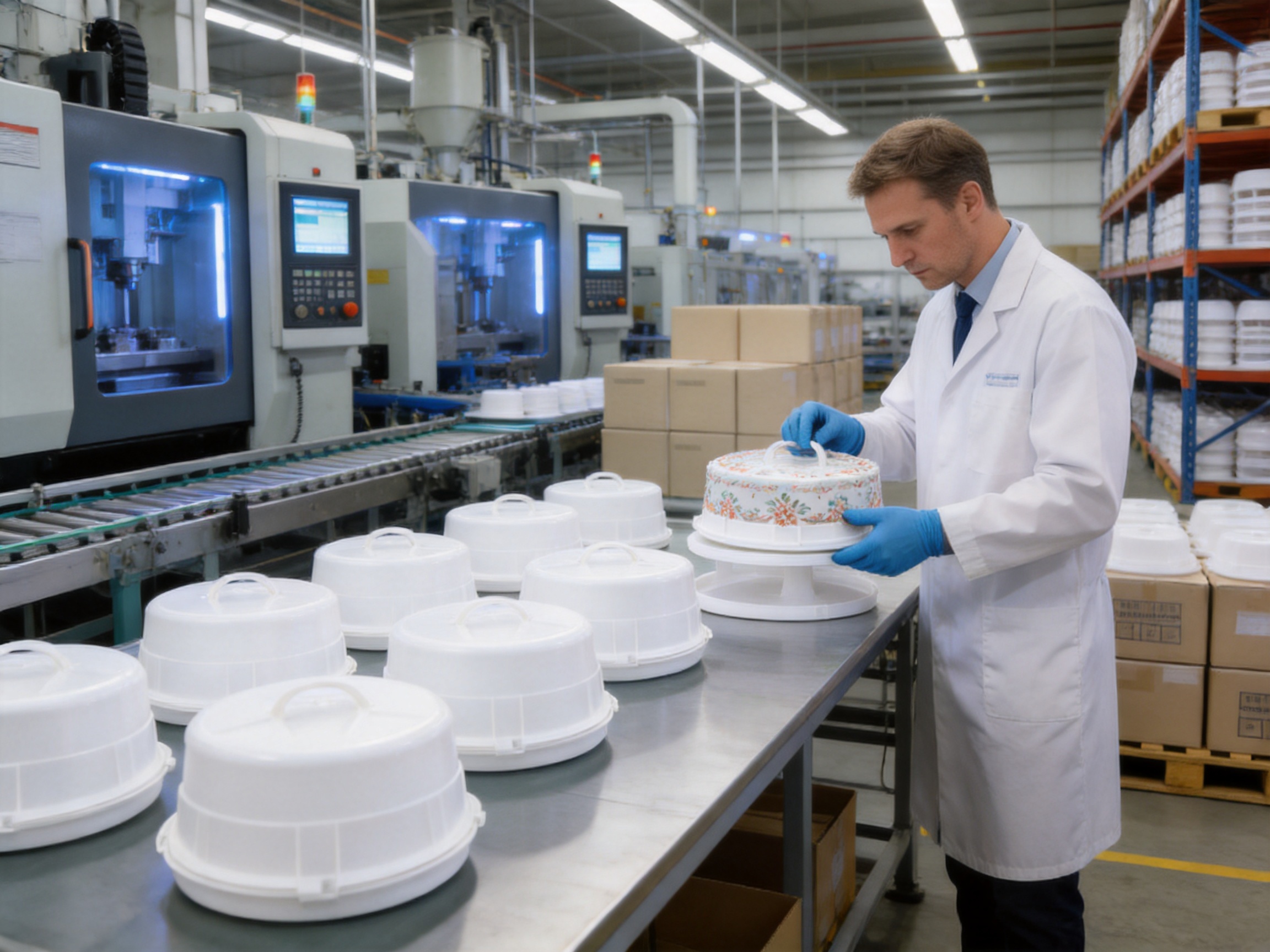
14. Why Choose an Experienced Product Manufacturer?
Choosing a supplier for household tableware involves more than comparing unit prices. Buyers need confidence in design stability, production capacity, quality systems, communication, packaging, and delivery performance. An experienced manufacturer can contribute to each of these areas.
CIXI GSTAR ELECTRIC APPLIANCE CO., LTD. has developed products for household kitchens, food preparation, bars, restaurants, hotels, and retail channels. This broad application experience helps the company understand the difference between a product intended for occasional home use and one intended for repeated commercial handling.
The company’s history also reflects a focus on innovation. It has developed non-electric products with practical functions and later expanded into electric appliances such as blenders, slicers, choppers, food processors, air fryers, air ovens, and hot pots. This range indicates familiarity with consumer preferences, product usability, component coordination, and the demands of international markets.
Its stated manufacturing strengths include product design, engineering support, production management, research and development, quality control, and after-sales service. The company also describes its operating principles as high-quality innovative products, competitive pricing, quick delivery, and responsive service.
For a buyer evaluating GS032, these strengths can translate into better support throughout the purchasing process. The supplier can assist with sample confirmation, specification review, packaging discussion, order scheduling, inspection coordination, and export preparation. Long-term customers may also benefit from product updates and cooperation on related kitchen or food-service items.
15. Positioning the Product in Different Markets
The Multifunction Cake Carrier can be positioned differently depending on the sales channel. In a household retail program, it may be promoted as a reusable baking accessory for birthdays, celebrations, and weekend desserts. Its multifunctional character can appeal to consumers who prefer products that occupy less space while performing several tasks.
In the bakery supply market, the product can be presented as a practical transport and storage solution. Bakeries may use it for local orders, customer collection, or repeat customers who return the carrier. A return-and-reuse program can help businesses communicate a more resource-conscious packaging approach.
In the hospitality market, the emphasis may be placed on workflow, cleanliness, presentation, and repeated service. Hotels, restaurants, and catering companies may require several units to support banquet operations and event schedules.
For distributors, GS032 can complement other kitchen and food-service products. It may be sold alongside cake decorating tools, baking molds, food processors, slicers, storage containers, serving trays, and small kitchen appliances. This creates opportunities for category expansion and bundled promotions.
Seasonal demand may also be relevant. Cake carriers can be promoted during wedding seasons, holidays, school graduation periods, family celebration periods, and baking-related retail campaigns. Buyers can plan inventory according to regional events and consumer purchasing cycles.
16. Ordering and Project Planning
Before placing a wholesale order, customers should define the intended market, sales channel, cake size requirements, color preference, packaging format, and expected annual volume. Clear specifications help the manufacturer provide a more accurate quotation and production plan.
Sample approval is an important step. Buyers should inspect the physical sample for appearance, dimensions, material feel, component fit, stability, ease of handling, and cleaning convenience. If the product will be sold in a regulated market, the buyer should also confirm the required compliance documents and testing procedures.
Packaging artwork and labels should be reviewed carefully. Important information may include product name, item number, material, usage guidance, cleaning instructions, warnings, importer details, barcode, carton quantity, and country-of-origin information, depending on destination-market requirements.
Production timing should be discussed before order confirmation. The listed delivery time is approximately 30 days, but lead time may change according to order size, customization, raw-material planning, production capacity, inspection requirements, and shipping arrangements.
Buyers should also agree on inspection standards. A written quality specification can cover acceptable appearance variation, carton quantity, dimensional tolerance, functional requirements, packaging condition, and defect classification. This creates a shared reference for both parties.
17. Frequently Asked Questions
Q1: What is the Multifunction Cake Carrier made from?
The product is made from PP, or polypropylene. This material is commonly used for reusable household food containers because it is lightweight, moisture-resistant, processable, and suitable for practical daily handling when manufactured and used according to the applicable requirements.
Q2: Is GS032 intended only for cakes?
The product is named a Multifunction Cake Carrier, but its broader value comes from its ability to support suitable baked goods and desserts. Users should confirm the internal dimensions, food compatibility, and operating instructions before using it for products other than cakes.
Q3: Can the carrier be used for commercial purposes?
Yes. Its wholesale specifications and reusable design make it suitable for bakeries, cafés, restaurants, hotels, catering companies, retailers, and distributors. Commercial users should establish their own cleaning, handling, labeling, and food-safety procedures.
Q4: How many sets are packed in one carton?
The listed packing quantity is six sets per carton. The carton measurement is 39 x 39 x 67.5 centimeters, with a net weight of 11 kilograms and a gross weight of 12 kilograms.
Q5: What is the minimum order quantity?
The listed minimum order quantity is 2,000 pieces. Buyers should confirm whether customized colors, packaging, printing, or other requirements affect the final minimum quantity.
Q6: How many pieces can be loaded into containers?
The listed loading information is 1,680 pieces for a 20-foot container and 4,000 pieces for a 40-foot high-cube container. Actual loading should be reconfirmed according to the final packaging, pallet configuration, and shipping plan.
Q7: What is the standard delivery time?
The listed delivery time is approximately 30 days. The actual schedule should be confirmed after order details, sample approval, customization, production planning, and inspection requirements are established.
Q8: Is the carrier disposable?
No. It is designed as a reusable product. Repeated use requires proper cleaning, drying, storage, and handling. The actual service life will depend on usage frequency, transport conditions, cleaning methods, and general care.
Q9: Can buyers request customized packaging?
Customization should be discussed directly with the manufacturer. Possible topics may include packaging artwork, labels, colors, logos, instruction materials, and retail presentation. The availability, cost, minimum order, and lead time must be confirmed for each project.
Q10: Why is PP suitable for this product?
PP offers a useful balance of low weight, toughness, moisture resistance, and manufacturing efficiency. It can be molded into practical food-storage shapes and is widely used for household kitchen products. Buyers should still verify market-specific food-contact and compliance requirements.
Q11: What makes GS032 different from a cardboard cake box?
GS032 is intended for repeated use and can support transport, storage, and serving. A cardboard box may be less expensive initially, but it is generally designed for limited use and may be more vulnerable to moisture, crushing, and deformation.
Q12: Who manufactures GS032?
GS032 is supplied by CIXI GSTAR ELECTRIC APPLIANCE CO., LTD., a Chinese manufacturer of small kitchen appliances, food-related household products, and hospitality-oriented items.
18. Conclusion
The Multifunction Cake Carrier is a practical response to the common problems of cake transportation, storage, and serving. Its PP construction offers lightweight handling, useful toughness, moisture resistance, and suitability for efficient molded production. Its reusable and multifunctional character gives it broader value than disposable packaging or single-purpose cake-storage products.
For households, GS032 can make baking occasions easier to organize. For bakeries, cafés, restaurants, hotels, and catering companies, it can support more controlled food movement and a cleaner service workflow. For distributors and retailers, it offers an opportunity to add a useful reusable tableware product to a kitchen and food-service assortment.
The product is supported by a manufacturer with experience in innovative household products, kitchen appliances, food preparation equipment, international retail supply, engineering development, production, and quality control. The company’s reported R&D resources, QC organization, factory facilities, and experienced workforce provide a strong platform for consistent wholesale manufacturing.
With a minimum order quantity of 2,000 pieces, a listed delivery time of approximately 30 days, and established carton and container data, GS032 is positioned for organized commercial purchasing. Buyers should confirm all final specifications, compliance requirements, packaging details, and logistics arrangements before production. When selected for the right market and used responsibly, the Multifunction Cake Carrier can provide a durable, presentable, and efficient solution for modern cake handling.
References
1. Product specification sheet for Multifunction Cake Carrier, item GS032.
2. Polypropylene material information for household food-storage and tableware applications.
3. General principles of injection molding design and process control for consumer plastic products.
4. Food hygiene and reusable-container handling guidance for household and commercial kitchens.
5. Manufacturer-provided company profile and production capability information for CIXI GSTAR ELECTRIC APPLIANCE CO., LTD.
6. General wholesale logistics principles for carton packing, container loading, and export order planning.