
 English
 中文简体
中文简体 Español
 English
 中文简体
中文简体 Español
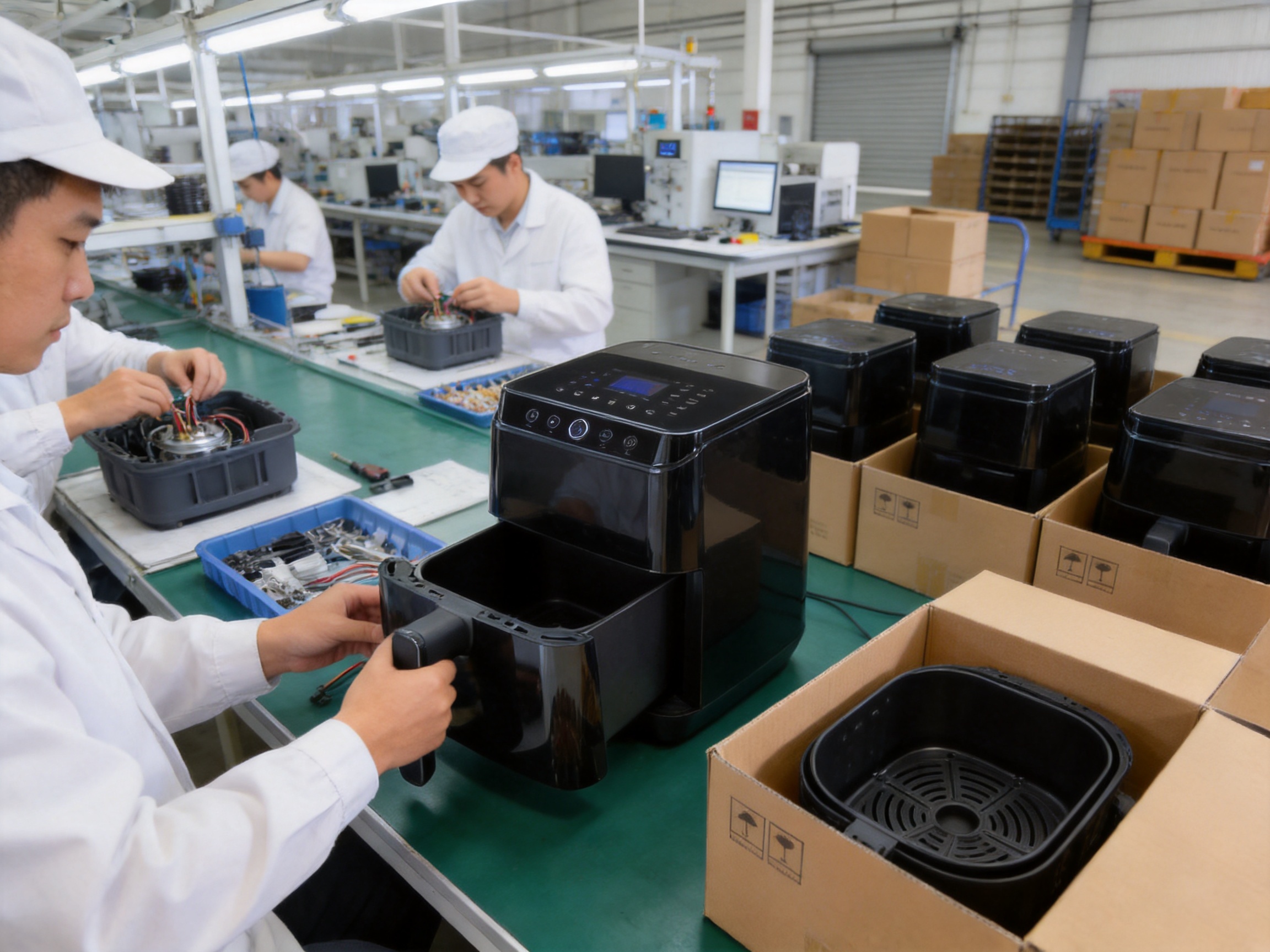
Modern kitchens increasingly require appliances that combine compact dimensions, practical cooking capacity, intuitive controls, and dependable safety features. A digital air fryer can meet these needs by reducing the amount of oil required for many foods while providing a fast and convenient alternative to conventional frying, grilling, and oven cooking. The GSE030D is designed as a versatile 4.0-litre air fryer for households, retailers, hospitality applications, and private-label distribution. It combines a digital touch interface, adjustable temperature control, dynamic hot-air circulation, dual-direction heating, automatic shutoff, and multiple protection functions in a compact countertop format.
With a rated power of 1,450 watts and a temperature range of 80°C to 200°C, this model is suitable for preparing a broad selection of everyday foods. Users can cook fries, chicken wings, vegetables, fish, meat snacks, pastries, and reheated meals with less dependence on traditional deep-frying methods. Its single 4.0-litre chamber offers a useful balance between cooking volume and countertop efficiency, making it appropriate for small families, couples, individual users, and commercial customers seeking a space-saving product.
The appliance is manufactured by CIXI GSTAR ELECTRIC APPLIANCE CO., LTD., a Chinese manufacturer with experience in small kitchen appliances, product development, sourcing, engineering, quality control, and international distribution. The company’s product portfolio includes blenders, slicers, choppers, food processors, smokeless grills, hot pots, air fryers, air ovens, and selected food-service accessories. This experience supports a product-development approach that focuses on functional design, cost control, production consistency, and long-term cooperation with distributors and retailers.
Product Overview
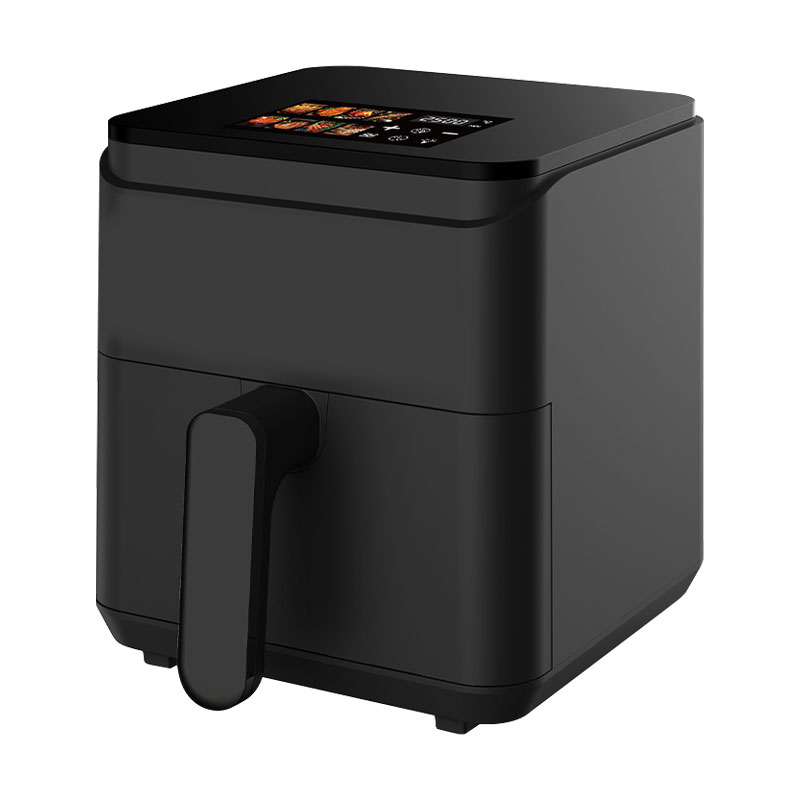
The GSE030D is a digital air fryer with a single 4.0-litre cooking chamber. It uses electrically generated heat and dynamic airflow to cook food from multiple directions. The design incorporates heating elements above and below the cooking area, with a stated heating configuration of 1,200 watts plus 250 watts and a total rated input of 1,450 watts. This arrangement is intended to support faster heating and more consistent cooking than a basic single-heating-element structure.
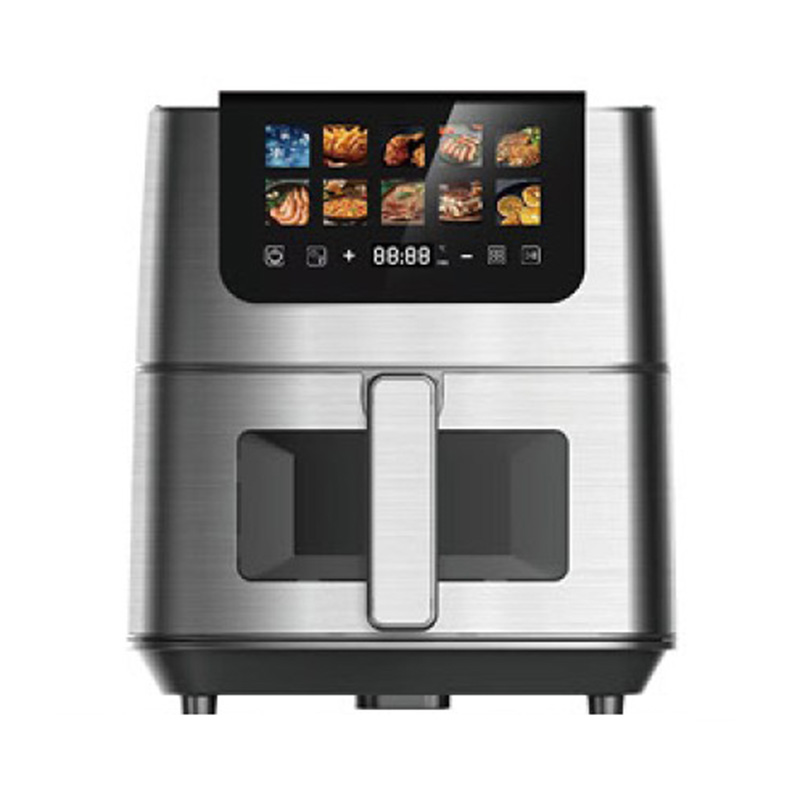
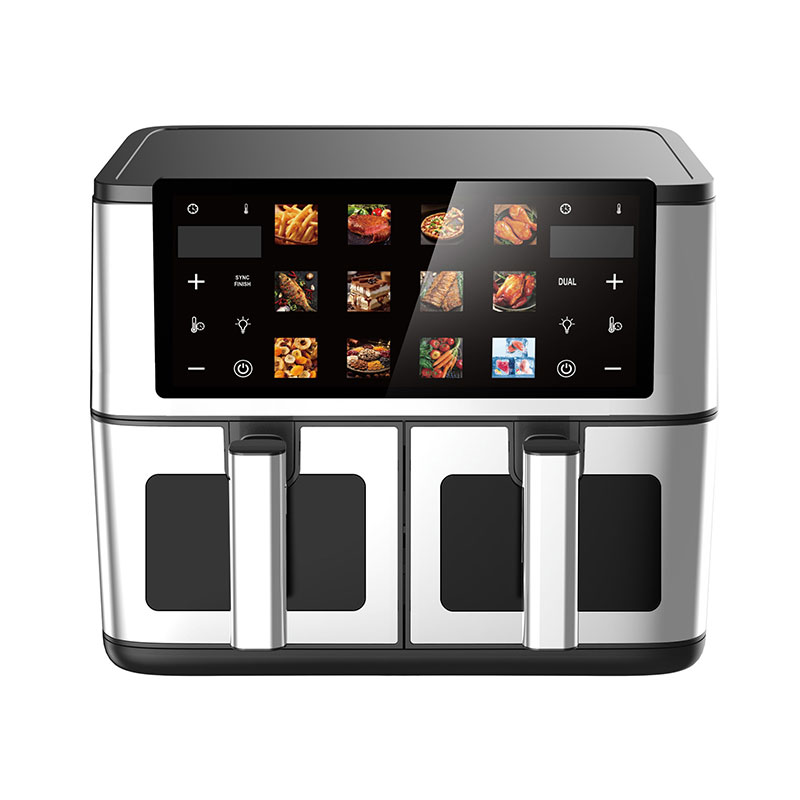
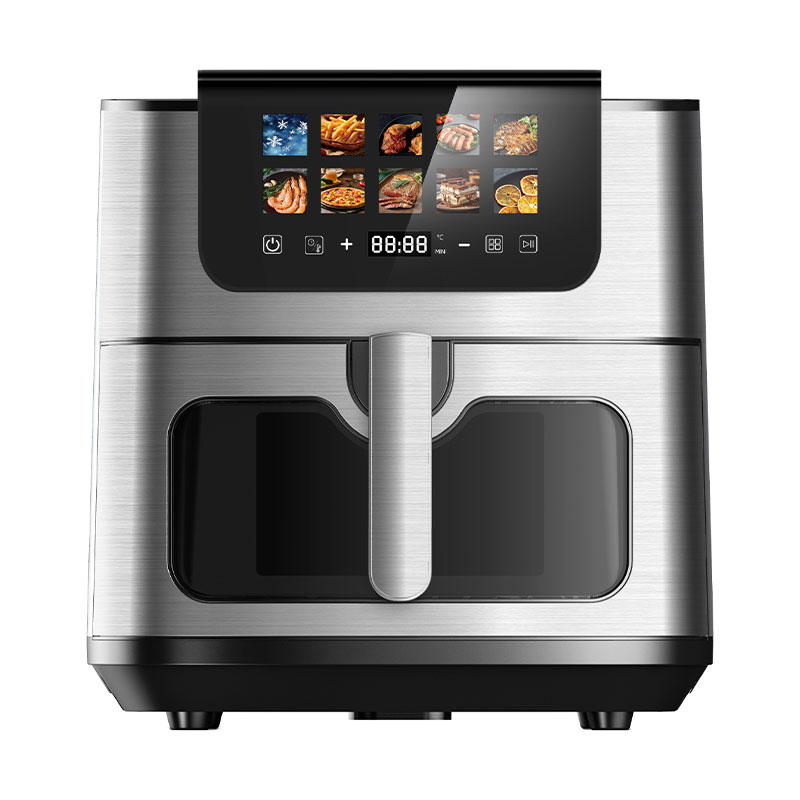
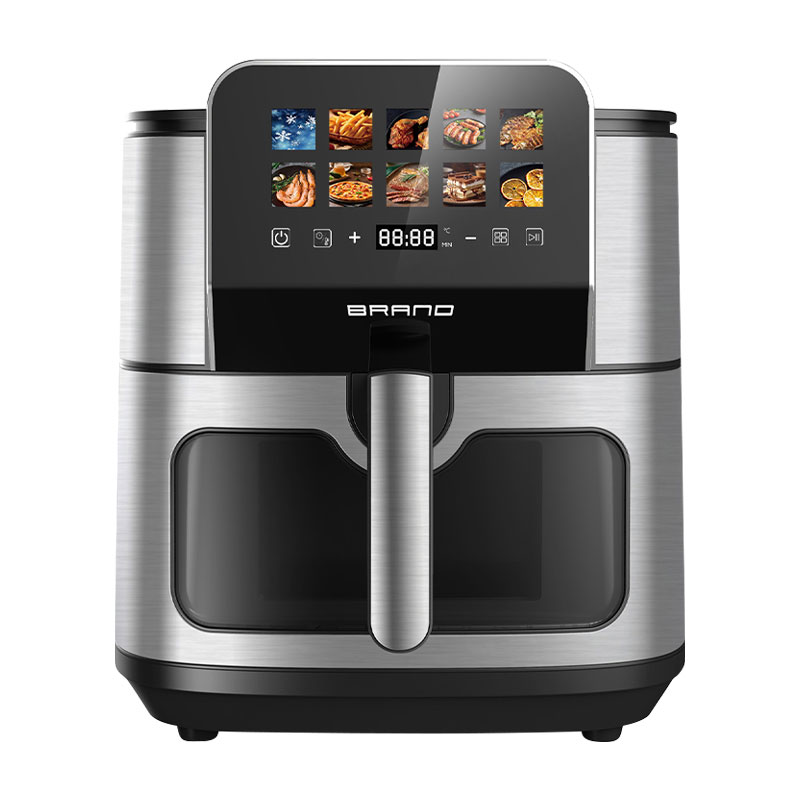
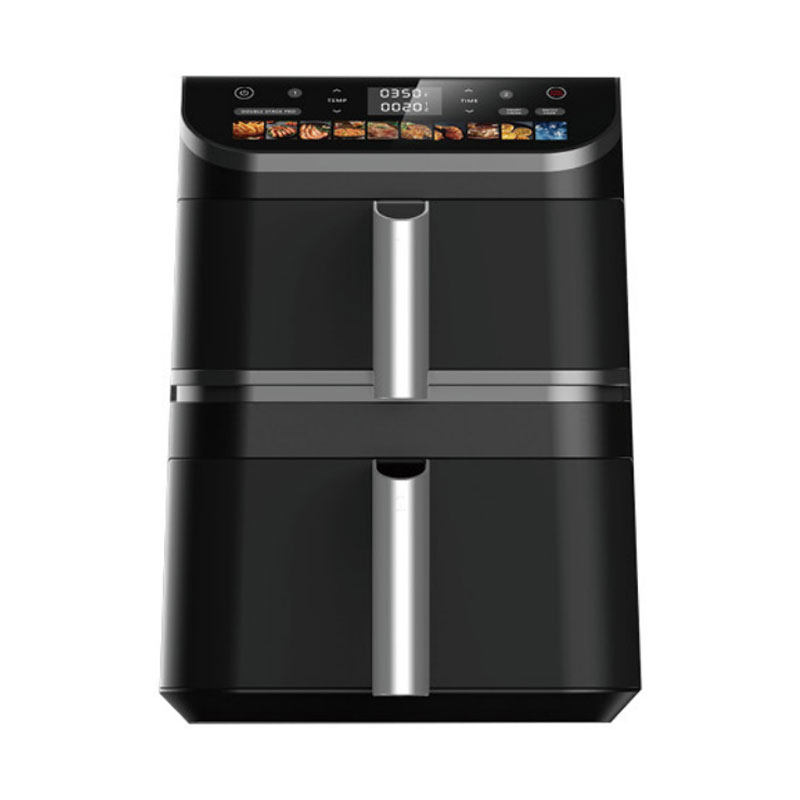
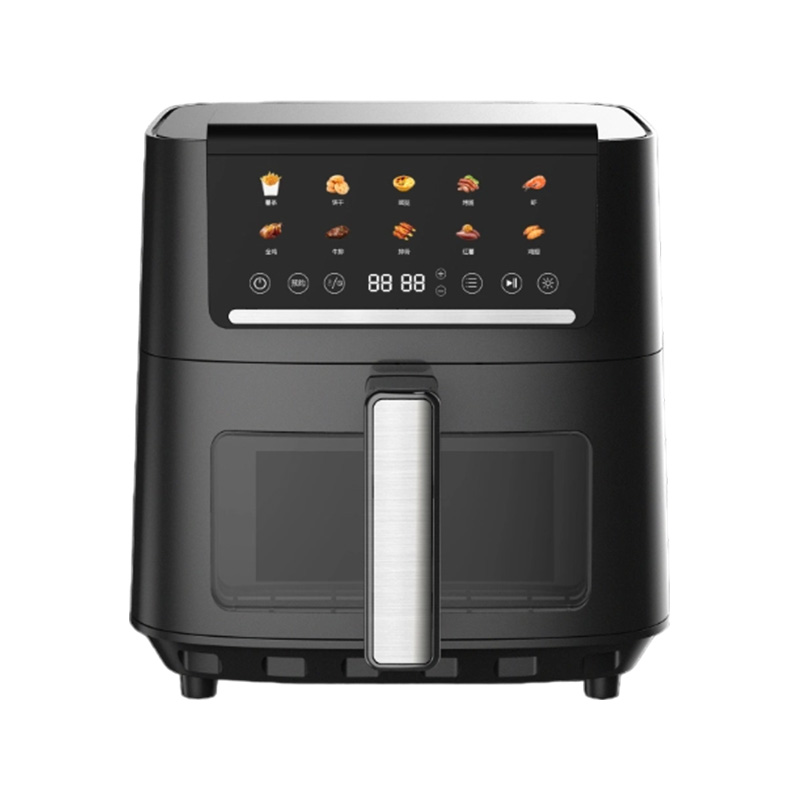
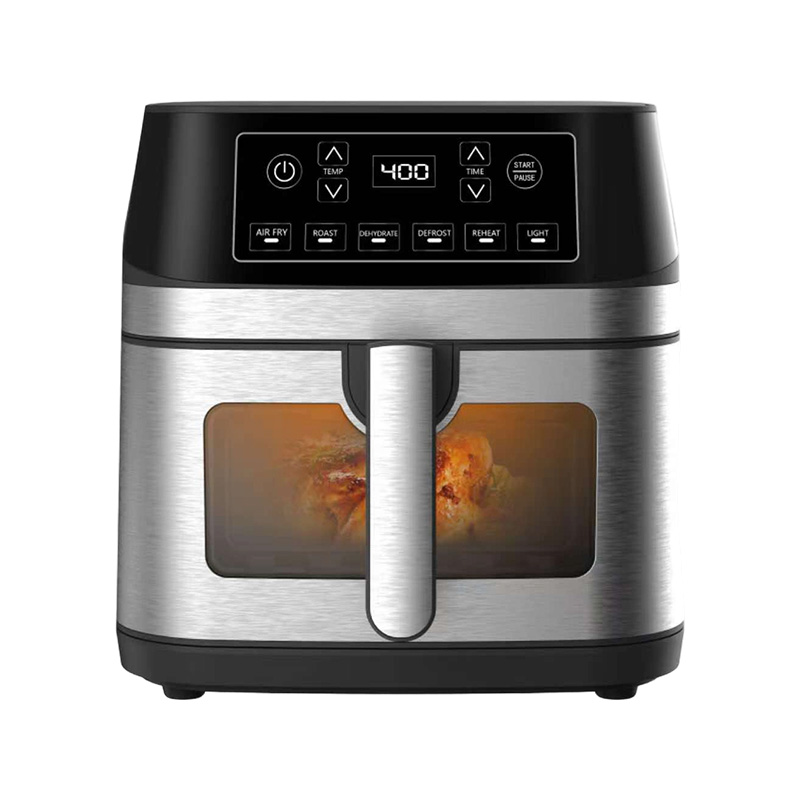
The appliance is equipped with a digital touch display and intelligent touch control. Instead of relying only on mechanical knobs, the user can operate the main functions through a modern touch interface. The digital display gives the product a clean appearance for retail presentation while helping users select and monitor cooking settings more conveniently.
Temperature control is adjustable from 80°C to 200°C. Lower temperatures are useful for gentle heating, reheating, drying, or cooking delicate foods, while higher temperatures can be used for browning, roasting, crisping, and finishing. The broad temperature range allows one countertop appliance to support multiple cooking styles rather than being limited to a single food category.
The GSE030D also includes automatic shutoff when cooking is complete, power-off protection when the outer pot is detached, overheat protection, non-slip feet, a one-click disable function, and power-off memory. These features are valuable for household convenience and also help retailers present the product as a safety-conscious appliance for daily use.
| Specification | Product Information |
|---|---|
| Product model | GSE030D |
| Product category | Digital air fryer |
| Cooking capacity | Single 4.0 litres |
| Rated voltage | 220–240 volts |
| Rated power | 1,450 watts |
| Frequency | 50–60 hertz |
| Temperature range | 80°C–200°C |
| Product dimensions | 30 × 23.5 × 28 centimetres |
| Gift box dimensions | 32 × 28 × 30.1 centimetres |
| Carton dimensions | 57.5 × 33.5 × 31.9 centimetres |
| Carton packing | 1 piece per carton |
| Gross/net weight | 10.7/8.2 kilograms |
| Container loading reference | 2,020 pieces per 40HQ |
| Certification information | CE, CB, GS, and RoHS |
Compact Design with Practical Capacity
One of the main advantages of the GSE030D is the relationship between its external size and internal cooking capacity. Measuring approximately 30 centimetres long, 23.5 centimetres wide, and 28 centimetres high, the appliance is designed to occupy a relatively small area on a kitchen worktop. This makes it suitable for apartments, student accommodation, office kitchens, recreational vehicles, guest rooms, and other spaces where countertop area is limited.
A 4.0-litre chamber is large enough for many routine meals while remaining more compact than larger family-size air fryers. Users can prepare portions of fries, chicken pieces, vegetables, fish fillets, snacks, and reheated food without needing a full-size oven. The single-basket format also simplifies operation because users do not need to coordinate two independent cooking compartments.
For retailers, the compact size can provide several commercial benefits. Smaller products may be easier to display in stores, photograph for online sales, package for shipping, and position in promotional campaigns. The gift box dimensions are also suitable for standard retail handling. The supplied packaging configuration is one piece per carton, which can simplify inventory identification and reduce confusion during order processing.
The product’s external materials include PP, PA, aluminium, ABS, and PC. These materials are commonly used in small kitchen appliances because they can provide a combination of structural support, heat management, electrical insulation, visual appeal, and impact resistance when properly engineered. The use of different materials for different functional areas allows the product design to balance durability, weight, manufacturing efficiency, and user comfort.
Dual-Heating and Dynamic Airflow Performance
Air-frying performance depends on more than simply producing heat. The appliance must transfer heat efficiently to the food, circulate hot air through the chamber, and maintain a suitable cooking environment. The GSE030D uses a full-direction dynamic airflow heating design intended to move hot air around the food more evenly. This circulation supports surface browning and can help reduce the need for large amounts of cooking oil.
The stated heating structure combines an upper heating capacity of 1,200 watts with a lower heating capacity of 250 watts. Compared with an appliance that relies solely on an upper heating element, an upper-and-lower heating configuration can help distribute heat more effectively within the cooking chamber. It may also reduce the need for excessive turning or repositioning, depending on the type and quantity of food being prepared.
The 1,450-watt rating provides a strong power level for a 4.0-litre appliance. Sufficient power is important for shortening preheating time, recovering temperature after cold food is added, and maintaining cooking conditions during operation. The actual cooking time will vary according to food type, quantity, starting temperature, and preparation method, but the power configuration is designed for efficient everyday use.
Dynamic airflow is also relevant to the texture of finished food. Hot air moving across exposed surfaces can create a crisp outer layer while allowing the interior to remain tender when the correct temperature and cooking time are selected. This is particularly useful for foods that are traditionally deep-fried, such as potato products, breaded snacks, and certain prepared meat products. It can also support roasting and baking-style applications.
The product should not be viewed as a replacement for every cooking appliance. A conventional oven may still be better for very large meals, while a microwave may be faster for simple reheating. However, the GSE030D occupies a useful middle position: it offers more focused and potentially crisp cooking than a microwave, while using less space and generally requiring less preheating than a large oven.
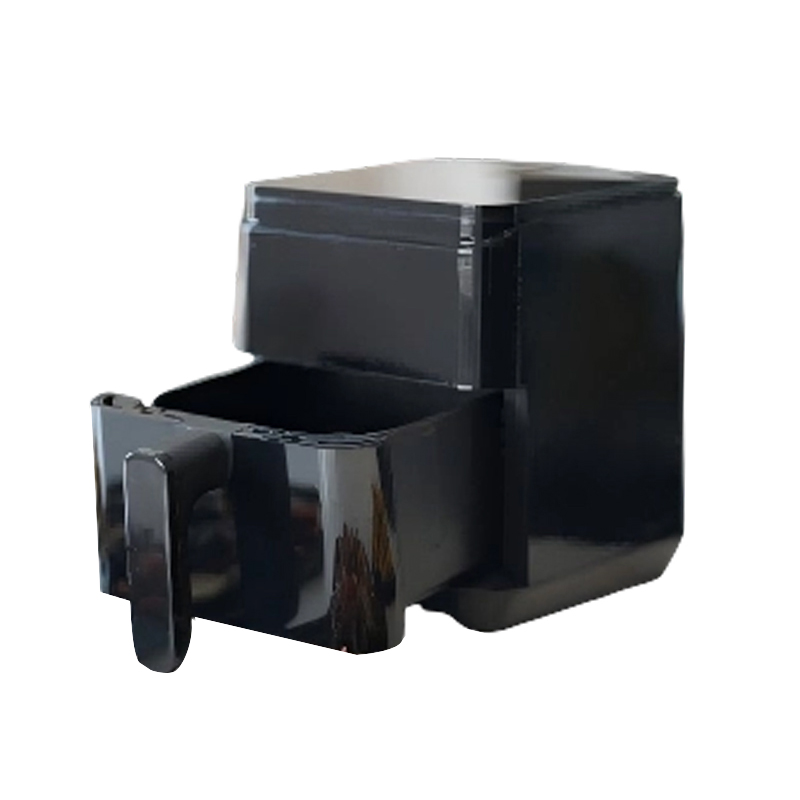
GSE030D
Digital Touch Control for Everyday Convenience
The digital touch display is an important part of the product’s user experience. Touch controls provide a smooth front-panel appearance and allow the user to operate the appliance without protruding mechanical dials. For consumers who value modern-looking kitchen appliances, the display can make the air fryer more attractive than traditional analogue models.
Intelligent touch control is designed to make settings easier to select and adjust. Users can choose a suitable temperature within the 80°C to 200°C range and set the appliance according to the food being prepared. A digital control system can also support clear status indication and more consistent setting selection than a basic mechanical control, particularly when users need to repeat the same cooking process.
The one-click disable function adds another layer of operational convenience. In practical use, a quick disable function can help users stop or lock a function without navigating through complicated controls. The exact operating sequence should be explained in the final user manual and confirmed during product configuration for the target market, but the feature is intended to make daily use more straightforward.
Power-off memory is another useful function. If the appliance experiences a power interruption or is switched off during operation, memory functionality can help retain selected settings or support easier restoration of the previous cooking process. This is convenient in homes where electrical use may be interrupted and can also help improve user confidence in the product.
Digital operation is particularly valuable for online retail because product images can clearly show the display and touch-panel design. It also gives distributors an opportunity to position the air fryer as a modern lifestyle product rather than only as a basic heating appliance. Packaging, instruction manuals, and promotional materials can emphasize intuitive operation, adjustable temperature control, and convenient daily cooking.
Safety Features for Responsible Appliance Use
Safety is a central consideration in the design and distribution of any electrical kitchen appliance. The GSE030D includes several functions intended to reduce operational risks and support responsible use. These include power-off protection when the outer pot is detached, overheating protection, automatic shutoff at the completion of cooking, and stable non-slip feet.
Power-off protection when the outer pot is detached is a practical feature because it helps prevent heating operation when the cooking assembly is not correctly positioned. This can reduce the possibility of accidental exposure to hot internal components and supports a more controlled user experience. It also reminds users that the outer pot and related components should be correctly installed before operation.
Overheat protection is designed to respond if the appliance reaches an abnormal temperature condition. Protection systems are important because air fryers operate at high temperatures and contain electrical heating components. A properly engineered protection circuit can help limit excessive heat and support the product’s overall reliability. Users should still follow the instruction manual, maintain ventilation around the appliance, and avoid blocking air inlets or outlets.
Automatic shutoff when cooking is complete helps reduce the chance of unnecessary continuous heating. This function can be convenient when users are preparing side dishes, doing household tasks, or briefly stepping away from the kitchen. Automatic shutoff should not be interpreted as permission to leave the appliance unattended for long periods, but it adds a useful layer of control during normal operation.
Non-slip feet help the unit remain stable on a suitable, level countertop. Stability matters when the outer pot is inserted or removed and when food is being placed into the basket. The appliance should be positioned on a heat-resistant surface with adequate clearance around the ventilation areas. These basic practices should be communicated clearly in the product manual and safety labeling.
Advantages Compared with Basic Air Fryer Models
The GSE030D offers several features that can distinguish it from entry-level air fryers. A basic model may use a single heating element, a narrow temperature range, mechanical controls, and limited safety functions. By contrast, the GSE030D combines digital operation, upper-and-lower heating, dynamic airflow, automatic shutoff, overheat protection, power-off protection, and memory functionality.
The first advantage is control flexibility. A temperature range from 80°C to 200°C supports more than high-temperature crisping. Consumers can use lower settings for warming and gentle preparation, then select higher settings for browning or roasting. This broad range gives the product greater practical versatility than a model designed around only one or two fixed heat levels.
The second advantage is the heating configuration. Upper and lower heating can support more balanced thermal performance than a simple top-heating design. Although cooking results depend on food arrangement and quantity, the combination is intended to improve heat delivery across the chamber and reduce uneven cooking.
The third advantage is the digital user interface. Consumers often compare appliances not only by performance but also by ease of use and visual design. A digital touch display can increase perceived product value, improve retail appeal, and provide a more contemporary experience than a basic knob-controlled product.
The fourth advantage is the combination of safety functions. Automatic shutoff, protection when the outer pot is detached, overheat protection, and non-slip feet address different stages of use. Together, these features give distributors a stronger product story when targeting families, first-time air-fryer users, and consumers who prioritize appliance safety.
The fifth advantage is the compact capacity balance. Very small air fryers can be restrictive for everyday meals, while oversized models require more storage and countertop space. The 4.0-litre format is a practical compromise for many households and gives the product broad market relevance.
Materials and Construction Considerations
The GSE030D uses a combination of PP, PA, aluminium, ABS, and PC. Each material can serve a different engineering or design purpose. Polypropylene is commonly used for selected appliance components because of its light weight and suitability for molded parts. Polyamide can provide strength and resistance in components that require more mechanical performance. Aluminium is often useful in heat-related applications because of its thermal conductivity.
ABS is widely used for rigid exterior housings and control-related structures, while polycarbonate can support transparent or visually refined components where impact resistance and appearance are important. The final performance of any material depends on grade selection, thickness, molding conditions, assembly design, temperature exposure, and quality control. Therefore, the material list should be considered together with the manufacturer’s engineering and production processes.
Well-designed assembly is essential in a high-temperature countertop appliance. Heating components, airflow channels, control electronics, insulation, housing parts, and removable cooking components must work together within a restricted space. Production consistency is particularly important because small variations in assembly can affect airflow, electrical connections, temperature control, and user safety.
The manufacturer’s stated approvals and management credentials include CE, CB, GS, and RoHS references for the product, as well as BSCI and ISO9000 approval references in the product information. Certification and compliance documentation should always be verified for the exact model, voltage configuration, target country, and current production version before commercial sale. For importers, this documentation is an important part of responsible supplier qualification.
Manufacturing Capabilities and Product Development Strengths
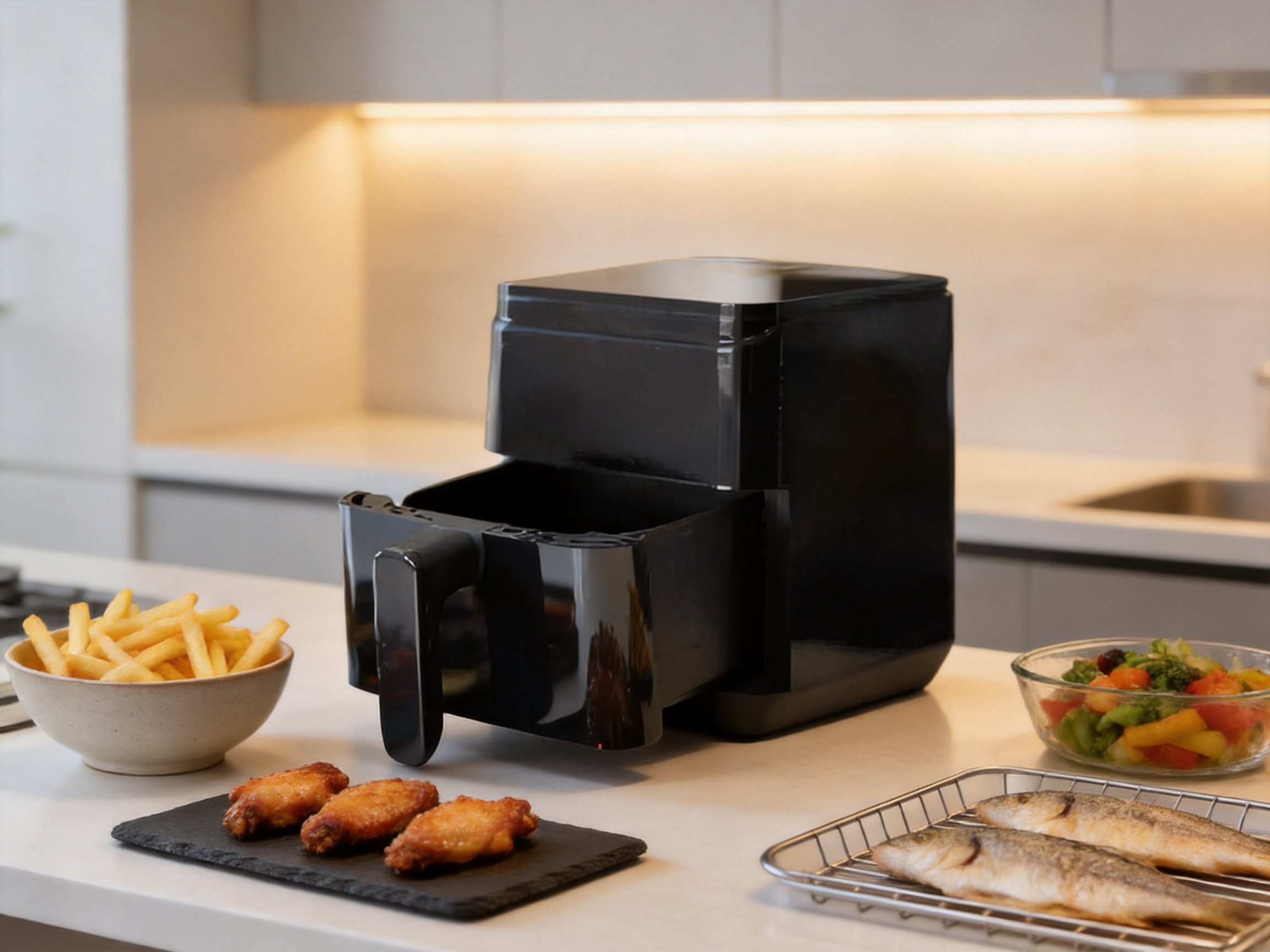
The manufacturer has developed from an earlier trading and sourcing background into a company that designs, develops, and manufactures small electrical kitchen appliances. This history is significant because successful appliance production requires more than the ability to assemble a finished product. It requires market understanding, engineering coordination, tooling management, component sourcing, testing, quality inspection, packaging control, and after-sales support.
The company reports that it operates its own plant and has a production area of approximately 15,000 square metres, with earlier company information also describing a facility of approximately 10,000 square metres and a building area of approximately 18,000 square metres. Since the supplied information contains different facility figures, buyers should confirm the current factory profile during supplier audits and commercial negotiations. In either case, the information indicates an established manufacturing base rather than a purely brokerage-oriented business model.
The company reports more than 200 experienced workers, together with engineering and quality-control personnel. Earlier information identifies 10 engineers in the research and development department and 10 people in quality control, while the company description also refers to approximately 150 workers in an earlier period. These figures suggest organizational growth over time, although current staffing and department structures should be confirmed directly for a specific order.
A dedicated research and development function can support the continuous improvement of product appearance, heating performance, controls, ergonomics, packaging, and manufacturability. For an air fryer, R&D work may involve airflow design, thermal testing, electronic control adjustment, housing development, removable-pot structure, noise reduction, and user-interface refinement.
Quality-control personnel support inspection at different stages of production. A mature quality system may include incoming-material checks, first-article approval, assembly inspection, electrical safety testing, function testing, appearance checks, packaging inspection, and random sampling before shipment. The exact inspection plan should be agreed with the buyer according to destination-market requirements and purchase specifications.
The manufacturer also states that it works closely with customers as an engineering partner. This is valuable for importers and private-label customers that need changes to colors, packaging, language, plug configuration, labeling, control-panel graphics, or user manuals. A supplier capable of coordinating engineering and manufacturing changes can help reduce communication gaps and shorten the path from concept to production.
Production Process for a Digital Air Fryer
The manufacturing process begins with product design and technical specification confirmation. The buyer and manufacturer should first agree on rated voltage, frequency, power, capacity, temperature range, control functions, heating configuration, materials, color, packaging, certifications, and destination-market requirements. Clear specifications reduce the risk of changes during production and provide a reference for quality inspection.
Design and Engineering Validation
During the engineering stage, the product structure is reviewed to ensure that the housing, cooking chamber, heating elements, fan system, electronics, insulation, and removable components can be assembled efficiently. Engineers may evaluate airflow paths, heat distribution, surface temperatures, mechanical clearances, and component access for maintenance or replacement.
Design validation should include functional tests under representative operating conditions. The team may verify temperature adjustment, automatic shutoff, pot-detection protection, memory behavior, touch-control response, airflow operation, and overheating protection. Testing at this stage can identify issues before tooling and mass production create additional cost.
Tooling and Plastic-Part Production
Plastic housing components are generally produced through injection molding. The quality of the mold, resin selection, injection parameters, cooling process, and operator controls affects the appearance and dimensional stability of each part. Consistent molding is important for proper fit between the upper housing, control panel, outer pot, handles, feet, and internal structures.
After molding, parts may undergo trimming, visual inspection, dimensional checks, surface treatment, printing, or preparation for assembly. Components with visible surfaces require particular attention because scratches, sink marks, color variation, flash, and deformation can affect retail quality even if the appliance remains functional.
Heating and Electrical Assembly
Heating elements, wiring, control boards, switches, sensors, fans, and protective components are assembled according to the approved technical design. Electrical connections must be routed securely and protected from excessive heat, movement, and abrasion. Insulation and separation distances are important considerations in a compact appliance that combines high temperatures with mains electricity.
Assembly operators should follow work instructions and use appropriate fixtures or testing equipment. Where applicable, electrical continuity, insulation, grounding, power consumption, temperature response, and protective functions can be checked during production. Traceability records can help identify component batches and production dates if corrective action is ever required.
Final Assembly and Functional Testing
During final assembly, the housing, heating system, control panel, fan, feet, removable pot, and accessories are combined into a complete product. The unit can then be tested for startup behavior, touch sensitivity, temperature adjustment, airflow, automatic shutoff, and protection functions.
Visual inspection is also important. Inspectors may check the alignment of panels, condition of surfaces, display clarity, control markings, handle attachment, pot movement, feet stability, and packaging accessories. A product can pass an electrical test and still fail to meet retail expectations if its appearance or mechanical operation is inconsistent.
Before shipment, completed units are packed into gift boxes and outer cartons. Packaging should protect the appliance from shock, vibration, moisture, and compression during handling and transport. Carton markings, product labels, manuals, certification marks, and barcodes should be checked against the buyer’s approved artwork.
Quality Management and Buyer Confidence
For international buyers, supplier quality is evaluated through both product performance and manufacturing discipline. The manufacturer’s reported BSCI and ISO9000-related approvals indicate an emphasis on social-compliance and quality-management considerations. Buyers should request current certificates, audit reports, test reports, and factory records relevant to the exact model and shipment.
A useful quality plan for the GSE030D may include an approved sample, a golden reference unit, a component specification list, a packaging specification, and a pre-shipment inspection standard. The approved sample should represent the final production version, including housing color, display graphics, plug type, labels, accessories, and packaging materials.
Incoming-material inspection can help prevent defects before assembly begins. Key items may include heating elements, motors, control boards, sensors, plastic housings, insulation materials, power cords, fasteners, and removable cooking components. In-process inspection can then verify assembly quality and reduce the number of problems discovered only at the end of production.
Performance testing should be based on the buyer’s agreed requirements. Examples include power verification, heating operation, temperature adjustment, fan operation, touch-panel response, automatic shutoff, outer-pot detection, overheat protection, noise observation, and repeated operating cycles. The specific test limits should be defined by the manufacturer, buyer, applicable standards, and destination market.
Packaging inspection is equally important for export products. The air fryer must arrive in saleable condition after long-distance transportation. Carton strength, internal cushioning, accessory placement, printed instructions, product identification, and carton quantity should be verified before loading. The stated loading reference of 2,020 pieces per 40HQ can assist preliminary logistics planning, but actual loading capacity may vary according to shipping method, pallet use, carton arrangement, and carrier requirements.
Commercial Value for Importers and Distributors
The GSE030D can be positioned in several market segments. Household retailers may present it as a compact everyday cooking appliance. Online sellers can focus on its digital display, 4.0-litre capacity, adjustable temperature, and safety functions. Hospitality buyers may consider it for selected guest-room, staff-kitchen, or small food-service applications where a compact appliance is appropriate and permitted.
Private-label customers may benefit from the manufacturer’s ability to support product development and packaging coordination. Possible commercial adaptations can include brand-specific gift boxes, multilingual manuals, color changes, logo application, plug configurations, control-panel artwork, and promotional inserts. Any customization should be reviewed for tooling requirements, minimum order quantities, lead time, certification impact, and production cost.
The product’s compact dimensions can also support efficient warehouse handling and retail display. A single-piece carton configuration simplifies unit-level order fulfillment, while the 4.0-litre capacity provides a clear product position between compact personal models and larger family-size appliances.
For wholesalers, the combination of digital controls and multiple safety functions can support a higher-value product presentation than a basic analogue air fryer. Marketing materials should focus on verifiable features, including the stated power, capacity, temperature range, heating configuration, certifications, and protection functions. Clear and accurate claims are more valuable than exaggerated promises because they build trust with retailers and end users.
Recommended Use and Care
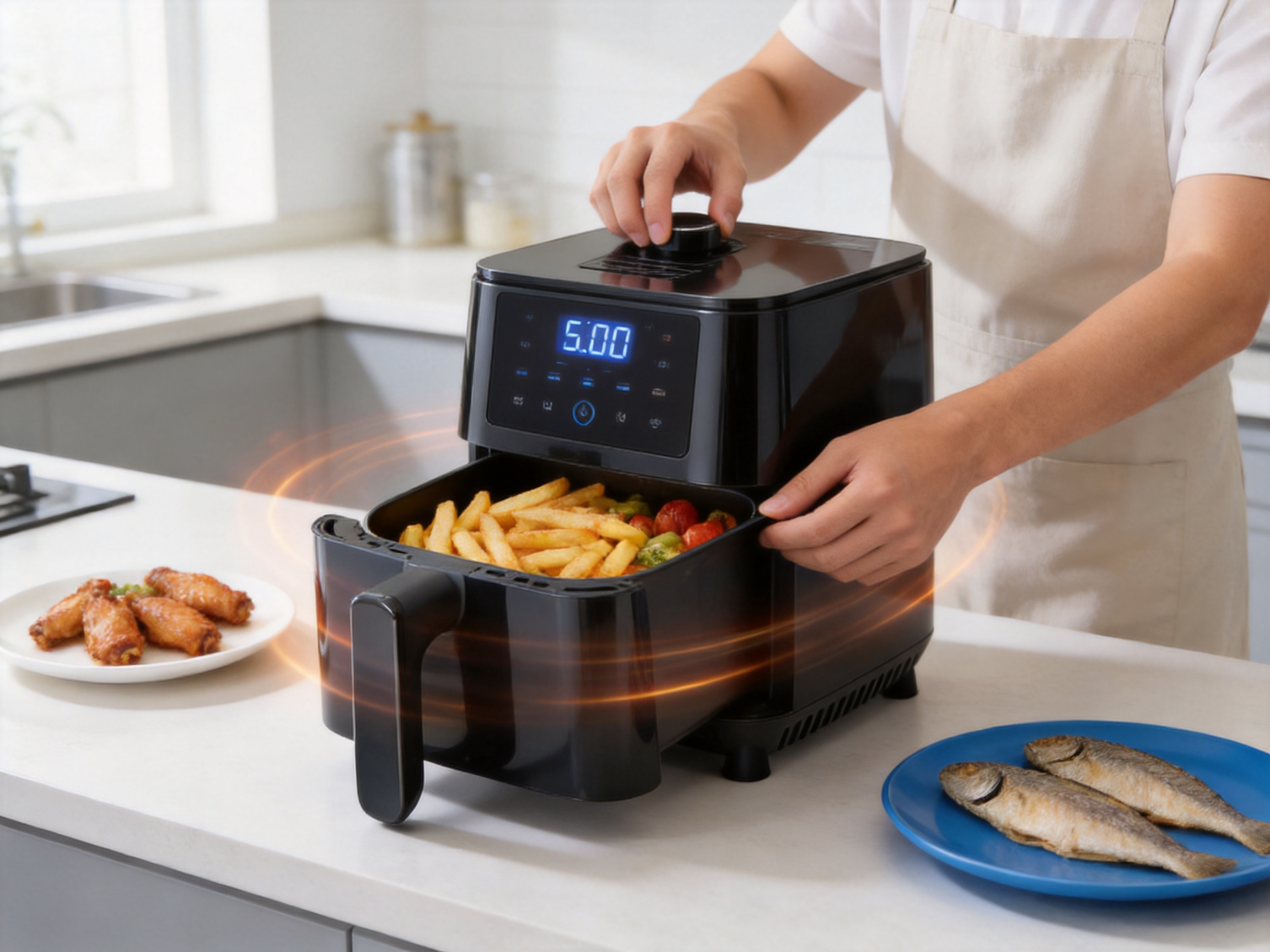
Before first use, the consumer should read the instruction manual, remove packaging materials, and place the appliance on a level, heat-resistant surface. Adequate clearance should be maintained around air inlets and outlets. The power supply should match the rated 220–240-volt specification, and the appliance should be connected to a suitable electrical outlet.
Food should be placed in the appropriate cooking basket or chamber without exceeding the recommended fill level. Overfilling can restrict airflow and may lead to uneven cooking. Foods that benefit from crisping should generally be arranged so that hot air can circulate around them. Depending on the recipe, shaking or turning may still be helpful even when the appliance uses upper-and-lower heating.
Users should avoid placing water or other liquids into areas not designed to receive them. The exterior should be cleaned with appropriate methods, while removable components should be handled according to the manufacturer’s instructions. Abrasive tools and unsuitable chemicals may damage surfaces or coatings. The appliance should be unplugged and allowed to cool before cleaning or storage.
Although automatic shutoff and overheating protection are included, users should not cover the appliance, operate it near flammable materials, or leave it running in an unsafe environment. Children should use the appliance only with suitable supervision. These recommendations should appear in clear language in the user manual and, where appropriate, on product labels.
Positioning Against Alternative Cooking Appliances
Compared with a conventional deep fryer, an air fryer can reduce the amount of oil required for many food preparations. This may make it attractive to consumers who want crisp textures without maintaining a large quantity of hot oil. It can also simplify cleanup and reduce the need to store a separate deep-frying appliance.
Compared with a full-size oven, the GSE030D takes up less space and is designed for smaller portions. Its focused cooking chamber can be useful when a user does not want to heat an entire oven for a small meal or snack. The 1,450-watt power rating and dynamic airflow system support fast, concentrated cooking, although results will depend on food quantity and preparation.
Compared with a microwave, the air fryer is better suited to browning and crisping. A microwave may heat certain foods more quickly, but it generally does not create the same surface texture. The GSE030D therefore complements rather than replaces other kitchen appliances.
Compared with a low-cost analogue air fryer, the product offers a digital touch interface, a wider range of integrated protection features, upper-and-lower heating, memory functionality, and a more contemporary appearance. These differences can help retailers target consumers who want better control and more versatile daily cooking.
Q&A
What is the capacity of the air fryer?
The GSE030D has a single 4.0-litre cooking capacity. This format is suitable for many everyday portions and is intended to balance useful cooking volume with compact countertop dimensions.
What power supply does the appliance use?
The listed specification is 220–240 volts, 50–60 hertz, with a rated power of 1,450 watts. Buyers should confirm the exact electrical configuration, plug type, labeling, and certification requirements for the destination market before placing an order.
What temperature range is available?
The adjustable temperature range is 80°C to 200°C. Lower settings may be used for warming or gentle cooking, while higher settings are suitable for browning, roasting, and crisping applications.
Does the product use more than one heating element?
The product information describes an upper-and-lower heating configuration of 1,200 watts plus 250 watts. This arrangement is intended to support more effective heat distribution within the cooking chamber.
Does the air fryer have a digital display?
Yes. The appliance includes a digital touch display with intelligent touch control. The digital interface is designed to make temperature selection and daily operation more convenient.
What safety functions are included?
The listed safety-related functions include power-off protection when the outer pot is detached, overheat protection, automatic shutoff when cooking is complete, and non-slip feet. Users should still follow the instruction manual and basic electrical and kitchen-safety practices.
What materials are used?
The listed materials are PP, PA, aluminium, ABS, and PC. These materials are used in different product areas to support structural performance, heat-related functions, insulation, housing strength, and appearance.
Is the product suitable for private-label orders?
The manufacturer describes itself as a product designer, developer, and manufacturer and states that it works closely with customers as an engineering partner. Private-label possibilities should be discussed directly, including minimum order quantity, packaging, colors, labeling, manuals, plug configuration, tooling, certifications, and lead time.
What certifications are associated with the product?
The supplied product information lists CE, CB, GS, and RoHS. Certification documents should be verified for the exact model, production version, voltage configuration, and intended sales market before importation or retail distribution.
What are the product dimensions?
The listed product dimensions are approximately 30 centimetres long, 23.5 centimetres wide, and 28 centimetres high. The gift box measures approximately 32 × 28 × 30.1 centimetres.
How is the product packed?
The listed packing method is one piece per carton. The stated carton dimensions are approximately 57.5 × 33.5 × 31.9 centimetres, with a gross/net weight reference of 10.7/8.2 kilograms.
What should buyers verify before mass production?
Buyers should verify the final technical specification, approved sample, control-panel operation, heating performance, certification documents, packaging artwork, user manual, plug type, carton quantity, inspection requirements, warranty terms, and shipment schedule. These checks help ensure that the delivered product matches the commercial agreement.
Why This Model Is Suitable for Long-Term Product Programs
A successful kitchen-appliance product program requires stable manufacturing, clear communication, adaptable engineering, and consistent quality. The GSE030D provides a practical foundation because its main functions are relevant to a broad group of consumers. Digital control, 4.0-litre capacity, adjustable temperature, dynamic airflow, and safety protection are all features that can remain commercially attractive across different retail channels.
The manufacturer’s experience across multiple small-appliance categories can also support product-line development. A distributor that begins with an air fryer may later require related products such as air ovens, food processors, blenders, choppers, slicers, or hot pots. Working with a supplier that understands several product categories can simplify sourcing and create opportunities for coordinated packaging, merchandising, and quality management.
The company’s reported history of supplying international customers and developing products for supermarket, home-shopping, hospitality, and food-service channels indicates experience with different commercial expectations. Buyers should still complete their own due diligence, but this background may be valuable for customers seeking a manufacturing partner rather than a one-time trading source.
Long-term cooperation also benefits from documented engineering changes, regular production feedback, corrective-action procedures, and transparent communication about materials and components. These practices help protect product consistency and reduce avoidable problems as order volumes increase.
Conclusion
The GSE030D is a compact digital air fryer designed for practical everyday cooking. Its 4.0-litre capacity, 1,450-watt power rating, 80°C to 200°C temperature range, upper-and-lower heating configuration, and dynamic airflow system provide a versatile platform for preparing a variety of foods. The digital touch display gives the product a modern user interface, while automatic shutoff, overheat protection, pot-detachment protection, non-slip feet, one-click disable, and power-off memory strengthen its convenience and safety profile.
Compared with basic air fryers, the model offers a more complete combination of heating, control, capacity, and protection features. Its compact dimensions make it suitable for space-conscious households, online retail, supermarket distribution, private-label projects, and selected hospitality applications. The use of PP, PA, aluminium, ABS, and PC supports a balanced construction approach when combined with suitable engineering and production controls.
The manufacturer contributes additional value through its reported experience in small kitchen appliances, product development, factory production, research and development, quality control, international customer service, and engineering cooperation. Its manufacturing background can support buyers that require more than a standard catalogue product, including packaging customization and coordinated product-development services.
For importers and distributors, the most important next steps are to verify current certifications, approve a final sample, confirm all electrical and packaging details, establish inspection criteria, and align the product with the regulations of the intended market. With those controls in place, the GSE030D can serve as a reliable and commercially flexible addition to a modern small-appliance portfolio.
References
1. Product specification sheet for the GSE030D digital air fryer, including electrical ratings, capacity, dimensions, materials, functions, packing data, and certification references.
2. Manufacturer-provided company profile for CIXI GSTAR ELECTRIC APPLIANCE CO., LTD., including product categories, factory development, research and development resources, quality-control information, and international business experience.
3. General electrical appliance safety and quality-management principles relating to heating appliances, insulation, overheat protection, user instructions, inspection, and production traceability.
4. General food-preparation guidance for hot-air circulation cooking, including temperature selection, airflow management, portion control, cleaning, and safe countertop operation.