
 English
 中文简体
中文简体 Español
 English
 中文简体
中文简体 Español
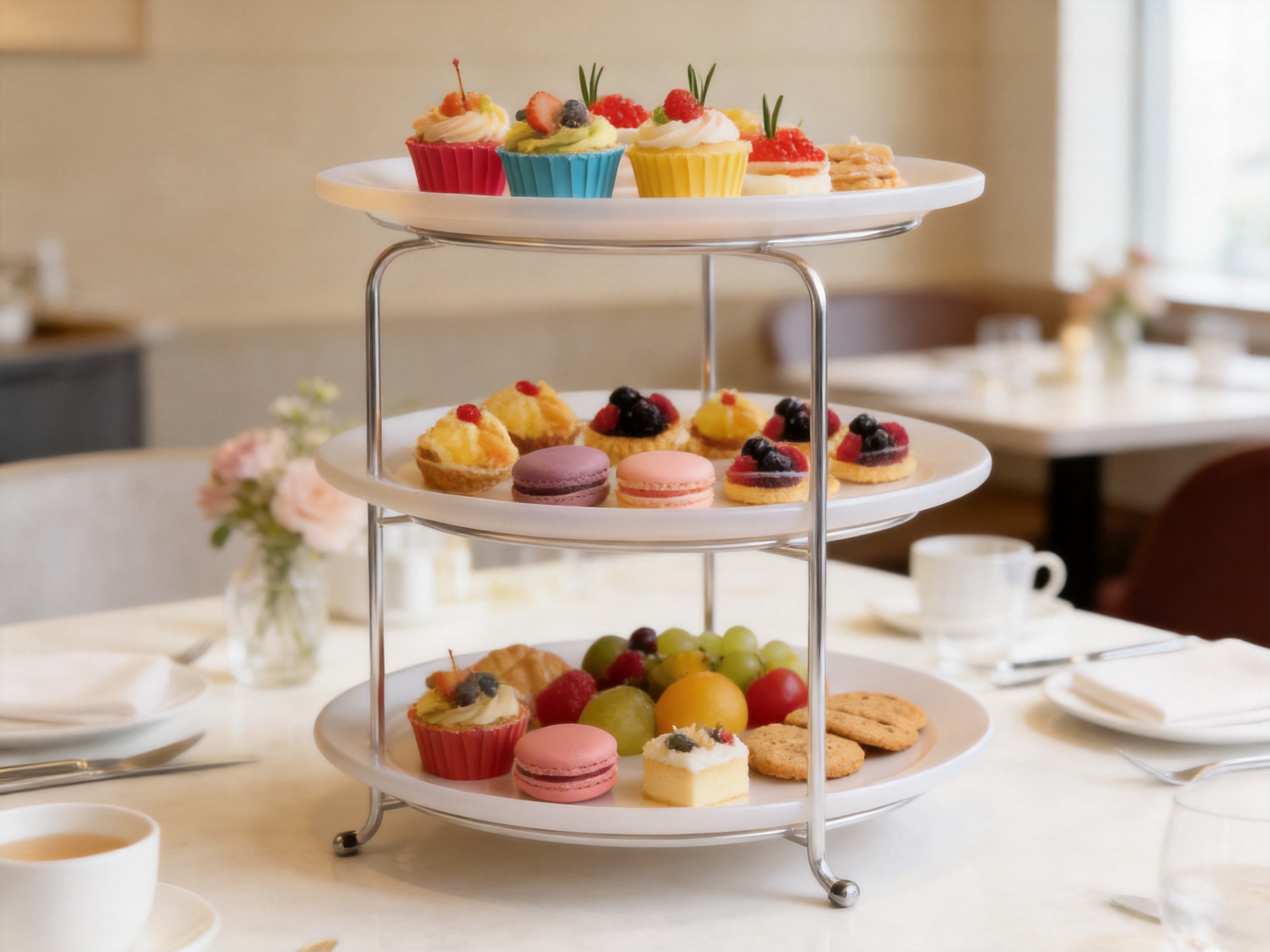
A well-presented dessert can influence how customers and guests experience an entire meal. Whether it is used for afternoon tea, a hotel buffet, a restaurant celebration, a family gathering, or a commercial display, a serving tray should combine visual appeal with stability, useful capacity, easy handling, and dependable construction. The 3-Tier Dessert Tray is designed to meet these requirements through a vertical three-level format that helps organize cakes, pastries, fruit, snacks, finger foods, and other small servings.
With a combination of PS and stainless iron, the product offers a practical balance between a lightweight presentation structure and a supportive metal framework. Its three-tier configuration makes better use of vertical space than a conventional flat platter, while its tableware-oriented design allows users to create attractive displays without requiring a large serving surface. The item is identified as GS064 and is supplied in cartons of four pieces, making it suitable for household use, hospitality procurement, retail distribution, and food-service applications.
This article examines the structure, benefits, commercial value, manufacturing background, quality approach, packaging information, and usage possibilities of the 3-Tier Dessert Tray. It also explains why a specialized manufacturer with experience in both innovative household products and small kitchen appliances can provide valuable support to importers, distributors, retailers, hospitality groups, and private-label buyers.
Understanding the 3-Tier Dessert Tray
The 3-Tier Dessert Tray is a vertical serving and display product developed for desserts and other small foods. Instead of spreading items across a single large platter, the three-tier arrangement separates the display into multiple levels. This creates a more attractive visual presentation and allows users to place different food categories in an organized way.
The product belongs to the tableware category and carries item number GS064. It is made from PS and stainless iron. PS, commonly known as polystyrene, can provide a smooth, lightweight surface suitable for serving and display components. Stainless iron is used as part of the supporting structure, helping the tray maintain its form during normal handling and presentation.
The listed product measurement is 53.5 x 51.5 x 47.5 centimeters. These dimensions indicate that the product is designed as a substantial tabletop display rather than a compact individual plate. Its vertical arrangement gives users the ability to present a noticeable quantity of food while retaining a relatively concentrated footprint on the table.
The item is packed four pieces per carton. The carton net weight is listed as 8 kilograms, while the gross weight is 9 kilograms. The product is also offered with a minimum order quantity of 2,000 pieces and a stated delivery time of 30 days. These details are relevant for wholesalers, importers, hospitality suppliers, and retailers planning stock purchases.
| Product Attribute | Specification |
| Item Number | GS064 |
| Product Name | 3-Tier Dessert Tray |
| Category | Tableware |
| Material | PS and stainless iron |
| Carton Packing | 4 pieces per carton |
| Product or Carton Measurement Listed | 53.5 x 51.5 x 47.5 centimeters |
| Net Weight | 8 kilograms |
| Gross Weight | 9 kilograms |
| 20-Foot Container Loading | 860 pieces |
| 40-Foot High-Cube Container Loading | 2,093 pieces |
| Minimum Order Quantity | 2,000 pieces |
| Stated Delivery Time | 30 days |
Why a Three-Tier Format Adds Value
The main advantage of a three-tier dessert tray is its use of vertical presentation. Traditional flat trays often require a wide surface area to hold an assortment of desserts. A tiered design makes the display more structured and can help create a centerpiece effect on a dining table, buffet counter, dessert station, or event table.
Vertical presentation can also improve product visibility. When desserts are arranged at different heights, items at the rear or upper levels may be easier to see than they would be on a single flat surface. This can encourage guests to explore a wider selection and can help food-service operators create a more appealing buffet arrangement.
The three levels can be used for different purposes. For example, the lowest tier may hold larger cakes or bowls of fruit, the middle tier may display pastries and sandwiches, and the upper tier may contain smaller sweets or decorative items. A restaurant can also organize food by flavor, color, or course. This flexibility allows one product to support many presentation styles.
Compared with multiple separate plates, a tiered tray can help reduce visual clutter. A collection of individual plates may occupy a large area and require more table organization. The 3-Tier Dessert Tray brings the display together into one coordinated serving unit. This can be especially useful for afternoon tea, dessert buffets, catering tables, and celebrations where the appearance of the overall arrangement matters.
The tiered format may also improve the efficiency of service preparation. Staff can load several levels before placing the tray on a table or buffet surface. This can reduce the number of separate serving pieces that need to be transported and arranged. While the final load should always be appropriate for the tray’s construction and intended use, the format itself is well suited to organized food presentation.
Material Combination and Functional Construction
The use of PS and stainless iron reflects a practical approach to tableware design. Different parts of a serving product may require different material characteristics. A tray surface benefits from being smooth, presentable, and relatively easy to handle, while a support structure benefits from rigidity and resistance to deformation.
PS can contribute to a lightweight product experience. Compared with many heavier serving materials, a polymer-based component may be easier for staff and household users to move from a preparation area to a table. Lower handling effort can be valuable in hospitality environments where serving equipment is repeatedly transported during service.
Stainless iron provides a supportive structural element. In a three-tier product, the framework must help connect and stabilize the levels. A metal support can contribute to a firm appearance and provide a more dependable structure than a design that relies only on flexible polymer parts. The combined material approach is therefore intended to support both presentation and everyday practicality.
The contrast between the tray surfaces and the metal structure can also create a refined appearance. A well-proportioned framework allows the product to look organized without competing with the food. This is important because a dessert stand should enhance the presentation rather than make the display look crowded or distracting.
Material selection also affects sourcing and logistics. A design that balances strength with manageable weight may offer advantages during carton packing, warehouse movement, container loading, and final delivery. The listed carton information and container quantities provide commercial buyers with a basis for planning procurement and distribution.
As with all food-service products, users should follow appropriate cleaning, food-contact, and care instructions provided with the final product. The tray should be used for suitable foods and handled according to its intended purpose. Buyers requiring specific regulatory documentation, testing, or market compliance should confirm the relevant requirements before placing a production order.
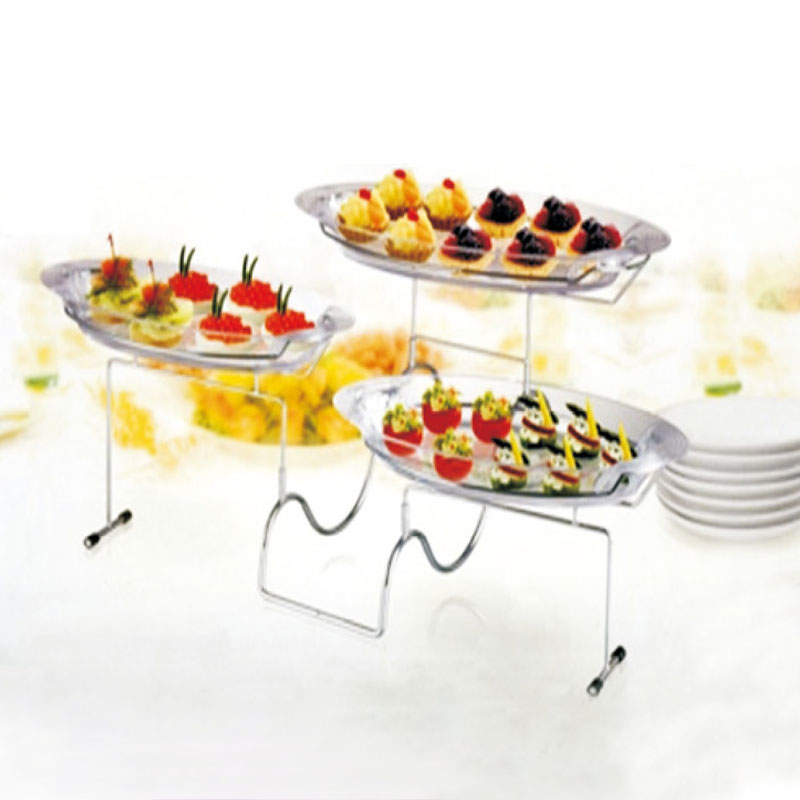
3-Tire Dessert Tray
Advantages Over Conventional Flat Serving Trays
A conventional flat serving tray remains useful for many applications, but it has limitations when the goal is to create a decorative dessert display. Its primary advantage is horizontal capacity. However, a flat design can require considerable table space and may not provide the visual height associated with a centerpiece or buffet display.
The 3-Tier Dessert Tray addresses this limitation through a compact vertical arrangement. It can provide several visible presentation levels without requiring each dessert category to occupy a separate table area. For buyers comparing similar products, this space-conscious structure is one of the most important points of differentiation.
Another advantage is display organization. On a flat tray, small desserts can become visually mixed together, especially when a large quantity is served. The tiered design allows foods to be separated by level and arranged in a more deliberate way. This can improve the visual identity of a dessert station and make it easier for guests to identify different selections.
The product can also help create a premium presentation without requiring complex decoration. A three-level stand naturally adds height, symmetry, and structure. This can help cafés, bakeries, hotels, and event organizers produce an attractive setting with a relatively simple piece of equipment.
Compared with several separate serving dishes, one coordinated stand may offer a cleaner appearance. It can support a consistent presentation concept and reduce the number of unrelated shapes on the table. This is especially useful for businesses that want to maintain a uniform service style across dining areas, catering functions, or seasonal promotions.
For retailers, the product may also be easier to position as a multifunctional tableware item. Although its name emphasizes desserts, the design can be marketed for pastries, afternoon tea, fruit, snacks, appetizers, sandwiches, and party food. This broadens the potential use case and can make the item relevant to more consumer groups.
Applications in Homes and Hospitality Venues
At home, the tray can be used for birthdays, family dinners, holiday gatherings, afternoon tea, and informal entertaining. A host can use the different levels to display cupcakes, cookies, chocolates, fruit, or small sandwiches. Because the product creates a dedicated serving area, it can help turn ordinary snacks into a more organized and festive presentation.
In cafés and bakeries, the tray can support counter displays or table service. A selection of pastries arranged on three levels may attract attention and encourage customers to consider additional products. Staff can use the lower level for larger items and the upper levels for smaller specialty products, creating a visual hierarchy that highlights premium or seasonal selections.
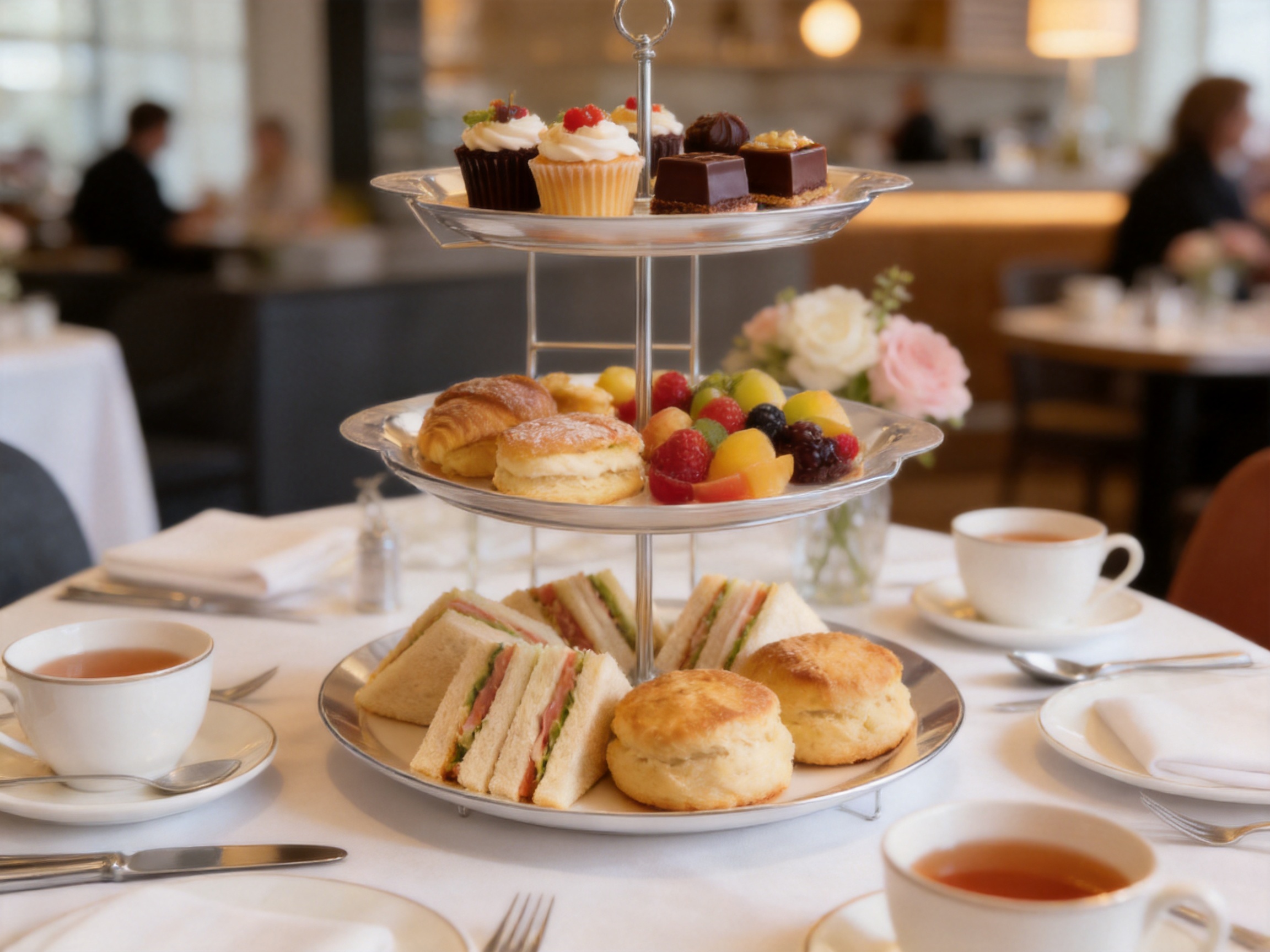
Hotels may use the product for afternoon tea service, banquet functions, conference refreshments, or special room amenities. A tiered arrangement can contribute to a coordinated guest experience and provide a practical way to serve multiple food types in a single presentation unit.
Restaurants can use it for desserts, appetizers, sharing portions, and themed menus. For example, a restaurant may create a tiered tasting arrangement with small cakes on one level, fruit on another, and chocolate items on the third. The same product can also be used for breakfast pastries or table snacks, subject to the establishment’s food-service procedures.
Catering companies and event planners can benefit from the product’s decorative value. Weddings, birthday parties, corporate events, trade receptions, and holiday celebrations often require food displays that are attractive as well as functional. A three-tier structure can add height to a buffet and help create a focal point on a long serving table.
Retailers may present the tray as a practical entertaining accessory. Its potential customer base includes families, home bakers, hosts, cafés, small restaurants, bakeries, hotels, caterers, and hospitality procurement companies. The product’s adaptable use makes it suitable for different sales channels, including kitchenware stores, home-goods retailers, food-service distributors, and online marketplaces.
Design Considerations for Different Foods
The best performance of a tiered tray depends on thoughtful loading and arrangement. Small pastries and desserts are generally well suited to multi-level presentation because they can be distributed across the available surfaces. Items should be arranged so that they remain stable and are easy for guests to reach.
Users may create visual balance by placing larger or heavier suitable items on the lower level and lighter items on the upper levels. This arrangement can support a more stable center of gravity and make the display look proportionate. Food should not be stacked excessively or placed beyond the intended serving surface.
Color coordination can further improve the presentation. Light-colored cakes, dark chocolates, bright fruit, and decorated pastries can be distributed across the three levels to create contrast. Bakeries and caterers may also coordinate the food arrangement with a seasonal theme, brand color, wedding palette, or holiday concept.
For afternoon tea, the levels can be divided into sandwiches, scones, cakes, or other small servings. For a dessert table, one tier may feature cookies, another may hold cupcakes, and the third may display fruit or confectionery. For a party, the product can be used for a mixture of sweet and savory finger foods.
When preparing the tray for service, users should consider accessibility. Items should not be placed so close together that guests need to disturb neighboring foods to reach them. A visually attractive arrangement should also remain practical for serving. Adequate spacing, stable placement, and suitable portion sizes are important for a positive user experience.
Commercial and Logistics Advantages
For international buyers, product specifications are only one part of the purchasing decision. Carton packing, container loading, minimum order quantity, delivery time, and supplier capability all influence the total cost and efficiency of a procurement program.
The 3-Tier Dessert Tray is packed four pieces per carton. This carton quantity provides a basic planning reference for warehousing and distribution. Buyers can calculate expected carton requirements based on order volume and can coordinate storage space before shipment.
The listed loading quantity is 860 pieces for a 20-foot container and 2,093 pieces for a 40-foot high-cube container. These figures may assist importers when planning shipping schedules, freight budgets, and warehouse receiving capacity. Actual loading results can depend on packaging configuration, palletization, shipping conditions, and final production details, so buyers should confirm the final packing plan before shipment.
The minimum order quantity is 2,000 pieces. This quantity is suitable for importers, distributors, large retailers, hospitality supply companies, and private-label customers planning a commercial launch rather than a small trial purchase. A stated delivery time of 30 days can also support seasonal purchasing, promotional planning, and replenishment schedules, subject to order confirmation, artwork approval, production requirements, and shipping arrangements.
Commercial buyers may also request packaging customization, product labeling, barcode application, instruction inserts, or private-label support. These requirements should be discussed during the quotation and sampling stages. Early confirmation helps the manufacturer plan materials, packaging components, quality checkpoints, and production timing.
The combination of a differentiated product format and a commercial manufacturing structure can be advantageous compared with generic flat trays or small-scale supply sources. Buyers can obtain a product with a clear use case while working with a supplier that has experience serving international customers and handling larger production programs.
Manufacturing Experience and Product Development Strengths
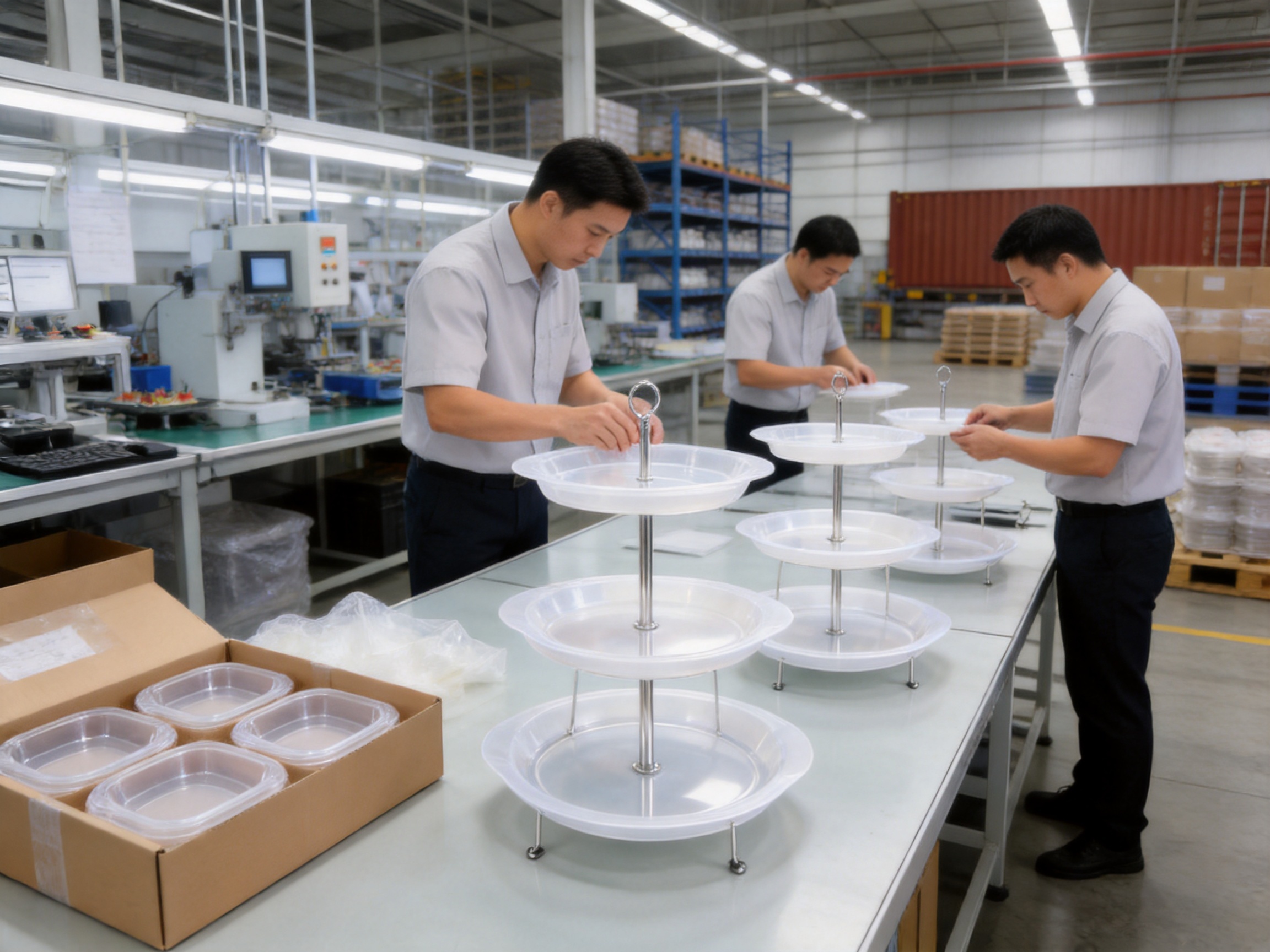
The manufacturer behind the product is CIXI GSTAR ELECTRIC APPLIANCE CO., LTD., located in Cixi, Ningbo, China. Although the company is widely associated with small electric kitchen appliances, its product development history also includes non-electric household and hospitality products. This combination is relevant because many successful kitchen and tableware products require more than basic assembly; they require practical design, user-focused development, sourcing coordination, production management, and quality control.
The company’s product range includes blenders, slicers, choppers, food processors, smokeless grills, hot pots, air fryers, and air ovens. It also develops products for bars, restaurants, and hotels, including ice buckets, beverage dispensers, pitchers, slicers, and graters. Experience across these categories can support an understanding of food preparation, serving environments, kitchen workflows, and hospitality requirements.
The company’s development history began with trading and sourcing experience before moving toward proprietary product development. This background can be valuable in international business because it provides familiarity with customer expectations, market differences, supplier coordination, price structures, and export requirements.
The company reports that it began developing non-electric innovative products in 2009, including items such as spiralizer drum graters, iced pitchers, and iced bowls. These products were supplied to international markets and major retail customers. Experience with non-electric products is particularly relevant to a tableware item because it involves material selection, mechanical structure, appearance, mold or component management, and user-oriented design rather than electrical performance alone.
In later years, the company expanded its capabilities in electric product development. It reports having a factory with approximately 10,000 square meters of land and an 18,000-square-meter building area during one stage of its development. The company also reports a workforce that has grown to include production workers, research and development engineers, and quality control personnel. Current company information describes a wholly owned production plant with approximately 15,000 square meters of production area and more than 200 experienced workers.
These resources can support a more structured approach to product development. A dedicated research and development team may help evaluate new concepts, improve usability, and coordinate design changes. Quality control personnel can participate in incoming material checks, production inspections, assembly checks, packaging inspections, and final shipment approval.
For buyers, the most important value of this manufacturing background is not simply factory size. It is the ability to manage a product from concept through production and delivery. A supplier with experience in both innovative household products and electrical appliances may be better prepared to coordinate engineering, materials, quality, packaging, and international customer requirements.
Advanced Production and Quality Management Approach
Producing a dependable three-tier tray involves multiple stages. The process begins with product specifications and material planning. The supplier must identify the required components, define dimensions, confirm appearance expectations, and establish packaging requirements. A clear specification reduces the risk of inconsistent production and supports more reliable inspection.
Material control is another important stage. PS components and stainless iron components should be sourced according to the agreed product requirements. Incoming materials may be checked for appearance, dimensions, surface condition, color, and other relevant characteristics. Effective material control helps prevent defects from being carried into later assembly stages.
Component production must then be coordinated with the intended structure. Tray surfaces should be formed consistently, while metal supports should be produced and finished to the required design. The assembly process should ensure that the tiers are correctly positioned and that the overall construction has an orderly appearance.
Inspection during production can identify problems before the entire order is completed. Quality personnel may review component fit, stability, alignment, surface condition, and packaging readiness. Early inspection is more efficient than discovering a large-scale issue at the end of production.
Final inspection should verify the finished product against approved samples or specifications. Relevant checks may include product appearance, dimensions, material consistency, structural assembly, quantity, carton condition, labeling, and loading arrangements. The exact inspection plan should be agreed with the buyer according to the destination market and order requirements.
Packaging is also part of the manufacturing process. A tableware product must be protected from scratches, deformation, contamination, and damage during inland transport, container loading, ocean freight, unloading, and warehouse handling. The four-piece carton configuration provides a foundation for organized packing, while additional inner protection may be considered according to the final packaging design.
The manufacturer’s experience with international retail and hospitality products can support practical quality management. Large retail customers often require consistent appearance, reliable packaging, accurate documentation, and delivery coordination. These expectations encourage suppliers to develop repeatable processes rather than rely only on final visual checks.
Working with a Factory for Private-Label and Wholesale Programs
Wholesale and private-label buyers should begin with a detailed product brief. The brief may include target market, intended users, preferred color, logo requirements, packaging format, barcode information, carton marks, quantity, delivery destination, and required documentation. Clear information allows the factory to provide a more accurate quotation and production schedule.
Sample approval is an important part of the process. A buyer should review the physical sample for appearance, dimensions, assembly, handling, packaging, and suitability for the intended application. If changes are needed, they should be documented before mass production begins. A signed or otherwise confirmed sample can become a reference for production inspection.
Buyers should also discuss whether the listed dimensions refer to the assembled product, the carton, or another measurement basis. Confirming this point avoids confusion during logistics planning. The same applies to net weight, gross weight, container quantities, and the final number of pieces per carton.
For food-service customers, it may be useful to request information about recommended cleaning methods, usage limitations, and material-related documentation. Requirements can vary by destination market and application. A professional supplier should be able to discuss available documents and identify which tests or certifications may be necessary for a particular sales region.
Communication should continue throughout production. Buyers may request progress updates, pre-shipment inspections, production photographs, or third-party inspection arrangements when appropriate. These measures can help coordinate international orders and reduce uncertainty for distributors and retailers.
Positioning the Product in the Market
The 3-Tier Dessert Tray can be positioned as a combination of tableware, serving equipment, and decorative display accessory. This broader positioning allows different buyers to emphasize different benefits. A home-goods retailer may focus on entertaining and celebrations, while a hospitality supplier may emphasize buffet organization and afternoon tea service.
For consumer sales, marketing content can highlight the three-level presentation, space-conscious arrangement, versatility, and suitability for parties. Images and demonstrations can show the tray holding cupcakes, pastries, fruit, cookies, or finger foods. Retail packaging should communicate the intended uses clearly without making unsupported claims.
For commercial customers, the focus may shift toward consistent presentation, carton packing, order volume, supply reliability, and delivery planning. Bakeries and cafés may consider how the product supports counter displays, seasonal promotions, and special menus. Hotels and catering companies may evaluate how it contributes to event styling and service efficiency.
Compared with low-cost generic trays, the product’s strongest competitive point is its structured three-tier format combined with a mixed-material construction. Compared with elaborate premium stands, its potential advantage may be practical simplicity and broader everyday use. Buyers can decide how to position it according to their market segment and price strategy.
Private-label customers can also use the product as part of a larger kitchenware or entertaining collection. It may be paired with cake servers, dessert plates, beverage dispensers, pitchers, ice buckets, or other hospitality accessories. A coordinated product range can help retailers build a stronger category presentation and encourage multiple-item purchases.
Care, Handling, and Practical Use Recommendations
Before first use, the tray should be cleaned according to the supplier’s instructions. Users should inspect the structure to confirm that the components are properly assembled and that no part has been damaged during transport. Any packaging materials should be removed before the product is placed into service.
Food should be distributed evenly across the tiers. Users should avoid placing excessive weight on any level or using the tray for purposes outside its intended application. Heavy cookware, sharp equipment, or unstable containers may damage the surfaces or affect the balance of the structure.
The product should be carried carefully, preferably with both hands when loaded. Users should avoid lifting it by a single decorative or support component unless the design specifically permits that method. When moving the tray through a busy service area, staff should ensure that pathways are clear and that the food remains stable.
Cleaning procedures should be appropriate for the materials and finish. Abrasive tools, harsh chemicals, or excessive heat should not be used unless specifically approved. After cleaning, the tray should be dried thoroughly before storage. Proper care can help maintain its appearance and reduce the risk of surface damage.
For commercial operators, a cleaning and inspection routine can be included in daily service procedures. Staff can check for loose components, scratches, deformation, stains, or other conditions that may affect presentation. A consistent care program is especially useful when the product is used frequently in cafés, hotels, bakeries, restaurants, and catering operations.
Supply Capacity and Long-Term Business Potential
A product is more valuable to commercial buyers when it can be supported beyond the initial shipment. The manufacturer’s experience in product development, international sourcing, and kitchen-related categories provides a foundation for long-term business cooperation. Buyers may begin with the 3-Tier Dessert Tray and later explore related tableware, serving accessories, or small kitchen appliances.
The company’s history includes cooperation with international retail and supermarket customers. This indicates experience with the expectations associated with large-volume orders, including product consistency, delivery coordination, packaging requirements, and customer communication. Such experience can be useful to importers seeking a supplier capable of supporting repeat orders.
The reported research and development resources may also support product customization and new product programs. Buyers with a specific market concept can discuss modifications to appearance, packaging, materials, or related designs. Any proposed change should be assessed for tooling, cost, lead time, minimum order quantity, and regulatory implications.
For businesses building a food-service product range, the supplier’s combination of electric and non-electric categories can simplify sourcing. A buyer may be able to discuss a broader selection of kitchen and hospitality products with one manufacturing partner. This can reduce communication complexity and support a more coherent purchasing strategy.
Long-term cooperation depends on clear expectations, stable quality, transparent communication, and reliable after-sales support. The company identifies high-quality innovative products, competitive pricing, quick delivery, and after-sales service as central business principles. Buyers should evaluate these commitments through samples, production performance, inspection results, and ongoing order management.
Frequently Asked Questions
What is the primary purpose of the 3-Tier Dessert Tray?
The primary purpose is to display and serve desserts and other small foods across three vertical levels. It can be used for cakes, pastries, cookies, fruit, finger foods, sandwiches, and snacks in homes, cafés, restaurants, hotels, bakeries, catering operations, and event settings.
What materials are used in the product?
The listed materials are PS and stainless iron. The PS component supports a lightweight and presentable serving structure, while the stainless iron component contributes to the supporting framework and overall form.
How is the product different from a flat dessert platter?
A flat platter spreads food horizontally, while the three-tier tray creates a vertical display. The tiered format can save table space, improve visibility, organize different foods, and create a more decorative centerpiece for dessert or buffet service.
Can the tray be used for foods other than desserts?
Yes. Although it is named a dessert tray, it may also be used for suitable pastries, fruit, sandwiches, appetizers, cookies, snacks, and other small servings. Users should select food items and portion sizes appropriate for the product’s structure and intended use.
How many pieces are packed in one carton?
The listed packing quantity is four pieces per carton. Buyers should confirm the final packaging configuration if they require customized cartons, private-label packaging, inner protection, or special carton markings.
What is the minimum order quantity?
The listed minimum order quantity is 2,000 pieces. This quantity is intended for wholesale, distribution, retail, hospitality, and private-label purchasing programs.
What is the stated delivery time?
The stated delivery time is 30 days. The final schedule should be confirmed according to order quantity, packaging requirements, sample approval, production planning, inspection, and shipping arrangements.
How many pieces can be loaded into a container?
The listed loading information is 860 pieces for a 20-foot container and 2,093 pieces for a 40-foot high-cube container. Actual loading may vary depending on final packaging, palletization, and shipping conditions.
Is customization available?
Buyers should discuss customization directly with the manufacturer. Possible topics may include packaging, labels, colors, logo presentation, carton marks, and related product requirements. Customization can affect tooling, cost, minimum order quantity, and lead time.
What type of company manufactures the product?
The product is supplied by a Chinese manufacturer with experience in small electric kitchen appliances, non-electric household products, and hospitality-related items. The company reports research and development, production, and quality control resources, as well as experience serving international customers.
What should buyers confirm before placing an order?
Buyers should confirm the final product dimensions, material details, packaging, carton quantity, net and gross weights, loading plan, delivery schedule, inspection requirements, documentation, payment terms, and any destination-market compliance requirements.
Conclusion
The 3-Tier Dessert Tray is a practical and visually effective solution for organized food presentation. Its vertical three-level format helps users make better use of tabletop space while creating a more attractive display for desserts, pastries, fruit, snacks, and other small foods. The combination of PS and stainless iron supports a balance between manageable handling, presentable surfaces, and structural support.
Its potential advantages over conventional flat trays include improved visibility, more efficient use of vertical space, better organization, and a stronger centerpiece effect. These qualities make it relevant to homes, cafés, bakeries, restaurants, hotels, catering companies, event planners, retailers, and food-service distributors.
From a commercial perspective, the item offers clear purchasing information, four-piece carton packing, container loading references, a 2,000-piece minimum order quantity, and a stated 30-day delivery time. These details give buyers a foundation for evaluating inventory, logistics, and sales plans.
The manufacturer adds value through experience in both small kitchen appliances and non-electric household and hospitality products. Its reported factory resources, research and development capability, production workforce, and quality control organization provide a foundation for wholesale and private-label cooperation. Buyers seeking a dependable supplier should review samples, confirm specifications, discuss market requirements, and establish a clear inspection and packaging plan before mass production.
For companies looking to expand their tableware or hospitality product range, the 3-Tier Dessert Tray can serve as a versatile and commercially attractive addition. It combines presentation value with everyday practicality and can be adapted to a wide variety of food-service and entertaining situations.
References
1. Product specification sheet for item GS064, 3-Tier Dessert Tray.
2. Manufacturer-provided company information for CIXI GSTAR ELECTRIC APPLIANCE CO., LTD.
3. General principles of food-service tableware design, serving organization, and buffet presentation.
4. General guidance on wholesale product development, packaging coordination, quality inspection, and international supply planning.
5. General material-handling and care considerations for polymer and metal household serving products.