
 English
 中文简体
中文简体 Español
 English
 中文简体
中文简体 Español
Introduction
Modern kitchens require organization, convenience, and dependable everyday products. A pantry set is more than a collection of containers or accessories; it is a practical storage solution that helps households arrange ingredients, maintain a tidy countertop, and improve the overall cooking experience. The six-piece pantry set identified as GS038-1 is designed for consumers, retailers, hospitality businesses, and distributors seeking a coordinated tableware and kitchen-storage product made from AS, ABS, and silicone.
The set combines several material characteristics in one product. AS can provide a clear or attractive appearance and a rigid structure, ABS contributes strength and impact resistance, while silicone is commonly used where flexibility, sealing, cushioning, or user comfort is required. Together, these materials create a balanced product concept that is suitable for daily kitchen use and commercial distribution.
Produced by CIXI GSTAR ELECTRIC APPLIANCE CO., LTD., the six-piece pantry set benefits from the company’s experience in designing and manufacturing household kitchen products. Although the company is widely associated with small electric appliances, its product development history also includes non-electric kitchen innovations, tableware, food-preparation tools, beverage products, and storage-related items. This broader product background gives the manufacturer useful insight into the needs of kitchens, retailers, food-service customers, and international buyers.
The GS038-1 is supplied as a six-piece pantry set, with four complete sets packed per carton. Its carton measurement is 29.5 by 13.5 by 28.3 centimeters, with a net weight of 7 kilograms and a gross weight of 8 kilograms per carton. The listed minimum order quantity is 2,000 pieces, and the standard delivery time is 30 days. These specifications make the product suitable for wholesale purchasing, private-label programs, supermarket distribution, kitchenware retailers, and regional importers.
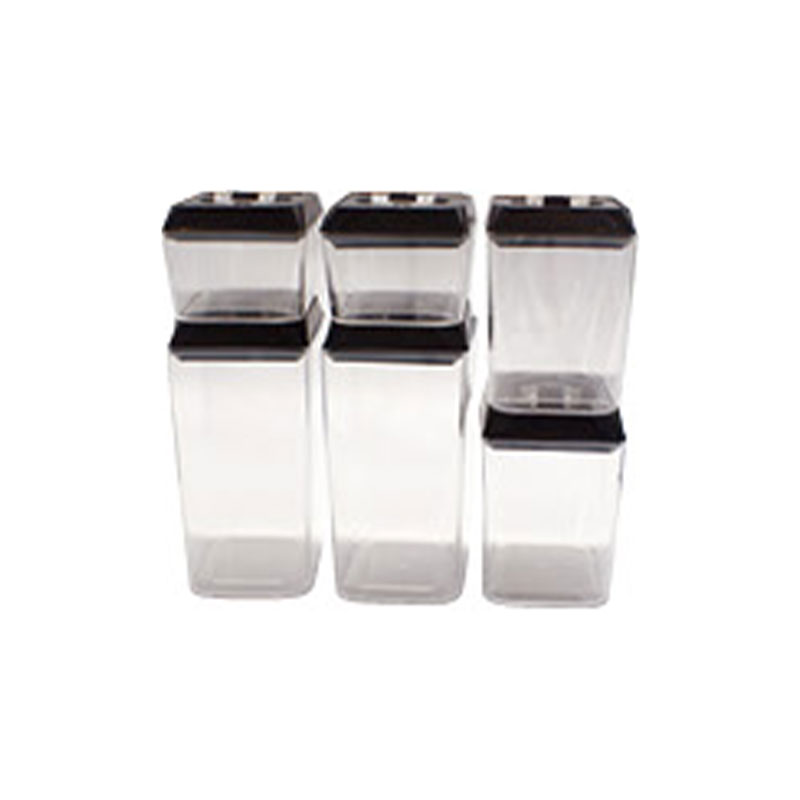
6pcs Pantry Sets
Product Overview
The six-piece pantry set is categorized under tableware and daily household necessities. Its principal product code is GS038-1, allowing buyers, purchasing departments, and logistics teams to identify the item accurately during quotation, ordering, production, and shipment. A clear item number is particularly useful for international trade because it reduces confusion when a supplier offers several similar household products.
The name “six-piece pantry set” communicates the product’s primary selling point: customers receive a coordinated group of pantry-related pieces rather than purchasing individual items separately. A matching set can create a more uniform kitchen appearance and can also offer better value than buying separate products. For retailers, a complete set generally has stronger shelf appeal because it can be presented as an immediate kitchen solution.
The product uses AS, ABS, and silicone. The supplied specification spells silicone as “Sillicon,” but silicone is the standard English spelling for the material. AS, or acrylonitrile styrene, is often selected for household products that require a clear, polished, or visually attractive plastic component. ABS, or acrylonitrile butadiene styrene, is widely used for rigid consumer products because it can offer a combination of strength, stability, and a smooth finished surface. Silicone can provide flexibility and is frequently used for seals, soft-touch parts, anti-slip elements, or protective interfaces.
The combination of materials can help separate different functions within the same set. Rigid structural components may use AS or ABS, while flexible or contact-sensitive parts may use silicone. This approach can make the product easier to use while improving the perceived quality of the finished item. It also enables the manufacturer to create a product that is both attractive and functional without relying on one material for every component.
For consumers, a coordinated pantry set can support daily routines such as storing dry goods, arranging kitchen supplies, preparing ingredients, or maintaining a clean food-preparation area. For retailers, it offers a compact product with a straightforward category position. For hospitality and food-service buyers, a pantry set can contribute to organized back-of-house or guest-use areas, depending on the specific application and local food-contact requirements.
| Specification | Details |
| Item number | GS038-1 |
| Product name | Six-Piece Pantry Set |
| Category | Tableware and daily household necessities |
| Material | AS, ABS, and silicone |
| Pieces per carton | Four complete sets per carton |
| Carton measurement | 29.5 x 13.5 x 28.3 centimeters |
| Net weight | 7 kilograms per carton |
| Gross weight | 8 kilograms per carton |
| Minimum order quantity | 2,000 pieces |
| Standard delivery time | 30 days |
Advantages of a Coordinated Six-Piece Design
Complete Purchasing Convenience
One of the clearest advantages of a six-piece set is purchasing convenience. Consumers do not need to select several items individually and then determine whether the pieces match in appearance or function. The set is already organized as one product offering, making it easier to understand, display, price, and purchase.
This convenience also benefits professional buyers. Retailers can list one stock-keeping unit instead of managing multiple independent components. Importers can negotiate one product specification and one packaging configuration. Distributors can simplify catalog management, product photography, and sales training. A coordinated product is often easier for sales staff to explain because the value is contained in one complete package.
Better Visual Consistency
Consumers increasingly value visual consistency in kitchen products. A set with coordinated pieces can create a more orderly appearance than a collection of unrelated containers and accessories. Uniform styling may be especially attractive in open kitchens, modern apartments, rental properties, guesthouses, and hospitality environments where storage products are visible.
For retail presentation, a coordinated set can also create a stronger visual message. The product can be displayed as a complete solution rather than as separate plastic or silicone accessories. This helps buyers understand the intended use and may improve shelf communication. Packaging designers can emphasize the number of pieces, the material combination, and the product’s role in pantry organization.
Efficient Use of Kitchen Space
Pantry organization is closely connected with space efficiency. A properly arranged set can help users group related items, reduce countertop clutter, and make frequently used kitchen supplies easier to locate. Even in small homes, organized storage can improve the practical use of cabinets, shelves, and work surfaces.
Compared with purchasing miscellaneous kitchen accessories, a coordinated set offers a more structured starting point. Users can assign the pieces to specific pantry tasks and expand their organization system later if needed. This makes the product suitable for first-time homeowners, students, families moving into new homes, and consumers refreshing an existing kitchen.
Material Versatility
The use of AS, ABS, and silicone gives the product a material profile that can support different design requirements. AS and ABS can provide a firm, stable base for rigid components, while silicone can be integrated where flexibility or a softer interface is useful. This can produce a more refined user experience than a product made entirely from one rigid material.
A multi-material structure can also help manufacturers address different performance requirements within the same product. Structural areas may need stiffness, visible surfaces may need a smooth finish, and contact areas may benefit from flexibility. Separating these functions by material is a common way to balance appearance, usability, and production practicality.

Advantages Over Less Coordinated Competitor Products
The pantry and kitchen-storage market includes individual containers, unbranded accessories, low-cost mixed assortments, and premium organizational systems. The six-piece pantry set can compete effectively by combining coordinated design, material variety, wholesale readiness, and manufacturer support.
Compared with Single-Item Purchases
Single-item products can appear inexpensive, but purchasing several separate pieces may lead to inconsistent colors, different dimensions, and uneven quality. A coordinated six-piece set reduces this problem by offering a planned assortment. Customers receive a product collection intended to work together, which can provide stronger functional and visual value.
From a retailer’s perspective, a set can also support a higher average transaction value than one small accessory. The product is easier to promote as a solution for pantry organization instead of as a low-cost replacement item. This solution-oriented positioning may improve the product’s appeal in homeware stores, online marketplaces, supermarket seasonal programs, and gift sections.
Compared with Low-Grade Mixed Plastic Products
Some competing products rely on a single low-cost material for every component. While this may reduce the initial price, it can limit the product’s design flexibility and perceived quality. The AS, ABS, and silicone combination allows the manufacturer to assign materials according to function, creating opportunities for better handling, more comfortable interfaces, and a more polished appearance.
Material selection alone does not guarantee performance, and buyers should always confirm detailed specifications, testing documents, and applicable regulations. Nevertheless, a deliberate multi-material design is a positive foundation for developing a more capable household product than an undifferentiated plastic assortment.
Compared with Unbranded Import Products
Unbranded import products may offer low prices but can create uncertainty regarding product consistency, packaging, communication, and after-sales support. A manufacturer with a defined factory, engineering team, quality-control personnel, and export experience can provide a more organized supply relationship.
CIXI GSTAR ELECTRIC APPLIANCE CO., LTD. has experience serving international customers and has supplied products to well-known retail and wholesale channels. This background can be valuable for buyers that require stable specifications, production follow-up, carton information, and communication throughout the order process.
Compared with Overly Complex Storage Systems
Premium pantry systems may include many components, specialized mechanisms, or extensive installation requirements. Such systems can be attractive but may also be more expensive and less accessible to price-sensitive consumers. A six-piece pantry set offers a simpler alternative. It provides multiple coordinated pieces without requiring a major kitchen renovation or complicated installation.
This balance between functionality and simplicity can widen the potential market. The product can serve customers who want better organization but do not need a large modular storage system. It can also be suitable for promotional campaigns, seasonal merchandising, and entry-level home organization ranges.
Manufacturing Strengths and Product Development Capability
Experience in Household Kitchen Products
The manufacturer has developed a broad portfolio covering small electric kitchen appliances and non-electric kitchen products. Its product range includes blenders, slicers, choppers, food processors, smokeless grills, hot pots, air fryers, air ovens, ice buckets, beverage dispensers, pitchers, graters, and related household products.
This product diversity supports a practical understanding of how kitchen products are designed, assembled, packed, used, and sold. A pantry set may not contain an electrical system, but it still needs careful attention to ergonomics, materials, appearance, durability, packaging, and customer expectations. Experience across multiple kitchen categories can help the manufacturer identify these requirements at an early design stage.
Research and Development Resources
The company reports an established research and development department with engineering personnel. A dedicated product-development team can contribute to industrial design, material selection, prototype evaluation, tooling coordination, production improvement, and technical communication with customers.
For a pantry set, research and development may involve reviewing the geometry of each piece, evaluating how components fit together, checking the appearance of molded surfaces, and confirming that packaging protects the product during transportation. It may also include adjustments for private-label requirements, color preferences, regional market expectations, and customer-specific packaging.
Strong product development is particularly important in household goods because consumers judge quality through many details. They notice whether parts fit properly, whether edges feel smooth, whether the product is easy to clean, whether the appearance is consistent, and whether the packaging communicates the product’s purpose. Engineering and design coordination helps address these details before mass production.
Quality-Control Organization
The company also reports dedicated quality-control personnel. Quality control is important for multi-piece products because the complete set must be evaluated not only piece by piece but also as a coordinated package. The presence of all six pieces, the correct material components, the consistency of appearance, and the accuracy of carton packing should be checked before shipment.
A suitable quality-control program may include incoming material review, first-article inspection, in-process checks, visual inspection, dimensional verification, assembly or fit checks, finished-product sampling, and carton audits. The exact inspection standards should be agreed with the buyer before production. For products intended for food-related use, buyers should also confirm relevant food-contact testing, migration requirements, labeling obligations, and market-specific compliance documentation.
Quality control is not limited to identifying defective goods at the end of production. Effective control begins with clear specifications. When the item number, materials, color standards, packaging details, carton quantity, and acceptance criteria are documented before production, the risk of misunderstanding is reduced. A manufacturer with experience in international orders can help coordinate these requirements.
Factory Scale and Production Coordination
The manufacturer reports a factory with substantial production and building areas, together with an experienced workforce. A factory of this scale can provide advantages in production coordination, storage of raw materials, assembly management, packing operations, and order scheduling.
Factory scale does not automatically determine product quality, but it can improve the ability to manage larger orders and repeat programs. Wholesale buyers often need suppliers that can support both an initial launch and future replenishment. Adequate facilities and trained personnel can make it easier to maintain production continuity when demand increases.
For the six-piece pantry set, production coordination is likely to be important because several components must be matched, inspected, and packed together. The supplier must ensure that complete sets are formed correctly before cartons are sealed. Efficient coordination reduces the risk of incomplete sets, mixed parts, incorrect quantities, or inconsistent packaging.

Production Process Considerations
The production of a multi-material pantry set generally involves several controlled stages. Although exact machinery, tooling specifications, and inspection standards should be confirmed with the manufacturer, the following process framework explains the operational strengths that buyers should expect from a capable supplier.
Design and Specification Confirmation
Production begins with confirmation of the product structure and commercial requirements. The item number, product name, materials, colors, dimensions, piece count, packaging, carton quantity, and delivery schedule should be documented. If the buyer requires a private label, the artwork, logo placement, language, barcode, and warning information should also be approved at this stage.
This initial stage is essential because a six-piece set has more variables than a single-component product. Each piece must correspond to the approved design, and the packing method must ensure that the complete assortment is maintained. Clear approval procedures reduce later changes and protect the production schedule.
Material Preparation
AS, ABS, and silicone materials should be prepared according to the approved product specification. Material identification, color matching, storage conditions, and batch control can influence the final appearance and consistency. For products used around food or kitchen supplies, buyers should request the appropriate material declarations and testing documentation for the target market.
Material preparation also includes confirming that the correct material is assigned to the correct component. Since a multi-material product may have rigid and flexible sections, part identification is important. Organized material control supports stable production and helps prevent accidental substitution.
Component Forming and Finishing
Rigid plastic parts are commonly formed using controlled molding operations, while silicone components may require a separate forming or curing process. After forming, parts may undergo trimming, surface inspection, cleaning, or other finishing operations. The objective is to produce components with consistent dimensions, smooth surfaces, and reliable fit.
Visible defects such as excessive flash, scratches, discoloration, warping, incomplete filling, or uneven edges can affect customer satisfaction. A structured visual inspection process is therefore important. Dimensional checks are also useful when components must fit together or occupy a defined space in the retail package.
Assembly and Set Formation
Where the product includes multiple components, assembly personnel or dedicated production processes bring the pieces together into a complete six-piece set. This stage requires careful counting and matching. Operators should work with clear visual instructions and packing references to ensure that each finished set contains the correct pieces.
Set formation can be supported by line-side checklists, sample boards, component trays, barcode controls, or weight verification. The most suitable method depends on the product structure and factory system. The key goal is to prevent incomplete or mixed sets from reaching the carton-packing stage.
Inspection and Packaging
Before packaging, finished sets should be checked for appearance, completeness, function where applicable, and compliance with the approved sample. Packaging materials should protect the product from dust, moisture, abrasion, and impact during handling and transportation.
The specified carton quantity is four complete pantry sets per carton. Carton packing should be verified carefully because the buyer’s inventory records, shipping documents, and warehouse planning depend on accurate carton quantities. The listed carton measurement and weight information should also be checked periodically, especially if packaging materials or product configurations change.
Packaging, Logistics, and Wholesale Value
Packaging plays an important role in the commercial success of household tableware. A well-designed package protects the product and communicates its value. For the six-piece pantry set, packaging should clearly identify the product name, item number, piece count, material information where required, country of origin, handling instructions, and any applicable compliance marks.
The carton specification of 29.5 by 13.5 by 28.3 centimeters provides buyers with a starting point for warehouse planning. With four complete sets per carton, distributors can calculate approximate storage requirements, pallet arrangements, and shipping quantities. The net weight of 7 kilograms and gross weight of 8 kilograms help logistics teams estimate handling requirements and freight costs.
The listed container-loading reference is 2,200 pieces for a 20-foot container and 5,400 pieces for a 40-foot high-cube container. These figures can assist preliminary purchasing and freight planning. Actual loading quantities may vary according to packaging configuration, container utilization, shipping requirements, and final carton dimensions. Buyers should confirm the final loading plan before booking transportation.
The minimum order quantity of 2,000 pieces is suitable for distributors, supermarket suppliers, online retailers, and importers planning a regional launch. It may also support customized packaging or color programs more effectively than very small orders. The stated 30-day delivery time provides a useful planning reference, although the confirmed schedule should take account of order approval, raw-material availability, packaging artwork, production capacity, inspection, and shipping arrangements.
Commercial Applications
Household Retail
The most direct market for the six-piece pantry set is household retail. Homeware stores, department stores, supermarket chains, and kitchen-specialty retailers can present the product as an affordable organization solution. Its complete-set format makes it suitable for shelf displays, end-cap promotions, new-home campaigns, and seasonal kitchen programs.
Online Marketplaces
Online retailers can benefit from the product’s straightforward description. The listing can emphasize the six-piece configuration, material combination, intended pantry use, carton-ready supply, and coordinated design. Product photography should show the complete set and explain the role of each piece without making claims that are not supported by the approved specification.
Online buyers often look for practical benefits such as organization, easy handling, attractive appearance, and good value. Retailers should provide accurate measurements, care information, material disclosures, and any relevant restrictions. Clear product information helps reduce returns and improves customer confidence.
Hospitality and Food-Service Supply
Hotels, guesthouses, serviced apartments, catering businesses, and restaurants may use pantry-related tableware in guest kitchens, staff areas, preparation spaces, or storage zones. The suitability of the product depends on the intended application and local regulations. Buyers serving commercial food environments should confirm cleaning, temperature, food-contact, and durability requirements before placing an order.
Promotional and Gift Programs
A coordinated six-piece set can also be considered for promotional campaigns, home-opening gifts, loyalty programs, and seasonal bundles. The product offers practical daily value, which can make it more attractive than a purely decorative promotional item. Custom packaging or printed inserts may help align the set with a retailer, property developer, kitchen brand, or household campaign.
Why Manufacturer Support Matters
Choosing a product is only one part of a successful wholesale program. Buyers also need communication, technical support, order coordination, production visibility, and after-sales service. The manufacturer’s stated business principles emphasize quality, innovation, competitive pricing, quick delivery, and customer service. These priorities are relevant to the pantry set because buyers often need consistent support from sample approval through repeat orders.
Engineering cooperation can be useful when a customer wants modified colors, packaging, piece arrangements, or market-specific instructions. A supplier with product-development experience can evaluate whether a requested change affects tooling, materials, production time, carton capacity, or quality inspection.
Long-term cooperation can also improve efficiency. After the first production run, the supplier and buyer can review sales feedback, customer comments, packaging performance, defect data, and replenishment timing. This information can support future improvements while preserving the core identity of the product.

Buyer Checklist Before Ordering
Before placing an order, buyers should confirm whether the six-piece pantry set meets the requirements of the intended market. The following points are especially important.
First, confirm the complete product specification, including the exact contents of the six-piece set. The supplied information identifies the set as a six-piece product but does not list the individual components. Buyers should request a detailed component list, product photographs, dimensional drawings, and an approved sample.
Second, confirm the material composition and any applicable food-contact documentation. AS, ABS, and silicone may be used for different parts, so the buyer should understand which material applies to each component. Testing requirements vary by destination market and intended use.
Third, approve colors, surface finishes, logos, packaging artwork, labels, instruction inserts, and carton markings before mass production. Written approval helps prevent misunderstandings and provides a reference for quality inspection.
Fourth, confirm the inspection process. The buyer and supplier should agree on acceptable quality limits, visual standards, dimensional tolerances, packaging requirements, and procedures for handling nonconforming goods.
Fifth, confirm logistics data. The carton quantity is four sets per carton, with listed carton dimensions and weights. These details should be checked against the final approved packaging before shipment.
Sixth, confirm the delivery schedule. The standard delivery time is 30 days, but the actual schedule may depend on production capacity, customized packaging, raw materials, inspection, and shipping arrangements.
Care, Use, and Responsible Product Communication
Retailers should communicate product care instructions accurately. Unless the manufacturer has confirmed specific conditions, sellers should avoid making unsupported claims about dishwasher safety, microwave use, freezer use, boiling temperatures, or long-term food storage. These features depend on the exact design, material grade, and testing results.
Product descriptions should also distinguish between pantry organization and certified food-storage performance. A pantry set may be intended for household organization, but the precise use should follow the manufacturer’s approved instructions and applicable regulations. Clear communication protects consumers and reduces the risk of misuse.
Responsible product communication is also valuable for international sales. Packaging language, recycling information, warnings, care instructions, and compliance marks may differ between markets. Buyers should work with the supplier to prepare market-appropriate materials before shipment.
Q&A
What is the product?
It is a six-piece pantry set identified by item number GS038-1. It belongs to the tableware and daily household necessities category and is intended for practical kitchen and pantry organization.
What materials are used?
The listed materials are AS, ABS, and silicone. The exact material assigned to each individual component should be confirmed with the manufacturer through the technical specification or approved sample.
How many complete sets are packed in one carton?
Four complete six-piece sets are packed in each carton.
What are the carton dimensions?
The listed carton measurement is 29.5 by 13.5 by 28.3 centimeters.
What are the carton weights?
The listed net weight is 7 kilograms and the gross weight is 8 kilograms per carton.
What is the minimum order quantity?
The stated minimum order quantity is 2,000 pieces. Buyers should confirm whether customized colors, packaging, or other requirements affect the final minimum order.
What is the standard delivery time?
The listed delivery time is 30 days. The confirmed schedule should be agreed after specifications, packaging, materials, and order details are approved.
Is the product suitable for food contact?
The materials are associated with household kitchen products, but food-contact suitability must be confirmed through the manufacturer’s documentation and testing for the destination market. Buyers should not assume a specific food-contact approval without receiving evidence.
Can the product be customized?
Customization possibilities should be discussed with the manufacturer. Potential areas may include colors, packaging, labels, logos, and market-specific instructions, subject to tooling, order quantity, cost, and production feasibility.
Why purchase a complete set instead of separate pieces?
A complete set provides coordinated design, simplified purchasing, easier retail presentation, and a more organized solution for customers. It can also reduce the inconsistency associated with buying unrelated individual products.
Who can purchase this product?
Potential buyers include importers, distributors, homeware retailers, supermarkets, online sellers, hospitality suppliers, promotional-product companies, and private-label brands.
What should buyers request before placing an order?
Buyers should request product photographs, a complete component list, dimensions, material details, packaging artwork, compliance documentation where applicable, an approved sample, quality standards, and a confirmed production schedule.
Conclusion
The six-piece pantry set GS038-1 is a practical tableware product designed around organization, coordinated presentation, and wholesale efficiency. Its AS, ABS, and silicone construction provides a versatile material foundation, while the complete six-piece format gives consumers and retailers a clear value proposition.
Compared with unrelated single-item products, the set offers better visual consistency and easier purchasing. Compared with low-grade mixed plastic assortments, its multi-material structure provides greater design flexibility. Compared with complex premium systems, it offers a simpler and more accessible way to improve kitchen organization.
The manufacturer’s broader experience in small kitchen appliances, non-electric kitchen products, product innovation, international distribution, engineering, and quality control strengthens the product’s commercial potential. Its factory resources, research and development personnel, quality-control organization, and experience with large retail customers can support reliable production and international order coordination.
With four complete sets per carton, a listed minimum order of 2,000 pieces, a standard 30-day delivery time, and defined logistics information, the product is positioned for wholesale and distribution programs. Buyers should confirm the complete component specification, testing documents, packaging, and market requirements before ordering. When supported by accurate product communication and controlled manufacturing, the six-piece pantry set can become a useful addition to household kitchenware, retail, hospitality, and private-label product ranges.
References
1. Product specification for GS038-1, Six-Piece Pantry Set, including materials, carton data, order quantity, and delivery information.
2. Company information supplied for CIXI GSTAR ELECTRIC APPLIANCE CO., LTD., including manufacturing history, product categories, research and development resources, quality-control organization, and factory capabilities.
3. General principles of household plastic product design, material selection, quality inspection, packaging control, and international wholesale distribution.
4. General guidance for evaluating food-contact materials, consumer-product labeling, packaging requirements, and market-specific compliance obligations.