
 English
 中文简体
中文简体 Español
 English
 中文简体
中文简体 Español
Home & Kitchen — Grilling Guide
Electric Grill vs. Traditional Grill: The Real Difference Is in the Cleanup
A close look at what actually happens after the food comes off the grate — and why the answer changes everything about how often you'll want to cook outdoors, or indoors, this season.
The Direct Answer: Electric Grills Are Significantly Easier to Clean
If cleanup time is your main concern, the short answer is straightforward: an electric grill takes roughly 5 to 10 minutes to clean, while a traditional charcoal or gas grill can easily take 20 to 45 minutes once you factor in ash removal, grease trap scraping, and burner maintenance. Electric grills, especially compact countertop models, are engineered around removable, dishwasher-safe or wipe-clean components, which eliminates most of the labor-intensive steps that make traditional grill cleanup a chore. This difference is one of the biggest reasons people switch to a smokeless indoor grill for everyday cooking rather than relying solely on an outdoor setup.
Info
"Easier" does not mean "zero effort." Electric grills still require regular attention to the drip tray, grease channel, and heating plate to keep performance consistent and to prevent smoke or odor buildup.
Below, we break down exactly why electric grills clean up faster, how the process compares step by step, and what ongoing maintenance actually looks like over months of regular use.
electric grill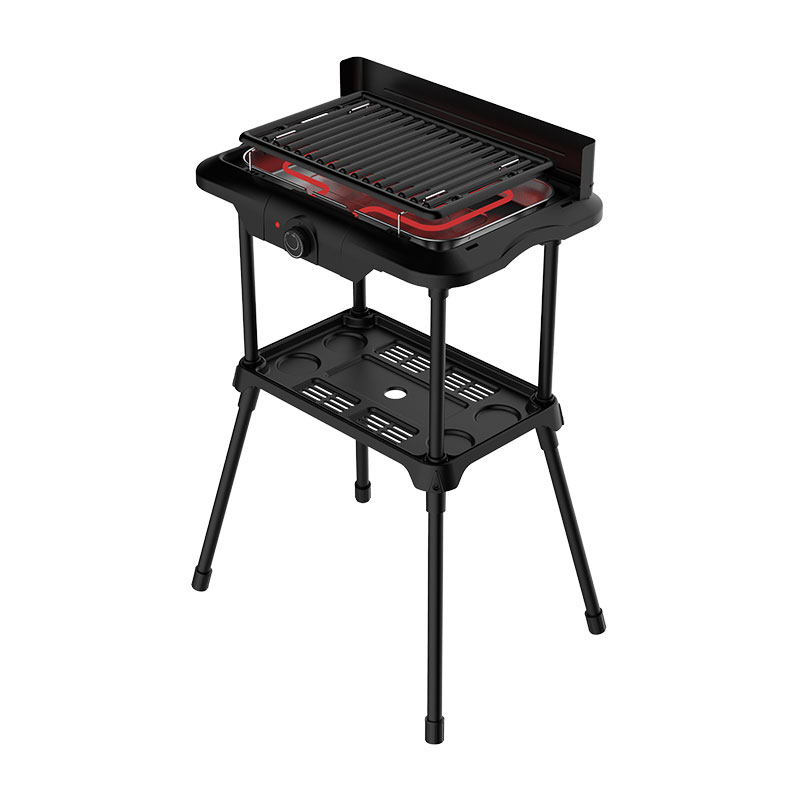
Cleaning Time and Effort: A Side-by-Side Comparison
The clearest way to understand the cleaning gap is to compare the actual tasks involved for each grill type after a typical cooking session. The table below outlines the core cleaning steps required immediately after use.
| Cleaning Task | Electric Grill | Charcoal Grill | Gas Grill |
|---|---|---|---|
| Ash or residue removal | Not applicable | Required every use | Occasional (burner debris) |
| Grease tray emptying | Simple slide-out tray | Grease pan plus ash pan | Grease pan under burners |
| Grate cleaning | Non-stick, wipe or rinse | Wire brush scrubbing | Wire brush scrubbing |
| Exterior wipe-down | Damp cloth | Damp cloth plus soot removal | Damp cloth |
| Estimated total time | 5–10 minutes | 30–45 minutes | 20–30 minutes |
The biggest time savings come from two factors: no ash and no open-flame residue. Charcoal grilling produces fine ash that gets into every crevice of the grill body, and it has to be fully cooled before disposal, adding extra waiting time to the process. Gas grills avoid ash but still accumulate grease and carbon buildup on burner tubes and flavorizer bars, which need periodic deep cleaning to prevent flare-ups.
Why Electric Grills Are Built for Faster Cleanup
Removable, Non-Stick Cooking Plates
Most electric grills use a non-stick or ceramic-coated cooking plate that can be lifted out and washed separately, either by hand or in a dishwasher if the manufacturer rates it as dishwasher-safe. Because the coating prevents food from bonding to the surface during cooking, a quick wipe with a damp sponge is usually enough to remove residue, compared to the aggressive wire-brush scrubbing needed on cast iron or stainless steel grates.
Integrated Grease Management
Electric grills typically funnel fat and drippings into a single removable tray positioned beneath a sloped cooking surface. This is one of the defining features of an indoor smokeless electric bbq grill: by channeling grease away from the heating element immediately, the unit prevents the fat from burning off and producing smoke, which is also what keeps the surrounding cooking plate cleaner during use. You simply pull the tray out, discard the grease, and rinse it.
Roughly a third to a quarter of the time investment required by charcoal or gas alternatives — with far less physical scrubbing involved in each session.
No Combustion Byproducts
Because there's no charcoal, propane, or wood involved, electric grills don't generate soot, creosote, or ash. These combustion byproducts are what typically stain grill lids, cling to interior walls, and require solvent-based cleaners or heavy scrubbing on traditional grills. Without them, an electric unit stays visibly cleaner for longer with minimal effort.
Step-by-Step: Cleaning an Electric Grill
Most electric grill manufacturers recommend the same basic routine after each use. Following these steps consistently keeps a smokeless barbeque grill performing well and prevents grease buildup from affecting flavor over time.
- Unplug the grill and allow the cooking plate to cool to a safe touch temperature, usually 10–15 minutes.
- Remove the cooking plate or grate and wash it with warm, soapy water, or place it in the dishwasher if it is rated dishwasher-safe.
- Slide out the grease collection tray, dispose of the drippings, and rinse the tray thoroughly.
- Wipe down the heating base and exterior housing with a damp, non-abrasive cloth, avoiding water contact with any electrical components or the power cord.
- Dry all removable parts completely before reassembling to prevent moisture buildup or rust on metal parts.
Danger
Never let water contact the heating base, power cord, or any electrical components. Always unplug the unit and let it cool before cleaning.
This entire routine usually takes less time than it takes to let a charcoal chimney fully burn out, which is part of why electric models have become popular for weeknight cooking rather than being reserved for weekend cookouts.
Why Traditional Grills Take Longer to Clean
Charcoal Grills: Ash, Soot, and Waiting Time
Charcoal ash must cool for several hours before it can be safely handled, meaning same-day cleanup often isn't possible. Fine ash particles also settle into vents, hinges, and the bottom bowl, requiring a shop vacuum or ash tool for full removal. Grates develop a layer of carbonized fat that typically needs a stiff wire brush and repeated scrubbing to loosen.
Gas Grills: Burner and Flavorizer Maintenance
Gas grills avoid ash, but grease drips onto flavorizer bars and can clog burner ports over time, sometimes producing uneven flames or minor flare-ups if left unaddressed. Manufacturers generally recommend a deeper burner-tube cleaning every few months using a wire or pipe cleaner, a task that most electric grill owners never have to think about.
Long-Term Maintenance: What Changes Over Months of Use
Daily cleaning ease is only part of the picture. Long-term upkeep also differs substantially between grill types:
- Electric grills rarely need more than an occasional deep wipe of the heating base, since the non-stick plate resists buildup with regular washing.
- Charcoal grills often need the ash catcher and interior bowl scraped clean every few uses to prevent airflow restriction, which affects cooking temperature.
- Gas grills benefit from a seasonal deep clean of burners, igniters, and the grease management system to maintain consistent heat output.
- Non-stick coatings on electric grill plates can wear down after a couple of years of heavy use, at which point cleaning becomes noticeably harder — a trade-off worth factoring into long-term ownership.
Warning
Non-stick coatings don't last forever. Once a plate's coating wears down, food can start sticking again, and cleanup effort rises noticeably — plan for eventual plate replacement on heavily used units.
In practical terms, an electric grill's low-maintenance profile is a major reason it works well as a smokeless indoor grill for apartments and kitchens, where residents don't have the outdoor space — or patience — for the more involved upkeep that charcoal and gas units demand.
Practical Tips to Keep Cleanup Even Faster
A few small habits can shave even more time off the cleaning process for electric grill owners:
- Wipe the plate while it's still slightly warm (but unplugged and safe to touch) — residue lifts off more easily before it fully cools and hardens.
- Empty the grease tray after every session rather than letting fat accumulate over multiple uses.
- Avoid metal utensils on non-stick plates, since scratches create grooves where grease and food particles can get trapped.
- Line the grease tray with foil for near-instant disposal on especially fatty cooking sessions.
Success
Lining the grease tray with foil turns a multi-minute scrub into a ten-second swap — one of the simplest upgrades to an already fast routine.
Who Benefits Most From Easier Cleanup
The cleaning advantage matters most to specific groups of buyers. Apartment and condo dwellers without balcony access to charcoal or gas grilling appreciate that a smokeless barbeque grill can be used indoors and cleaned at the kitchen sink without soot or ash ever entering the living space. Busy households that grill on weeknights benefit from a routine that fits into a normal after-dinner cleanup rather than requiring a dedicated block of time. And renters or small-space owners who don't want to store bulky cleaning tools — ash buckets, wire brushes, degreasing sprays — find that an electric grill's minimal maintenance kit is easier to keep on hand.
On the other hand, dedicated outdoor grilling enthusiasts who prioritize smoke flavor and high-heat searing may find the cleaning convenience less relevant if flavor and char are their top priorities — for that use case, a traditional grill's extra cleanup time is often accepted as part of the trade-off for open-flame cooking results.
Overall, if cleaning time and convenience are decision factors, electric grills have a clear, measurable advantage — roughly a third to a quarter of the time investment required by charcoal or gas alternatives, with far less physical scrubbing involved in each session.