
 English
 中文简体
 Español
 English
 中文简体
 Español

Air frying and blood sugar
Crisp Without the Carb Load: Diabetic Air Fryer Recipes That Work on a Weeknight
Hot moving air, a teaspoon of oil and eleven minutes. That is the entire promise, and it is enough. The recipes below keep the crunch that makes vegetables and lean protein worth eating, while portion sizes and coatings stay inside a carbohydrate budget you can defend.
The short answer: air frying changes fat, not carbohydrate
An air fryer will not lower your blood glucose by itself. What it does is remove the decision that usually goes wrong in a home kitchen: how much oil ends up in the meal. A basket circulating air at 180 °C browns chicken strips, crisps kale and roasts peppers with one or two teaspoons of fat instead of a pan of it. Lower calorie density makes weight management easier, and weight management is one of the levers that improves insulin sensitivity over months rather than minutes.
The second gain is texture. Most people abandon steamed vegetables not because of the carbohydrate but because of the boredom. Five to ten minutes in a hot basket turns green beans, radishes or courgette into something with edges, salt and lemon, which makes a fibre-heavy plate repeatable three nights a week.
What the appliance does not fix is worth naming plainly:
- Breadcrumb and panko coatings, which can add 15 to 25 g of carbohydrate per serving before anything else is counted.
- Glazes built on honey, maple or barbecue sauce, where two tablespoons may carry close to 20 g of sugar.
- The size of the starch portion. No amount of hot air negotiates a potato down.
- The arithmetic of the whole meal, including the bread on the side and the fruit afterwards.
Practical swaps are simple. Replace a honey glaze with lime zest, cracked pepper and a pinch of salt. Replace panko with grated parmesan, crushed pork rind or a thin dust of almond flour. Keep the crunch, drop the coating carbohydrate.
Set the plate before you switch the appliance on
Start with the split: half the plate non-starchy vegetables, a quarter protein, a quarter carbohydrate. For many adults a main meal lands somewhere between 30 and 45 g of carbohydrate, but that number belongs to your care team and your medication schedule, not to a recipe card. The air fryer is simply the tool that makes the vegetable half of that plate taste like something you chose on purpose.
Order matters more than most people expect. Eating the protein and the vegetables first, then the starch, produces a modest but measurable flattening of the post-meal rise. Fibre, fat and protein slow gastric emptying; the carbohydrate arrives later and lower. A basket of roasted peppers and chickpeas eaten first is doing two jobs at once.
One more detail that rewards a crisp appliance: cooked-then-chilled potato and rice form resistant starch, which blunts the glucose response a little. Reheating those potatoes in the air fryer at 180 °C for four or five minutes brings the crust back without turning them into a fresh starch load.
Crispness is a texture decision. Carbohydrate is a portion decision. The appliance only helps with the first one, and that is still worth having.
Six recipes worth keeping in rotation
Kale chips at 150 °C, four to six minutes
Dry the leaves completely, tear them away from the stems, toss with one teaspoon of olive oil and a small pinch of salt, and lay them in a single layer. Salt after baking, not before, or the leaves bleed water and steam. Kale goes from crisp to ash in about forty seconds, so stay at the basket. A 30 g portion is roughly 3 g of carbohydrate with 2 g of fibre and a useful amount of vitamin K.
Chicken fajita tray at 190 °C, ten to twelve minutes
Cut chicken breast into 1.5 cm strips, toss with sliced peppers, red onion, cumin, smoked paprika and lime juice plus one teaspoon of oil. Shake the basket at the six-minute mark. Serve in lettuce cups instead of tortillas and you remove roughly 30 g of carbohydrate from the meal without removing the meal itself.
Chili-lime chickpeas at 190 °C, twelve to fifteen minutes
Rinse canned chickpeas until the water stops foaming, dry them on a towel until no moisture shows, then toss with one tablespoon of oil, chili powder and salt. In a 100 g serving you are looking at roughly 20 g of carbohydrate and about 5 g of fibre, plus 7 g of protein, which is a snack that behaves very differently from a biscuit.
Three more that need no explanation beyond timings:
- Tofu steaks, pressed for fifteen minutes, 190 °C for twelve minutes, finished with soy, garlic and ginger.
- Whole radishes and green beans, 190 °C for eight to ten minutes, one teaspoon of oil, lemon at the end.
- Courgette chips, sliced thin, salted and drained for twenty minutes, patted dry, 180 °C for ten to twelve minutes.
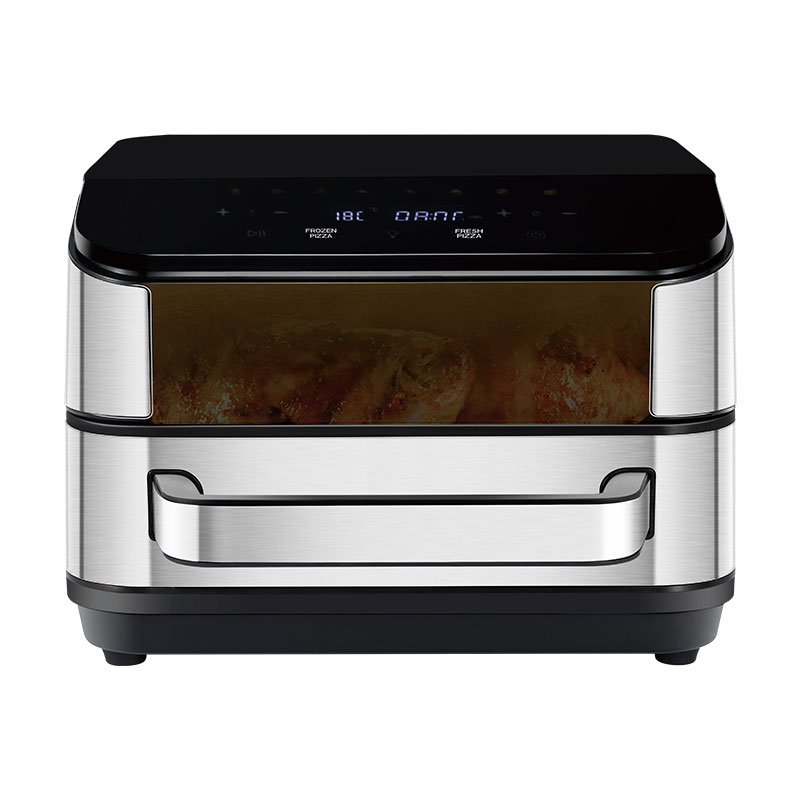
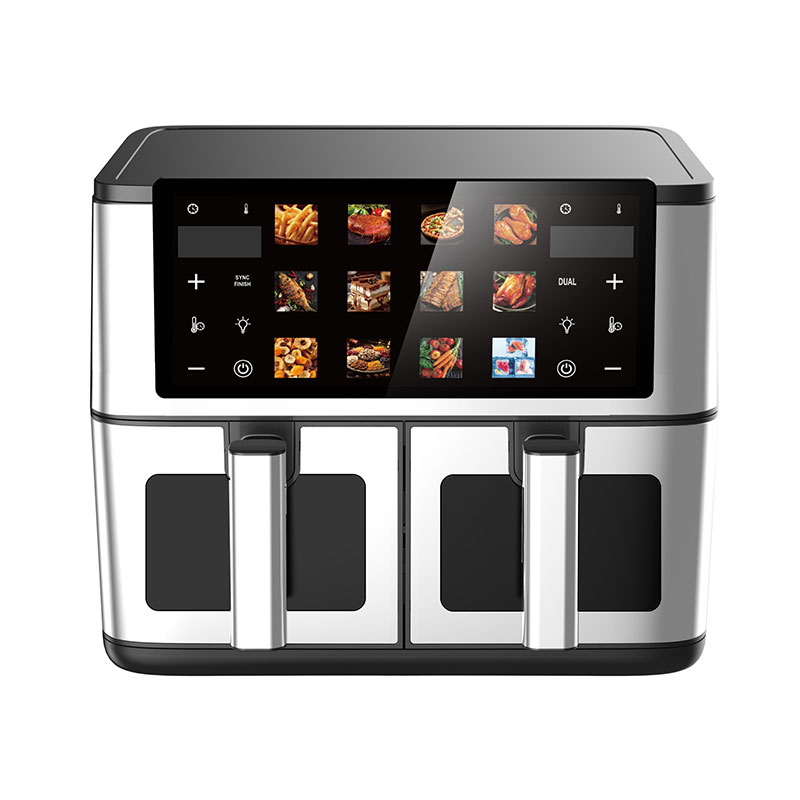
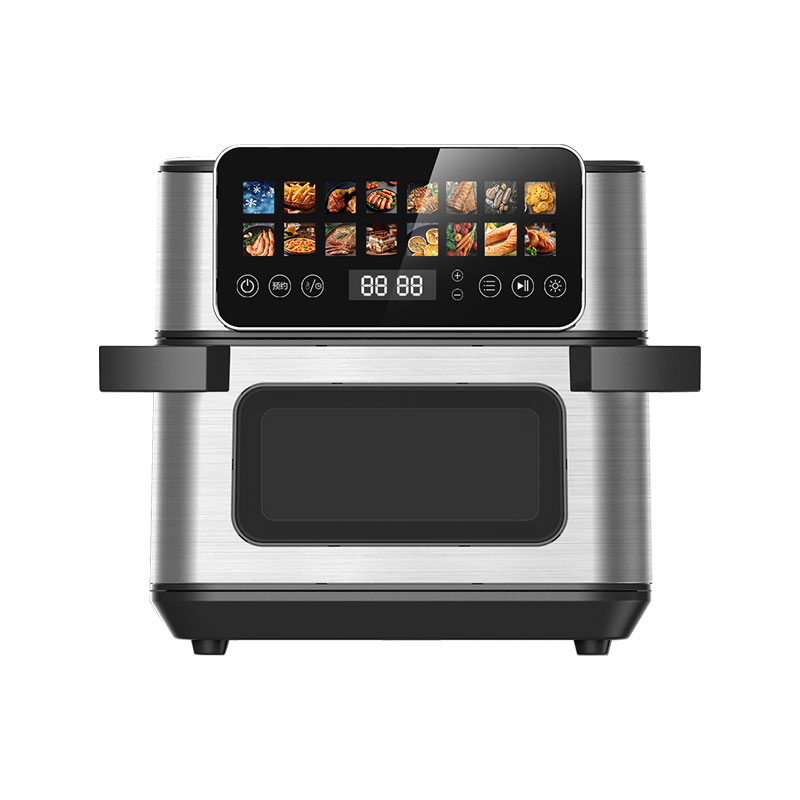
Two cooking zones remove the main friction from this way of eating: protein in one drawer at 190 °C, vegetables in the other at 175 °C, both finished at the same moment instead of one going cold while the other cooks. The GSE051 digital dual-zone air fryer is a working example of that layout, and it is the configuration most weeknight cooks end up wanting.
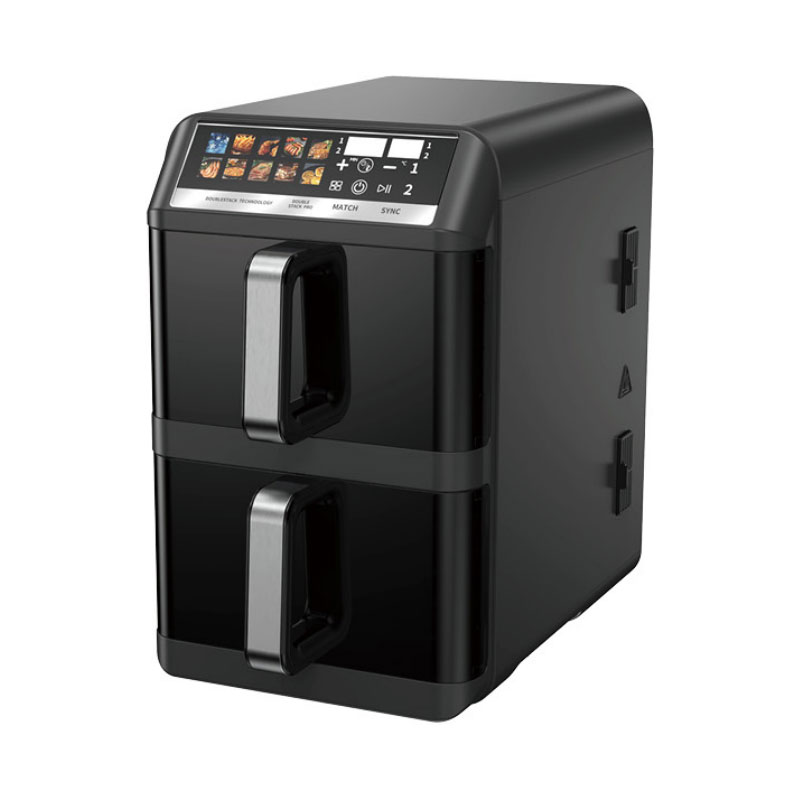 GSE051 Dual-Zone Digital Air FryerA dual-zone air fryer with two 5.6L compartments and 2400W, suited to cooking protein and vegetables together on weeknights.View Product →
Snacks, crisps and the dehydrate setting
Snacking is usually where a plan collapses, and it collapses quietly. A dehydrate function gives you a third option between raw vegetables and bought crisps: courgette, beetroot, kale and herb leaves dried at 60 to 70 °C for anywhere from three to six hours, then stored in an airtight jar. The oil content stays near zero, the fibre stays intact, and the portion is easy to see because it sits in a bowl rather than a packet.
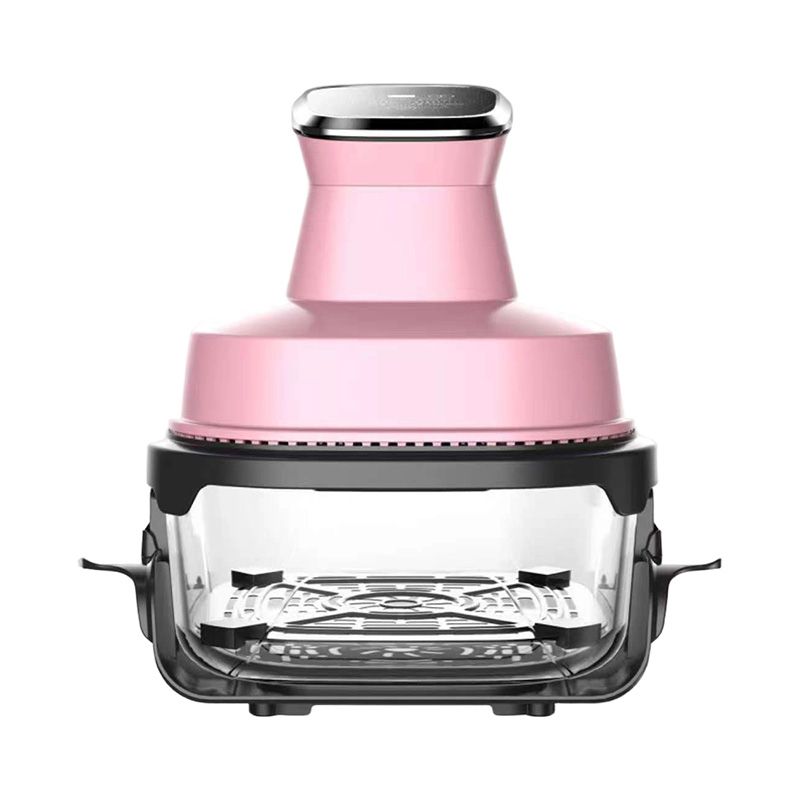
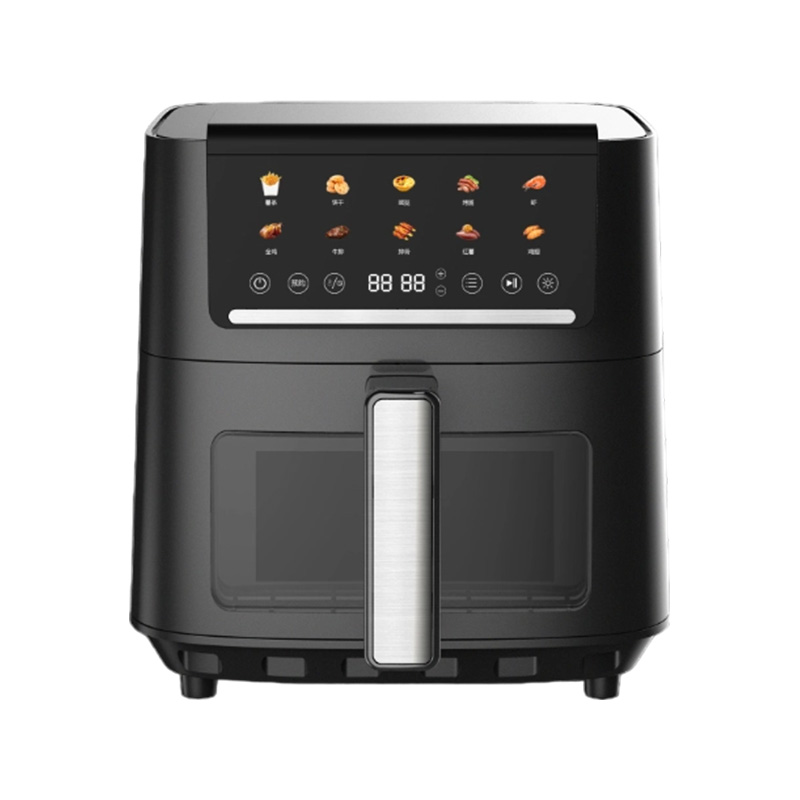
Two cautions. Dried fruit is not a health swap here, because the sugar concentrates while the water leaves and the portion becomes almost impossible to judge. And a dehydrate cycle is long, so run it overnight or while you are out rather than watching it. If snacks are the weak point in your week, a model with a dedicated dehydration and combination setting earns its bench space; the dehydrator function combination air fryer line covers that configuration.
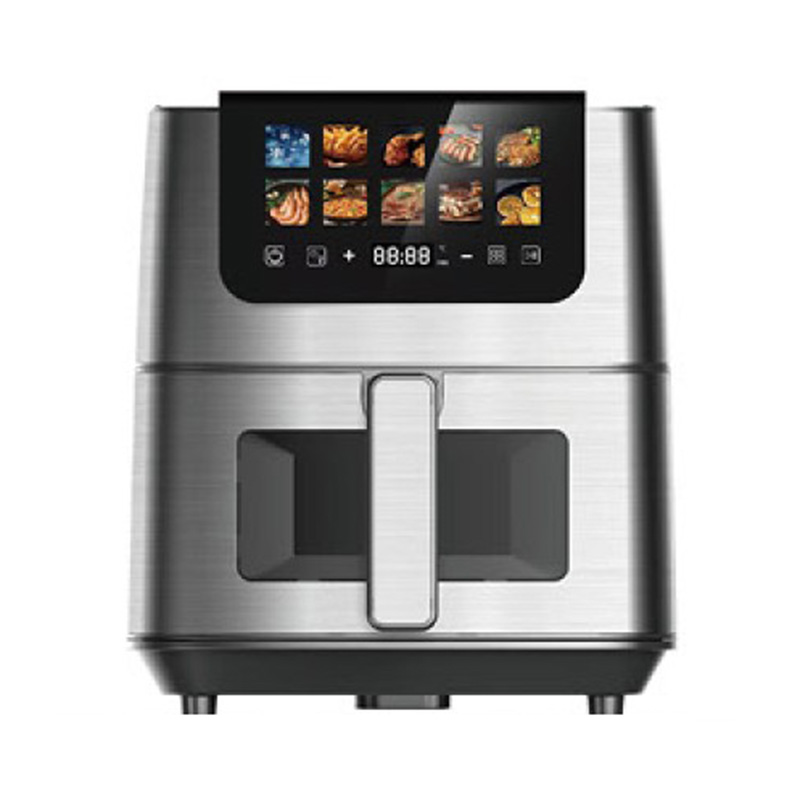
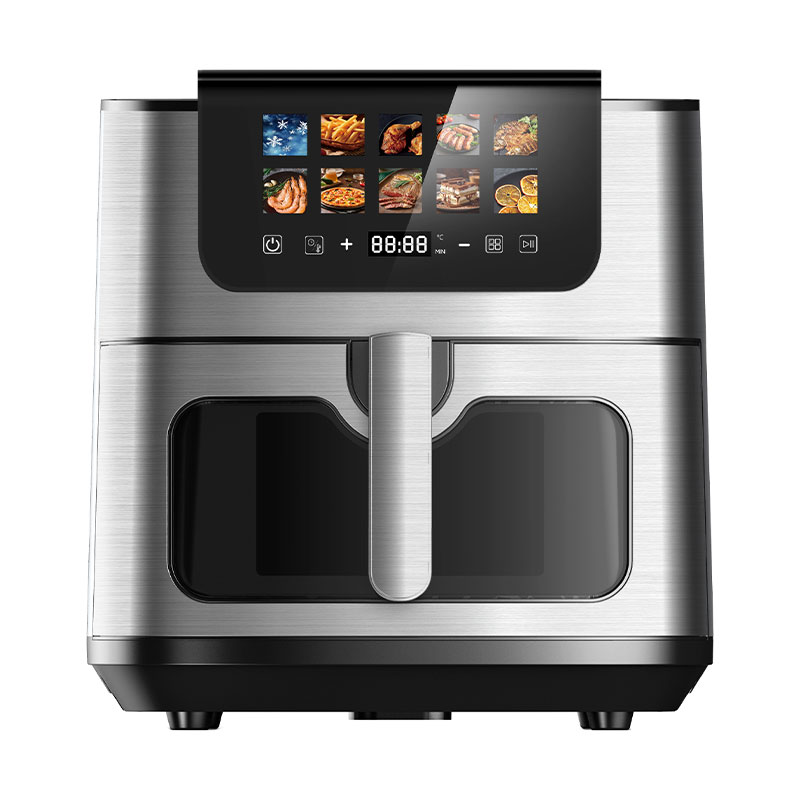
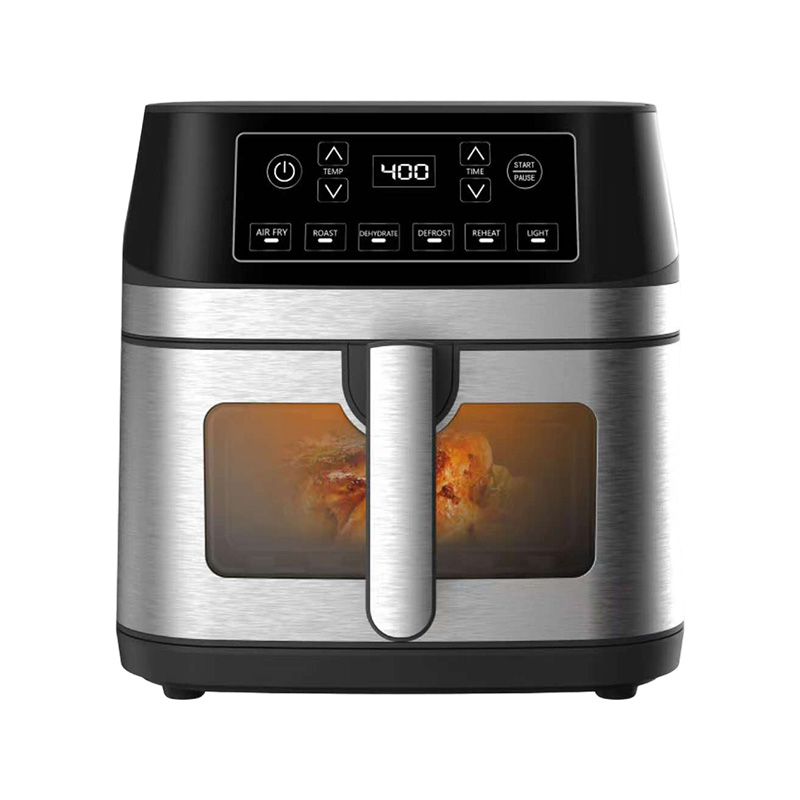
A window is more useful than it sounds. You are judging colour, not time, and the difference between a golden chickpea and a bitter one is about ninety seconds. The windowed mechanical models let you stop at golden on sight rather than at a timer's word, which is exactly the skill this cooking method rewards.
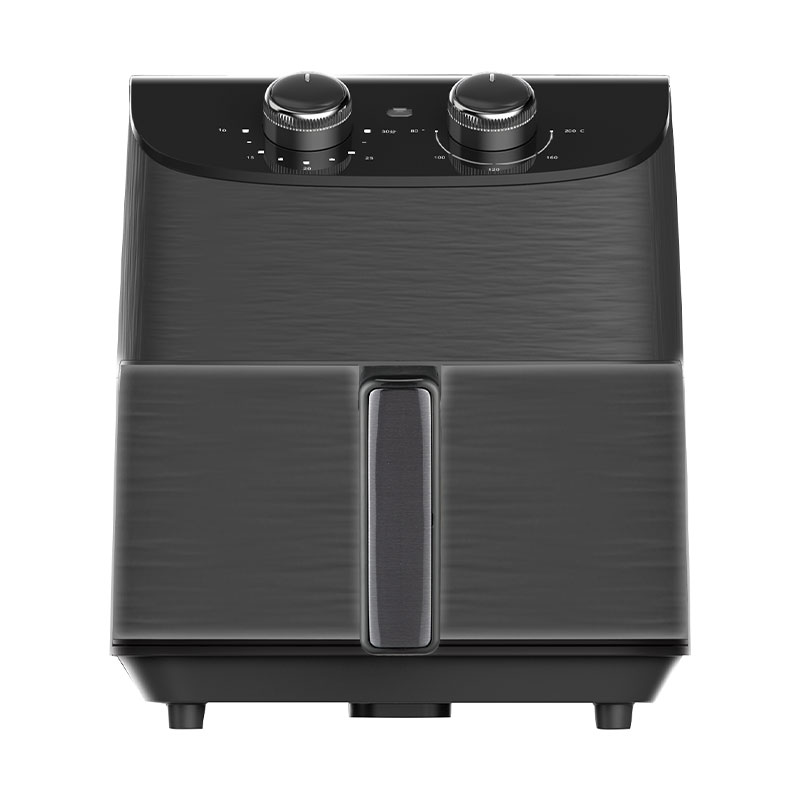 Mechanical Air Fryer with Window OptionA 6.5L mechanical air fryer offered with or without a window; the window variant lets cooks judge colour while air-frying.View Product →
Deep fry, oven roast, air fry: the practical differences
| Method | Added fat | Time | Browning control | Best use |
|---|---|---|---|---|
| Deep fry at 175 °C | Oil absorbed equal to 8 to 12 percent of the food's weight | 3 to 4 minutes | Fast but uneven, hard to watch | Occasional treat, not a routine |
| Oven roast at 200 °C | 1 to 2 tablespoons | 20 to 25 minutes | Moderate, depends on shelf height | Large trays, mixed roots and vegetables |
| Air fry at 180 to 190 °C | 1 to 2 teaspoons, sprayed | 10 to 14 minutes | High, you can shake and look | Weeknight vegetables, chicken strips, chickpeas |
| Par-boil, then air fry | About 1 teaspoon | 12 to 16 minutes | High, with lower acrylamide risk on potatoes | Chips and wedges you want crisp without dark edges |
What to check before you buy
The appliance is the easy part to get wrong, because most shoppers buy for capacity and stop there. For this style of cooking, these are the specifications that actually change outcomes:
- Capacity of 4 to 6 litres for a household of three or four, 3 to 4 litres for one or two people.
- A temperature floor near 60 to 80 °C, otherwise dehydrating herbs, kale and jerky is not possible.
- Two zones or a stacked design when you routinely cook protein and starch in the same meal.
- Dishwasher-safe basket and crisper plate. A non-stick drawer that needs hand washing gets used less often.
- Cool-touch housing and automatic shut-off when the drawer is pulled, particularly with children in the kitchen.
- A recognised safety mark and roughly 1500 to 1800 W, which shortens preheat and improves browning consistency.
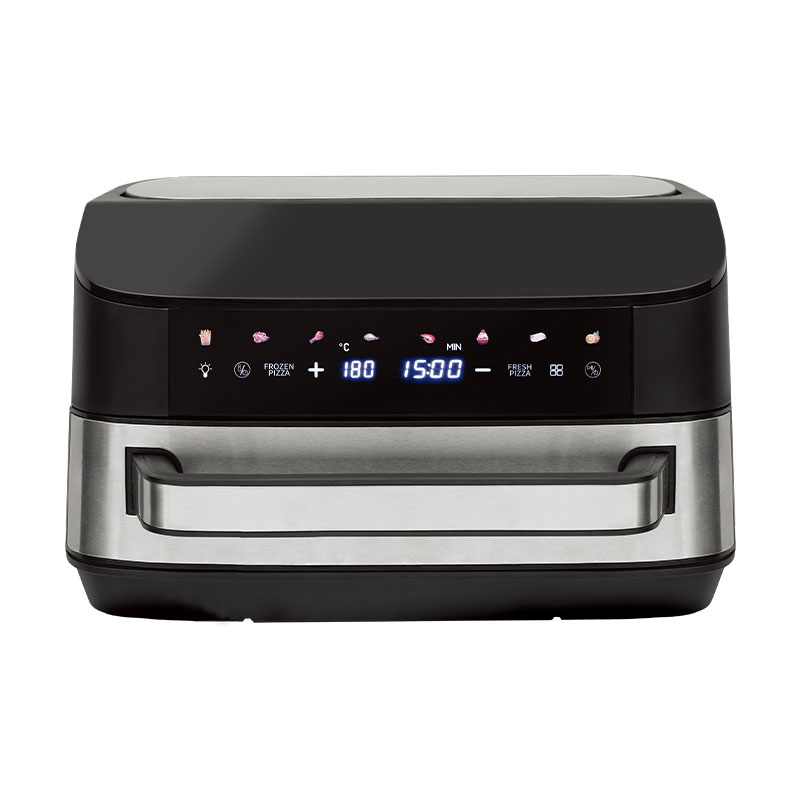
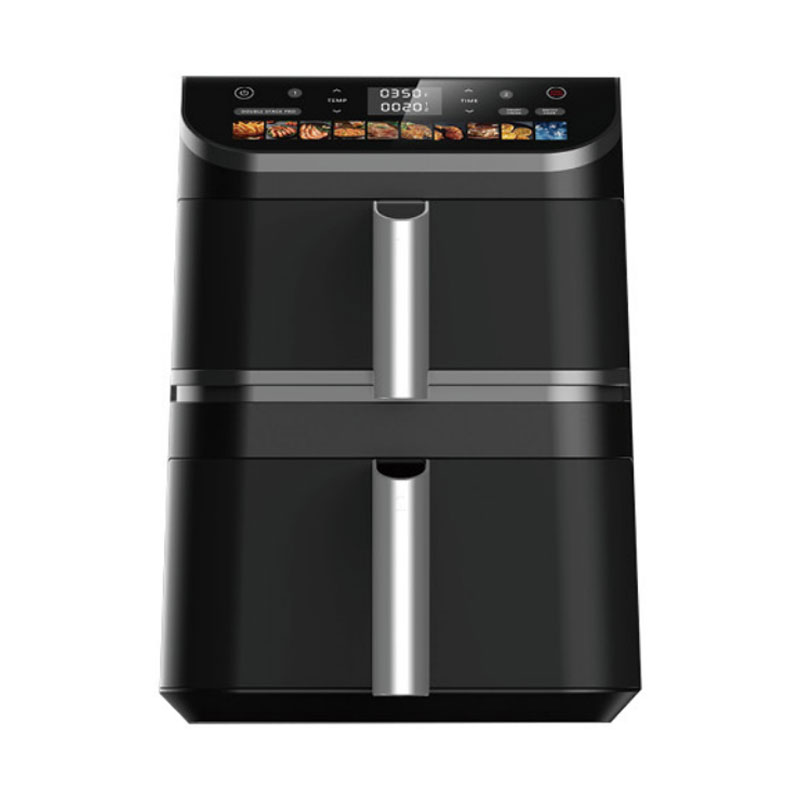
If your weeknight cooking is genuinely two dishes at once, a dual-basket arrangement saves a second appliance and a second round of washing up; the dual basket powerful air fryer range is built around that scenario. Where bench space is the binding constraint, a stacked format is the alternative. The GSE056 double-stack air fryer puts two 4.5 litre chambers in a single footprint, which is the practical answer for a small kitchen that still cooks separate protein and vegetables.
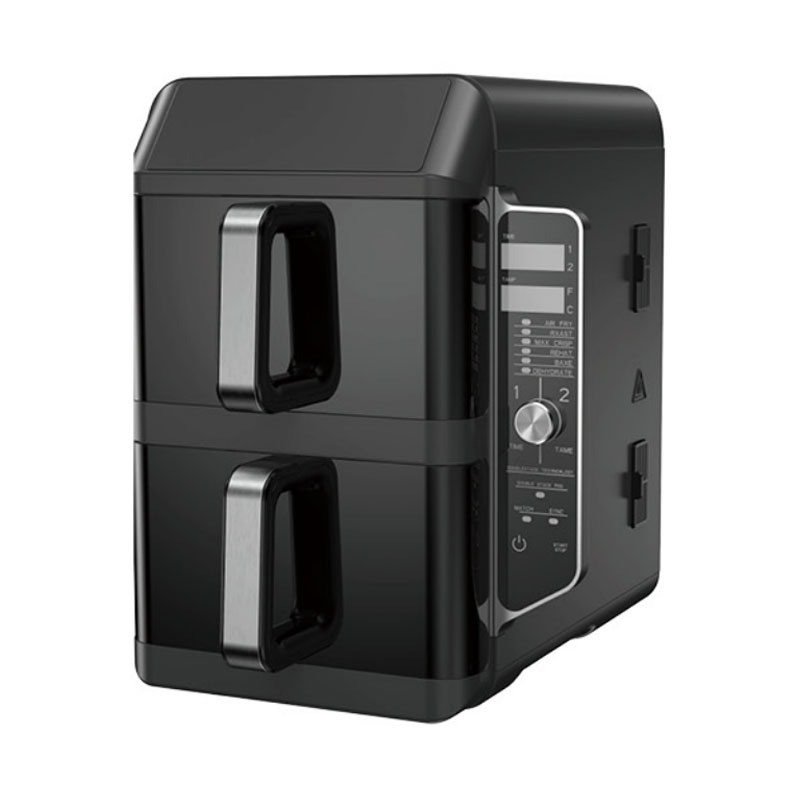 GSE056 Double-Stack Air Fryer for Small KitchensA stacked air fryer with two 5.6L chambers totaling 11.2L and 2400W, useful where bench space is limited but separate cooking is needed.View Product →
A week of this, honestly
Realistically, nobody cooks six new recipes in seven days. A workable week looks like three: a chicken tray on Monday, chickpeas or tofu midweek, and a vegetable basket on the night when cooking feels like too much. The rest of the plate stays ordinary, which is the point. The appliance is not a diet, and it is not a treatment. It is a way to keep roasted, crisp, salty food in the rotation without the oil and without the deep fryer.
Watch two numbers and the rest follows: how much coating is on the food before it enters the basket, and how much starch is on the plate beside it. Everything else is craft. Dry the surface, do not crowd the drawer, stay within sight for the last two minutes, and pull the basket while it is still golden rather than when the timer says so.
None of it is exotic. It is a basket, a thermometer, a short list of recipes you trust, and the habit of looking at the plate before looking at the recipe.