
 English
 中文简体
 Español
 English
 中文简体
 Español

Snack Science
Air Fryer Rice Paper Chips: Four Minutes to Crisp, Forty Seconds to Ruined
A rice paper sheet is thinner than a business card and lighter than a cornflake. That is exactly what makes it the fastest snack an air fryer can make, and the least forgiving.
Drop a dry rice paper sheet into a hot air fryer basket and two things happen at once: the circulation fan lifts it, and the 400°F air pulls the last of its moisture out in well under a minute. That is why rice paper chips finish in three to four minutes while potato chips need fifteen or more — there is almost no mass to heat through. It is also why the same sheet turns from translucent white to bitter black in about forty seconds if you turn your back. The good news is that every failure this snack produces is predictable, and each one has a specific adjustment. Control the moisture, keep the pieces separated, work in short time windows, and the rest is seasoning.
Why Rice Paper Cooks Nothing Like a Potato
Rice paper is a dried starch film: rice flour, tapioca starch, water and salt, rolled to roughly 0.2 to 0.5 millimetres and dried until it is stiff and glassy. Under heat, the remaining moisture flashes into steam, the steam pushes the starch layers apart, and the sheet puffs and sets into a brittle cracker. Nothing browns slowly here. The whole transformation happens inside one narrow window of temperature and moisture.
Three practical consequences follow from that structure.
- There is no thermal mass. A sheet reaches air temperature almost immediately and cannot buffer a hot spot the way a thick potato slice can.
- The moisture window is narrow. Too wet and the sheet turns leathery and glues itself to the basket; too dry and it curls, lifts and drifts toward the heating element.
- The fan matters as much as the heat. Airflow strong enough to crisp a chicken wing quickly is also strong enough to move a sheet that weighs almost nothing.
Info: After blotting, the surface should look matte and slightly damp, never glossy. A glossy sheet still carries surface water, and that water is what fuses a whole batch into one thick cracker.
Five Failure Modes, and the Adjustment for Each
Almost every disappointing batch falls into one of five categories. Match the symptom to the fix before changing anything else — usually a single variable is responsible.
| Symptom | Most likely cause | Adjustment |
|---|---|---|
| Sheets fold over and jam near the top of the basket | The fan lifts the featherweight sheet | Lay a perforated rack on top, space pieces at least 1 cm apart, cook fewer at a time |
| Everything fuses into one thick cracker | Over-soaking, or overlapping pieces | Dip for two seconds only, blot dry, keep a single layer with visible gaps |
| Edges blacken before the centre crisps | Setpoint too high for a 0.3 mm sheet | Drop to 350°F (175°C), add one to two minutes, check at the two-minute mark |
| Chips tear and leave starch on the basket | No oil film, or a worn non-stick coating | Brush both sides with a thin neutral oil; retire any basket with visible scratches |
| Crisp out of the basket, chewy ten minutes later | Under-dried centre, or stored while warm | Give one extra 60-second pass, then cool completely before sealing airtight |
Warning: Never walk away from a rice paper batch. A sheet that drifts against the heating element can scorch in seconds, and blackened starch tastes acrid. Pull the basket at two minutes, look, then decide.
A Repeatable Method: Four Minutes, Seven Steps
- Preheat to 400°F (200°C) for three minutes. A cold basket stretches the cook time and dries the sheet unevenly.
- Dip each sheet in water for two to three seconds, then blot it on a clean towel. It should feel like damp paper, not wet film.
- Optional and worth it: press the damp sheet onto a nori square, season the nori, then top with a second dipped sheet so the seaweed sits in the middle.
- Cut into strips or rounds with scissors while the sheet is still pliable. A fully dry sheet shatters instead of slicing.
- Brush or spray both sides with a thin film of neutral oil. Oil carries flavour and keeps starch off the basket.
- Arrange in a single layer with space between pieces. If your model has a strong fan, set a perforated rack over them to hold them down.
- Air fry three to four minutes, checking at two. Pull the batch when the sheets are opaque, rigid and barely golden at the edges; they firm up further as they cool.
Season immediately after they leave the basket. Salt and dry spices cling to a hot, lightly oiled surface and slide straight off a cooled one.
Success: A three-to-four minute finish at 400°F is the range most cooks settle on. If your machine runs hot, 350°F (175°C) for five to six minutes gives you a wider margin and rarely changes the texture.
What to Look for in an Air Fryer If Chips Are Your Goal
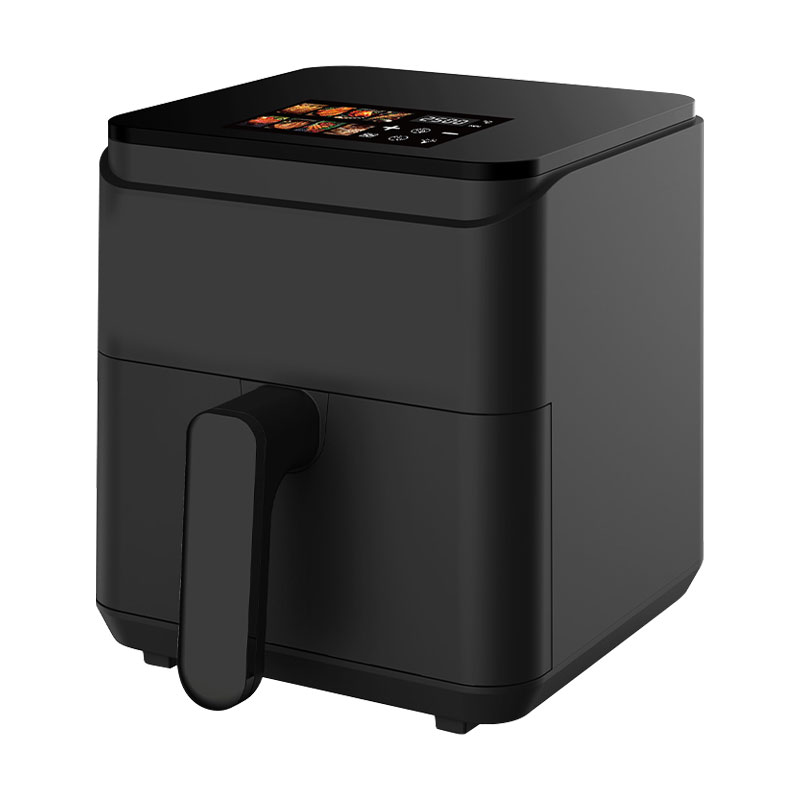
Most air fryers can produce a passable chip. The gap between a frustrating batch and a repeatable one usually comes down to airflow control, basket surface, and how easily you can watch the colour change. Start with rapid air circulation: strong airflow is what makes the snack possible, and it is also what lifts a dry sheet off the tray, so it helps to know how the fan behaves at lower setpoints.
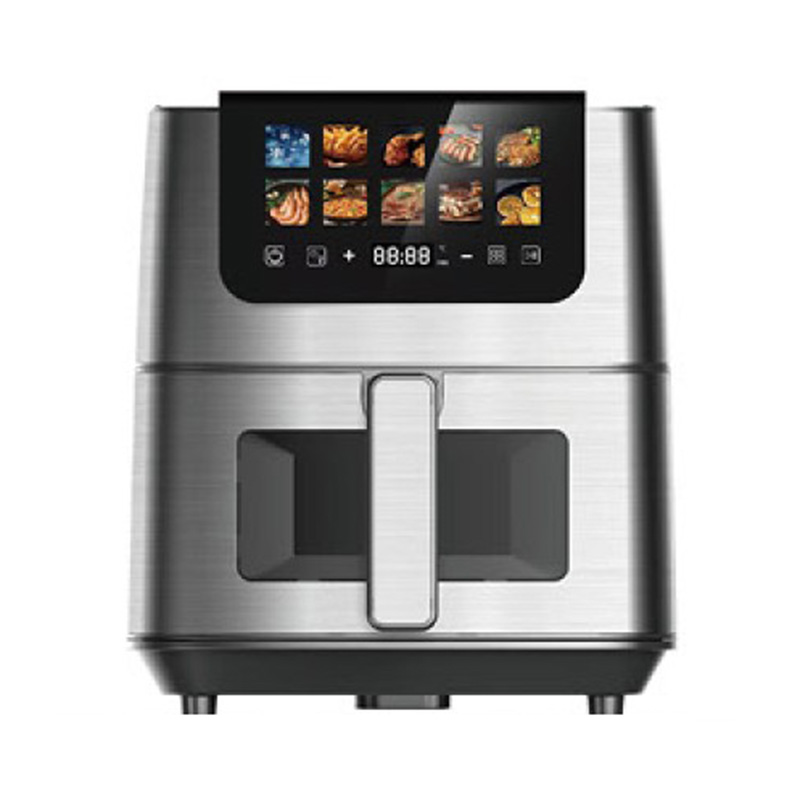
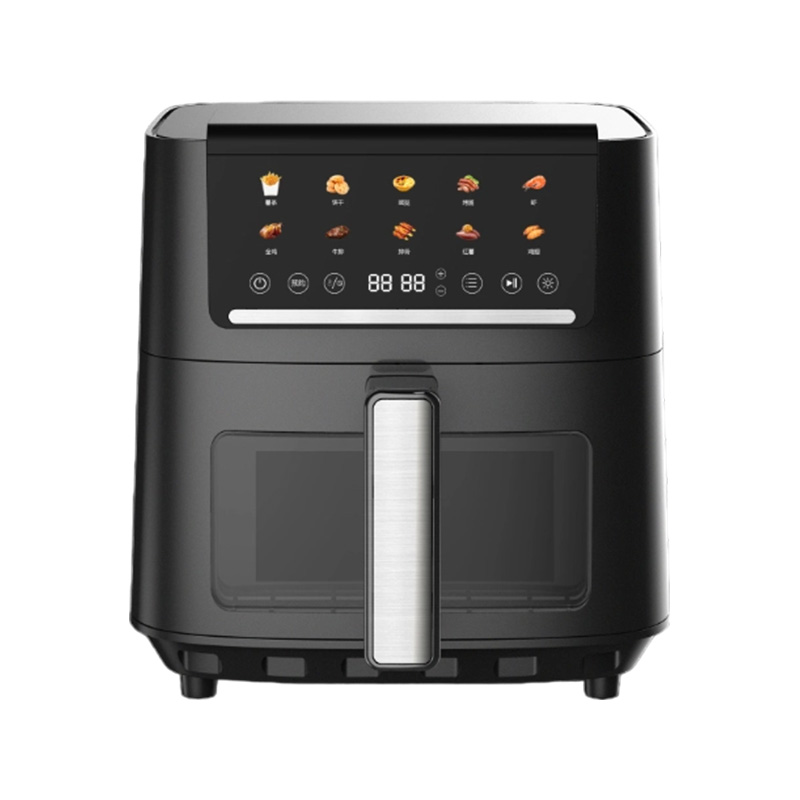
Next, look at the basket surface. A sound non-stick coating releases a starch film cleanly; a scratched one grips it, and you end up chiselling chips off with a spatula. Beyond the coating, a few features earn their place for this specific snack: a digital setpoint you can trust within a few degrees, a window so you can see the moment the sheets turn opaque, automatic shut-off so an interrupted batch does not keep cooking, a cool-touch housing you can grip safely when you pull the basket early, and dishwasher-safe trays, because starch residue sets hard once it cools.
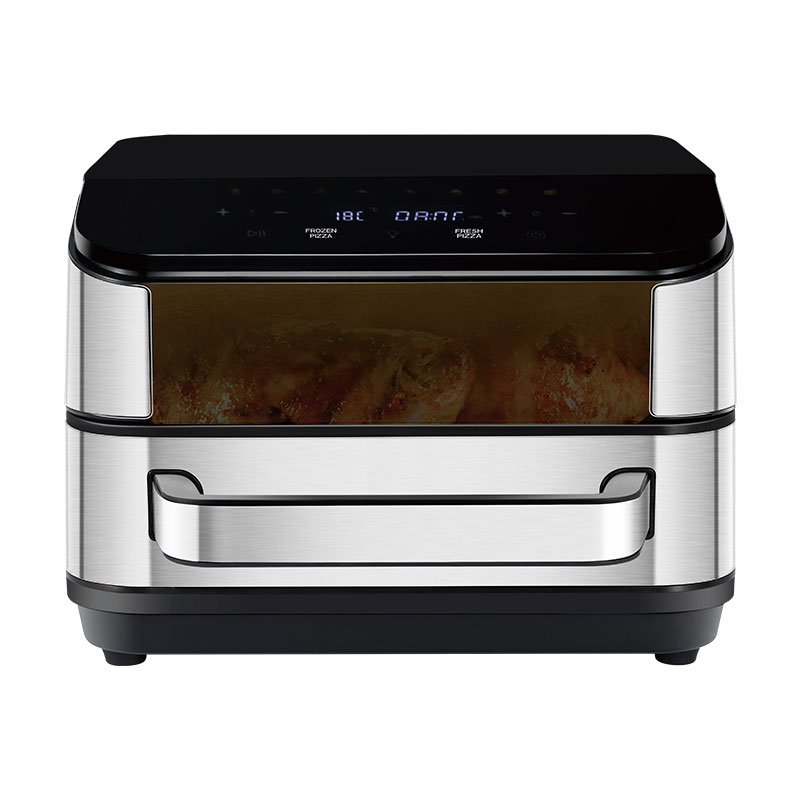
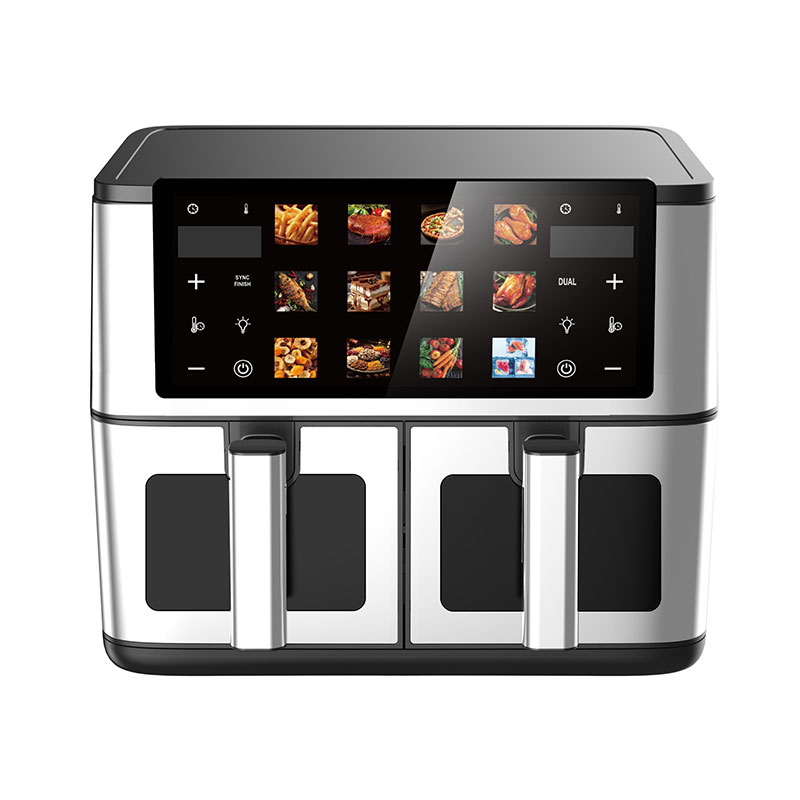
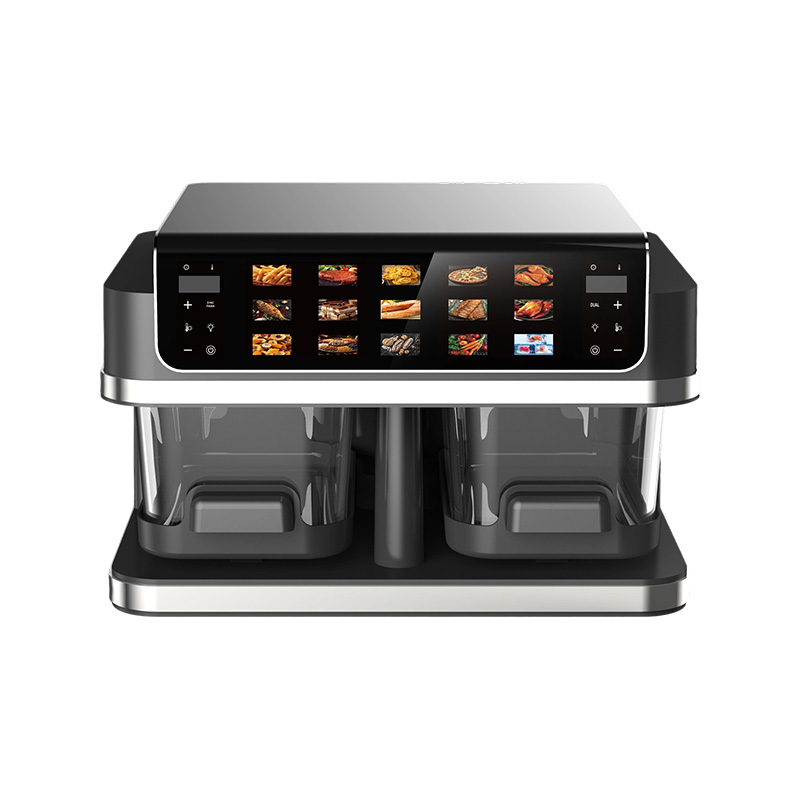
A dual-zone machine solves the batch problem neatly: run rice paper chips on one side at high heat for four minutes while a second dish cooks at a gentler setpoint on the other.
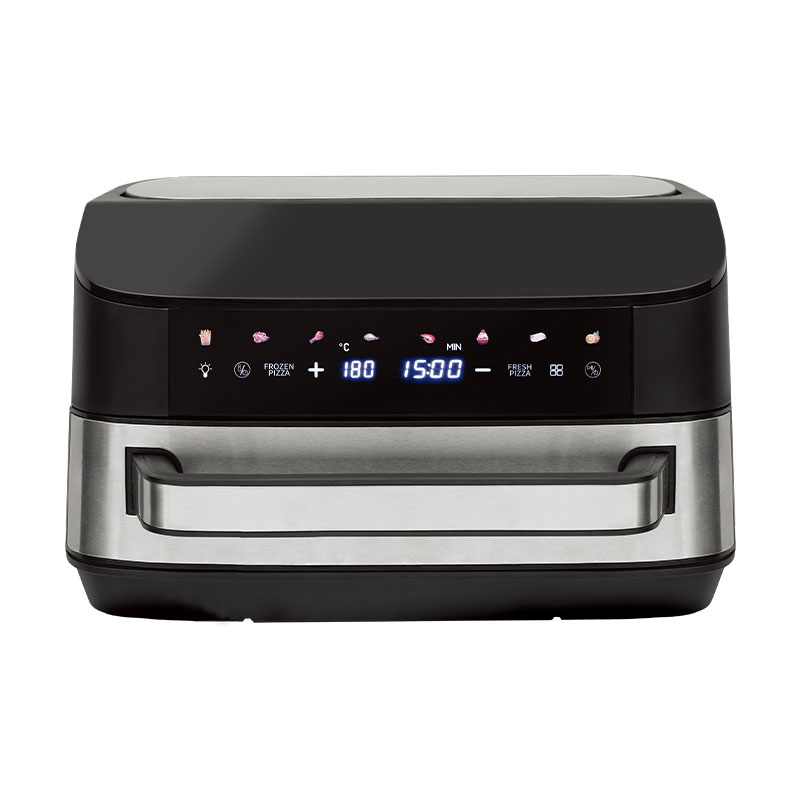
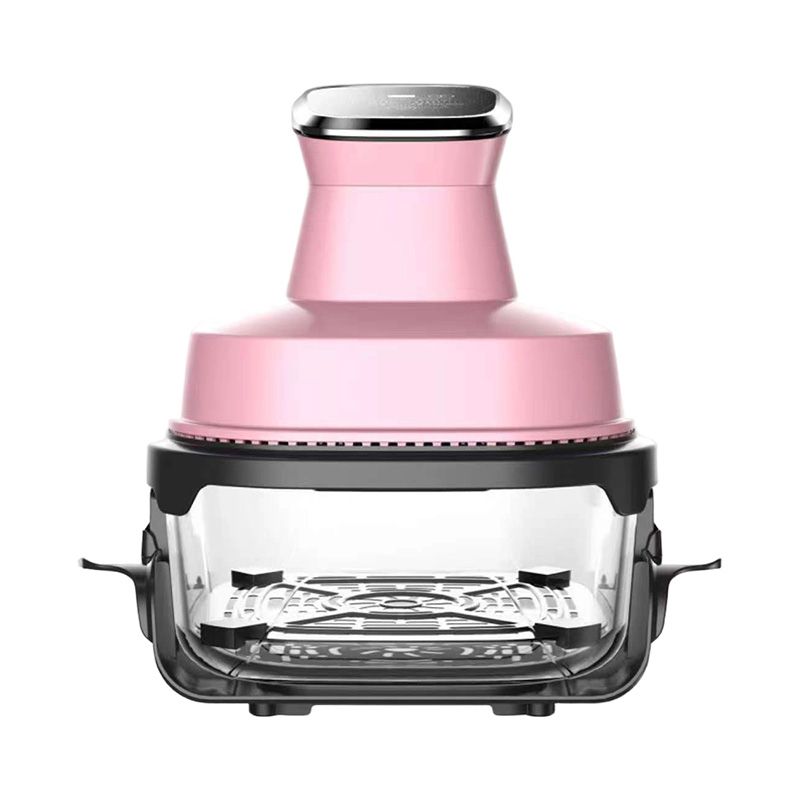
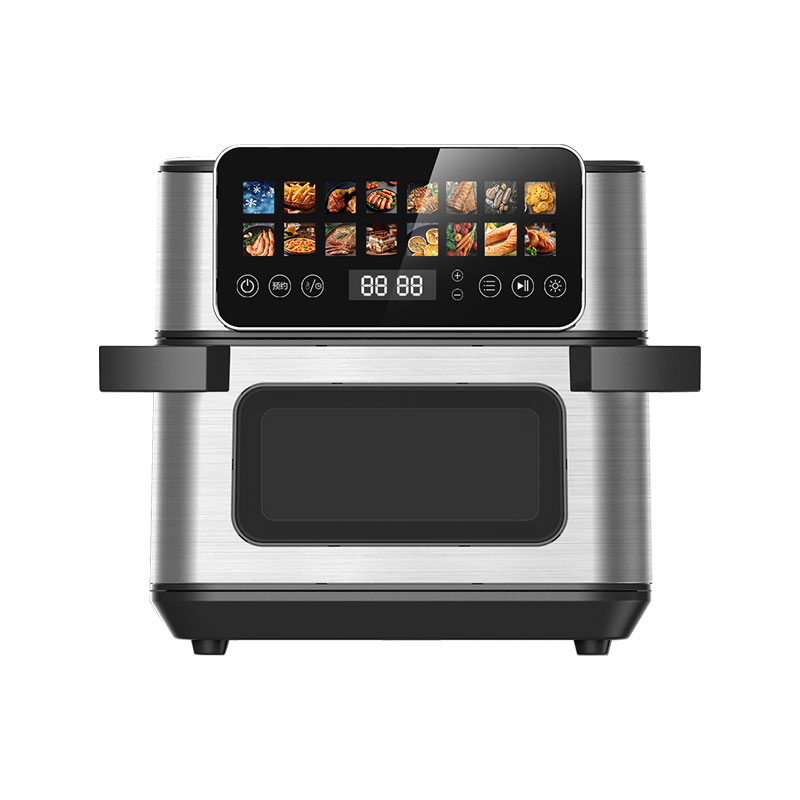
If your household eats chips by the bowl rather than the handful, a stacked design doubles usable cooking surface without taking more counter space.
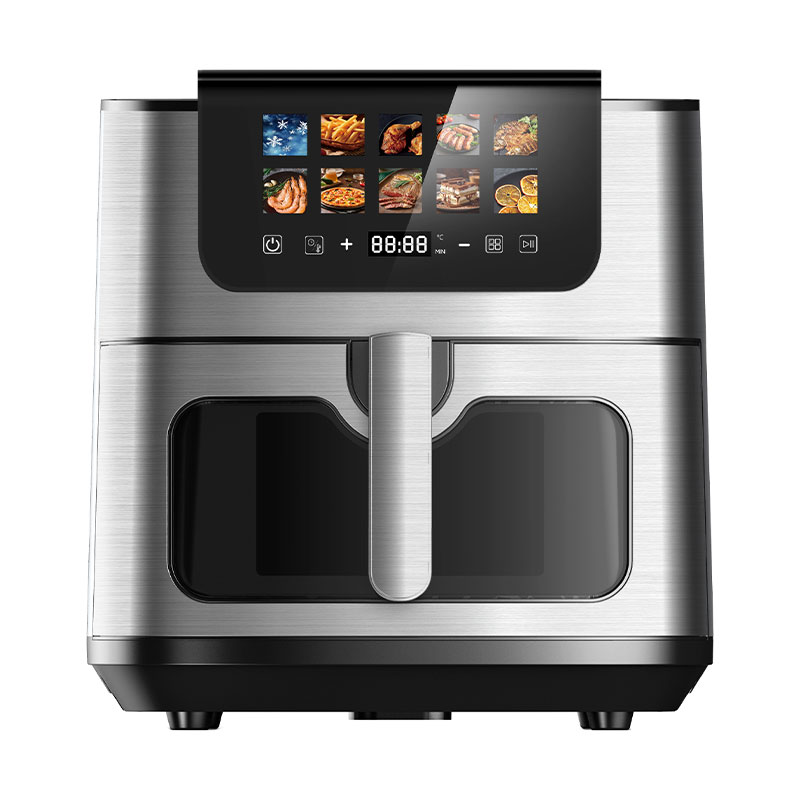
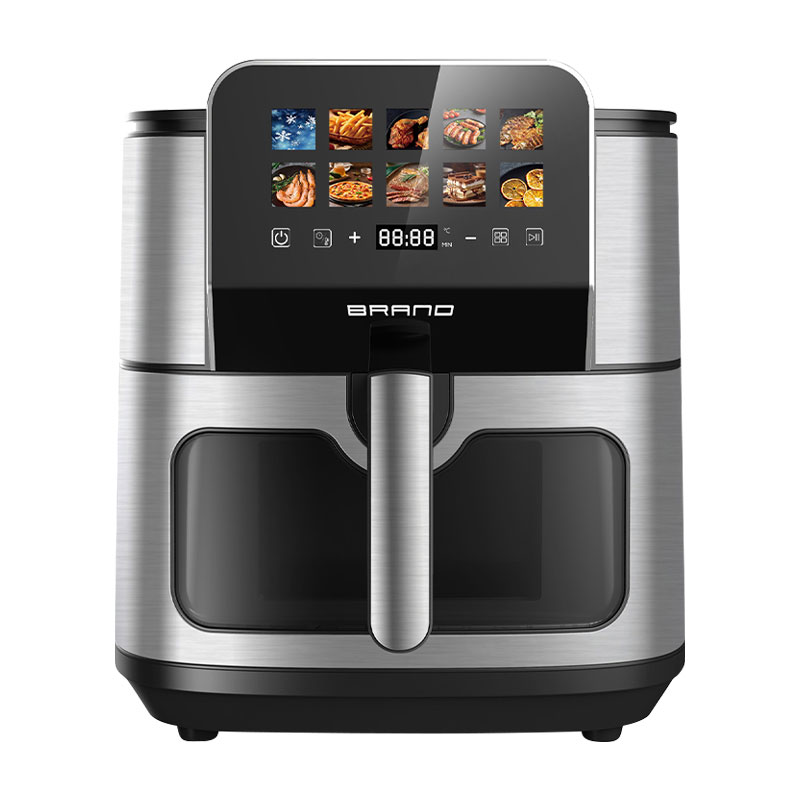
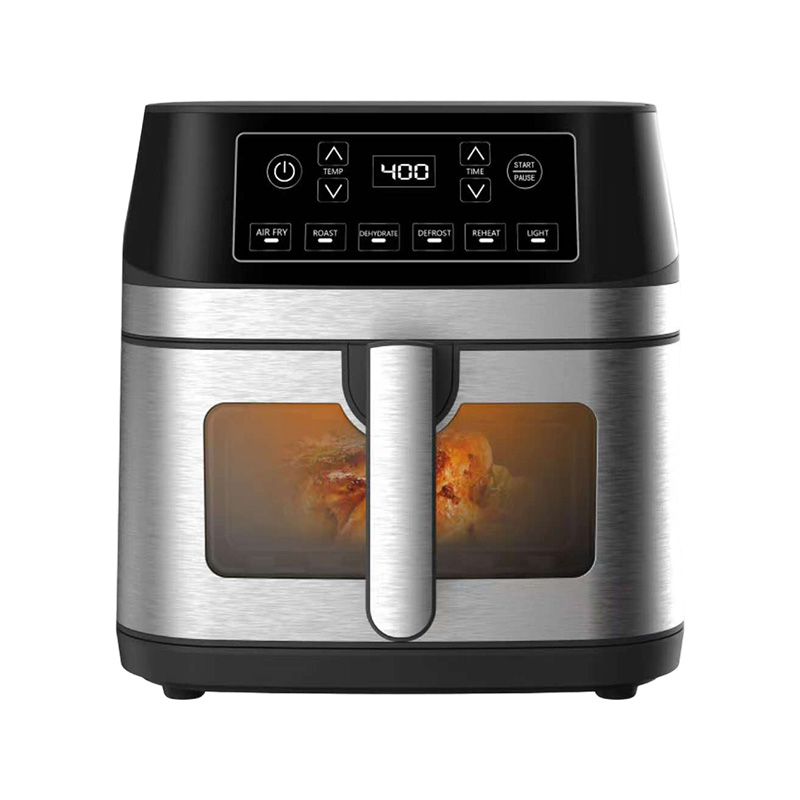
And if you would rather watch than guess, a model with a viewing window shows you the exact moment the sheets go rigid — which is the moment they are done.
Seasoning, Serving and Texture
- Sea salt with five-spice or smoked paprika: the default, and the most forgiving.
- Furikake, toasted sesame and shredded nori: a natural match for the seaweed-sandwich version.
- Chili, lime zest and a pinch of sugar: bright against the neutral starch flavour.
- Cinnamon and coconut sugar: dust after cooking, never before, or the sugar scorches.
- Nutritional yeast or cheese powder: add while the chips are still hot so it sticks.
Serve within half an hour. Rice paper pulls moisture straight out of the air, and a sealed jar of warm chips creates condensation that softens the whole batch by morning. For dips, choose something thick — guacamole, hummus, a reduced tomato salsa — and dip the edge rather than submerging the chip, which is a two-second route back to soggy.
Cleaning Rice Paper Residue Properly
Starch leaves a thin film that bakes into a brown varnish if you ignore it. Let the basket cool, fill it with warm soapy water for five minutes, then wipe with a soft sponge. Dishwasher-safe baskets and trays make this quicker, but check the parts are fully dry before they go back into the housing. Skip metal utensils on coated surfaces, and empty the crumb tray after every session: rice paper fragments are light enough to travel and dark enough to smoke.
Danger: Never submerge the main housing, and never pour water into a hot basket. Cool first, then clean — and unplug the unit before you reach for a cloth.
For Buyers: Thin Snacks Are a Useful Stress Test
If you source air fryers in volume, rice paper is a more revealing test load than frozen fries. Cixi Gstar Electric Appliance has been building small kitchen appliances in Zhejiang, China since 2009, and today operates an 18,000-square-metre factory with around 150 staff, including a ten-person engineering team and a ten-person quality control team. The air fryer range runs from compact mechanical models to dual-basket and stacked 4.5-litre-plus designs, supplied to international retail chains.
A batch of rice paper chips exposes things a potato test hides: whether the fan lifts light food off the basket, whether the coating releases a starch film at 400°F, and whether the setpoint holds steady across a three-minute cycle. Buyers evaluating a programme can reasonably ask for:
- Setpoint accuracy verified at 350°F and 400°F, not just at maximum.
- Fan behaviour documented with lightweight food loads.
- Coating adhesion checked after repeated dishwasher cycles.
- Timer granularity in one-minute steps, which matters for short cooks.
- Cool-touch surface temperatures measured with the basket pulled mid-cycle.
Rice paper chips are a four-minute snack with a forty-second margin for error, and that ratio is the entire lesson. Keep the sheets damp rather than wet, keep them apart, ease the temperature down if your machine runs hot, and watch the last minute with the basket in hand. Do that, and an appliance that struggles with delicate food stops being a limitation and starts being a reason to make one more batch.