
 English
 中文简体
中文简体 Español
 English
 中文简体
中文简体 Español
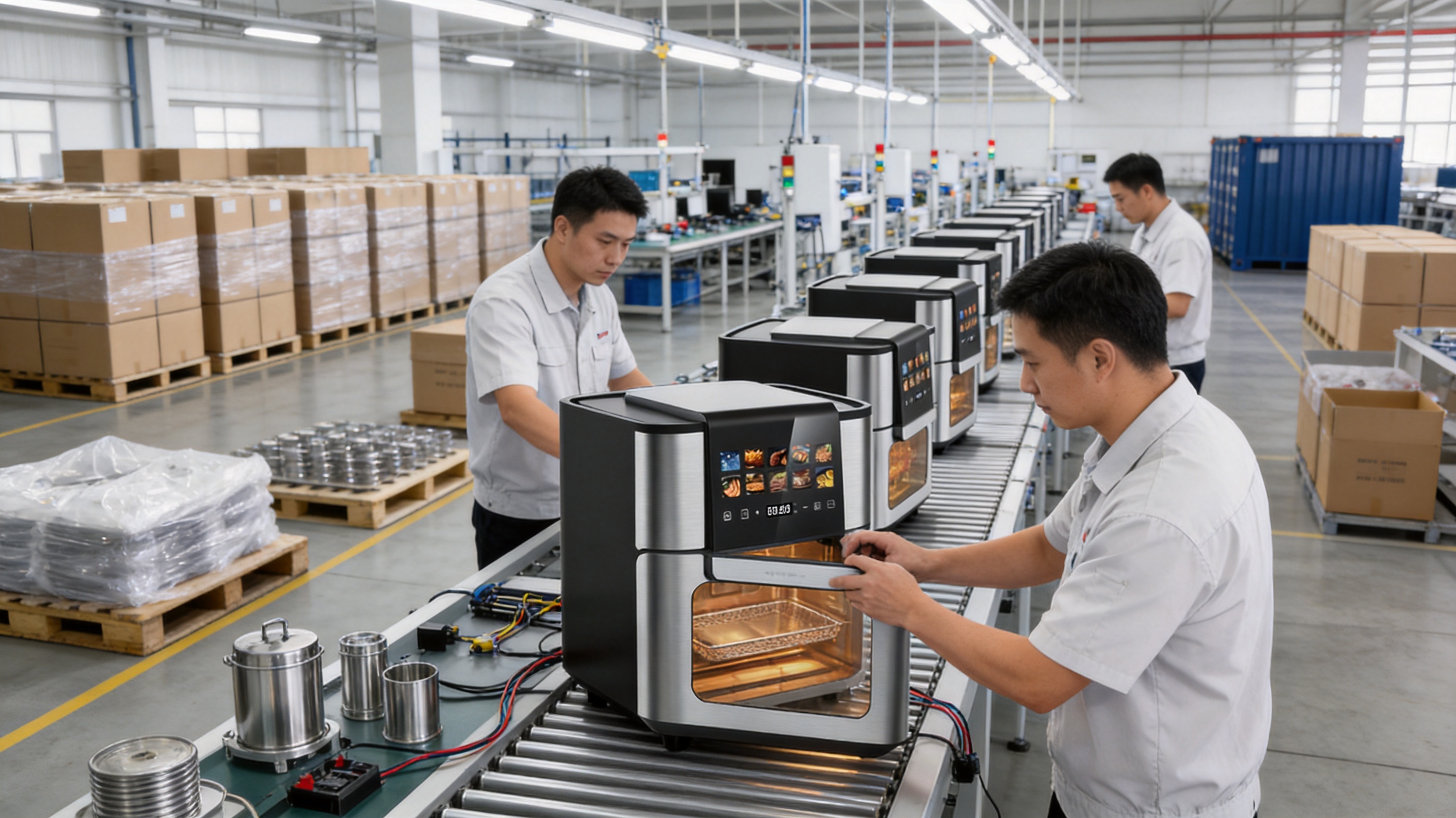
Modern kitchens increasingly demand appliances that can perform several cooking tasks without occupying the space required by multiple separate machines. Consumers want crisp food with less oil, convenient digital controls, easy cleaning, dependable safety, and enough capacity for family meals. Commercial buyers, distributors, retailers, and hospitality operators also look for products that combine attractive design with reliable manufacturing, efficient logistics, and broad market appeal.
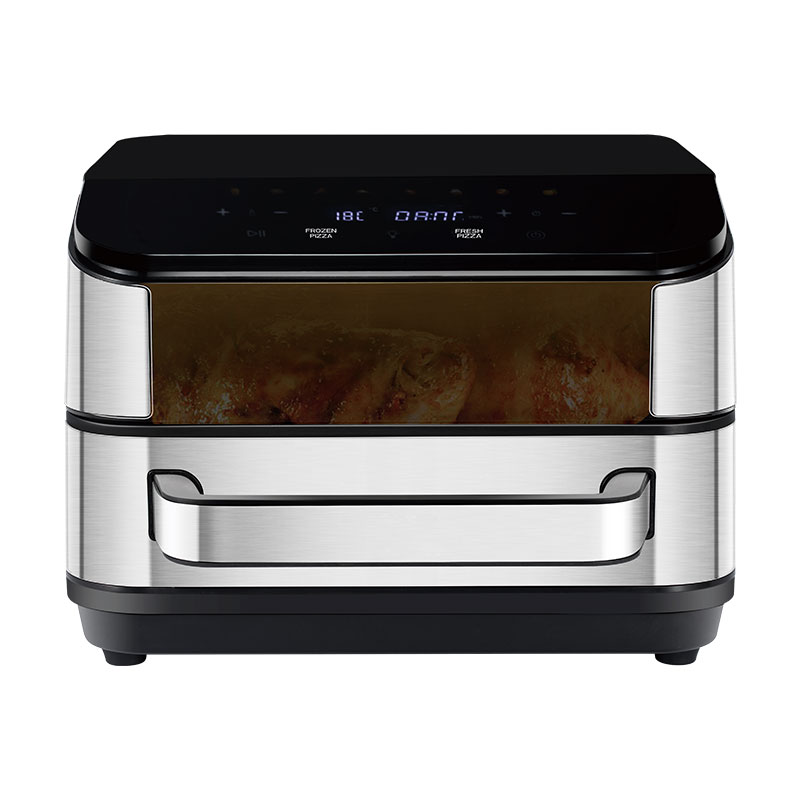
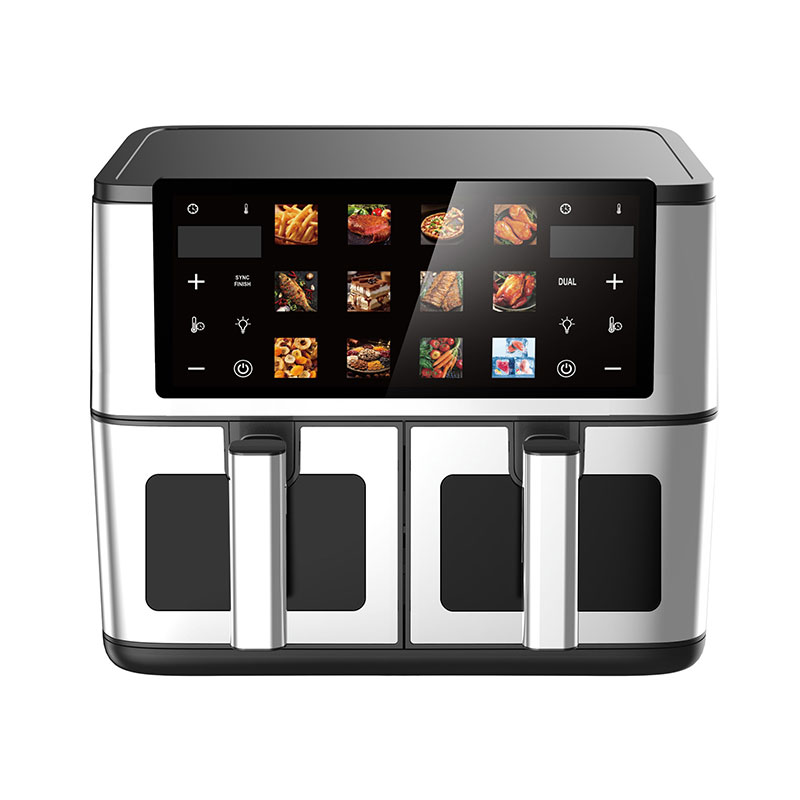
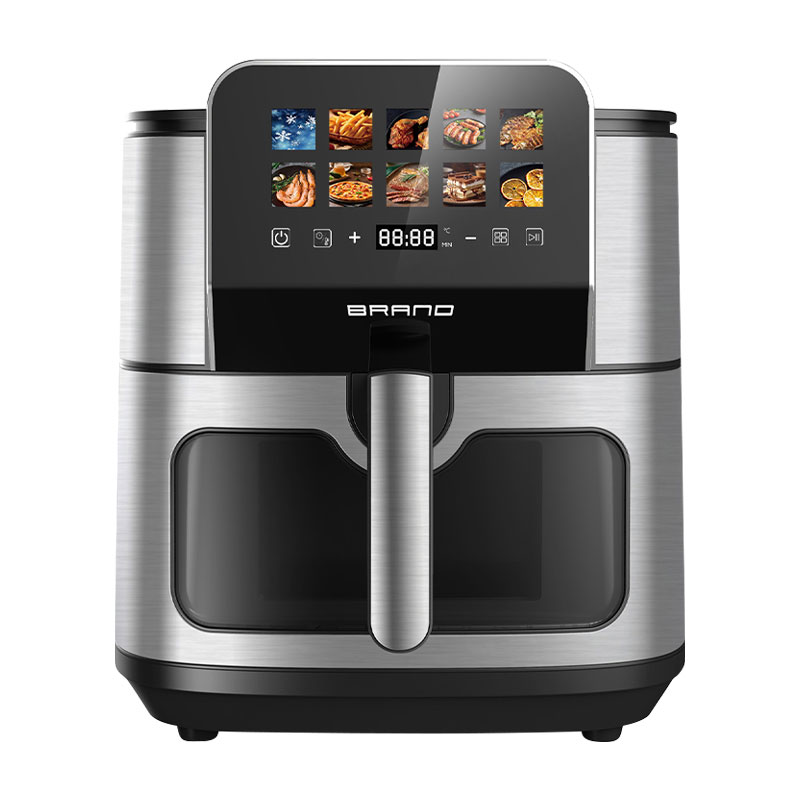
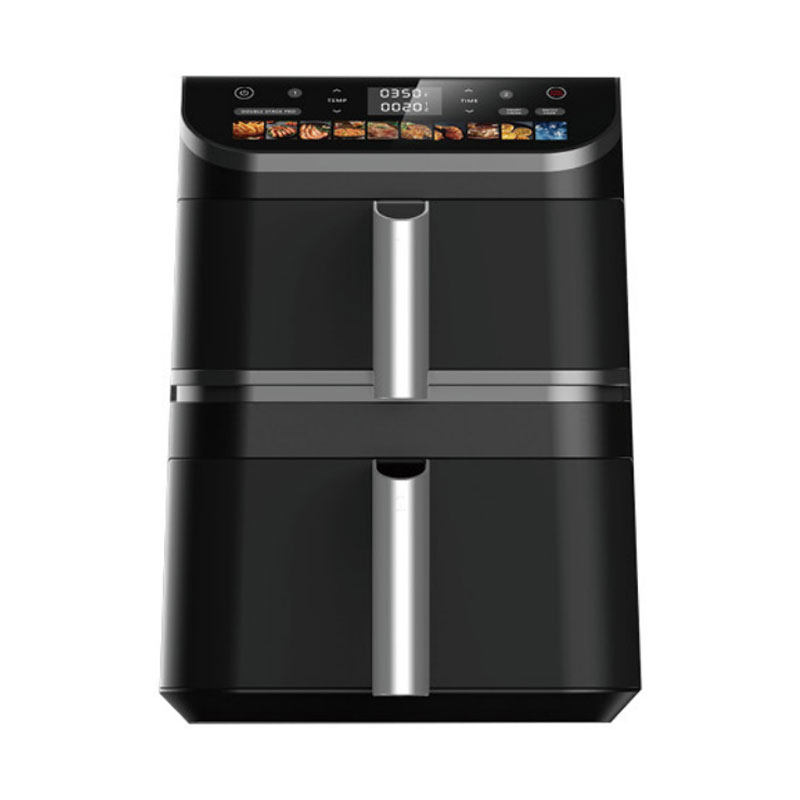
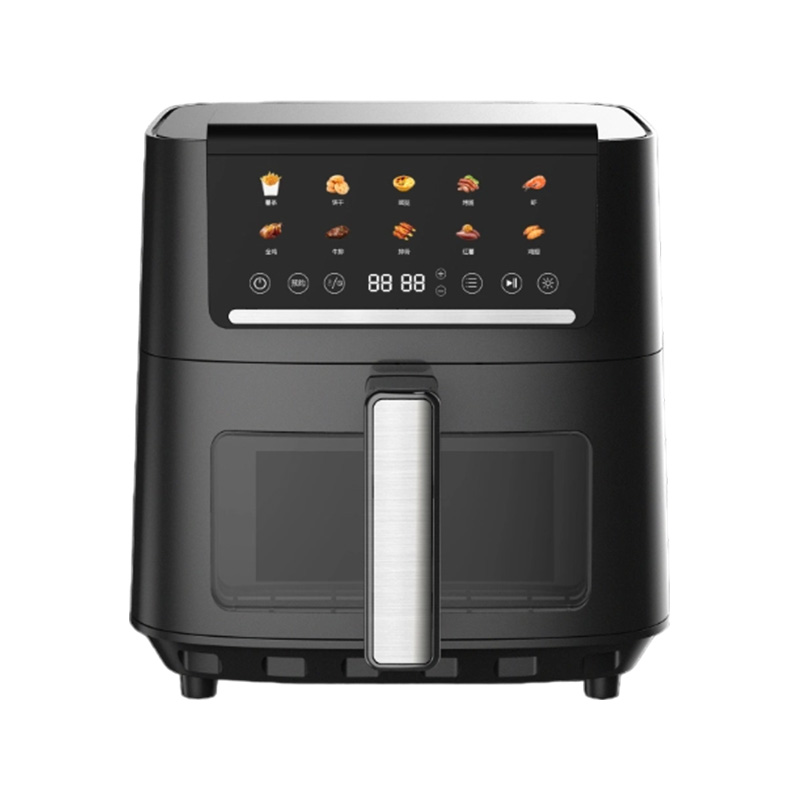
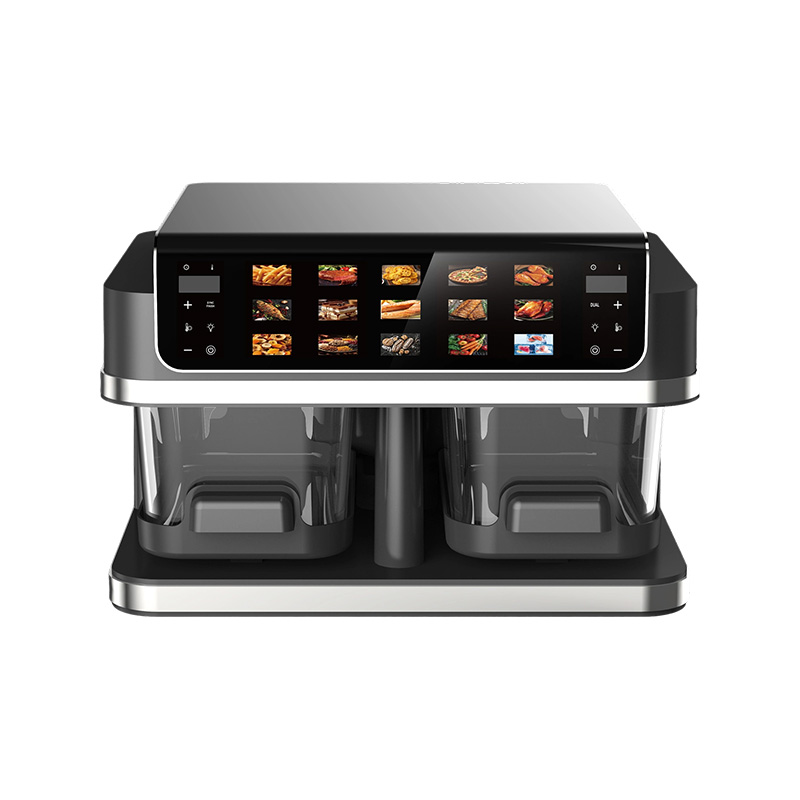
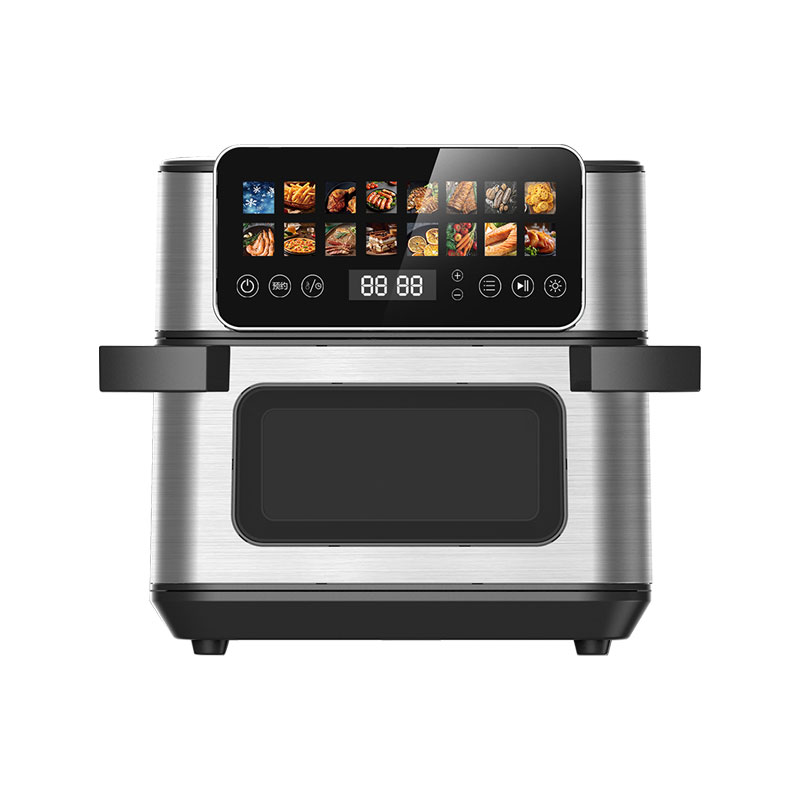
The front LCD touch visible large-capacity square multi-function air oven, identified as GSE022/GSE022-1, is designed to answer these needs. With a 12-litre chamber, 1700W power, circulating hot-air technology, a front digital interface, multiple accessories, and a wide selection of cooking functions, it is positioned as more than a conventional air fryer. It combines the practical role of an air fryer, electric oven, rotisserie, dehydrator, fermentation appliance, breakfast maker, and food-warming or defrosting device in one compact countertop platform.
Its square form makes effective use of internal cooking space, while the visible glass door allows users to monitor food during preparation. The removable and washable door structure, oil catch tray, fork, grill, and interchangeable trays are intended to make daily operation more convenient. At the same time, the product is supported by the manufacturing capabilities of CIXI GSTAR ELECTRIC APPLIANCE CO., LTD., a Chinese small-appliance manufacturer with experience in product development, engineering, quality control, and export-oriented production.
This article examines the product’s features, user benefits, commercial advantages, manufacturing strengths, quality considerations, and suitability for different sales channels. It also explains why a multi-function air oven can provide a stronger value proposition than a basic air fryer or conventional countertop oven.
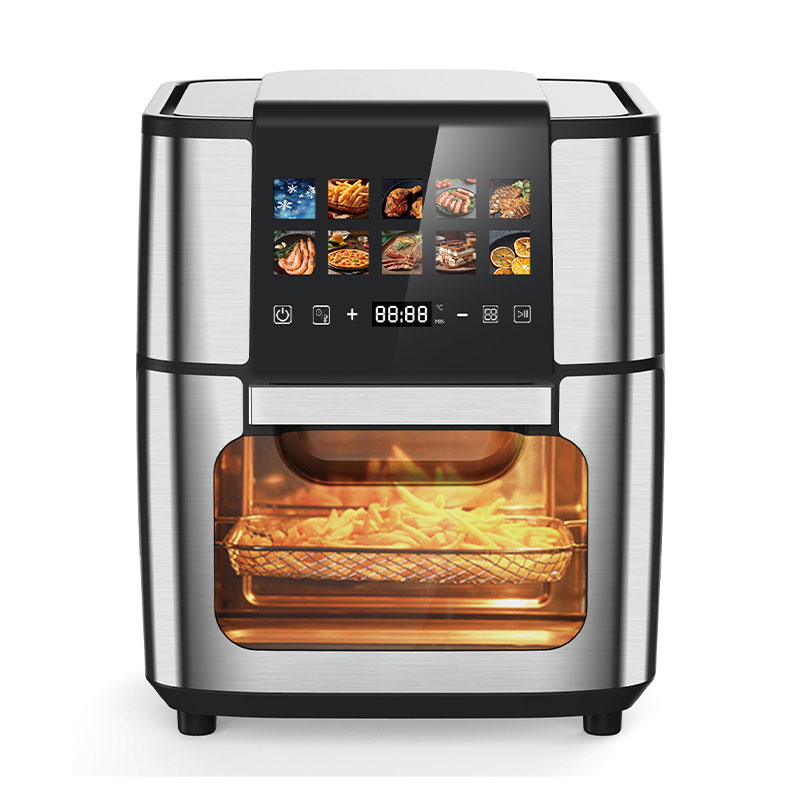
Front LCD touch visible large capacity square multi-function air oven
1. Product Overview
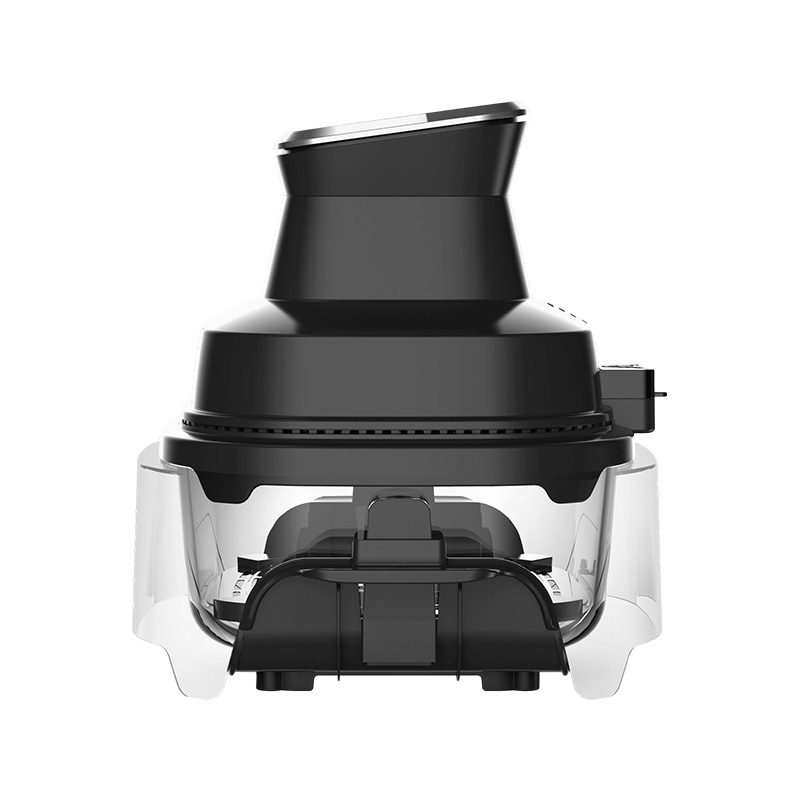
The GSE022/GSE022-1 is a front-facing LCD touch air oven with a large 12-litre capacity. It is designed for countertop use in domestic kitchens, apartments, offices, holiday homes, small food-service environments, and hospitality settings. Its structure combines a high-visibility front door, a square cooking chamber, digital controls, a circulating hot-air system, and accessories for different types of cooking.
The product is rated at 1700W, giving the heating system sufficient output for rapid temperature recovery and high-temperature cooking. Compared with lower-powered countertop appliances, a 1700W system can reduce waiting time between preheating and cooking, especially when preparing larger quantities of food or when the door has been opened to check the cooking process.
The 12-litre capacity provides more usable room than many compact basket-style air fryers. A basket air fryer is often convenient for small portions, but its vertical or drawer-based layout may limit the size and shape of food that can be prepared. The square air-oven format can accommodate a wider range of foods, including toast, chicken portions, vegetables, pastries, bread, pizza-style snacks, grilled food, and rotisserie items.
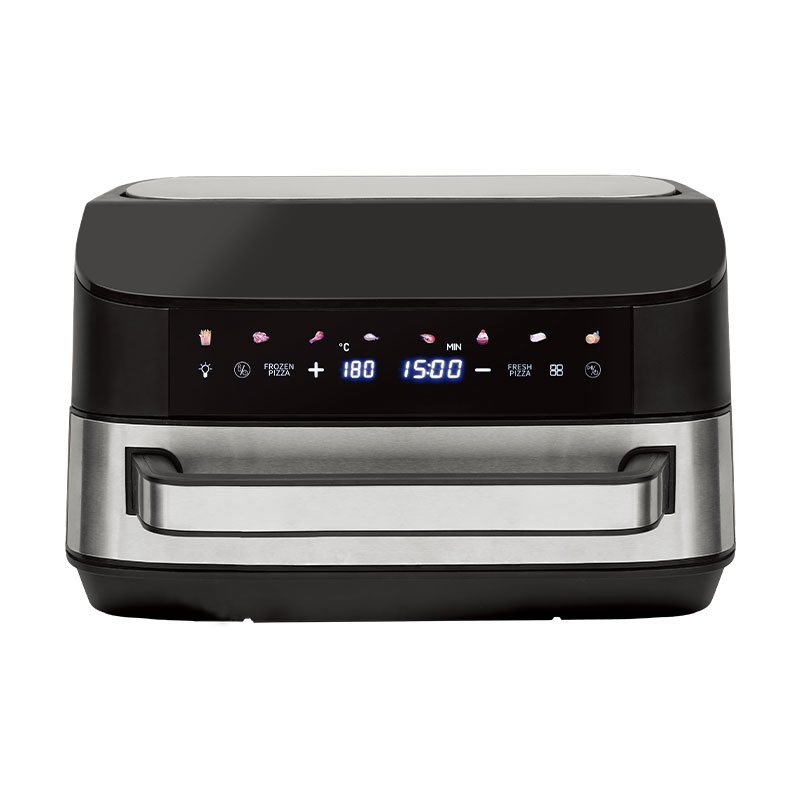
The front LCD touch interface presents operating information in a clear and accessible format. Time and temperature can be viewed at a glance, helping users make adjustments with less guesswork. Digital operation also gives the appliance a more modern appearance than mechanical dial-controlled ovens, which can be an important consideration for retailers selling into design-conscious markets.
The product description identifies the construction as using food-grade materials, including PP, PA, ABS, PC, stainless steel, glass, and aluminium components. The detailed material specification lists PP, PA, SS, PC, ABS, and glass. These materials are selected for different functions within the appliance, including housing components, structural parts, visible panels, internal cooking areas, and heat-resistant accessories. Actual material use should always be confirmed against the final production specification and applicable certification documentation.
Key Technical Information
| Item | Specification |
|---|---|
| Item number | GSE022/GSE022-1 |
| Product name | Air Oven |
| Rated power | 1700W |
| Capacity | 12 litres |
| Material specification | PP, PA, stainless steel, PC, ABS, and glass |
| Packaging quantity | 1 piece per carton |
| Carton size | 38 x 37 x 45 cm |
| Net weight | 7.6 kg |
| Gross weight | 8.0 kg |
| 20-foot container loading reference | 450 pieces |
| 40-foot high-cube container loading reference | 1112 pieces |
| Listed MOQ | 1112 pieces |
| Certifications listed in product information | CE, GS, CB, ETL, RoHS, LFGB, and FDA |
The technical data provides buyers with a useful starting point for procurement planning. The carton size and gross weight can be used to estimate warehouse requirements, freight costs, pallet arrangements, and container utilization. Before mass production, importers should confirm the final carton dimensions, electrical specifications, plug type, labeling requirements, and certification scope for the destination market.
2. Air Cooking with Less Oil
The fundamental operating principle of the appliance is hot-air circulation. Instead of immersing food in a large volume of cooking oil, the oven moves heated air around the ingredients. This allows the surface of many foods to brown and crisp while using little or no additional oil, depending on the recipe.
Reduced-oil cooking is one of the most important reasons consumers purchase air fryers and air ovens. Many households want to continue enjoying fried-style foods while reducing the amount of oil used during preparation. An air oven cannot eliminate the calories naturally present in food, and cooking results depend on the ingredients and recipe, but it can reduce the need for deep frying oil in numerous applications.
The product information states that air frying can provide up to 85 percent fewer calories than regular frying. This figure should be treated as a recipe-dependent marketing reference rather than a universal result. The actual reduction depends on the food, coating, added oil, cooking time, and comparison method. Even so, the hot-air cooking method offers a clear practical alternative to traditional deep frying.
Hot-air circulation can also reduce the inconvenience associated with handling and disposing of cooking oil. Users do not need to fill a deep pan, monitor a large quantity of hot oil, or store used oil after cooking. This may make the appliance especially attractive to families, health-conscious consumers, students, apartment residents, and users who want a cleaner countertop cooking process.
For retailers, the low-oil cooking benefit provides a straightforward sales message. It connects with current consumer interests in balanced eating, convenience, portion control, and simplified kitchen routines. The message is also broad enough to appeal to different age groups and household types.
3. 3D Air Frying and 360-Degree Heating
The product is described as using 3D air frying technology and circulating ducted air heating. In practical terms, the system is designed to distribute hot air around the cooking chamber rather than concentrating heat in one location. Even airflow can help improve browning, surface texture, and cooking consistency.
The 1700W heating system supports powerful hot-air circulation and 360-degree heating. This is useful when preparing foods that need a crisp outside and tender interior. Frozen snacks, chicken wings, potato products, vegetables, pastries, and bread-based items can benefit from a stable flow of hot air around the food.
Cooking consistency depends on several factors, including the quantity of food, the position of the tray, the starting temperature of the ingredients, the selected program, and whether the food is turned during cooking. No countertop oven can guarantee identical results for every recipe. However, a ducted circulation design gives the appliance a stronger technical foundation than a simple static heating chamber.
The two-speed fan heating system further broadens the appliance’s operating range. A lower or gentler airflow setting may be appropriate for delicate foods, drying, fermentation, or recipes that should not be exposed to very strong air movement. A higher airflow setting can be used when rapid hot-air circulation is preferred for roasting, baking, and crisping.
For commercial buyers, this flexibility is a valuable differentiator. A basic air fryer may be strongly associated with one cooking style, while a programmable air oven can be promoted as an all-purpose countertop appliance. The wider application range may help retailers create more product demonstrations, recipe content, and promotional campaigns.
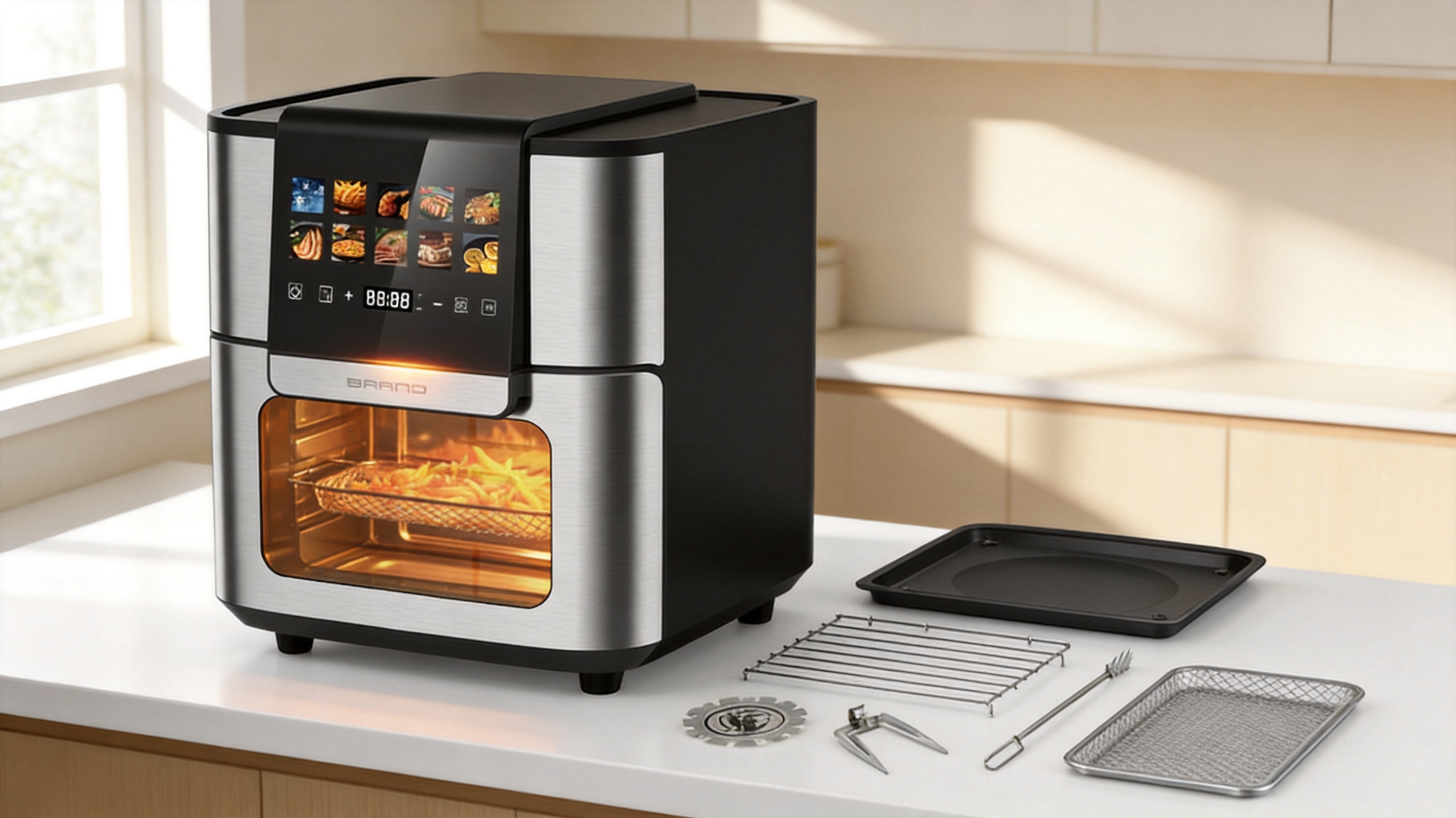
4. A 12-Litre Chamber for Everyday Meals
Capacity is one of the clearest differences between a small basket air fryer and a multi-function air oven. The 12-litre chamber offers additional room for larger portions and different food shapes. It can be more practical for families that want to prepare several servings at once or for users who do not want to cook in multiple small batches.
The square chamber design supports better use of tray space. Rectangular and square foods can be positioned more efficiently than in some rounded or narrow containers. The internal layout can also accommodate different accessories, allowing the user to change from a flat grill surface to a baking tray or rotisserie arrangement according to the recipe.
A 12-litre appliance remains smaller than a full-size built-in oven, so it can be used in kitchens where installation space is limited. It is suitable for countertop cooking without requiring permanent renovation or specialist installation. This makes it attractive for rental properties, compact homes, student accommodation, office kitchens, recreational vehicles, and holiday residences, subject to local electrical and ventilation requirements.
The capacity also supports a broader range of meal occasions. A user might prepare toast or pastries for breakfast, grilled vegetables for lunch, roasted chicken for dinner, and dried fruit for snacks. The ability to use one machine throughout the day can justify the purchase more effectively than a device designed for only one type of food.
For retailers, the 12-litre size can be positioned between small personal air fryers and larger built-in ovens. It offers a meaningful capacity upgrade while retaining the convenience and portability associated with countertop appliances. This middle position can help distributors address multiple customer segments without carrying an excessively large product range.
5. Multi-Function Cooking Performance
The appliance is described as combining the functions of an electric oven, breakfast maker, air fryer, dried-fruit maker, bread maker, and rotisserie. It also includes fermentation and defrost functions. These capabilities turn the product into a multi-purpose cooking station rather than a single-use appliance.
Air Frying
The air-frying mode is intended for foods that benefit from a crisp surface and reduced oil use. Frozen snacks, potatoes, breaded foods, chicken pieces, vegetables, and similar recipes can be cooked using circulating hot air. Users can often apply a small amount of oil with a brush or spray when a richer surface finish is desired.
Baking
The oven format and baking trays make the product suitable for cakes, pastries, bread rolls, biscuits, and other baked goods within the chamber’s size limitations. Digital temperature and time visibility can help users repeat recipes more consistently. The glass door allows visual monitoring without opening the oven repeatedly and losing heat.
Grilling and Roasting
The grill and high-temperature air circulation functions support grilled meats, fish, vegetables, and roasted ingredients. The oil catch tray can collect drippings during cooking, helping prevent grease from accumulating on the bottom of the chamber. Proper placement of the tray and accessories is important for safe operation and effective cleaning.
Rotisserie Cooking
The included fork and rotisserie arrangement provide an additional cooking option that is not available on many basic basket air fryers. Rotisserie cooking can rotate food through the hot-air stream, supporting more even surface browning. Users should follow the recommended weight and size limits for the rotisserie attachment and make sure the food is balanced before operation.
Dehydrating
The dried-fruit function is designed for lower-temperature, longer-duration preparation. Users can make dried fruit, vegetable chips, herbs, or similar snacks, depending on the selected temperature and cooking time. Dehydration requires patience and consistent airflow, so the two-speed fan system may provide useful flexibility.
Fermentation
The fermentation function can support selected bread, yoghurt, or cultured-food preparation processes where controlled warmth is required. Fermentation is sensitive to temperature, ingredients, humidity, and time. The appliance provides a convenient warm environment, but users should follow tested recipes and food-safety procedures.
Defrosting
A dedicated defrost function can reduce the need to use a separate microwave or leave food at room temperature for extended periods. Defrosting should be managed carefully, particularly with meat and seafood, because food-safety risks can increase when ingredients remain in unsafe temperature ranges.
Breakfast Preparation
The appliance can support quick breakfast preparation, including toast, baked eggs, pastries, sausages, and other small morning meals. A single appliance that handles breakfast, snacks, and dinner may appeal to households that want to simplify their kitchen equipment.
6. Ten Intelligent Preset Menus
The product includes ten intelligent preset menus for applications such as seafood, baking, and grilling. Presets are helpful for users who do not want to calculate time and temperature for every recipe. They can select a suitable program, adjust it if necessary, and begin cooking through the touch interface.
Preset menus also make the appliance more accessible to first-time air-oven users. Instead of learning every setting immediately, a new user can begin with a guided program and gain confidence through repeated operation. This is particularly useful for families, older consumers, and users who want quick meal preparation without extensive technical knowledge.
Presets should not be viewed as substitutes for recipe judgment. Food quantity, thickness, moisture, starting temperature, and personal preference all affect the final result. However, they establish a convenient starting point and can reduce the learning curve compared with a completely manual appliance.
From a product-marketing perspective, ten presets provide strong packaging and demonstration content. Retailers can show different foods being cooked under different programs, helping customers understand the product’s versatility. Online sellers can also use preset-focused recipe guides, short videos, and comparison charts to communicate the appliance’s benefits.
7. Visible Glass Door and User Convenience
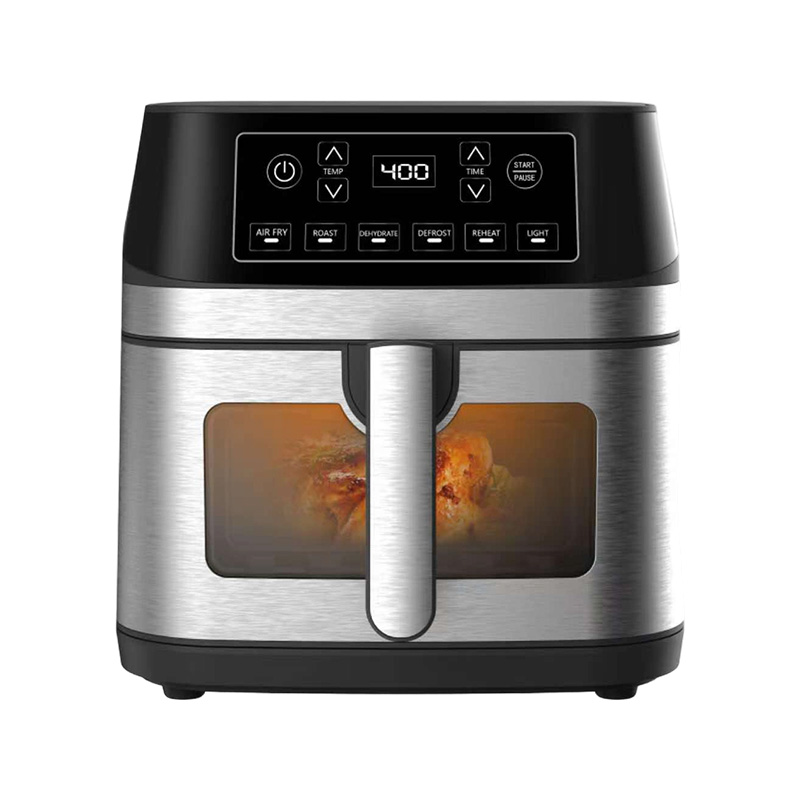
The visual high-borosilicate glass cover is one of the product’s most practical features. Users can see food during cooking without opening the door repeatedly. This can help reduce unnecessary heat loss and make it easier to judge browning, rising, and cooking progress.
Borosilicate glass is commonly selected for heat-resistant applications because it is designed to tolerate temperature changes better than ordinary glass. The final performance depends on thickness, manufacturing quality, installation, temperature limits, and correct use. Users should still avoid thermal shock, such as exposing a hot glass component to cold water.
The removable and washable case door is intended to simplify cleaning. Food residue, grease, and condensation can collect around the door area during cooking. A removable design allows users to access more surfaces than they could with a permanently fixed door. Easy cleaning is a significant purchasing factor because consumers often reject appliances that are difficult to maintain.
The oil catch tray provides another practical advantage. Dripping oil and cooking residue can be collected below the food, helping reduce contamination of the heating chamber. The tray should be removed, cooled, emptied, and washed according to the product instructions after use. Regular cleaning supports hygiene, performance, and long-term appearance.
The UV-finished handle is described as providing a clean and tidy surface treatment. The handle is designed to make opening the door easier while helping users avoid direct contact with hot surfaces. Users should always operate the appliance using the designated handle and maintain sufficient space around the unit for ventilation.
These details may appear small compared with heating power, but they strongly influence the ownership experience. A product that is powerful but difficult to clean may receive poor reviews. By combining visible cooking, removable components, a drip tray, and an easy-grip handle, the appliance addresses several common consumer concerns.
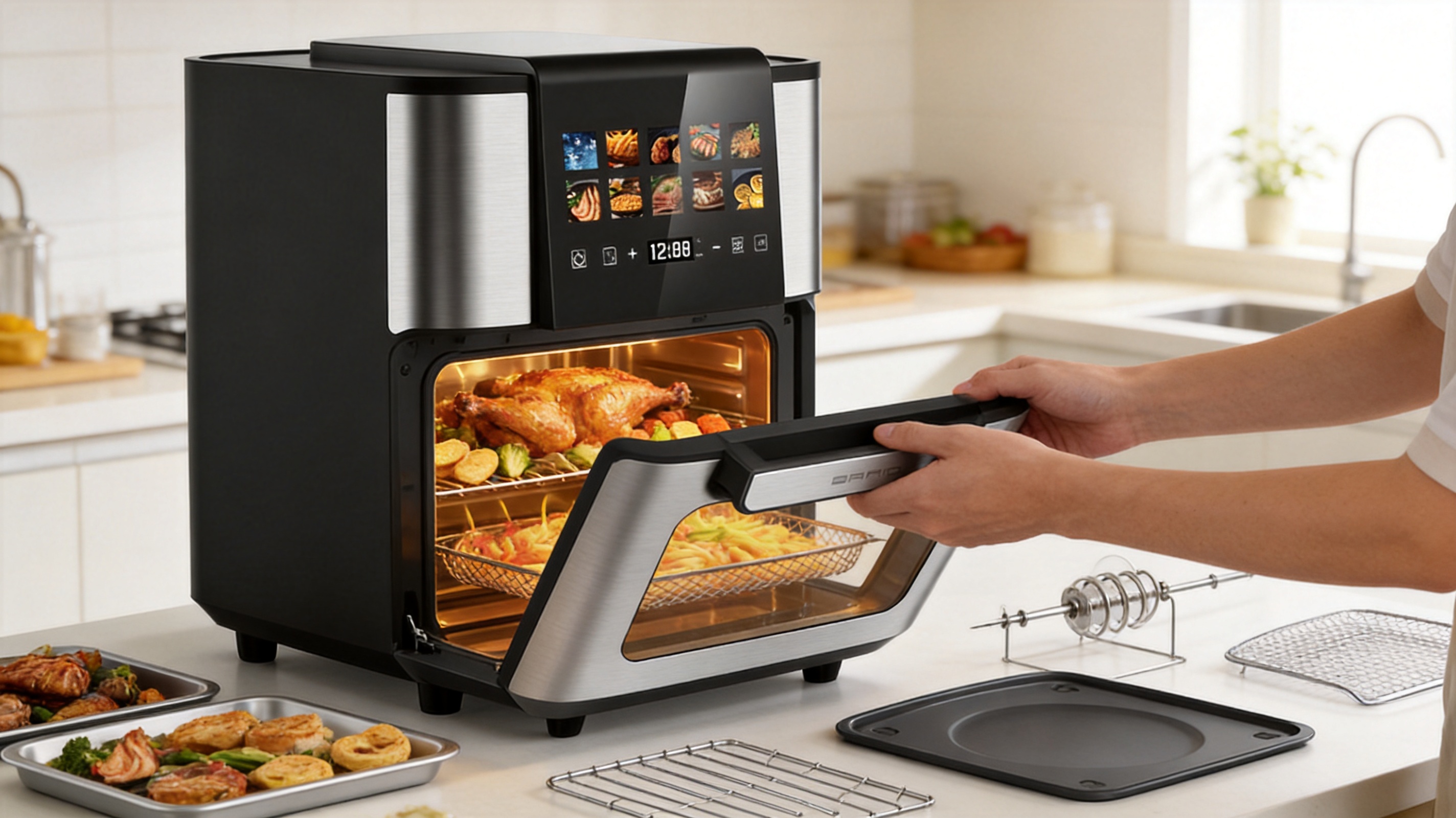
8. Advantages Over Basic Air Fryers
A conventional basket-style air fryer is often effective for small portions, but its design may limit versatility. The basket may not be suitable for bread, pastries, long ingredients, rotisserie cooking, or foods that need to be arranged on a flat tray. The GSE022/GSE022-1 addresses these limitations through its oven-style chamber and multi-accessory configuration.
The first advantage is capacity. Twelve litres provides more room than many personal air fryers and makes it easier to prepare food for several people. While capacity alone does not guarantee better cooking results, it can reduce the need to prepare multiple batches.
The second advantage is format. A front-opening door and square chamber can be more familiar to users accustomed to conventional ovens. It can also make it easier to place and remove trays, inspect food, and use different accessories.
The third advantage is function range. A basic fryer is usually optimized for high-speed hot-air cooking, while this appliance adds baking, grilling, roasting, dehydration, fermentation, defrosting, and rotisserie functions. This broad capability can reduce the need for separate appliances.
The fourth advantage is visibility. Many basket-style fryers require the user to pull out a drawer to inspect food. The glass door allows monitoring through the front, which may help preserve heat and improve convenience.
The fifth advantage is accessory flexibility. The included fork, grill, baking equipment, and interchangeable trays allow users to select the most suitable configuration. This can make the appliance more useful for different household recipes and seasonal cooking habits.
The sixth advantage is retail differentiation. The market contains many basic air fryers with similar features. A 12-litre multi-function air oven can stand out through its visible glass door, square design, LCD touch interface, 1700W power, and extensive cooking modes. These differences give distributors more opportunities to position the product at a higher value level than a basic single-function fryer.
9. Advantages Over Conventional Countertop Ovens
Compared with a conventional countertop oven, the air oven emphasizes rapid hot-air cooking, reduced oil use, and multifunctional operation. Its compact format can be easier to place in small kitchens, and its 12-litre capacity is adequate for many everyday dishes without the size and energy demand of a larger oven.
The air-circulation system can help food develop a crisp exterior more quickly than a static heating environment. The 1700W power rating also supports fast heating and recovery. The digital interface makes time and temperature information easier to read than on some older mechanical ovens.
The product can also be more approachable for consumers who do not need a full-size oven. A renter or apartment resident may prefer a countertop appliance that can be moved or stored as needed. A small business may use it for limited food preparation without investing in a commercial built-in system.
However, the product should be presented accurately. It is not a replacement for every full-size oven application. Its chamber is smaller, and users must follow the specified cooking capacity and accessory limits. Its main competitive strength is convenience and versatility in a compact format, not industrial-scale cooking volume.
10. Manufacturing and Engineering Capabilities
The product is manufactured by CIXI GSTAR ELECTRIC APPLIANCE CO., LTD., a company focused on the design, development, and production of small electric kitchen appliances. Its product range includes blenders, slicers, choppers, food processors, smokeless grills, hot pots, air fryers, air ovens, and related equipment for bars, restaurants, and hotels.
The company’s development history combines product sourcing experience, engineering work, export market understanding, and its own manufacturing operation. According to the supplied company information, the business developed from earlier experience with household appliances and television-shopping products before establishing its own factory and expanding into innovative kitchen products.
The company reports that it moved into a new factory in 2018, with a stated overall site area of approximately 10,000 square metres and a building area of approximately 18,000 square metres at that stage. The supplied company profile also refers to a wholly owned plant with a production area of approximately 15,000 square metres and more than 200 experienced workers. Because the figures describe different stages or facility measurements, buyers should confirm current factory area, production capacity, and staffing during the audit process.
The company also reports engineering and quality-control resources, including an R&D department and QC personnel. This structure is important for electric kitchen appliances because successful production requires more than assembly. It involves heating-system design, airflow management, thermal insulation, control-panel integration, material selection, accessory development, packaging engineering, and safety testing.
An experienced manufacturer can support the entire product-development cycle. This may include concept evaluation, industrial design, prototype production, functional testing, tooling coordination, pilot production, reliability checks, packaging development, and final inspection. These capabilities are particularly useful for buyers seeking private-label products, customized colors, branded packaging, regional plug configurations, or modified operating instructions.
Product Development
Product development begins with identifying a consumer or commercial need. In this case, the need is for a countertop appliance that combines air frying with baking, grilling, roasting, dehydration, fermentation, defrosting, and rotisserie cooking. The design must balance capacity, heating performance, appearance, user controls, cleaning, safety, and production cost.
Engineering teams must translate these requirements into a practical internal structure. They need to determine the location of heating elements, fan ducts, sensors, control boards, insulation, trays, door components, and ventilation openings. The square chamber and front-opening door must work together without interfering with airflow or accessory movement.
Prototype and Pilot Validation
Prototype testing allows the manufacturer to evaluate heating behavior, cooking performance, handle temperature, door operation, fan noise, control response, and accessory fit. Pilot production then tests whether the design can be manufactured consistently at scale. A product that works well as a hand-built prototype must also be reliable when hundreds or thousands of units are produced.
Pilot validation can reveal issues such as inconsistent component fit, packaging damage, loose accessories, control-panel sensitivity, or variations in thermal performance. Correcting these problems before mass production helps reduce warranty claims and protects the buyer’s market reputation.
Quality Control
Quality control for an air oven should address incoming materials, assembly processes, electrical safety, heating performance, visual finish, door alignment, accessory completeness, and packaging strength. The listed material specification includes multiple plastics, stainless steel, PC, ABS, and glass, so incoming inspection is important to verify that each component meets the approved standard.
Electrical inspections may include power consumption, insulation, grounding, leakage current, dielectric strength, temperature control, timer operation, and abnormal-operation testing. Mechanical inspections may cover door opening force, hinge performance, handle stability, tray fit, rotisserie balance, and the durability of removable parts.
Final inspection should also confirm product labeling, user manuals, warning symbols, carton markings, serial or batch information, and included accessories. These details are essential for import compliance and customer support.
Export Experience
The company’s supplied profile states that its products have been sold to international customers and major retail channels. It also describes experience supplying markets in Europe, South America, Korea, Southeast Asia, and other regions. International experience can help a manufacturer understand different plug types, voltage requirements, packaging expectations, documentation, and regulatory procedures.
Export experience does not remove the buyer’s responsibility to verify compliance. Importers should confirm that the exact model, electrical version, factory, and production batch are covered by the required certificates. They should also check local rules for food-contact materials, energy labeling, packaging waste, language requirements, and product registration.
11. Certification and Compliance Considerations
The supplied product information lists CE, GS, CB, ETL, RoHS, LFGB, and FDA certifications or compliance references. These marks and standards address different regulatory or market requirements, and their relevance depends on the destination country and the exact product configuration.
CE marking is associated with applicable European Union product legislation. GS is a voluntary German safety mark commonly used to demonstrate tested product safety. CB certification supports international recognition of electrical safety test results. ETL is widely used for product safety evaluation in North America. RoHS concerns the restriction of certain hazardous substances in electrical and electronic products. LFGB and FDA references may relate to food-contact materials or relevant regulatory requirements.
Buyers should request copies of certificates, test reports, declarations, and scope documents. The documents should identify the correct model number, rated voltage, rated frequency, factory, and applicable standards. A certificate for a similar product is not necessarily valid for the purchased model.
Electrical specifications may need to be adapted for different markets. A European version may use a different plug, voltage, frequency, and labeling system from a North American version. Temperature units, preset descriptions, user instructions, and warning labels may also require localization.
Compliance should be considered during product development rather than after production. Early review of requirements can prevent costly redesigns, delayed shipments, relabeling, or customs problems. A professional manufacturer can help coordinate testing, but the importer remains responsible for market entry obligations in many jurisdictions.
12. Packaging, Logistics, and Procurement
The product is packed one piece per carton, with a listed carton size of 38 x 37 x 45 centimetres. The stated net weight is 7.6 kilograms and gross weight is 8.0 kilograms. These figures are useful for freight calculations and warehouse planning, although final production data should be confirmed before purchase orders are issued.
The supplied loading references indicate approximately 450 pieces in a 20-foot container and 1112 pieces in a 40-foot high-cube container. The listed MOQ is also 1112 pieces. Buyers should verify whether the MOQ reflects a full-container order, a standard production quantity, or a sales-system default. Depending on the destination market and customization requirements, the actual minimum order may vary.
Air ovens contain glass doors, heating components, electronic controls, and multiple accessories. Packaging therefore needs to protect the product against vibration, impact, compression, and moisture during transport. Internal cushioning should hold the unit securely and prevent accessories from striking the glass door or control panel.
Carton drop testing, vibration testing, stacking evaluation, and container-loading review can help reduce transit damage. The outer carton should include clear handling instructions where appropriate. Retail packaging should also communicate the main selling points without making unsupported health or performance claims.
Buyers should consider spare parts and after-sales support before placing a large order. Potentially useful replacement items include glass doors, handles, trays, grills, rotisserie forks, heating elements, fan components, control panels, and fuses. A clear parts policy can improve retailer confidence and reduce product replacement costs.
13. Private Label and Market Positioning
The appliance is suitable for several business models. Importers can sell it under a house brand, retailers can place it in a small-appliance range, distributors can supply independent kitchen stores, and hospitality suppliers can offer it to small food-service customers.
Its strongest positioning is as a premium-value countertop air oven. It is more versatile than a basic air fryer but more compact and accessible than a full-size oven. Marketing should focus on practical benefits such as capacity, cooking variety, visible operation, easy cleaning, digital controls, and reduced reliance on oil.
Retailers can target families, health-conscious consumers, apartment residents, busy professionals, students, home bakers, and consumers upgrading from a small basket fryer. Hospitality applications may include breakfast preparation in guest accommodation, snack preparation in offices, and limited-volume cooking in cafés or small food outlets, provided the appliance is used within its intended operating conditions.
Recipe-led promotion can be especially effective. Demonstrations can show air-fried potatoes, grilled chicken, baked pastries, roasted vegetables, dried fruit, toast, and rotisserie recipes. Since the product includes ten preset menus, each menu can support a separate retail message or recipe card.
Packaging and online listings should state capacity, power, accessories, electrical requirements, and cooking modes clearly. Product claims should be supported by testing or framed appropriately. For example, “designed to reduce the need for deep-frying oil” is more responsible than promising a specific health outcome for every recipe.
14. Efficient Everyday Operation
Users should place the air oven on a stable, heat-resistant surface with sufficient clearance around the ventilation areas. The chamber should not be overloaded, because excessive food volume can restrict airflow and lead to uneven cooking. Foods should be arranged with appropriate spacing when crisping is required.
Preheating may be useful for recipes that require a stable starting temperature. The LCD touch interface allows users to select the desired mode, temperature, and time. Preset programs can provide a convenient starting point, while manual adjustment allows users to fine-tune results.
Food should be checked during the cooking process, especially when using a new recipe. The visible door makes monitoring easier, but users should avoid opening the appliance unnecessarily. Cooking times can vary according to food size, moisture, quantity, starting temperature, and container type.
After cooking, the appliance should be allowed to cool before cleaning. The oil catch tray, grill, baking tray, and other removable accessories should be cleaned according to the instructions. Abrasive cleaners, excessive water near electrical parts, and harsh tools that damage non-stick or protective surfaces should be avoided unless specifically permitted.
Users should inspect the power cord, plug, door, glass, handle, and accessories regularly. If the glass is cracked, the cord is damaged, or the appliance shows abnormal operation, it should be disconnected and inspected by qualified service personnel.
15. Sustainability and Resource Efficiency
Air cooking can reduce the amount of oil used for many recipes, which may reduce oil purchasing, storage, and disposal. A multi-function product can also reduce the need to own several separate countertop appliances. Fewer appliances may mean less storage demand and potentially lower material use across the kitchen, although the overall environmental impact depends on product lifespan, usage patterns, manufacturing, and recycling.
Efficient cooking also depends on selecting the appropriate capacity. A 12-litre air oven may use fewer resources than heating a large conventional oven for a small meal. Conversely, users should avoid operating the appliance unnecessarily or cooking very small portions for long periods. Good recipe planning and batch preparation can improve practical efficiency.
Long service life is one of the most important sustainability factors. Reliable heating elements, durable controls, strong door components, replaceable accessories, and responsive after-sales service can help keep the product in use longer. Manufacturers and buyers should consider spare-part availability and repair support as part of the product’s environmental and commercial value.
16. Why the Manufacturer Is a Strong Business Partner
A small-appliance supplier should provide more than a product catalogue. Buyers need a partner capable of understanding market requirements, supporting design adjustments, maintaining consistent production, preparing compliance documents, and responding to after-sales issues.
CIXI GSTAR ELECTRIC APPLIANCE CO., LTD. presents itself as an engineering-oriented manufacturer with experience in both innovative product development and electric kitchen appliances. Its product history includes non-electric kitchen innovations as well as newer electric categories. This combination can support practical design thinking, because the company has experience with food preparation tools, household use scenarios, and retail presentation.
The company reports a team structure that includes R&D engineers and QC personnel. Dedicated technical and quality resources are important for an air oven because the appliance includes electrical, thermal, mechanical, electronic, and food-contact considerations in one product.
The reported factory and workforce provide a foundation for larger-volume production. The company also describes experience supplying international customers and major retailers. For importers, this background may reduce the learning curve associated with global sourcing, although each new project should still be evaluated through samples, audits, documentation checks, and production inspections.
The company’s stated business principles include innovative products, competitive pricing, quick delivery, high-quality after-sales service, and close cooperation with customers as engineering partners. These principles are relevant to buyers seeking a stable long-term supply relationship rather than a one-time transaction.
17. Recommended Buyer Evaluation Process
Before confirming an order, a buyer should request a production sample and evaluate the complete user experience. The sample should be tested for heating, airflow, cooking consistency, noise, digital controls, door operation, handle temperature, accessory fit, cleaning, and packaging.
The buyer should confirm the exact electrical version, including voltage, frequency, plug, rated power, fuse arrangement, and regional markings. The product should be tested using representative recipes rather than only an empty heating cycle.
Documentation should include the user manual, packaging artwork, rating label, test reports, declarations, certificate copies, accessory list, warranty policy, and quality-control procedure. Private-label buyers should approve all artwork before mass production.
A factory audit can review production lines, incoming inspection, assembly control, testing equipment, warehouse management, worker training, and corrective-action procedures. A pre-shipment inspection can verify quantity, appearance, functions, accessories, cartons, labels, and random electrical tests.
Buyers should also agree on acceptable quality limits, inspection standards, delivery terms, payment terms, spare-part arrangements, and responsibility for compliance. Clear written specifications reduce misunderstandings and support a more stable business relationship.
18. Frequently Asked Questions
What is the capacity of the air oven?
The air oven has a listed capacity of 12 litres. This provides more cooking space than many small personal air fryers while keeping the product suitable for countertop use.
How powerful is the heating system?
The rated power is 1700W. This high-power configuration is designed to support fast heating, strong hot-air circulation, and stable cooking performance.
Does the appliance require cooking oil?
The appliance cooks primarily by circulating hot air and can prepare many foods with little or no added oil. Some recipes may benefit from a small amount of oil for flavor, browning, or texture.
What cooking functions are available?
The listed functions include air frying, electric oven cooking, grilling, baking, rotisserie cooking, dried-fruit preparation, bread making, fermentation, defrosting, and breakfast preparation. The appliance also includes ten intelligent preset menus.
Can users see the food while it cooks?
Yes. The appliance has a visible high-borosilicate glass door, allowing users to monitor the food without opening the door repeatedly.
Is the door removable for cleaning?
The product description states that the case door is removable and washable. Users should follow the final instruction manual for correct removal, cleaning, drying, and reinstallation.
What accessories are included?
The supplied information refers to a fork and grill, as well as interchangeable multi-cooker baking trays and an oil catch tray. The final accessory list should be confirmed in the purchase order and approved sample.
Is the product suitable for private labeling?
The product can be considered for private-label distribution, subject to agreement on minimum order quantity, artwork, packaging, electrical configuration, certification, and customization requirements.
What is the listed minimum order quantity?
The supplied information lists an MOQ of 1112 pieces. Buyers should confirm whether this quantity applies to all orders, a specific production version, or a full 40-foot high-cube container arrangement.
What certifications are listed?
The product information lists CE, GS, CB, ETL, RoHS, LFGB, and FDA. Buyers should request current documents and verify that they apply to the exact model, factory, voltage, and destination market.
Is the air oven suitable for commercial use?
It may be suitable for limited-volume preparation in offices, guest accommodation, small cafés, and similar environments, provided it is used within the manufacturer’s specifications. It is not intended to replace high-capacity commercial cooking equipment.
How does it compare with a basket air fryer?
It offers a larger 12-litre oven-style chamber, a visible front door, baking and rotisserie accessories, multiple functions, and a square layout. A basket fryer may remain preferable for users who want the smallest footprint or very simple portion cooking.
How should the appliance be cleaned?
The appliance should be unplugged and cooled before cleaning. Removable trays and accessories can be washed according to the manual. Electrical components and the main housing should not be immersed in water.
What should importers confirm before ordering?
Importers should confirm the exact model, electrical configuration, certifications, test reports, accessories, packaging, MOQ, lead time, inspection standards, warranty terms, spare parts, and destination-market labeling requirements.
19. Conclusion
The GSE022/GSE022-1 front LCD touch air oven combines the convenience of air frying with the broader capabilities of a countertop electric oven. Its 12-litre capacity, 1700W power, circulating ducted air, 360-degree heating concept, visible glass door, digital controls, ten preset menus, removable cleaning components, oil catch tray, and multi-purpose accessories create a strong value proposition for modern kitchens.
Its principal advantage over a basic air fryer is versatility. The square oven-style chamber can support baking, grilling, roasting, rotisserie cooking, dehydration, fermentation, defrosting, and breakfast preparation in addition to low-oil air frying. Its principal advantage over a conventional countertop oven is the combination of compact size, hot-air circulation, digital operation, and recipe flexibility.
For distributors and retailers, the product provides several compelling sales messages: family-friendly capacity, reduced reliance on deep-frying oil, visible cooking, easy cleaning, modern touch controls, and multiple appliances in one. For importers, the manufacturer offers experience in small kitchen appliances, product engineering, international sales, factory production, and quality-control organization.
As with any electrical kitchen appliance, buyers should verify current certifications, destination-market requirements, final specifications, production capacity, and quality procedures before placing an order. With appropriate validation and clear commercial planning, this multi-function air oven can serve as a practical addition to household-appliance portfolios and a competitive product for international markets.
References
1. Product specification for air oven model GSE022/GSE022-1, including capacity, power, material, packaging, loading, and certification information supplied by the manufacturer.
2. Product description for the front LCD touch visible large-capacity square multi-function air oven, including air-circulation technology, accessories, preset menus, and cooking functions.
3. Manufacturer company profile for CIXI GSTAR ELECTRIC APPLIANCE CO., LTD., including product categories, development history, factory information, engineering resources, and international market experience.
4. General principles of countertop air cooking, hot-air circulation, food preparation, appliance maintenance, and kitchen electrical safety.
5. General procurement practices for electrical kitchen appliances, including sample approval, factory evaluation, production inspection, packaging verification, and certification review.