
 English
 中文简体
中文简体 Español
 English
 中文简体
中文简体 Español

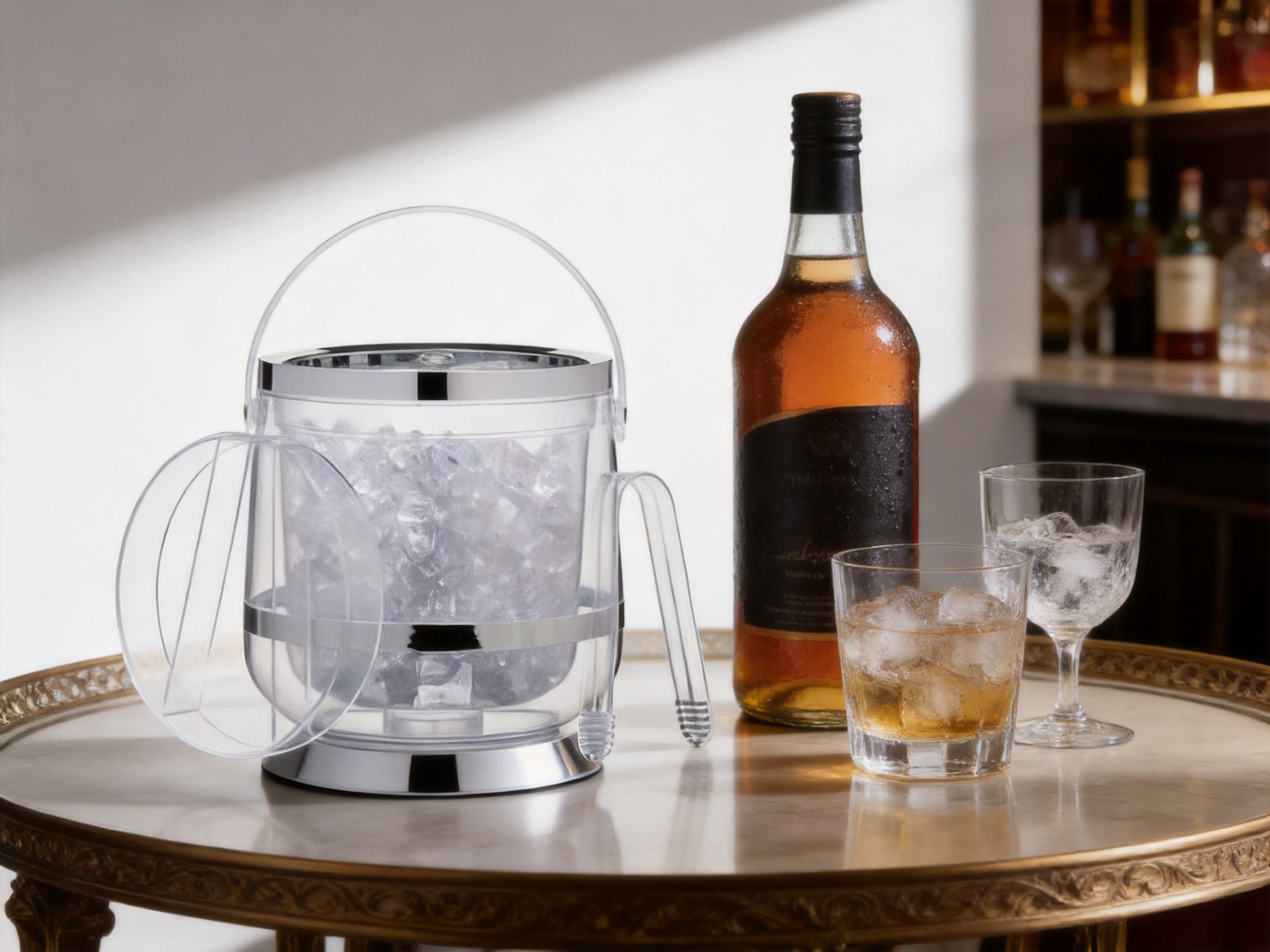
An ice bucket is a simple product with an important role in beverage presentation, foodservice, hospitality, and household entertaining. Whether it is placed beside a dining table, used at a bar, supplied to a hotel, or included in a retail assortment of daily necessities, the right ice bucket should combine practical handling, dependable material performance, efficient packing, and attractive presentation. The GS070 Ice Bucket is designed to meet these requirements with a straightforward construction, a lightweight PS body, organized carton packing, and a supply capability suitable for wholesale and commercial purchasing.
The product is manufactured by CIXI GSTAR ELECTRIC APPLIANCE CO., LTD., a Chinese manufacturer with experience in small kitchen appliances, hospitality products, and innovative household goods. Although the company is known for electrical products such as blenders, food processors, air fryers, and hot pots, it also develops non-electric products for bars, restaurants, hotels, supermarkets, and home use. The GS070 Ice Bucket belongs to this practical daily-use product range.
Its design is focused on the essential functions expected from an ice bucket: holding ice in an orderly container, supporting beverage service, remaining easy to move, and allowing buyers to procure the product in commercially efficient quantities. The product uses PS material and is supplied in cartons of eight pieces. With a stated minimum order quantity of 2,000 pieces and a delivery time of approximately 35 days, it is positioned for importers, distributors, hospitality suppliers, supermarket buyers, and private-label customers seeking a repeatable supply program.
Product Overview
The GS070 is identified as an ice bucket under the ice bucket product category. Its product number is GS070, and its listed material is PS. In common product terminology, PS refers to polystyrene, a thermoplastic material widely used in household, packaging, display, and foodservice-related products. The selection of PS allows manufacturers to create a formed product with a consistent appearance and relatively low weight compared with many metal alternatives.
The product is packed at eight pieces per carton. The listed carton measurement is 41 x 41 x 41 cm, with a net weight of 7.76 kg and a gross weight of 8.76 kg. These figures are useful for import planning, warehouse calculation, freight quotation, and distribution management. The listed container loading quantities are 3,246 pieces in a 20-foot container, 6,732 pieces in a standard 40-foot container, and 7,884 pieces in a 40-foot high-cube container.
| Product Attribute | Specification |
| Item Number | GS070 |
| Product Name | Ice Bucket |
| Product Category | Ice Buckets |
| Material | PS |
| Pieces per Carton | 8 pieces per carton |
| Carton Measurement | 41 x 41 x 41 cm |
| Net Weight | 7.76 kg per carton |
| Gross Weight | 8.76 kg per carton |
| Minimum Order Quantity | 2,000 pieces |
| Stated Delivery Time | Approximately 35 days |
Because the supplied product data does not specify a lid, handle, insulation layer, drainage system, or accessories, buyers should confirm the exact configuration before placing an order. This is an important part of professional sourcing. A responsible supplier should provide the latest product drawings, approved samples, packaging details, and inspection criteria so that the delivered product corresponds with the buyer’s intended market requirements.
Why Ice Buckets Remain Valuable in Modern Beverage Service
Ice buckets are used in situations where ice needs to be stored close to the point of service. In restaurants, a bucket can support table-side beverage presentation. In bars, it can keep a working quantity of ice available for servers and bartenders. In hotels, it can be supplied for rooms, event spaces, lounges, and banquet operations. At home, it can be used for parties, family gatherings, outdoor meals, and casual entertaining.
The product category also has value in retail. A buyer may position an ice bucket within a kitchenware, barware, hospitality, summer living, entertaining, or daily necessities assortment. The simplicity of the item makes it easy for consumers to understand, while its practical use provides a clear reason to purchase. For wholesalers, the product can complement beverage dispensers, pitchers, trays, bottle openers, ice tongs, food processors, and other hospitality-related accessories.
A well-selected ice bucket should not be evaluated only by its basic ability to contain ice. Commercial buyers also consider material consistency, appearance, weight, carton efficiency, replenishment speed, minimum order requirements, and supplier reliability. The GS070 specification addresses several of these purchasing concerns through a defined material, standardized carton configuration, stated container quantities, and a planned delivery period.
For international buyers, standardized information is particularly important. Container loading figures help determine whether the product can be combined with other goods or shipped as a dedicated order. Carton dimensions help calculate warehouse space. Net and gross weights assist with freight planning and handling procedures. A declared minimum order quantity helps buyers compare suppliers on realistic commercial terms rather than on sample-level pricing alone.
Material Advantages of PS Construction
PS is valued in many product applications because it can be processed into consistent shapes with a smooth and uniform surface. For an ice bucket, this can support a clean visual appearance and a repeatable product profile from one production batch to another. Consistency is especially important for retail programs, hospitality chains, and private-label projects in which multiple shipments need to match.
One practical advantage of PS is its relatively light weight. Compared with many stainless-steel, aluminum, glass, or thick ceramic alternatives, a PS ice bucket can be easier to lift, move, arrange, and distribute. In hospitality settings, employees may handle the product repeatedly during a shift. A lighter container can help reduce unnecessary handling effort, particularly when the bucket is moved from a storage area to a dining room, service station, guest room, or event table.
Lightweight construction can also support more efficient logistics. Product weight affects transportation cost, manual handling, pallet movement, and warehouse organization. When the product is packed in consistent cartons of eight pieces, buyers can plan receiving and inventory procedures more easily. The GS070 carton information gives purchasing departments a starting point for estimating total shipment weight and required storage capacity.
PS also offers design flexibility. Manufacturers can form plastic products into practical shapes and produce a consistent appearance across a production run. Depending on the final approved design, this can allow the ice bucket to fit different visual themes, retail positions, or hospitality environments. Buyers requiring special colors, decoration, packaging, or branding should discuss those requirements with the manufacturer during the development and quotation stage.
At the same time, material suitability must always be evaluated according to the intended use. PS products should be handled in accordance with the supplier’s care instructions and applicable local regulations. Buyers should confirm whether the intended ice contact, temperature range, cleaning method, and food-contact application are covered by the final product specification. This type of verification is not a weakness; it is a normal part of responsible product development and international compliance.
Advantages Compared with Competing Ice Bucket Options
Compared with Metal Ice Buckets
Metal ice buckets are often selected for their solid appearance and premium visual impression, but they may be heavier and more expensive to transport. They can also require more attention to surface finishing, dent resistance, corrosion considerations, and cleaning marks. A PS ice bucket can offer a more economical and lightweight alternative for buyers whose main objective is practical beverage service rather than a heavy luxury presentation.
For high-volume hospitality operations, weight can affect daily labor. Staff members may need to move several buckets at once, refill them repeatedly, or relocate them between service areas. A lighter PS option may be easier to handle. It can also be suitable for promotional programs, event rental packages, catering supply, and supermarket sales where an accessible price and manageable logistics are important.
Compared with Glass or Ceramic Containers
Glass and ceramic products can have an elegant appearance, but they are generally more vulnerable to breakage during transportation and daily handling. Their weight may also increase freight and warehousing requirements. A PS ice bucket provides a practical alternative for settings where the product may be moved frequently or used in busy service environments.
Hotels, restaurants, and event organizers often need products that are easy to distribute across multiple rooms or service points. A lightweight plastic construction may simplify these operations. It can also reduce the risk of breakage-related disruption compared with fragile materials, subject to proper handling and the performance characteristics of the final design.
Compared with Low-Grade Uncontrolled Plastic Products
The value of a professionally sourced PS ice bucket is not simply that it is made from plastic. Material identification, process control, carton standards, inspection procedures, and supplier accountability all influence the result. Uncontrolled products may vary in color, wall thickness, shape, finish, or packing quality. Such variation can create complaints, inconsistent retail displays, and difficulty maintaining a repeat order.
The GS070 is supported by a defined item number, a stated material, established packing information, and a manufacturer with dedicated engineering and quality-control personnel. These factors give buyers a clearer foundation for purchasing decisions. A formal supplier relationship also makes it easier to discuss samples, modifications, packaging artwork, inspection requirements, and future replenishment.
Compared with Oversized or Over-Specified Designs
Some ice buckets are designed with complex structures, multiple accessories, or heavy decorative components. These features may be appropriate for certain premium applications, but they can increase cost, packaging volume, and shipping weight. The GS070 follows a more focused product concept. Its value lies in offering a useful ice container with a defined commercial specification rather than adding features that every customer may not need.
This practical approach can be attractive to distributors and retailers that want a product with broad market applicability. A straightforward item can be positioned for household entertaining, foodservice supply, hospitality procurement, or promotional use. Buyers can then evaluate whether optional customization is necessary for their specific channel.
-1.jpg)
Design and Handling Considerations
An ice bucket is normally placed within reach of users, so handling convenience should be considered from the beginning of a purchasing project. The shape should permit stable placement on a table, service counter, bar surface, or other intended location. The rim should be easy to access for adding or removing ice. The internal capacity and external dimensions should be matched to the service environment.
Since the provided specification identifies the material and packaging but does not state the product’s individual dimensions or capacity, buyers should request these details before final approval. Individual product dimensions are different from carton measurement. The listed 41 x 41 x 41 cm figure should be treated as the outer carton measurement unless the supplier confirms otherwise.
Buyers should also clarify whether the product includes a handle, lid, tongs, drainage feature, or other components. These details affect consumer expectations, packaging design, product photography, customs descriptions, and retail labeling. A complete technical file should identify the product’s components, material composition, color, surface finish, tolerances, packaging method, and recommended care instructions.
For commercial users, the product should be evaluated in a representative environment. A restaurant buyer may test it at a service station. A hotel buyer may assess how it fits in a guest room or hospitality trolley. A retailer may examine shelf presentation, carton opening, barcode placement, and consumer instructions. Testing the product in its actual use context helps identify requirements that may not be visible from a catalog image.
Packaging and Logistics Efficiency
Packaging is a major part of product performance in international trade. The GS070 is packed eight pieces per carton, providing a clear unit for counting, receiving, and stock management. Cartonized packing helps reduce loose-piece handling and can make warehouse operations more systematic.
The carton measurement of 41 x 41 x 41 cm corresponds to a cubic volume of approximately 0.0689 cubic meters per carton before any pallet or container spacing is considered. This figure can help logistics teams estimate warehouse needs and compare shipment configurations. The net and gross weights also offer useful planning information, although the final freight calculation should be based on the confirmed packing list and shipping documents.
The stated container quantities indicate that the product can be shipped in substantial commercial volumes. A 20-foot container is listed at 3,246 pieces, a 40-foot standard container at 6,732 pieces, and a 40-foot high-cube container at 7,884 pieces. These quantities are valuable for importers preparing purchasing forecasts, annual volume plans, or mixed-container strategies.
| Shipping Unit | Listed Quantity | Potential Planning Use |
| One carton | 8 pieces | Warehouse receiving and case-order planning |
| One 20-foot container | 3,246 pieces | Medium-volume import planning |
| One 40-foot container | 6,732 pieces | Large-volume distribution planning |
| One 40-foot high-cube container | 7,884 pieces | Higher-capacity container planning |
| Minimum order | 2,000 pieces | Initial wholesale or distribution program |
Container quantities should be confirmed before shipment because loading results may change according to packaging revisions, palletization, container type, loading method, and the inclusion of accessories. Nevertheless, the declared figures provide a useful initial reference. They demonstrate that the manufacturer has considered the product as a wholesale item rather than merely a small-batch consumer craft product.
Efficient packing also supports lower product movement during transit. When pieces are arranged in properly designed cartons, buyers can reduce the likelihood of confusion during receiving and improve stock rotation. Carton labels should ideally include the item number, product name, quantity, gross weight, net weight, country of origin, handling marks, and any required customer references.
Quality Control for an Ice Bucket Production Program
Quality control should cover more than visual appearance. For the GS070, a professional inspection program may include material verification, dimensional inspection, color comparison, surface examination, structural assessment, carton inspection, and quantity checking. The exact inspection plan should be agreed between the buyer and supplier before production begins.
Incoming material control is the first stage. The manufacturer should use approved raw materials and maintain records for production batches where applicable. Material consistency can influence color, surface finish, strength, forming behavior, and overall appearance. If the customer has specific requirements for food contact, recycled content, or restricted substances, those requirements should be documented and verified through suitable testing or supplier declarations.
During forming and assembly, process control helps maintain consistent dimensions and shape. Operators and quality personnel can monitor key points such as wall uniformity, rim condition, base stability, surface defects, flash, deformation, and visible marks. A controlled process reduces the risk that products from different cartons will look noticeably different on a retail shelf or perform inconsistently in service.
Final inspection should confirm that the finished goods match the approved sample. This may include checking product quantity per carton, carton dimensions, packaging materials, labels, color, printing, and overall presentation. For export orders, buyers may request a pre-shipment inspection based on an agreed acceptable quality limit or a customer-specific checklist.
Packaging quality deserves particular attention because the carton protects the product throughout factory handling, container loading, ocean transport, customs processing, and final distribution. Cartons should be properly closed and marked. Inner protection, if required by the design, should prevent friction or deformation. Any retail packaging should be evaluated for both protection and presentation.
Manufacturing Strengths and Factory Capabilities
CIXI GSTAR ELECTRIC APPLIANCE CO., LTD. has developed from a trading and sourcing background into a manufacturer and product development organization. The company was established in 2009 and initially focused on non-electric innovative products, including household and foodservice-related items. Its experience includes products such as spiralizer drum graters, iced pitchers, and iced bowls, which are relevant to the company’s understanding of beverage service and daily-use product design.
In 2018, the company moved into its own new factory. The supplied company information describes a facility with approximately 10,000 square meters of site area and approximately 18,000 square meters of building area at that stage. It also describes a production area of approximately 15,000 square meters and a workforce of more than 200 experienced workers in the company’s current profile. These figures indicate a substantial manufacturing base for a supplier serving international customers.
The company reports a team of engineers in research and development and a dedicated quality-control group. This structure is important because product manufacturing is not only a matter of operating equipment. It requires engineering review, tooling coordination, process documentation, sample approval, inspection, corrective action, and communication between production and customer service teams.
Although the company’s wider portfolio includes electrical kitchen appliances, the same organizational strengths can support non-electric products such as the GS070. Product development knowledge can help the company understand consumer handling, kitchen workflows, hospitality requirements, packaging expectations, and the importance of repeatable production. Experience across multiple product categories can also help the supplier support customers that are building a broader household or foodservice assortment.
Research and Development
The company’s history emphasizes its move from sourcing and selling existing products toward designing and developing products with its own innovations. This transition is relevant to buyers seeking more than a standard catalog item. A capable development team can review product drawings, recommend material adjustments, evaluate packaging concepts, and support modifications for different sales channels.
For the GS070, research and development support may be useful when a buyer needs a particular color, retail package, printed logo, carton design, or coordinated product family. Any custom requirement should be evaluated for tooling impact, minimum order quantity, lead time, testing, and cost. Early communication helps prevent changes from being requested after mass production has already begun.
Engineering and Process Coordination
Engineering plays a central role in translating a product concept into a stable manufacturing process. For a plastic ice bucket, engineering considerations may include material behavior, forming conditions, dimensional tolerances, surface quality, stacking, packaging, and handling. The goal is to create a process that can produce the approved design consistently at the required volume.
Engineering coordination is also important when a buyer requests a modification. A change to the rim, base, wall profile, surface decoration, or packaging may affect tooling, cycle time, material usage, carton configuration, and shipping quantities. A manufacturer with internal technical resources is better positioned to assess these consequences before confirming a quotation or delivery schedule.
Quality Management
The company states that it has dedicated personnel responsible for quality control. This supports a production model in which quality is considered throughout the manufacturing process rather than only at the final packing table. Quality staff can work with production teams to identify defects, review samples, monitor inspection results, and communicate corrective actions.
For international buyers, quality communication is especially important. A supplier should be able to work with product specifications, approved samples, inspection reports, carton markings, and customer feedback. This creates a documented reference for future orders and helps maintain consistency as production is repeated.
Production Experience Across Markets
The company’s information describes sales to supermarkets, clubs, department stores, home retailers, and other international customers. It also reports that its electric products have been welcomed in multiple countries and that certain products achieved significant sales volumes in Asian markets. While previous sales results do not automatically guarantee the performance of every new order, they indicate experience with international product requirements, volume production, and customer coordination.
A supplier serving different markets must often manage variations in packaging, labeling, voltage requirements for electrical products, language, quality expectations, and shipping documentation. For the non-electric GS070, this background can help the manufacturer understand the commercial discipline required for export orders, even though the ice bucket itself does not require electrical certification.
Manufacturing Process from Concept to Finished Goods
A reliable production program begins with a clear product definition. The buyer and supplier should agree on the item number, product name, material, dimensions, color, surface finish, accessories, packaging, labels, and inspection requirements. An approved sample or technical drawing should serve as the reference for mass production.
The next step is material and production preparation. The factory organizes the required PS material, packaging components, labels, and any approved accessories. Production personnel prepare the relevant equipment and confirm that the tooling and process settings are appropriate for the product. If the order includes special colors or decoration, these details should be approved before the production run.
During forming, the PS material is processed into the required ice bucket shape. The precise process depends on the approved product design and factory equipment. Key process controls may include temperature, pressure, timing, trimming, and cooling. Maintaining stable process conditions helps reduce deformation, inconsistent edges, surface defects, and dimensional variation.
After forming, workers or automated equipment may perform trimming and finishing operations. The product is checked for excess material, rough edges, visible marks, and shape irregularities. If the product includes additional parts or decoration, these are applied according to the approved work instructions.
Inspection is conducted at appropriate stages. In-process checks can identify problems before a large quantity is completed. Final checks confirm that the finished product meets the agreed appearance and dimensional requirements. Products that do not meet the standard should be separated and handled according to the factory’s corrective-action procedures.
Once approved, products are packed in cartons of eight pieces according to the confirmed packing method. Cartons are labeled and prepared for warehouse storage or container loading. The shipping department then coordinates the packing list, commercial documents, loading plan, and delivery schedule.
Commercial Applications
Restaurants and Bars
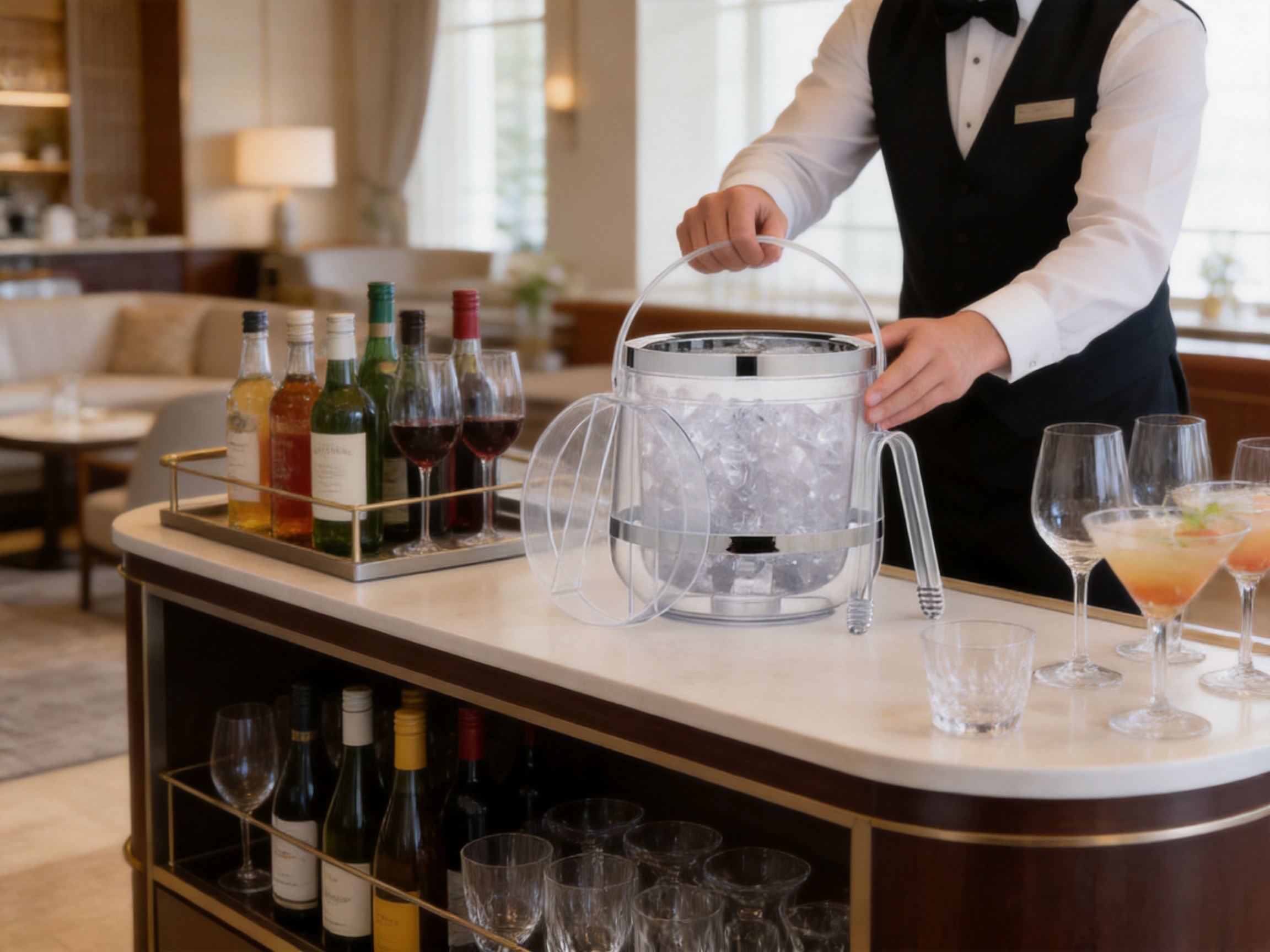
Restaurants and bars require practical service equipment that supports speed, organization, and presentation. An ice bucket can be positioned at a beverage station, near a dining table, or within a service area. Its relatively lightweight construction may be useful when staff members refill or relocate it during busy operating periods.
For foodservice buyers, the most important evaluation points may include size, stability, ease of cleaning, resistance to routine handling, and compatibility with the establishment’s service style. The buyer should confirm the product’s intended care instructions and any food-contact requirements before commercial deployment.
Hotels and Guest Services
Hotels can use ice buckets in guest rooms, suites, meeting spaces, lounges, restaurants, and event areas. A standardized product helps maintain visual consistency across a property or group of properties. The GS070 can be considered for hotel supply programs that require a non-electric beverage accessory with repeat-order potential.
Hotel purchasing departments often place importance on packaging, replacement availability, and delivery planning. The stated 2,000-piece minimum order may suit a regional distributor, hospitality supplier, or hotel group consolidating procurement across multiple locations. Buyers should compare the order quantity with their annual consumption, storage capacity, and replenishment cycle.
Retail and Supermarket Programs
Retailers may place the product in barware, kitchenware, entertaining, seasonal living, or household necessity sections. The product’s simple function can make it accessible to a broad consumer group. Retail packaging, barcode requirements, color selection, and shelf presentation should be discussed during the quotation stage.
Supermarket and club-store buyers may also be interested in multi-piece packs or coordinated product assortments. The manufacturer’s experience with large retail customers and international distribution can be valuable in these programs, particularly when the buyer requires defined carton quantities and container-level planning.
Events and Catering
Catering companies and event organizers need products that can be moved between venues and used repeatedly. A lightweight ice bucket can be suitable for weddings, business receptions, outdoor gatherings, buffets, and private parties, provided that the design meets the operational needs of the user.
For event applications, buyers should evaluate stacking, storage, cleaning, transport, and appearance. If the product is intended for frequent commercial reuse, the purchaser should conduct a practical durability evaluation and establish a cleaning procedure appropriate to the material and final product specification.
Household Entertaining
Consumers may use an ice bucket for family meals, celebrations, garden parties, holiday events, and casual beverage service. The product can be positioned as an accessible alternative to heavier or more fragile containers. Its non-electric operation means that it can be used wherever ice and beverages are served without requiring a power source.
Ordering, Customization, and Buyer Support
The stated minimum order quantity for the GS070 is 2,000 pieces. This quantity is appropriate for wholesale, distribution, hospitality, retail, and private-label projects rather than for individual consumer purchases. Buyers should provide a clear forecast and discuss whether the quantity refers to one color, one packaging configuration, or a combined order of several variations.
The stated delivery time is 35 days. Delivery schedules can depend on order confirmation, sample approval, raw material availability, tooling status, packaging artwork, production capacity, inspection requirements, and shipping arrangements. The delivery period should therefore be confirmed in the sales contract or purchase order, together with the required shipping date and any conditions that may affect the schedule.
Customization may be possible depending on the project. Potential areas for discussion include color, logo, printed packaging, carton artwork, labels, inserts, and coordinated products. However, customization should never be assumed without written confirmation. Buyers should request a formal quotation identifying tooling fees, sample charges, artwork requirements, minimum quantities, production lead time, and approval procedures.
Samples are strongly recommended before a mass order. A buyer can use the sample to review the shape, material appearance, dimensions, surface quality, packaging, and practical handling. If the product is intended for a regulated market or a specific foodservice environment, the buyer should also confirm applicable testing and documentation requirements.
| Buyer Action | Recommended Confirmation |
| Product approval | Approved sample, drawing, dimensions, color, and material |
| Packaging approval | Carton size, quantity per carton, labels, artwork, and protective materials |
| Quality approval | Inspection checklist, defect criteria, and sample standard |
| Order planning | Quantity, color breakdown, delivery date, and shipping method |
| Compliance review | Market-specific material, food-contact, labeling, and testing requirements |
| After-sales support | Complaint procedure, replacement policy, and communication contacts |
Care, Use, and Responsible Product Positioning
Product instructions should be clear and appropriate to the final design. Buyers should confirm whether the ice bucket is intended for direct ice contact, temporary beverage service, decorative use, or another specific application. Cleaning instructions should identify suitable methods and any substances or temperatures that should be avoided.
Retail descriptions should accurately represent the product. If the product does not include a lid, insulation, tongs, or drainage function, those features should not be suggested in sales materials. Accurate descriptions reduce customer complaints and help retailers establish trust. Product photography and packaging should match the approved production version.
For hospitality customers, a standard operating procedure can explain where the bucket should be stored, how it should be cleaned, how it should be inspected, and when it should be replaced. Such procedures are especially helpful when multiple employees or locations use the product.
Responsible product positioning also includes correct disposal and recycling guidance where applicable. PS is a plastic material, and local recycling systems differ significantly. Importers and retailers should follow the packaging and environmental labeling requirements of their target market rather than making broad claims that cannot be verified.
Why Choose an Experienced Manufacturing Partner
The most important advantage of working with an experienced manufacturer is the ability to connect product design, production, quality control, packing, and delivery within one coordinated system. A low price from an unknown source may not provide the same level of support for samples, documentation, corrective action, or repeat orders.
CIXI GSTAR ELECTRIC APPLIANCE CO., LTD. combines product development experience with factory manufacturing capability. Its history includes non-electric household and hospitality products as well as newer electric kitchen appliances. The company reports internal engineering and quality-control resources, a substantial production facility, and experience supplying customers in international markets.
For buyers of the GS070, this background can provide several practical benefits. The company can discuss product specifications in a structured way, coordinate production requirements, support packaging and customization discussions, and organize volume delivery. Its wider product portfolio may also allow customers to source related kitchen, bar, restaurant, and household items from one supplier, subject to individual product approval.
A long-term relationship should be based on transparent specifications and measurable performance. Buyers should still conduct due diligence, approve samples, verify compliance, and inspect shipments. Supplier experience is valuable, but a well-managed purchasing process remains essential for every order.
Frequently Asked Questions
What is the product material?
The listed material is PS, commonly known as polystyrene. Buyers should request the complete material specification and confirm suitability for their intended application, including any direct ice or food-contact requirements.
What is the product item number?
The item number is GS070. Using this number in quotations, purchase orders, inspection documents, and shipping records can help prevent confusion with other products.
How many pieces are packed in one carton?
There are eight pieces per carton according to the supplied product information.
What are the carton dimensions?
The listed carton measurement is 41 x 41 x 41 cm. Buyers should confirm whether this measurement refers to the outer export carton and should request updated packing details before shipment.
What are the carton weights?
The stated net weight is 7.76 kg per carton, and the stated gross weight is 8.76 kg per carton. Final shipping documents should be checked because weights can change if packaging or accessories are revised.
What is the minimum order quantity?
The minimum order quantity is listed as 2,000 pieces. Buyers should confirm whether this quantity applies to one color and one packaging configuration or whether variations can be combined.
How long is the delivery time?
The stated delivery time is 35 days. The final schedule should be confirmed after specifications, samples, packaging, quantity, payment terms, and shipping arrangements are approved.
How many pieces can fit in a container?
The listed capacities are 3,246 pieces in a 20-foot container, 6,732 pieces in a standard 40-foot container, and 7,884 pieces in a 40-foot high-cube container. These figures should be reconfirmed against the final carton and loading plan.
Is the ice bucket electric?
No electrical function is identified in the provided product information. The GS070 is a non-electric ice bucket intended for beverage and ice service.
Does it include a lid or ice tongs?
The supplied specification does not list a lid, tongs, handle, or other accessories. Buyers should confirm the exact configuration with the manufacturer before ordering.
Can the product be customized?
Customization should be discussed directly with the manufacturer. Possible topics may include color, packaging, labels, printed artwork, and coordinated product requirements. Any customization must be confirmed in writing with the relevant costs, quantities, samples, and lead time.
Who may be interested in this product?
Potential customers include importers, wholesalers, retail chains, supermarket buyers, hotel suppliers, restaurants, bars, catering companies, event organizers, and distributors of household or hospitality products.
Why is PS suitable for this type of product?
PS can provide a relatively lightweight, consistently formed, and commercially practical construction. Its suitability depends on the approved design, intended use, care instructions, and applicable market requirements.
What should buyers check before placing an order?
Buyers should confirm the individual product dimensions, capacity, accessories, material details, color, packaging, carton measurements, inspection standards, labeling, compliance requirements, delivery schedule, and after-sales procedure.
Conclusion
The GS070 Ice Bucket is a practical non-electric product for beverage service, hospitality supply, retail distribution, and household entertaining. Its PS construction offers a lightweight alternative to heavier or more fragile materials, while the standardized carton packing supports organized wholesale procurement and international logistics.
The product is supported by clear commercial information: eight pieces per carton, a listed carton measurement of 41 x 41 x 41 cm, defined net and gross weights, container loading references, a 2,000-piece minimum order, and an approximately 35-day delivery time. These details give buyers a useful starting point for budgeting, inventory planning, freight calculation, and distribution management.
Its strongest competitive position is its balance of essential function, manageable weight, straightforward sourcing, and volume-production suitability. Rather than relying on unnecessary complexity, the product can serve a broad range of beverage-related applications. Buyers can further develop its market position through appropriate color selection, packaging, labeling, and coordinated product assortments.
The manufacturing partner adds value through experience in non-electric household and hospitality products, engineering and research capabilities, quality-control personnel, international customer experience, and a substantial production facility. With proper sample approval, documented specifications, inspection planning, and clear communication, the GS070 can become a dependable component of a professional ice bucket supply program.
References
1. Product specification sheet for GS070 Ice Bucket, including material, carton packing, weights, measurements, container loading quantities, minimum order quantity, and delivery time.
2. Manufacturer-provided company profile describing product development history, factory development, engineering resources, quality-control organization, and international market experience.
3. General technical references on polystyrene thermoplastics, plastic product forming, material handling, and packaging logistics.
4. General purchasing guidance for hospitality products, commercial kitchenware, retail packaging, product inspection, and international shipment preparation.
5. Buyer verification checklist for household and foodservice products, including product samples, material suitability, labeling, packaging, quality standards, and market-specific compliance.