
 English
 中文简体
中文简体 Español
 English
 中文简体
中文简体 Español
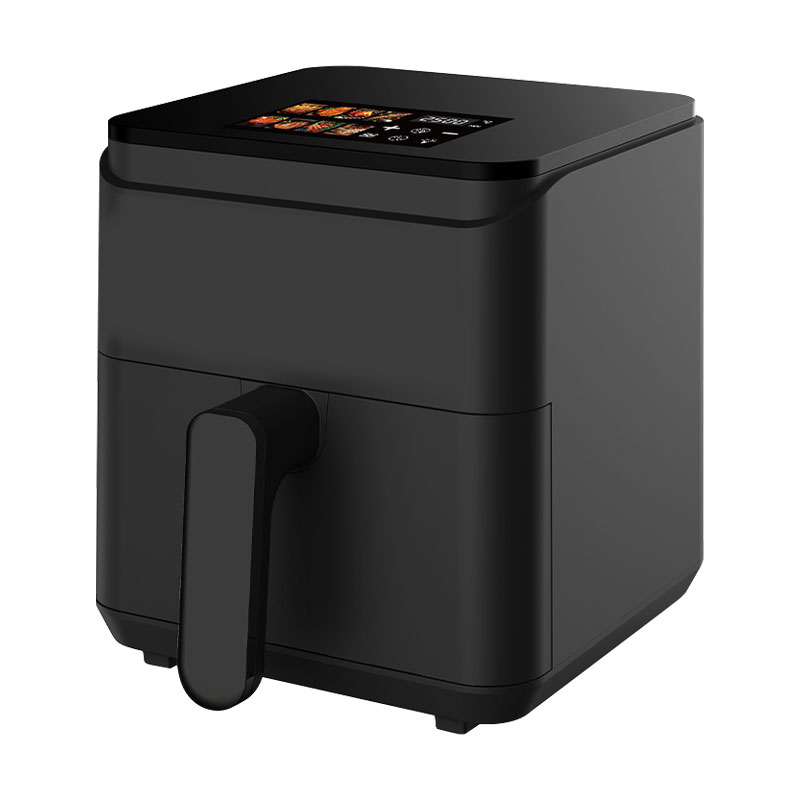
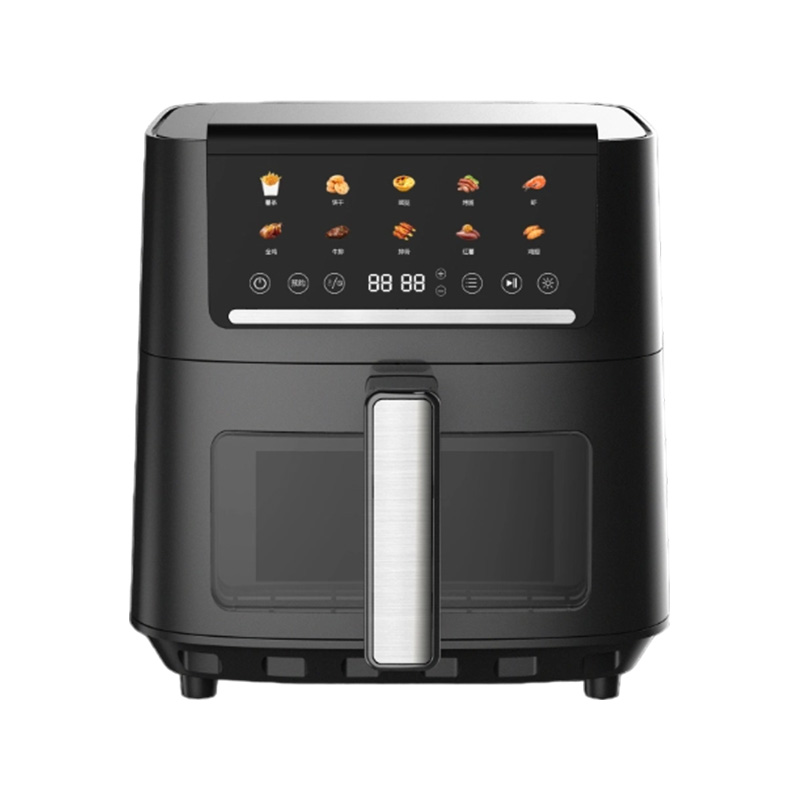
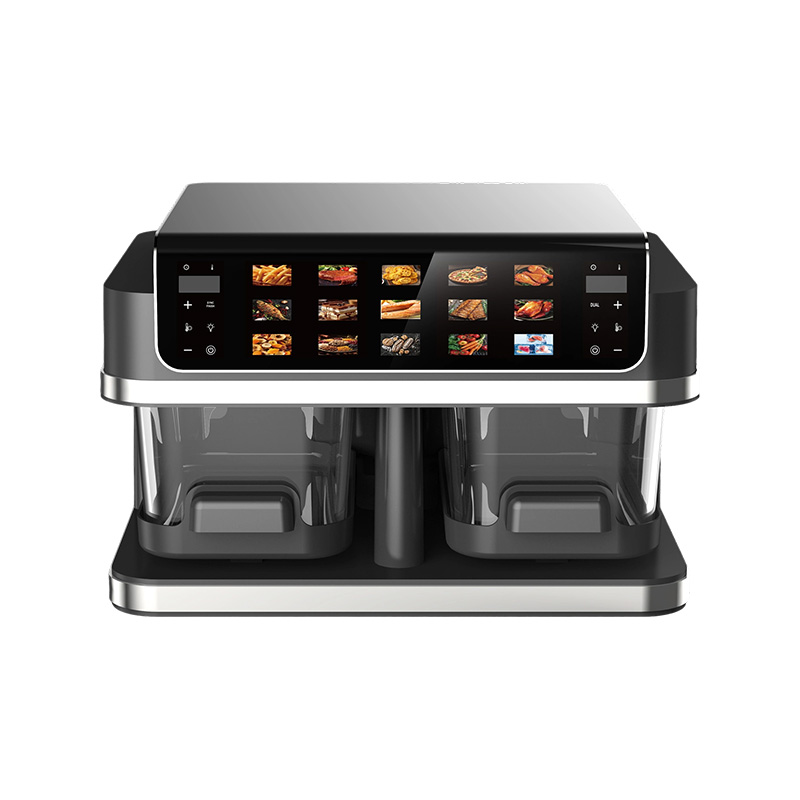
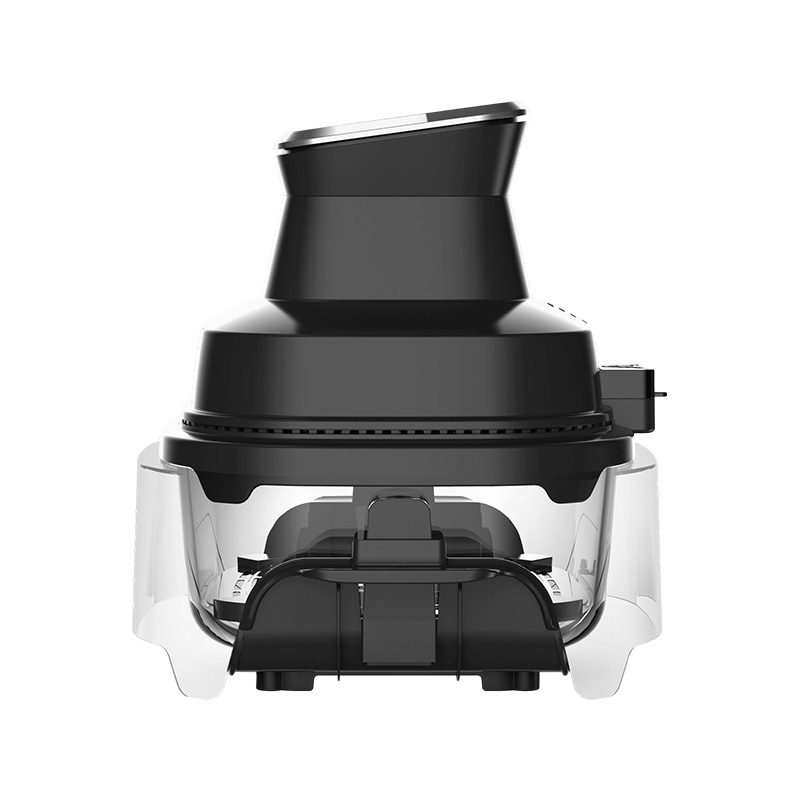
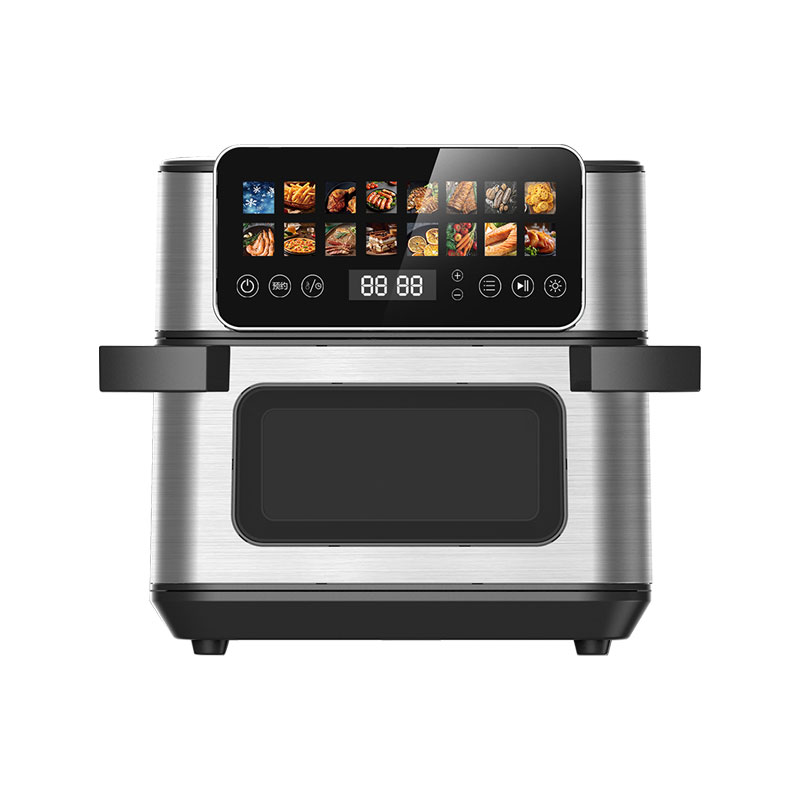
Modern kitchens increasingly require appliances that deliver dependable cooking performance without occupying excessive counter space. The AIR FRYER GSE027 is designed for households, apartments, student residences, offices, hospitality facilities, and retail programs seeking a compact yet capable hot-air cooking solution. Measuring only 25 × 25 × 30 cm, this air fryer combines a space-saving footprint with a 4-litre cooking capacity, allowing users to prepare everyday portions while preserving valuable kitchen workspace.
At the heart of the GSE027 is a 1500W heating system supported by an efficient hot-air circulation structure. The heating system is designed to reach cooking temperature quickly and maintain a stable heat output during operation. Its internal airflow moves heated air around the cooking cavity to support more balanced cooking, helping reduce the risk of localized overheating, uneven browning, or undercooked areas.
The product is part of a broader portfolio of small electric kitchen appliances manufactured by CIXI GSTAR ELECTRIC APPLIANCE CO., LTD. The company develops and produces appliances for household users as well as products intended for bars, restaurants, hotels, supermarkets, and international distribution programs. Its experience in product development, tooling coordination, quality control, export production, and customer-oriented engineering supports the GSE027’s positioning as a practical appliance for wholesale and private-label markets.
For buyers comparing compact air fryers, the GSE027 offers a balance of footprint, capacity, power, thermal efficiency, materials, packaging efficiency, and international market adaptability. It is not designed merely as a small appliance; it is developed as a product that can fit into modern kitchens, simplify production planning for importers, and provide consistent daily cooking performance for end users.
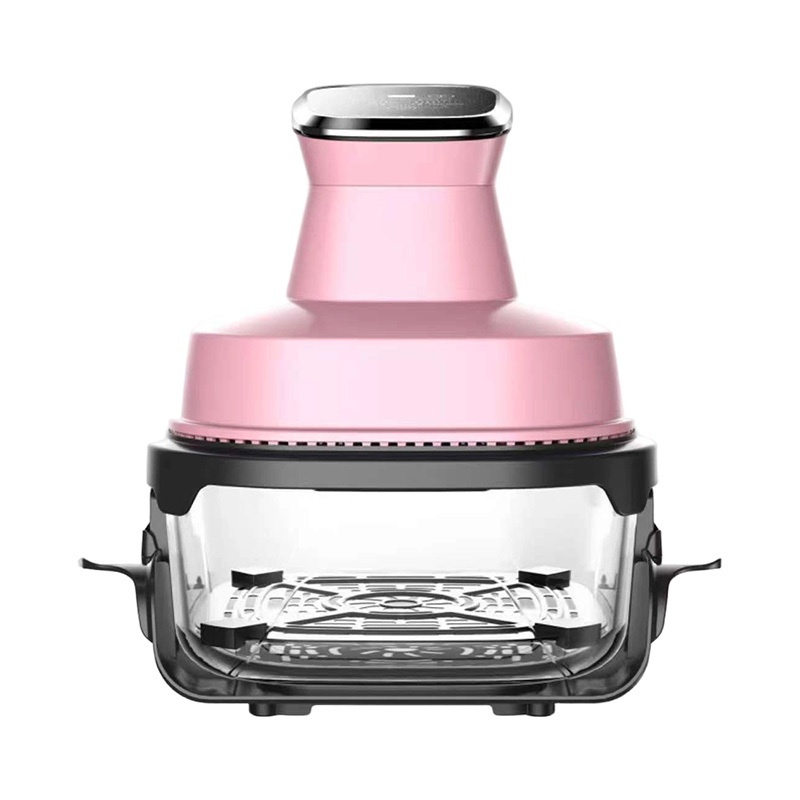
AIR FRYER GSE027
Product Overview
The AIR FRYER GSE027 is a compact countertop appliance with a nominal 4-litre capacity and a 1500W power rating. The size of the product is 25 × 25 × 30 cm, making it suitable for kitchens where counter depth and storage space are limited. Its compact format is particularly useful for apartments, smaller homes, dormitories, office pantries, vacation properties, and retail customers who prefer appliances that can be stored easily when not in use.
A 4-litre air fryer provides a practical middle ground between small personal models and larger family-size units. It offers more usable capacity than many compact personal fryers while remaining easier to position than oversized appliances. For everyday cooking, the capacity can accommodate a selection of common foods, including vegetables, frozen snacks, chicken portions, fish, potato products, reheated foods, and other recipes suitable for hot-air cooking.
The GSE027 uses a high-power heating system rated at 1500W. Power alone does not determine cooking quality, but an adequately powered heating element can support faster temperature recovery and stable cooking performance when food is placed inside the cavity. The product’s heating system works together with its internal air-circulation design to distribute heat throughout the cooking area.
The air fryer supports 50–60Hz power frequencies. This frequency range is important for products intended for multiple regional markets because electrical standards and appliance requirements vary between countries. Buyers should still select the correct voltage and certification configuration for each destination market, but the stated frequency compatibility helps support broader international product planning.
The exterior and internal components use a combination of PP, PA, ABS, and PC materials. Each material category can support different functional requirements, such as structural strength, heat resistance, insulation, surface appearance, component protection, and dimensional stability. The use of multiple engineering plastics reflects the need to balance appearance, durability, manufacturability, and safe operation in a compact electrical appliance.
Key Specifications
| Item | Specification |
| Item Number | GSE027 |
| Product Name | Air Fryer |
| Product Category | Air Fryer |
| Material | PP + PA + ABS + PC |
| Power | 1500W |
| Frequency | 50–60Hz |
| Capacity | 4L |
| Product Size | 25 × 25 × 30 cm |
| Giftbox Size | 33.5 × 31.5 × 39.4 cm |
| Carton Size | 68.5 × 64.5 × 41.3 cm |
| Packing Quantity | 4 pieces per carton |
| Gross Weight / Net Weight | 6.0 / 5.0 kg |
| Container Loading Reference | 1500 pieces per 40HQ container |
| Certification | CB and ETL |
The specification profile shows how the GSE027 is optimized for a combination of consumer convenience and commercial distribution. The product remains compact enough for modern countertops while retaining a capacity suitable for routine meal preparation. Its giftbox and carton dimensions also provide a defined basis for warehouse planning, pallet configuration, freight calculations, and retail packaging development.
Compact Design for Modern Kitchens
Countertop space is one of the most important practical considerations when consumers select a small kitchen appliance. Large appliances can provide substantial capacity, but they may be difficult to position in apartments or kitchens with limited work surfaces. The GSE027 addresses this challenge through a footprint of only 25 × 25 cm.
The compact footprint allows the unit to be placed on a kitchen counter without dominating the available workspace. It may also be stored in a cabinet or pantry after use, depending on the cabinet dimensions and required ventilation clearance. For retailers, a smaller product profile can make the appliance attractive to customers who want air-frying functionality but do not want a large machine.
Compact design does not simply mean reducing external dimensions. It requires coordination between the heating assembly, airflow path, cooking cavity, housing, electrical components, insulation, handle structure, and control interface. The different internal systems must be arranged so that the appliance remains functional and stable while meeting manufacturing and safety requirements.
The 30 cm overall height supports a relatively upright configuration, allowing the product to use vertical space efficiently. This format can provide a useful cooking cavity without requiring a broad horizontal footprint. The result is a product that can be positioned alongside other common appliances such as kettles, coffee makers, rice cookers, toasters, and food processors.
For hospitality or institutional buyers, the same compact design can assist with back-of-house organization. Smaller preparation areas can accommodate the appliance more easily, while multiple units may be positioned in a shared service area when workflow requires separate cooking stations.
4-Litre Capacity for Everyday Portions
The 4-litre capacity is designed to support practical household cooking rather than occasional single-item heating only. It provides enough space for a variety of everyday foods while maintaining a manageable external size. The useful quantity that can be cooked at one time will depend on the food type, recipe, shape, and preferred cooking result, but the capacity is well suited to routine meal preparation and snack cooking.
Capacity selection is a key decision when comparing air fryers. A model that is too small may require multiple batches, increasing preparation time. A model that is too large may consume more storage space and may be unnecessary for smaller households. The GSE027 occupies a versatile position between personal-size appliances and large family or commercial-style units.
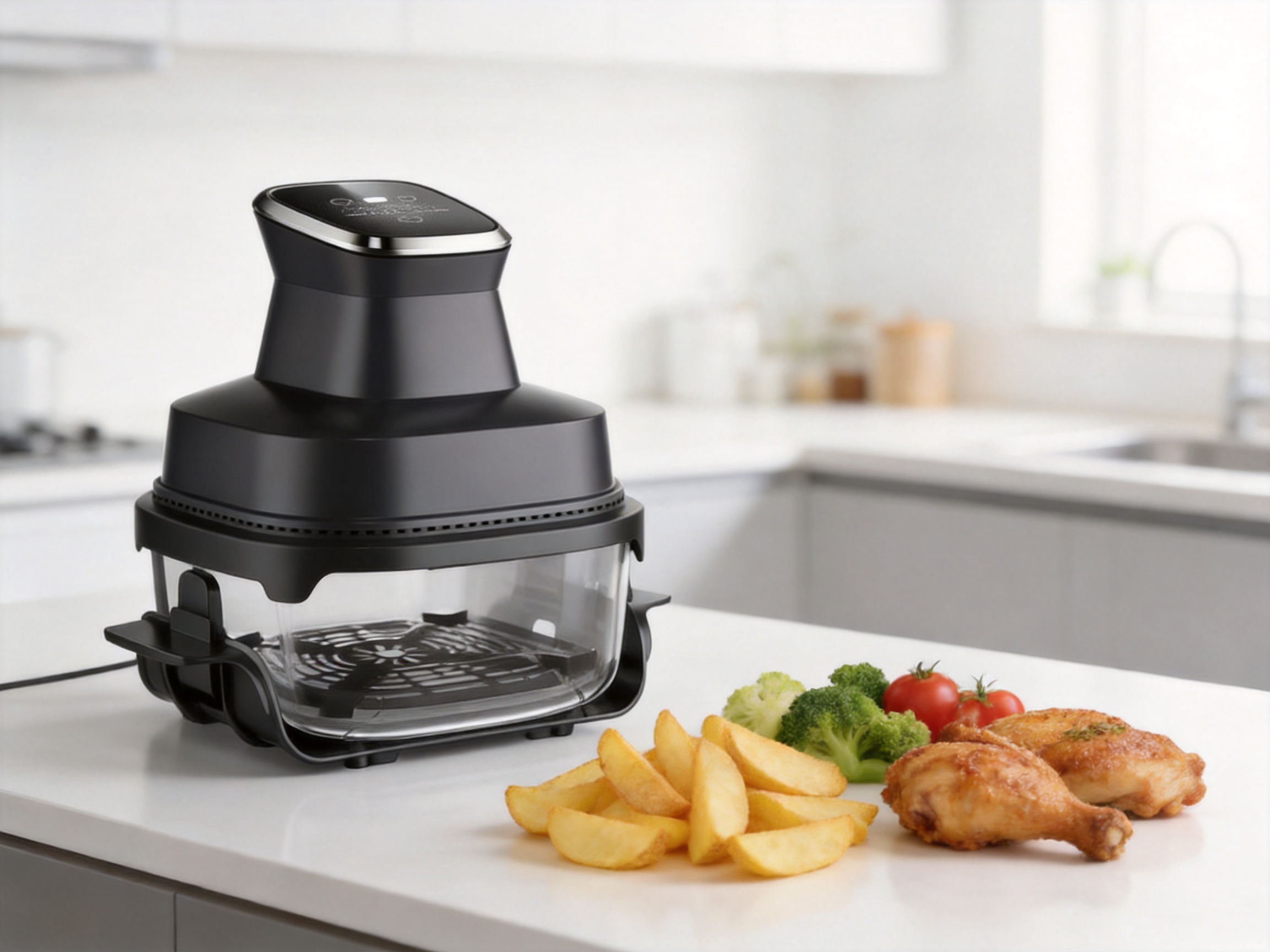
The 4-litre cavity can be used for cooking or reheating foods such as potato wedges, vegetables, breaded foods, chicken portions, fish, pastries, and other suitable ingredients. It can also help users reduce reliance on larger ovens for smaller quantities. This can be convenient when the user wants to prepare a quick meal or heat food without warming the entire kitchen.
Air-frying is based on circulating heated air around food. In many recipes, the method can produce a browned or crisp exterior with less added oil than traditional deep frying. Cooking results depend on the recipe, food composition, portion size, preparation method, and selected settings. The GSE027’s role is to provide a stable hot-air environment that supports repeatable everyday use.
1500W Heating Performance
The GSE027 uses a 1500W high-power heating system to generate the heat required for air-frying. A sufficiently powerful heating assembly can help the appliance reach its operating temperature efficiently and recover heat after the cooking basket or drawer is opened and reinserted. Stable heating is important because temperature fluctuations can affect cooking time, browning, texture, and consistency.
The heating system is designed to work with the appliance’s airflow system rather than operating as an isolated component. A heating element produces the necessary thermal energy, while the fan and cavity structure help carry that energy around the food. Proper coordination between these functions can improve heat utilization and reduce areas where air movement is weak.
For consumers, stable heat output can make cooking instructions easier to follow. When an appliance produces predictable performance, users can better estimate cooking times and adjust recipes according to food quantity. For importers and distributors, stable product behavior can reduce customer complaints related to inconsistent cooking results.
Heating performance must always be evaluated together with electrical safety, insulation, component quality, airflow, and thermal protection. Manufacturing an air fryer is therefore a system-engineering task. The heating assembly, wiring, terminals, housing, controls, fan, cooking cavity, and protective structures must work together under normal operating conditions.
The 1500W rating also gives the product a practical position in the compact air-fryer market. It provides meaningful cooking power without requiring the external size associated with larger models. For many retail applications, this combination of compact dimensions and substantial power can be a strong selling point.
Efficient Hot-Air Circulation
The GSE027 includes an efficient hot-air circulation system intended to promote high-speed airflow within the cooking cavity. The purpose of this circulation is to move heated air around the food from multiple directions, supporting more uniform thermal exposure and reducing the likelihood of localized hot or cool zones.
Air movement is one of the principal differences between an air fryer and a conventional static heating appliance. A fan-driven system continuously circulates heated air, helping transfer heat to the food surface. The effectiveness of this process depends on the fan, cavity geometry, air inlets, air outlets, heating position, basket design, and the amount and arrangement of food inside the cooking area.
The product description specifies 360-degree all-around heating. This indicates a design objective of distributing heat around the cooking space instead of concentrating it in a single direction. While users should still avoid overcrowding the basket and should follow suitable cooking practices, an all-around circulation concept can support more even cooking across a range of foods.
More balanced airflow may help prevent some common cooking problems. If heat is concentrated in one area, food can brown too quickly on one side while remaining insufficiently cooked on another. Circulating air can help reduce this difference by exposing more of the food surface to moving hot air. The actual result will depend on the food load and recipe, but the airflow design is intended to improve the overall cooking environment.
Efficient circulation also supports thermal efficiency. When heated air is distributed effectively, more of the available heat can be used for cooking rather than remaining concentrated near the heating element. This can contribute to a better balance between cooking performance and energy consumption during normal operation.
Thermal Efficiency and Energy Utilization
The GSE027 incorporates an optimized thermal-efficiency design intended to maximize the use of generated heat. In a compact air fryer, thermal efficiency is influenced by several factors, including insulation, cavity volume, airflow speed, heating-element placement, housing structure, and the ability of the system to maintain temperature without unnecessary heat loss.
Efficient thermal design does not mean that the appliance uses no energy. The product is rated at 1500W, and actual energy consumption depends on operating time, selected temperature, food quantity, ambient conditions, and the control cycle. However, a well-coordinated system can use its available heat more effectively and may reduce unnecessary energy waste compared with a poorly designed airflow or heating arrangement.
For consumers, efficient heat utilization can support shorter preparation cycles for suitable foods and reduce the need to operate a large oven for small portions. For retailers, energy-conscious cooking is an increasingly relevant product feature because buyers often compare appliances not only by purchase price but also by convenience and operating cost.
Thermal efficiency can also influence exterior comfort and component life. When internal heat is managed properly, sensitive electrical and structural components can be protected from excessive thermal exposure. The housing, insulation, airflow passages, and thermal controls must be selected and assembled carefully to maintain product reliability during repeated use.
The GSE027’s compact internal volume is another factor in its thermal design. A smaller cavity can require less air to heat than a much larger oven-style chamber. Combined with the 1500W heating system and circulating airflow, the compact architecture is intended to produce a practical cooking environment for everyday portions.
Materials and Structural Engineering
The stated material combination for the GSE027 is PP, PA, ABS, and PC. These materials are widely used in electrical appliances because each offers different characteristics useful for housing construction and component protection.
Polypropylene, commonly identified as PP, can provide a lightweight structure and is frequently used in appliance components where chemical resistance, low density, and practical molding performance are valuable. Polyamide, or PA, may be used where greater mechanical strength, wear resistance, or heat-related performance is required for specific components. ABS is often selected for appliance housings because it can support a durable surface appearance and good impact performance. Polycarbonate, or PC, can provide strength, dimensional stability, and suitability for selected transparent or protective parts.
The effectiveness of these materials depends on their specific grades, component design, molding conditions, and application. Materials must be matched to their positions within the appliance. Structural parts, external surfaces, heat-adjacent components, electrical protection elements, and user-contact components may each have different technical requirements.
Good material engineering is closely linked to manufacturing process control. Even a suitable material can produce inconsistent results if drying, temperature, pressure, mold condition, cooling, or inspection are not controlled. The manufacturer’s engineering and quality teams therefore play an important role in translating the product design into stable mass production.
Material selection also supports a balance between product weight and perceived durability. The GSE027 has a net weight of approximately 5.0 kg and a gross packed weight of approximately 6.0 kg. This provides a manageable profile for retail handling while retaining the structural components necessary for a powered heating appliance.
Manufacturing Capabilities and Product Development
CIXI GSTAR ELECTRIC APPLIANCE CO., LTD. has developed from a product-sourcing and innovation background into a manufacturer of small electric kitchen appliances. The company’s product range includes blenders, slicers, choppers, food processors, smokeless grills, hot pots, air fryers, and air ovens. It also produces selected equipment for bars, restaurants, and hotels, including ice buckets, beverage dispensers, pitchers, slicers, and graters.
This product diversity is relevant to the development of the GSE027 because air fryers share several technical and commercial requirements with other small appliances. These include plastic housing design, electrical assembly, heating management, motor or fan integration, user-interface development, packaging, inspection, and export documentation.
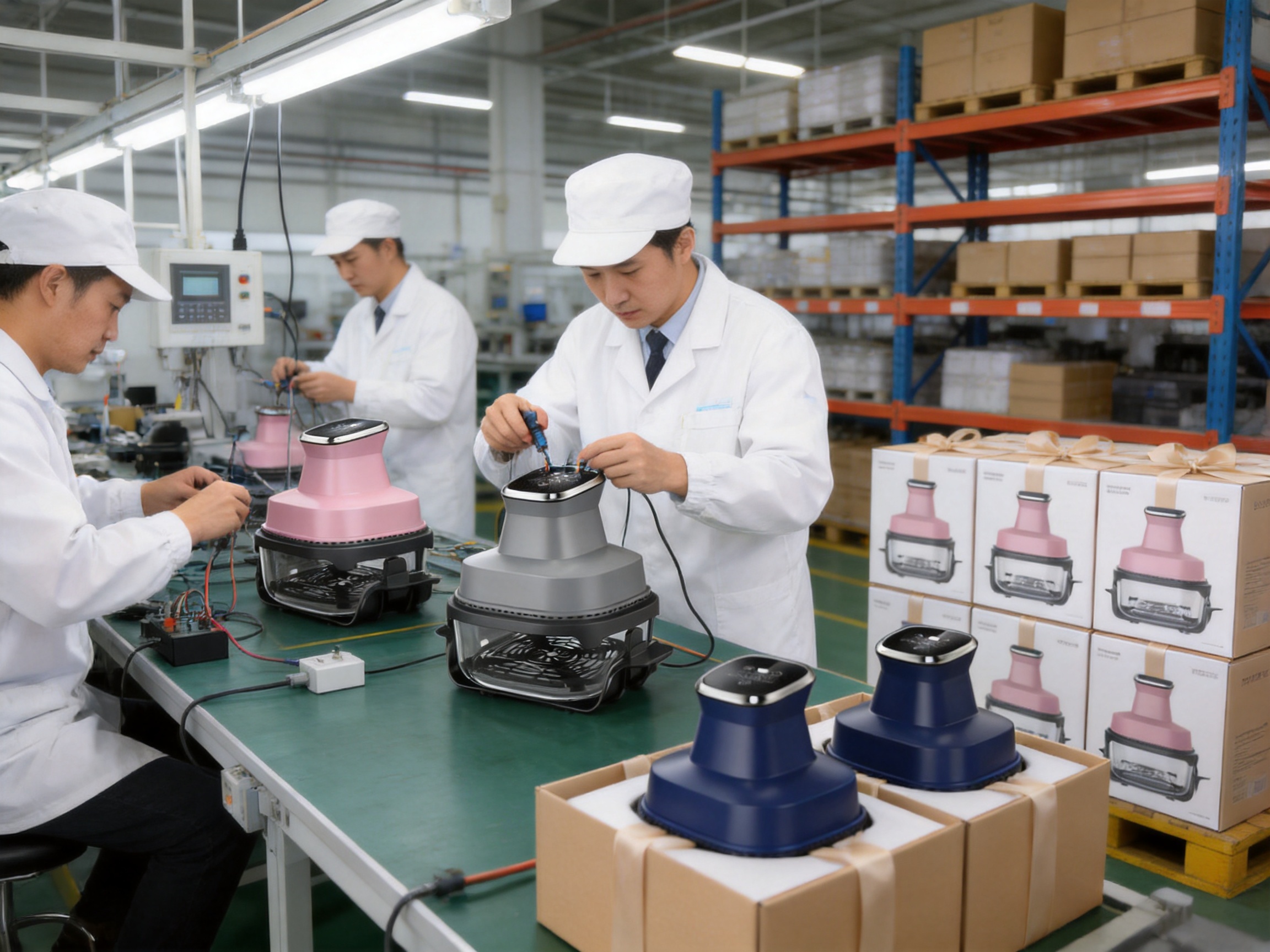
The company reports a wholly owned plant with approximately 15,000 square meters of production area and more than 200 experienced workers. It also identifies engineering and quality-control resources as part of its manufacturing organization. A production platform of this scale can support coordinated work between product design, engineering, purchasing, assembly, testing, quality assurance, packaging, and shipment preparation.
Manufacturing strength is not defined only by factory size. It also depends on how effectively the factory manages the full product life cycle. For the GSE027, this can include early product definition, material selection, prototype review, tooling preparation, assembly-line planning, testing standards, packaging design, production inspection, and feedback from customers and markets.
The company’s history in developing non-electric innovative products also contributes to its understanding of user-oriented design. Earlier product development activities included kitchen and household products intended for international retail and television-shopping channels. This background emphasizes the importance of visible product benefits, practical operation, attractive packaging, and reliability in real consumer environments.
Advanced Manufacturing Process for the GSE027
The production of a compact air fryer requires a controlled sequence of manufacturing operations. The exact process may vary according to the production configuration, but a professional workflow generally begins with product engineering and component preparation.
Design and Engineering Review
Before mass production, the product design must be reviewed for function, manufacturability, electrical layout, thermal behavior, assembly access, and user safety. The external dimensions, 4-litre cavity, heating system, fan arrangement, housing structure, and packaging must be considered together rather than separately.
Engineering review can identify potential interference between parts, areas where heat may accumulate, fastening challenges, wire-routing concerns, or components that may be difficult to inspect after assembly. Early review helps reduce the risk of expensive changes after tooling and production have begun.
Tooling and Plastic Component Production
Plastic housing and internal components are generally produced through injection molding or other controlled forming processes suitable for the selected materials. Tooling accuracy influences surface appearance, part dimensions, assembly fit, and the consistency of repeated production.
During molding, process variables such as material preparation, injection temperature, pressure, cooling time, and mold condition can influence the finished parts. Quality checks may examine warpage, short shots, flash, sink marks, color consistency, surface defects, and dimensional conformity.
For a compact appliance, dimensional accuracy is particularly important because many parts must fit within a limited enclosure. The housing must align correctly with the basket or drawer, control interface, heating chamber, fan assembly, and electrical components. Poor fit can affect both appearance and function.
Heating and Electrical Assembly
The heating assembly is installed with appropriate attention to positioning, insulation, electrical connections, mechanical stability, and thermal protection. Wires and terminals must be routed so that they are not exposed to unnecessary heat, sharp edges, movement, or compression during operation.
Electrical assembly quality is fundamental to a 1500W appliance. Connections should be secure, components should be correctly positioned, and the completed unit should undergo relevant electrical and functional checks. Depending on market requirements and product configuration, inspections may include continuity, insulation, leakage, grounding, power consumption, and operating performance.
Fan and Airflow Integration
The fan and airflow structure must be assembled so that air can circulate through the cooking cavity as intended. The fan position, protective cover, air passages, heating location, and cavity openings all influence the movement of heated air.
During production testing, abnormal noise, vibration, unstable rotation, obstruction, and airflow irregularities should be evaluated. A properly assembled fan system supports the product’s objective of high-speed circulation and all-around heating. It also contributes to user perception because unusual noise or vibration can reduce confidence in the appliance.
Final Assembly and Functional Testing
After the main components are installed, the housing, controls, cooking basket or drawer, handle, protective parts, and other assemblies are brought together. Operators and inspectors can verify that parts fit correctly, moving sections operate smoothly, and the external surface meets appearance requirements.
Functional testing may include powering the unit, confirming control response, checking the heating cycle, observing fan operation, measuring selected electrical parameters, and inspecting for abnormal smell, noise, vibration, or heat behavior. The scope of testing should be aligned with the destination market, product specification, and applicable certification requirements.
Packaging and Shipment Preparation
Packaging protects the appliance during handling, storage, and transport. The GSE027 has a giftbox size of 33.5 × 31.5 × 39.4 cm and a carton configuration of four pieces per carton. These details help distributors plan warehouse space and transportation requirements.
Packaging inspection can include carton strength, internal protection, accessory completeness, product identification, barcode or label accuracy, instruction materials, and packing quantity. Careful packaging preparation helps reduce damage claims and supports smoother receiving operations for importers and retailers.
Quality Control and Certification Orientation
The GSE027 is identified with CB and ETL certification. Certification requirements vary according to product version, destination market, voltage configuration, and applicable standards. Buyers should confirm the exact certification documentation and scope for the configuration they intend to purchase.
Certification is an important part of international electrical-appliance distribution, but quality management must extend beyond the certification process. A product can meet a standard during evaluation and still require ongoing production controls to ensure that mass-produced units remain consistent with the tested design.
Effective quality control may include incoming inspection of materials and components, first-piece approval, in-process assembly checks, electrical testing, appearance inspection, finished-product sampling, packaging verification, and shipment-release review. These stages create multiple opportunities to identify problems before the product reaches the customer.
Incoming inspection is especially important for components that influence heating, airflow, electrical safety, and user contact. Plastic parts should be reviewed for dimensions and appearance. Electrical components should be checked against approved specifications. Heating and fan assemblies should be verified for model compatibility and correct installation.
In-process inspection helps ensure that production operators follow the approved assembly method. It may verify screw fastening, wire routing, terminal connection, component orientation, insulation placement, fan alignment, housing fit, and control-panel installation.
Finished-product inspection provides a final assessment of the complete appliance. A professional inspection program can combine visual checks, functional operation, electrical safety testing, power verification, and packaging review. This layered approach supports stable quality and gives wholesale customers greater confidence in repeat orders.

Advantages Compared with Larger or Less Efficient Alternatives
The GSE027 has several advantages when compared with larger countertop ovens or oversized air fryers. Its 25 × 25 cm footprint requires less counter space, making it easier to integrate into compact kitchens. Its 4-litre capacity remains practical for everyday portions, avoiding the need to purchase a much larger appliance for routine use.
Compared with a conventional oven used for small portions, a compact air fryer can offer a more focused cooking environment. The smaller chamber may heat more directly around the food, while the circulating air supports fast surface heating. Users can prepare suitable foods without operating a large oven for a small quantity.
Compared with very small personal fryers, the GSE027 provides a larger 4-litre capacity and a 1500W heating system. This can reduce the need for repeated small batches when preparing food for more than one person. The result is a more versatile product for households that want compactness without limiting the appliance to individual portions.
Compared with air fryers that rely on less coordinated airflow, the GSE027 emphasizes high-speed circulation and 360-degree heating. The intention is to reduce localized heating and improve cooking balance. Although cooking results always depend on food arrangement and recipe selection, airflow design is a meaningful factor in product differentiation.
Compared with appliances designed for a single regional frequency, the 50–60Hz specification supports broader market planning. This does not eliminate the need to select the correct voltage, plug, label, and certification configuration, but it provides a useful foundation for international sourcing.
For distributors, another advantage is the product’s defined commercial packing data. The giftbox size, carton size, four-piece carton quantity, gross weight, net weight, and container-loading reference allow buyers to estimate logistics costs and warehouse requirements before placing an order.
Benefits for Importers, Wholesalers, and Retailers
The GSE027 is suitable for business buyers who need a compact appliance with a clear specification profile. Importers can use the product dimensions and packaging data to plan container utilization, shipping schedules, warehouse capacity, and retail display requirements.
Wholesalers may position the model within a compact-kitchen appliance range. It can complement larger air ovens, food processors, hot pots, blenders, and other small kitchen products. A balanced product portfolio allows distributors to serve different consumer needs rather than relying on a single appliance size.
Retailers can present the product around several easy-to-understand benefits: compact dimensions, 4-litre capacity, 1500W power, hot-air circulation, all-around heating, and 50–60Hz frequency compatibility. These features can be communicated through packaging, product listings, shelf displays, and sales materials.
The product’s compact size may also reduce the difficulty of retail storage. More units can be arranged within a defined warehouse area compared with larger appliance models, although exact efficiency depends on the retailer’s shelving and carton configuration.
For private-label programs, the manufacturer’s experience in product development and international sales can be valuable. Buyers may discuss market-specific requirements such as plug type, voltage, packaging language, labeling, manuals, color, surface finish, control configuration, certifications, and order quantities. Any customization should be confirmed through a formal technical and commercial review.
After-sales cooperation is another important consideration. Appliance buyers benefit from clear documentation, spare-part planning, quality feedback, and communication between the factory and the importing organization. A manufacturer that works closely with customers as an engineering partner can help address product adaptation and production questions more efficiently.
Applications in Different User Environments
Household Kitchens
In household kitchens, the GSE027 can be used for everyday meals, side dishes, snacks, reheating, and recipe experimentation. Its size is appropriate for users who want air-frying functionality but have limited storage space or do not wish to operate a large oven for small quantities.
Apartment and Dormitory Living
People living in apartments, dormitories, and other compact residences often prioritize appliances that can perform several functions while occupying little space. The GSE027’s compact footprint allows it to be stored or positioned more easily than many larger cooking appliances. Users must always follow the electrical and ventilation requirements of their residence.
Office and Break-Room Use
In offices and shared facilities, a compact air fryer can provide a convenient way to heat or prepare suitable foods. Its 4-litre capacity can serve a small group without requiring a full-size oven. Workplace operators should establish appropriate usage, cleaning, ventilation, and safety procedures.
Hospitality and Guest Accommodation
Hotels, serviced apartments, vacation rentals, and guest facilities may consider compact countertop appliances when providing additional cooking convenience. The GSE027 can be evaluated for use in locations where space is limited and guests may appreciate a simple hot-air cooking option.
Retail and Promotional Programs
The compact size, recognizable product category, and clear specification profile can support retail promotions. It may be suitable for seasonal campaigns, household-upgrade programs, kitchen-appliance collections, and gift-oriented sales. Packaging and market-specific documentation should be prepared according to the requirements of the intended sales channel.
Recommended Use and Maintenance Practices
Users should place the air fryer on a stable, level, heat-resistant surface with adequate clearance around ventilation areas. The appliance should not be covered during operation, and airflow openings should remain unobstructed. The power supply should match the approved voltage and plug configuration for the product version.
Food should be arranged in a way that allows hot air to circulate. Overfilling the cooking basket may reduce airflow and lead to uneven cooking. When necessary, users can shake or turn suitable foods during the cooking cycle, following the recipe and the appliance instructions.
Cleaning should be performed after the appliance has cooled and been disconnected from the power supply. Food residue, grease, and moisture should be removed according to the instruction manual. Electrical components and the main housing should not be immersed in water. Appropriate cleaning practices help preserve hygiene, appearance, and long-term performance.
Users should inspect the power cord, plug, basket, drawer, handle, and visible housing components periodically. If there is damage, abnormal noise, unusual odor, smoke, or unexpected operation, the appliance should be switched off and assessed by qualified service personnel.
Routine care is important for any hot-air cooking appliance. A clean airflow path can support efficient circulation, while excessive residue may affect cooking performance or create unpleasant odors. Regular maintenance also helps protect the appearance of the product and improve the user experience.
Why Manufacturing Experience Matters
A successful air fryer requires more than an attractive exterior. The product must combine electrical engineering, thermal management, airflow design, plastic molding, mechanical assembly, packaging, testing, and regulatory awareness. Manufacturing experience allows these disciplines to be managed as one coordinated product system.
CIXI GSTAR ELECTRIC APPLIANCE CO., LTD. reports experience in both innovative household products and electric kitchen appliances. This development path provides an understanding of how product ideas must be transformed into reliable, repeatable, and commercially viable items.
The company’s stated resources include a dedicated factory, experienced production workers, engineering personnel, and quality-control staff. These resources can support the product development and manufacturing activities required for models such as the GSE027. The company also reports experience supplying products to international supermarkets and customers in multiple regions.
International market experience can influence manufacturing discipline. Different markets may require different labels, manuals, plugs, electrical configurations, packaging formats, certification documents, and quality expectations. A manufacturer accustomed to export business is better positioned to organize these requirements during order preparation.
The company also describes an approach based on innovative product development, competitive pricing, quick delivery, after-sales service, and close cooperation with customers. For buyers, this approach can be relevant when evaluating not only the product itself but also the supplier’s ability to support repeat production and long-term cooperation.
Commercial and Logistics Considerations
The GSE027 is packed four pieces per carton. The stated carton size is 68.5 × 64.5 × 41.3 cm. These figures can be used as preliminary references for freight quotations, warehouse planning, container-loading estimates, and distribution calculations.
The gross weight is listed as 6.0 kg, while the net weight is listed as 5.0 kg. The difference includes packaging and related packing materials. Actual shipping documents should be confirmed against the final production configuration and packing method.
The stated container-loading reference is 1500 pieces per 40HQ container. Container loading can vary according to packaging arrangement, loading method, protective materials, and shipping requirements. Buyers should confirm the final loading quantity with the supplier and logistics provider before shipment.
Accurate logistics planning can influence the overall competitiveness of a small appliance. A product that combines practical dimensions with efficient packaging may help reduce unnecessary freight and storage pressure. This is particularly relevant for wholesale programs in which transportation costs form a meaningful part of the landed cost.
Importers should also confirm the product’s electrical configuration, certification documents, carton markings, product labels, user manuals, warranty terms, spare-parts policy, inspection standards, and acceptable quality limits before production. Clear pre-production communication can reduce delays and improve order consistency.
Product Positioning in the Small Appliance Market
The small electric kitchen appliance market includes a wide range of products with different capacities, functions, price points, and target users. The GSE027 can be positioned as a compact, practical air fryer for customers who want meaningful capacity without a large appliance footprint.
Its product story is straightforward: a compact body, 4-litre capacity, 1500W heating power, hot-air circulation, all-around heating, thermal-efficiency design, and international frequency compatibility. This combination gives distributors a clear foundation for product communication.
The model may appeal to consumers who are purchasing their first air fryer, replacing an older unit, furnishing a small kitchen, or adding a second appliance for convenience. It can also appeal to buyers who want to prepare smaller portions more efficiently than using a full-size oven.
For business customers, the product’s value comes from the combination of consumer-facing features and manufacturer support. Product quality, documentation, packaging, order coordination, production capacity, and after-sales communication all influence the success of an appliance in the market.
Frequently Asked Questions
What is the capacity of the AIR FRYER GSE027?
The GSE027 has a stated capacity of 4 litres. This capacity is intended for practical everyday portions and provides a balance between compact storage and useful cooking volume.
How powerful is the heating system?
The air fryer uses a 1500W heating system. It is designed to support rapid heating and stable heat output during normal operation.
What are the product dimensions?
The product measures 25 × 25 × 30 cm. Its compact footprint is suitable for kitchens and countertops where available space is limited.
How does the hot-air circulation system work?
The system circulates heated air around the cooking cavity at high speed. The design objective is to provide 360-degree all-around heating, supporting more even cooking and reducing localized overheating or undercooking.
Does the air fryer use less energy than a conventional oven?
Energy use depends on the food, cooking time, temperature, operating conditions, and appliance selected for comparison. The GSE027 uses a compact cavity and optimized thermal-efficiency design intended to make effective use of generated heat. Users should follow suitable cooking times and avoid unnecessary preheating or extended operation.
What materials are used in the product?
The stated material combination is PP, PA, ABS, and PC. These materials are used in different components according to structural, mechanical, thermal, appearance, and insulation requirements.
What frequency range does the product support?
The product supports 50–60Hz. Buyers must still confirm the correct voltage, plug, labeling, and certification configuration for the destination country.
What certifications are listed for the GSE027?
The product information lists CB and ETL certification. Certification details should be verified for the exact electrical version, market, and production configuration being ordered.
How many units are packed in one carton?
The stated packing quantity is four pieces per carton. The listed carton size is 68.5 × 64.5 × 41.3 cm.
What is the approximate product weight?
The listed net weight is 5.0 kg and the gross weight is 6.0 kg. The final shipping weight should be confirmed against the approved production packaging.
Is the GSE027 suitable for private-label projects?
The product can be evaluated for wholesale, distribution, and private-label programs. Buyers should discuss customization requirements, minimum order quantities, packaging, product labeling, manuals, plug types, voltage, certifications, colors, and quality standards with the manufacturer before placing an order.
What should users avoid when operating the air fryer?
Users should avoid blocking ventilation openings, overfilling the cooking cavity, placing the appliance on an unstable surface, using an incorrect power supply, immersing electrical components in water, or operating the appliance if the cord or housing is damaged. The supplied instruction manual should always be followed.
Why is factory quality control important for this product?
An air fryer combines heating, airflow, electrical, plastic, and mechanical systems. Quality control helps verify that components are correctly installed, electrical connections are secure, airflow is unobstructed, the housing fits properly, and finished units operate consistently.
Conclusion
The AIR FRYER GSE027 is a compact hot-air cooking appliance designed around the needs of modern kitchens and international distribution. Its 25 × 25 × 30 cm dimensions help conserve counter space, while its 4-litre capacity provides useful room for everyday cooking. The 1500W heating system supports efficient heat generation, and the high-speed circulation structure is intended to deliver balanced 360-degree heating throughout the cooking cavity.
Its thermal-efficiency design, combination of PP, PA, ABS, and PC materials, 50–60Hz frequency support, and CB and ETL certification orientation contribute to its suitability for international product programs. The defined packing information further assists importers and wholesalers with freight, storage, and order planning.
The product is supported by a manufacturer with experience in small electric kitchen appliances, innovative household products, export-oriented production, engineering development, and quality control. The company’s factory resources, product range, and customer-focused approach provide a foundation for ongoing cooperation with distributors, retailers, and private-label buyers.
For consumers, the GSE027 offers a practical combination of compactness and cooking capability. For commercial buyers, it offers a clearly specified appliance supported by manufacturing and logistics information. Together, these qualities position the model as a competitive choice for businesses seeking a versatile small air fryer for household and international markets.
References
1. Product specification sheet for AIR FRYER GSE027, including dimensions, capacity, power, materials, packing data, and certification information.
2. Manufacturer-provided company profile for CIXI GSTAR ELECTRIC APPLIANCE CO., LTD., including product categories, factory resources, engineering organization, and export experience.
3. General principles of hot-air circulation and thermal transfer in countertop cooking appliances.
4. General guidance for electrical appliance quality inspection, packaging verification, and international product preparation.
5. General consumer guidance for the safe operation, cleaning, storage, and maintenance of countertop air fryers.