
 English
 中文简体
中文简体 Español
 English
 中文简体
中文简体 Español
Introduction
A reliable cheese grater is a practical tool for home kitchens, restaurants, hotels, bars, catering operations, and food preparation areas. Although grating appears to be a simple kitchen task, the quality of the grater strongly affects preparation speed, food texture, user comfort, cleaning convenience, storage, and long-term value. A well-designed manual grater should provide a stable working structure, sharp and durable cutting surfaces, comfortable handling, and a material combination that can withstand repeated contact with food.
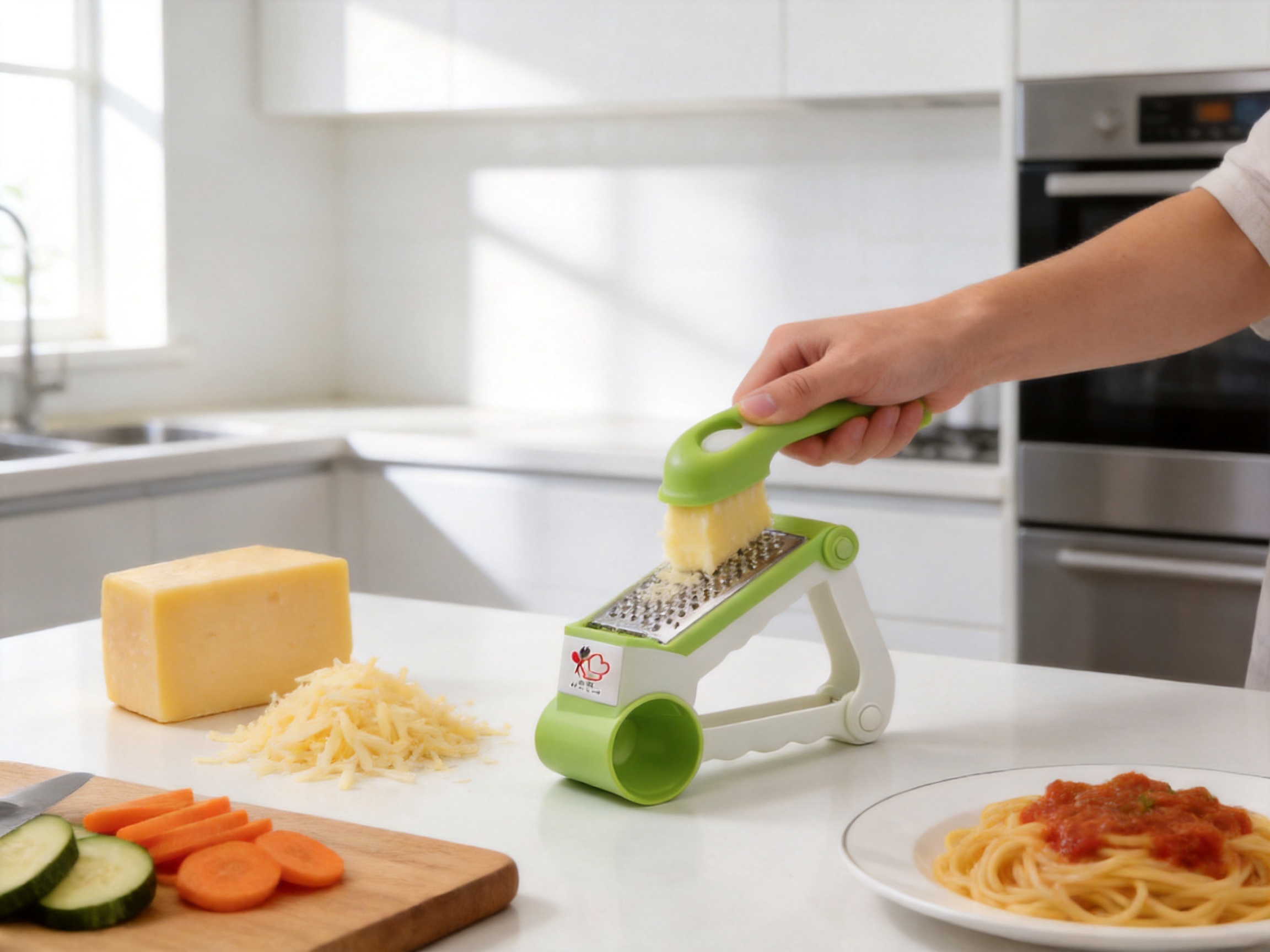
The GS012 Cheese Grater is a manual kitchen preparation product developed for everyday use. It combines ABS plastic components with stainless steel components, creating a balance between structural support, functional durability, appearance, and practical handling. Its product category is listed as Manual Vegetable Slicer, which places it within a wider family of non-electric food preparation tools. This positioning allows the product to serve not only cheese-grating needs but also related preparation applications where a compact manual cutting and shredding tool is preferred.
Unlike electric food processors, the GS012 does not depend on a motor, electrical connection, control panel, or battery. This makes it easy to use in kitchens of different sizes and in locations where electrical equipment is inconvenient. The absence of a motor also helps reduce product complexity, operating noise, energy consumption, and maintenance requirements. For retailers and distributors, a manual grater can complement a broader assortment of household kitchen tools and small appliances.
This article examines the product’s structure, application value, material selection, commercial advantages, packaging information, quality considerations, and the manufacturing capabilities of CIXI GSTAR ELECTRIC APPLIANCE CO., LTD. It also explains why a product such as the GS012 can be a competitive option for importers, wholesalers, supermarket buyers, food-service suppliers, and private-label customers.
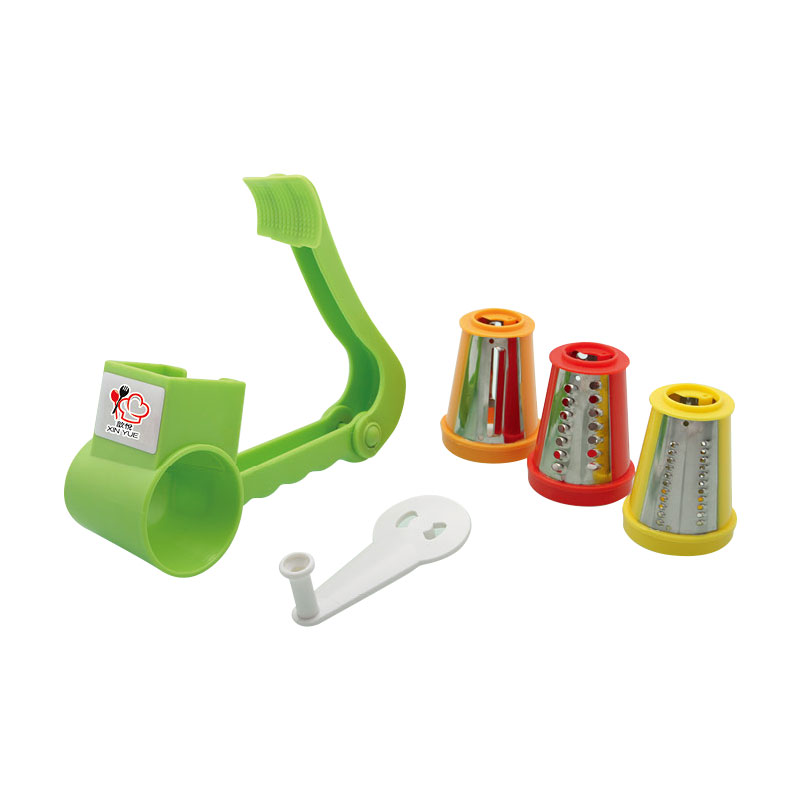
Cheese Grator
Product Overview
The GS012 Cheese Grater is identified by item number GS012 and is designed for manual kitchen preparation. Its listed product name is Cheese Grator, while the product category is Manual Vegetable Slicer. In commercial product catalogs, this type of classification is useful because buyers often source related kitchen preparation products together. A distributor looking for graters, slicers, choppers, and other non-electric kitchen tools can evaluate the GS012 as part of a coordinated product range.
The main material specification is ABS plus stainless steel, written as ABS+SS. ABS is commonly used for molded household product components because it can provide a rigid, lightweight, and visually consistent structure. Stainless steel is widely used for food-contact cutting surfaces because it is resistant to ordinary kitchen moisture and offers the hardness needed for repeated grating action. The combination is therefore suitable for a product that needs both a stable body and a functional cutting element.
The product is supplied in a carton quantity of 12 pieces. The listed carton measurement is 34 x 20 x 38.5 centimeters. The net weight is 1.2 kilograms, and the gross weight is 1.3 kilograms. These specifications are important for shipping calculations, warehouse planning, quotation preparation, and container loading analysis.
| Product Attribute | Specification |
| Item Number | GS012 |
| Product Name | Cheese Grater |
| Product Category | Manual Vegetable Slicer |
| Primary Materials | ABS and stainless steel |
| Carton Quantity | 12 pieces per carton |
| Carton Measurement | 34 x 20 x 38.5 cm |
| Net Weight | 1.2 kg per carton |
| Gross Weight | 1.3 kg per carton |
| Minimum Order Quantity | 2,000 pieces |
| Standard Delivery Time | 30 days |
| Estimated 20-Foot Container Quantity | 12,800 pieces |
| Estimated 40-Foot High-Cube Quantity | 31,100 pieces |
The combination of a 12-piece carton pack and a stated minimum order quantity of 2,000 pieces gives commercial buyers a clear starting point for procurement planning. The minimum order quantity is suitable for distributors and retailers seeking a meaningful launch quantity without necessarily committing to the volume required for a very large national rollout. Buyers can also use the carton and container figures to estimate landed cost, storage requirements, and replenishment cycles.
Functional Design and Everyday Use
A manual cheese grater must perform a straightforward function consistently: it should transform a block of cheese or another suitable food ingredient into shreds or fine pieces with reasonable effort. The quality of that experience depends on the interaction between the grating surface, the supporting body, the user’s grip, and the stability of the product during operation.
The GS012 is positioned as a compact kitchen preparation item rather than a complicated multi-stage appliance. This simple operating concept is one of its important advantages. Users do not need to assemble a motor, connect a power cord, select a speed setting, or learn a digital control system. The product can be taken from storage and used immediately when ingredients need to be prepared.
Manual operation also allows users to control the pressure and movement applied to the ingredient. This can be valuable when different recipes require different textures. A user may want a finer result for a sauce, a medium shred for a baked dish, or a larger shred for a salad or topping. The ability to control the action directly gives the product flexibility without requiring electronic controls.
The product can be useful in domestic kitchens for preparing cheese for pizza, pasta, casseroles, sandwiches, salads, soups, and baked dishes. It may also support preparation of selected vegetables and other compatible ingredients, depending on the cutting configuration and intended use instructions. Retailers should present the product according to its approved application range and provide suitable use and cleaning guidance to end customers.
In professional environments, a manual grater can be helpful for smaller preparation tasks, garnish work, table-side preparation, or situations where an operator does not need to run a full electric processor. Restaurants, cafes, hotels, bars, and catering businesses often require a mixture of large-capacity equipment and compact hand tools. A manual grater can fill the gap between a chef’s knife and a powered food processor.
Material Advantages: ABS and Stainless Steel
ABS Structural Components
ABS is a widely used engineering thermoplastic in household products. It is valued for its combination of rigidity, impact resistance, molding suitability, and attractive surface appearance. For a kitchen grater, ABS can be used for the housing, support structure, handle, or other molded components that do not form the cutting surface.
From a user perspective, an ABS body can help keep the product relatively light while still providing sufficient structural support. A lighter manual utensil is easier to handle, move, display, and store. From a manufacturing perspective, ABS can be processed through injection molding, allowing consistent production of repeated shapes and integrated design details.
A molded ABS structure can also support smooth surfaces and defined edges. These characteristics are useful for a product that may be handled frequently and stored with other utensils. Consistency in the molded shape is important because poorly formed plastic components can affect assembly, stability, visual quality, and the customer’s perception of value.
Stainless Steel Functional Parts
Stainless steel is associated with durability and kitchen hygiene because it can resist ordinary corrosion better than many untreated metals. In a grater, the stainless steel section performs the key cutting or shredding function. The quality of the stainless steel component, including its thickness, forming accuracy, hole pattern, edge condition, and attachment to the body, directly influences product performance.
A stainless steel grating surface must be formed accurately so that the raised cutting points are consistent. Irregularities may produce uneven shreds, increase operating effort, or create a less satisfactory user experience. Proper control of the metal component is therefore an essential part of manufacturing quality, even though the finished product itself is manually operated.
Stainless steel also contributes to the product’s visual appeal. Many consumers associate a clean metallic surface with kitchen reliability and professional food preparation. When combined with a well-finished ABS structure, stainless steel can give the grater a balanced appearance suitable for household retail packaging and food-service supply channels.
Complementary Material Selection
The ABS and stainless steel combination is commercially practical because each material performs a different role. The plastic component can provide shape, support, insulation from sharp edges, and comfortable handling. The metal component can provide the cutting function and resistance needed at the working surface. This division of functions avoids making the entire product from a single material that may not be ideal for every part.
For buyers comparing competing products, material transparency is an important advantage. The stated ABS+SS specification gives purchasers a clear basis for product comparison and quotation review. It also supports the creation of accurate retail descriptions, product catalogs, packaging copy, and procurement documents.
Advantages Compared with Alternative Products
Compared with Basic Low-Cost Graters
Very low-cost graters may use thin or poorly finished components that reduce production cost but can affect stability, appearance, comfort, and service life. A product made with a defined ABS body and stainless steel functional section can offer a more structured specification. The combination is easier for buyers to communicate and evaluate than an unspecified plastic-and-metal construction.
The GS012 is intended to provide a balance between affordability and practical quality. It is not positioned as an unnecessarily complicated premium appliance. Instead, its value comes from a useful manual format, a recognizable material combination, and a supply structure suitable for wholesale purchasing.
Compared with Electric Graters and Food Processors
Electric graters and food processors can be effective for high-volume preparation, but they also introduce additional cost and complexity. They require electrical power, occupy more storage space, and may involve more parts that need cleaning. Some users may not want to operate an appliance for a small amount of cheese or vegetables.
The GS012 offers a direct alternative for smaller quantities and quick preparation. It does not require an outlet, extension cable, motor maintenance, or electronic controls. This makes it suitable for kitchens where convenience means simplicity rather than automation. It can also serve as a backup tool when an electric appliance is already in use or unavailable.
Manual operation may also appeal to consumers who prefer quieter kitchen tools. Since there is no motor, the product does not create the operating noise associated with many powered food processors. This can be useful in open-plan homes, small apartments, hotel rooms, temporary kitchens, or service environments where noise control is preferred.
Compared with Single-Purpose Metal Tools
A basic flat grater may be inexpensive, but it may offer less structural support or a less comfortable grip. The GS012’s ABS component can provide a more defined body and a more coordinated product appearance. This can improve handling and give retailers a more presentable item for kitchenware displays.
For distributors, the product can be positioned as a practical household accessory rather than merely a replacement blade or loose metal utensil. Its assembled product format may make it easier to package, display, and include in promotional kitchen collections.
Compared with Bulky Multi-Function Appliances
Multi-function appliances are useful when customers need several preparation operations in one machine, but their size and price may not suit every user. A compact manual grater can address one of the most common food preparation tasks without requiring a large countertop footprint.
This makes the product relevant to smaller households, first-time kitchen users, students, renters, holiday homes, compact catering facilities, and buyers who prefer to own a focused selection of tools. Retailers can also use it as an accessible entry-level product within a wider kitchen preparation range.

Product Benefits for Different Customer Groups
Household Consumers
For household users, the main benefits are ease of access, direct control, and simple storage. A manual grater can be used whenever a recipe requires freshly prepared cheese or shredded ingredients. It does not need to be assembled like a larger food processor, and it can be returned to a drawer or cabinet after use.
Families may use the product for regular cooking, while occasional cooks can keep it available without investing in a larger appliance. The product can also be useful for people who prepare meals in small portions and do not want to clean a full-size machine for a limited task.
Restaurants and Cafes
Restaurants and cafes often require tools that can be used quickly during preparation or service. A manual grater may be useful for finishing dishes, preparing toppings, or handling small batches. Its non-electric format provides flexibility when workstations are crowded or power sockets are already occupied.
Professional users normally place high importance on repeatability, cleaning, storage, and replacement availability. A standardized product supplied in commercial quantities can help food-service operators maintain consistent tools across multiple preparation stations.
Hotels and Catering Operations
Hotels, catering companies, and banquet operators may use graters in breakfast service, buffet preparation, room-service kitchens, or event catering. Because the product is compact and manually operated, it can be moved between work areas without the logistical issues associated with powered equipment.
For procurement managers, the 12-piece carton format may support centralized purchasing and distribution to multiple departments. The stated carton dimensions and weight also help with stockroom organization and transport planning.
Retailers and Wholesalers
Retailers can place the GS012 in kitchenware, food preparation, household tools, or manual slicer categories. The product has a straightforward consumer message: a manual tool for grating cheese and preparing suitable ingredients. This clarity can support shelf presentation, online listing creation, and promotional campaigns.
Wholesalers can supply the product to supermarkets, independent kitchenware stores, restaurant suppliers, home-goods retailers, and online sellers. Its relatively simple product concept reduces the need for extensive technical training for sales staff. Buyers can explain the core function through images, demonstrations, and concise packaging information.
Packaging, Logistics, and Order Planning
Commercial success depends not only on product performance but also on the ability to purchase, store, transport, and replenish the item efficiently. The GS012 is supplied at 12 pieces per carton, which provides a manageable wholesale unit. The listed carton measurement of 34 x 20 x 38.5 centimeters allows buyers to estimate warehouse shelf space and pallet planning.
The net weight is listed as 1.2 kilograms per carton, while the gross weight is 1.3 kilograms. The difference between the two figures represents the packaging and carton weight. These specifications should be confirmed against final production packaging before shipment, particularly when a buyer is preparing freight quotations or import documentation.
| Logistics Factor | Available Information | Commercial Use |
| Pieces per Carton | 12 pieces | Wholesale packing and stock allocation |
| Carton Size | 34 x 20 x 38.5 cm | Warehouse and freight planning |
| Net Carton Weight | 1.2 kg | Product weight estimation |
| Gross Carton Weight | 1.3 kg | Shipping and handling calculations |
| Minimum Order Quantity | 2,000 pieces | Initial procurement planning |
| 20-Foot Container Reference | 12,800 pieces | Container utilization estimates |
| 40-Foot High-Cube Reference | 31,100 pieces | Large-volume import planning |
| Delivery Time | 30 days | Inventory and launch scheduling |
The container quantities are useful reference figures for international purchasing. Actual loading capacity may vary according to final carton dimensions, loading method, pallet use, shipping requirements, and packaging changes. Buyers should confirm final loading details with the supplier before placing a shipping order.
The minimum order quantity is 2,000 pieces. This quantity may suit distributors that want to test a product in several sales channels or supply multiple regional customers. It also provides sufficient volume for retailers planning a seasonal promotion, new kitchenware collection, or private-label launch.
The stated delivery time is 30 days. Delivery schedules can depend on order confirmation, packaging approval, production planning, material availability, inspection arrangements, and shipping conditions. A clear production schedule and written confirmation are recommended for every purchase order.
Manufacturing and Product Development Strengths
CIXI GSTAR ELECTRIC APPLIANCE CO., LTD. has experience designing, developing, and manufacturing small kitchen products. The company’s product range includes blenders, slicers, choppers, food processors, smokeless grills, hot pots, air fryers, air ovens, ice buckets, beverage dispensers, pitchers, and graters. This broad product background is relevant to the GS012 because it demonstrates familiarity with kitchen product structures, consumer requirements, and different manufacturing processes.
The company’s history began with product sourcing and international customer service experience before developing into independent product design and manufacturing. Over time, the business expanded from non-electric innovative products into electric kitchen appliances. This progression is important because it combines knowledge of manual product development with experience in more technically complex appliances.
The company reports that it operates its own plant, with a production area of approximately 15,000 square meters and more than 200 experienced workers. It also reports an earlier facility with a building area of approximately 18,000 square meters, as well as engineering and quality-control personnel. These figures indicate a manufacturing organization with resources beyond simple trading or outsourced assembly.
A direct manufacturing structure can provide several advantages to buyers. It may allow closer communication between product development, production, quality control, packaging, and customer service. It can also help the supplier respond more efficiently to design feedback, packaging requirements, inspection requests, and order-specific details.
Research and Development Capability
The company reports a dedicated research and development team with engineers involved in product design and development. For a product such as a manual grater, engineering work may include evaluating the body structure, component fit, metal cutting section, user handling, material compatibility, packaging dimensions, and production repeatability.
Research and development capability is valuable even for a simple kitchen tool. A product may appear uncomplicated to the end user, but successful manufacturing requires careful coordination between functional performance and production feasibility. A small change to a handle, support, cutting surface, or assembly feature can affect comfort, stability, tooling, material consumption, and packaging.
Experienced product developers can also help customers adapt a product for different markets. Possible areas for discussion may include retail packaging, color selection, labeling, user instructions, carton markings, assortment planning, and private-label presentation. Any customization should be assessed according to order quantity, tooling needs, regulatory requirements, and production schedule.
Quality-Control Organization
The company reports a dedicated quality-control team. Quality control is particularly important for kitchen products because the finished item must meet expectations for appearance, assembly, material consistency, cutting performance, packaging condition, and safe handling.
For the GS012, a practical quality-control process may include inspection of incoming ABS and stainless steel materials, verification of molded plastic components, examination of metal surfaces, checking of assembly fit, visual inspection, carton quantity verification, and pre-shipment sampling. Specific inspection standards should be agreed with the buyer in advance.
Quality control also supports consistency across repeated production batches. Retailers and wholesalers need products that maintain a similar appearance and function from one shipment to the next. Consistent production reduces customer complaints, improves product reviews, and supports long-term purchasing relationships.
Integrated Manufacturing Experience
The company’s experience with both manual and electric kitchen products can provide a useful understanding of the wider kitchenware market. It has developed products for household use as well as products supplied to bars, restaurants, and hotels. This combination of consumer and commercial exposure may help the company understand differences in volume, durability expectations, packaging, and procurement procedures.
The reported supply history includes sales to major international retail and wholesale organizations. Such experience suggests familiarity with larger-customer requirements, although every buyer should still conduct its own verification, product approval, and quality evaluation before placing an order.

Manufacturing Process Considerations
Material Preparation
The production process begins with the selection and preparation of the materials required for the product. ABS resin must be suitable for the intended molded components, while stainless steel must be appropriate for the grating section and compatible with the forming process. Material control helps reduce variation in color, strength, surface finish, thickness, and final assembly.
For export production, material specifications should be documented clearly. Buyers may request information concerning material grades, color standards, food-contact suitability, and inspection procedures. The exact requirements depend on the destination market and the buyer’s compliance program.
Plastic Injection Molding
ABS components are typically produced through injection molding. In this process, prepared plastic material is heated and injected into a mold cavity under controlled conditions. After cooling, the molded component is removed and inspected. Mold design influences the final shape, surface finish, wall thickness, assembly points, and dimensional consistency.
Injection molding can support efficient repeat production once tooling has been approved. It also allows designers to incorporate structural features into the component, such as ribs, supports, locating points, and attachment details. These features can improve assembly and reduce the need for additional parts.
Important molding controls include material drying where required, injection temperature, pressure, cooling time, mold condition, cycle consistency, and visual inspection. Defects such as warping, sink marks, flash, short shots, color variation, or surface damage can influence both appearance and function, so they should be managed through process control.
Stainless Steel Forming
The stainless steel grating component requires accurate forming and finishing. The cutting holes or raised edges must be produced with sufficient consistency to support effective grating. The metal surface should also be checked for burrs, sharp unintended edges, deformation, staining, and surface damage.
Depending on the design, the metal section may be stamped, punched, formed, or assembled into the plastic body. The chosen process must provide a reliable relationship between the stainless steel part and the ABS structure. Consistent positioning is important because misalignment can affect the appearance and user experience.
Assembly
After the molded and metal components are prepared, the product is assembled. Assembly may involve fitting, fastening, press assembly, or other joining methods appropriate to the design. Workers and inspectors should verify that the grating element is secure, the plastic structure is correctly aligned, and the finished product does not have unacceptable gaps or movement.
Assembly-line organization can improve efficiency and repeatability. Workstations may be arranged so that components move through defined stages, with checks performed at important points. Clear work instructions and trained operators help reduce assembly variation.
Final Inspection and Packing
Final inspection normally includes visual checks, quantity verification, packaging checks, and sampling of product function. Packaging should protect the grater from impact, contamination, scratching, and deformation during storage and transportation.
Carton packing must also be controlled carefully. The stated quantity is 12 pieces per carton, so packing staff should verify the quantity before sealing. Carton labels, item numbers, customer marks, and shipping information should be checked against the purchase order.
Commercial Positioning and Market Opportunities
The GS012 can be positioned in several market segments. In household retail, it can be offered as a practical cheese and food preparation tool. In professional supply, it can be included in restaurant and hotel kitchen assortments. In wholesale distribution, it can complement manual slicers, graters, choppers, and other kitchen accessories.
The product may also be suitable for seasonal cooking promotions. Cheese graters are associated with home baking, holiday meals, pasta dishes, pizza preparation, and family cooking. Retailers can feature the product in recipe-based displays or kitchen starter sets. Because it has a simple function, it can be demonstrated quickly in product photography and sales content.
Online sellers may present the product through a combination of lifestyle images, dimensional information, material specifications, application examples, and cleaning guidance. Accurate content is important. Retail descriptions should clearly identify the product as manual and should avoid implying electric operation or capabilities that are not confirmed by the specification.
For private-label customers, the product may offer an opportunity to build a kitchenware line around a consistent visual identity. Possible areas of customization can include packaging design, product color, logo application, instruction materials, and carton markings. Customization terms should be discussed with the manufacturer, including minimum quantities and approval procedures.
Quality, Safety, and Buyer Verification
Food preparation products should be evaluated carefully before commercial distribution. Buyers should review the intended materials, product construction, cleaning recommendations, packaging, labeling, and destination-market requirements. The supplier should provide available technical documentation and samples when requested.
Because the grating surface is functional and may be sharp, product instructions should explain appropriate handling, storage, cleaning, and use. Consumers should be advised to keep fingers away from the cutting surface and to store the product safely. Packaging should also prevent direct exposure to the sharp section during retail handling.
Buyers should consider requesting a pre-production sample or approval sample. This allows the customer to review the actual material appearance, assembly quality, dimensions, packaging, and functional performance before mass production. Any approved sample should be documented as a reference for later inspection.
Inspection criteria can include the following: correct item number, correct product quantity, accurate carton markings, absence of visible cracks or deformation, secure stainless steel attachment, acceptable plastic surface finish, clean metal edges, correct packaging, and satisfactory grating performance. Additional requirements may be added according to the customer’s market and quality system.
It is also advisable to confirm the delivery schedule, payment terms, packaging specifications, shipping marks, inspection arrangements, and documentation requirements in writing. Clear communication helps reduce misunderstandings and supports an efficient business relationship.
Maintenance and User Experience
A manual grater is most useful when it is easy to handle and maintain. Users should follow the cleaning instructions supplied with the product. Food residue should be removed promptly after use, and the product should be dried thoroughly before storage. The cutting surface should be handled carefully during cleaning.
The ABS body should be protected from excessive heat or unsuitable cleaning conditions unless the supplier’s instructions specifically confirm compatibility. Similarly, stainless steel should be cleaned with appropriate kitchen methods and should not be exposed unnecessarily to harsh chemicals that may affect the surface.
Retailers can improve customer satisfaction by including clear care information in product packaging or online listings. Simple instructions can help users understand how to operate the product, how to avoid injury, and how to maintain the grating surface.
For professional kitchens, storage organization is especially important. The product should be placed where it can be accessed quickly but not where the sharp surface may damage other utensils or pose a handling risk. A consistent storage location can support efficient workflow and reduce accidental damage.
Why Work with an Experienced Manufacturer
Selecting a supplier for a kitchen product involves more than comparing a unit price. Buyers should consider product development, production capacity, quality control, communication, delivery performance, packaging capability, and after-sales support. An experienced manufacturer can provide value across the full product lifecycle.
CIXI GSTAR ELECTRIC APPLIANCE CO., LTD. reports a long development history beginning with international sourcing and product sales before establishing its own manufacturing operation. The company subsequently developed non-electric innovative products and expanded into electric kitchen appliances. This background indicates familiarity with changing market requirements and with the practical needs of overseas buyers.
The company’s reported engineering and quality-control personnel provide a foundation for product improvement and manufacturing supervision. Its product range demonstrates experience with both manual kitchen tools and electrical appliances. The reported production facilities and workforce support the capacity to manage larger orders while maintaining an organized production structure.
Another potential strength is the company’s focus on product innovation. The company states that its development activities include original designs and patented products. For buyers seeking differentiated kitchenware rather than generic items, an innovation-oriented supplier may be able to support more distinctive product concepts.
The company also emphasizes quick delivery, competitive pricing, high quality, after-sales service, and cooperation with customers as engineering partners. These priorities are relevant to the GS012 because buyers may need support with packaging, quality requirements, product improvements, or market-specific adjustments.
Recommended Procurement Process
A structured procurement process can help buyers evaluate the GS012 efficiently. The first step is to confirm the product specification, including item number, product name, material, carton quantity, dimensions, weights, minimum order quantity, and delivery time.
The second step is to request product samples and review the construction. Buyers should examine the ABS components, stainless steel surface, assembly, handling, appearance, and packaging. If the product is intended for professional use, testing should include repeated operation and cleaning according to the proposed instructions.
The third step is to define packaging and labeling requirements. Buyers should confirm whether standard packaging is acceptable or whether customized artwork, barcodes, logos, manuals, warning statements, or carton markings are required.
The fourth step is to agree on quality standards and inspection procedures. A written specification should identify acceptable and unacceptable defects. If a third-party inspection is required, the inspection timing and sampling standard should be agreed before production begins.
The fifth step is to confirm production and shipping schedules. The stated standard delivery time is 30 days, but the final schedule should reflect the approved packaging, order quantity, material availability, and production plan.
The final step is to maintain communication after delivery. Feedback concerning customer response, packaging performance, product handling, or market demand can support future improvements and repeat orders.
Q&A
What is the GS012 product?
The GS012 is a manual cheese grater listed within the Manual Vegetable Slicer category. It is designed for kitchen food preparation and is identified by item number GS012.
What materials are used?
The listed materials are ABS and stainless steel. ABS is used for structural molded components, while stainless steel is used for the functional grating section.
Does the product require electricity?
No. The product is manual and does not require a motor, power cord, battery, or electrical outlet.
What types of customers can use this product?
The product may be suitable for household consumers, restaurants, cafes, hotels, catering companies, kitchenware retailers, wholesalers, and food-service suppliers.
What is the carton packing quantity?
The listed packing quantity is 12 pieces per carton.
What are the carton dimensions and weights?
The listed carton measurement is 34 x 20 x 38.5 centimeters. The net weight is 1.2 kilograms, and the gross weight is 1.3 kilograms.
What is the minimum order quantity?
The stated minimum order quantity is 2,000 pieces. Buyers should confirm whether customized packaging or product changes require a different quantity.
What is the stated delivery time?
The listed delivery time is 30 days. The final schedule should be confirmed according to order details, packaging approval, production planning, and shipping arrangements.
How does the product compare with an electric food processor?
The manual grater is simpler, quieter, and independent of electricity. It is suitable for smaller preparation tasks, while an electric food processor may be more appropriate for larger volumes or multiple automated functions.
Why is ABS combined with stainless steel?
The two materials provide complementary benefits. ABS can offer a lightweight and rigid molded structure, while stainless steel provides the functional cutting surface required for grating.
Can the product be used in commercial kitchens?
It may be useful for smaller preparation tasks, garnish work, service preparation, or backup use in restaurants, cafes, hotels, and catering operations. Professional buyers should conduct their own testing before adopting it for high-frequency use.
Can buyers request customized packaging?
Customization should be discussed with CIXI GSTAR ELECTRIC APPLIANCE CO., LTD. Requirements may include packaging artwork, labels, barcodes, logos, instructions, and carton markings. Minimum quantities and approval procedures should be confirmed in advance.
What should buyers inspect before mass production?
Buyers should inspect the materials, dimensions, assembly, grating performance, surface finish, packaging, carton quantity, labels, and overall consistency. A sample approval and written quality standard are recommended.
What manufacturing resources does the supplier report?
The company reports its own manufacturing plant, a production area of approximately 15,000 square meters, more than 200 experienced workers, engineering resources, and a dedicated quality-control team. Buyers should verify current facility details and capabilities during the procurement process.
What is the best market position for the product?
The GS012 can be positioned as a practical, compact, non-electric kitchen preparation tool for household, retail, wholesale, hospitality, and food-service channels.
Conclusion
The GS012 Cheese Grater is a practical manual kitchen product built around a simple and commercially useful concept. Its ABS and stainless steel construction provides a clear material specification, while its non-electric format supports easy operation, quiet use, low complexity, and flexible placement in household and professional kitchens.
Compared with very basic graters, the product offers a more defined structure and a commercially organized specification. Compared with electric food processors, it provides a compact and accessible alternative for smaller preparation tasks. Its 12-piece carton packing, 2,000-piece minimum order quantity, stated 30-day delivery time, and container-loading references give wholesalers and distributors useful information for planning procurement.
The manufacturer adds value through reported experience in manual kitchen products, electric appliances, product development, engineering, quality control, international supply, and factory-based production. Its own facilities, experienced workforce, research and development resources, and broad product portfolio create a foundation for supporting both standard orders and potential customized projects.
For buyers evaluating the product, the recommended approach is to request samples, confirm final specifications, review packaging, establish inspection standards, and agree on delivery and documentation requirements. With appropriate verification and market positioning, the GS012 can serve as a useful addition to kitchenware, food-service, hospitality, and household product ranges.
References
1. Product specification sheet for item GS012, including material, carton, weight, capacity, minimum order quantity, and delivery information.
2. Company profile and manufacturing information supplied by CIXI GSTAR ELECTRIC APPLIANCE CO., LTD.
3. General principles of injection molding for ABS household product components.
4. General considerations for stainless steel forming and finishing in food preparation utensils.
5. Standard procurement practices for kitchenware sampling, quality inspection, packaging approval, and international shipment planning.