
 English
 中文简体
中文简体 Español
 English
 中文简体
中文简体 Español
1. Independent Temperature Zones for Each Tray
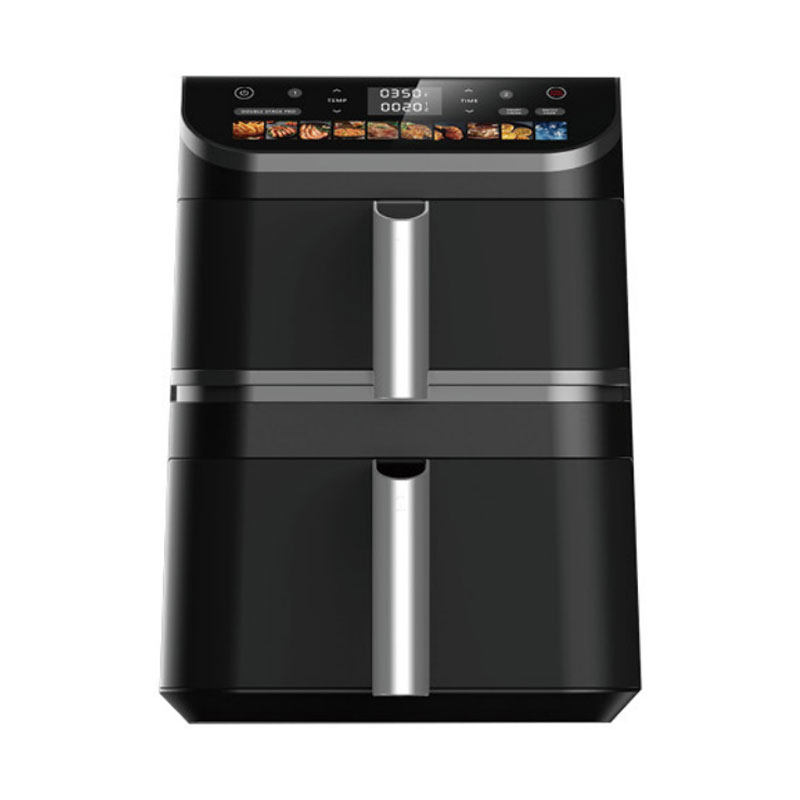
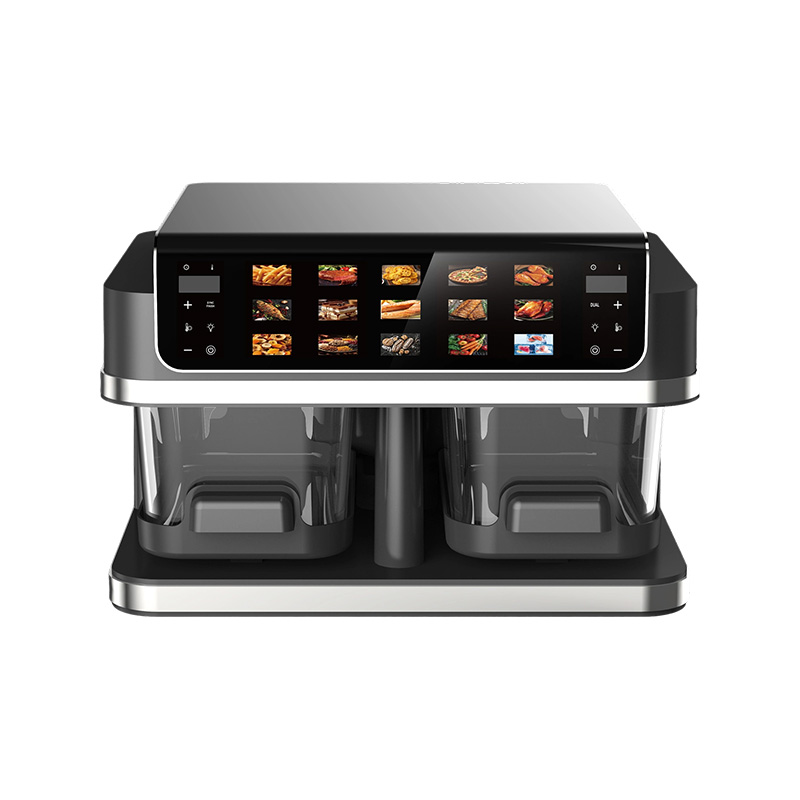
The key feature of Double Stack Air Fryer is its ability to provide independent temperature control for the upper and lower cooking trays. This design allows users to set distinct temperatures for each tray, accommodating different cooking requirements simultaneously. For example, delicate foods such as fish fillets or steamed vegetables, which require lower temperatures to maintain texture and prevent overcooking, can be placed on the top tray. Meanwhile, items requiring higher heat, such as French fries or chicken wings, can cook on the bottom tray. By allowing two separate temperature zones, the fryer eliminates the need for sequential cooking, reduces total meal preparation time, and ensures that each food item reaches optimal doneness without compromising quality. This independent control is crucial for multitasking, enabling a full meal to be prepared efficiently while maintaining consistency and precision in cooking outcomes.
2. Precision Digital Thermostats and Sensor Feedback
Double Stack Air Fryers rely on advanced digital thermostats and temperature sensors to achieve precise cooking control. Each tray is typically monitored by a dedicated sensor that measures air temperature in real time, allowing the system to automatically adjust the output of heating elements to maintain the set temperature. This continuous feedback loop ensures that thermal fluctuations caused by opening the lid, adding ingredients, or variations in food density do not compromise cooking quality. The sensors can detect even minor deviations, triggering incremental adjustments to heating intensity and fan speed. For instance, if a thick steak on the bottom tray absorbs more heat than the upper tray, the sensor network compensates by slightly increasing energy output to maintain the correct cooking environment. This sensor-based feedback system guarantees consistent results across both layers, enabling simultaneous cooking of multiple food types with precision and reliability.
3. Optimized Airflow Design and Heat Circulation
Temperature control in a Double Stack Air Fryer is tightly integrated with its airflow system, which ensures even heat distribution to all trays. High-efficiency fans circulate hot air uniformly throughout the cooking chamber, allowing each tray to receive consistent thermal energy. The fryer can modulate fan speed based on the selected temperature setting and the type of food being cooked. For example, a lower temperature combined with slower fan speed may be used to gently bake vegetables on the upper tray, while higher temperature and faster airflow rapidly crisp foods such as fries or chicken on the lower tray. This dynamic airflow management prevents hotspots, ensures uniform browning and cooking, and allows the simultaneous preparation of foods with very different heat requirements. By combining temperature control with directed airflow, a Double Stack Air Fryer maximizes both efficiency and cooking quality.
4. Programmable Presets and Multi-Stage Cooking Functions
Advanced Double Stack Air Fryers include programmable cooking presets and multi-stage cooking options, which integrate temperature control with time management. Users can predefine cooking sequences where each tray operates at a different temperature for a specified duration, automatically adjusting the heat for different stages of cooking. For instance, the lower tray may begin cooking a thick protein at high heat to achieve proper searing, while the top tray cooks vegetables at a moderate temperature to maintain tenderness. Multi-stage programs can also include timed reductions in temperature or fan speed to prevent overcooking. This programmable control reduces the need for constant monitoring, improves energy efficiency, and ensures precise results across all food types cooked simultaneously. It is particularly valuable for meal preparation in commercial kitchens or households seeking to prepare complete meals in one cooking cycle.
5. Compensation for Food Load and Thermal Mass
A Double Stack Air Fryer accounts for variations in food load and thermal mass, which directly impact cooking consistency. Heavier or denser foods absorb more heat, temporarily lowering the local air temperature. Similarly, lighter foods heat more rapidly and may cook faster than denser items. The temperature control system compensates for these differences by continuously monitoring each tray’s ambient temperature and adjusting the heating elements accordingly. This ensures that each food item reaches the intended internal temperature and maintains optimal texture, moisture, and crispness. Compensation algorithms also adjust for differences in moisture content, preventing over-drying of vegetables or undercooking of proteins. By dynamically adapting to thermal loads, the fryer guarantees even, predictable results across diverse food types cooked simultaneously.