
 English
 中文简体
中文简体 Español
 English
 中文简体
中文简体 Español
The Air Oven does a commendable job of maintaining consistent temperatures throughout most of its cooking chamber, thanks to its high-speed convection fan system. However, like virtually all countertop ovens, it is not entirely free of hot spots — particularly near the rear heating element and in the upper-center zone. Understanding where these variations occur and how to manage them can make a significant difference in your cooking results.
This article breaks down how the Air Oven manages heat distribution, where temperature inconsistencies are most likely to appear, and what practical steps you can take to ensure uniform cooking across every dish.
How the Air Oven Circulates Heat
The Air Oven uses a rapid air circulation system — essentially a powerful convection fan paired with a surrounding heating element — to push hot air around the food at high speed. This design is fundamentally different from a traditional static oven, where heat rises naturally and creates more pronounced top-to-bottom gradients.
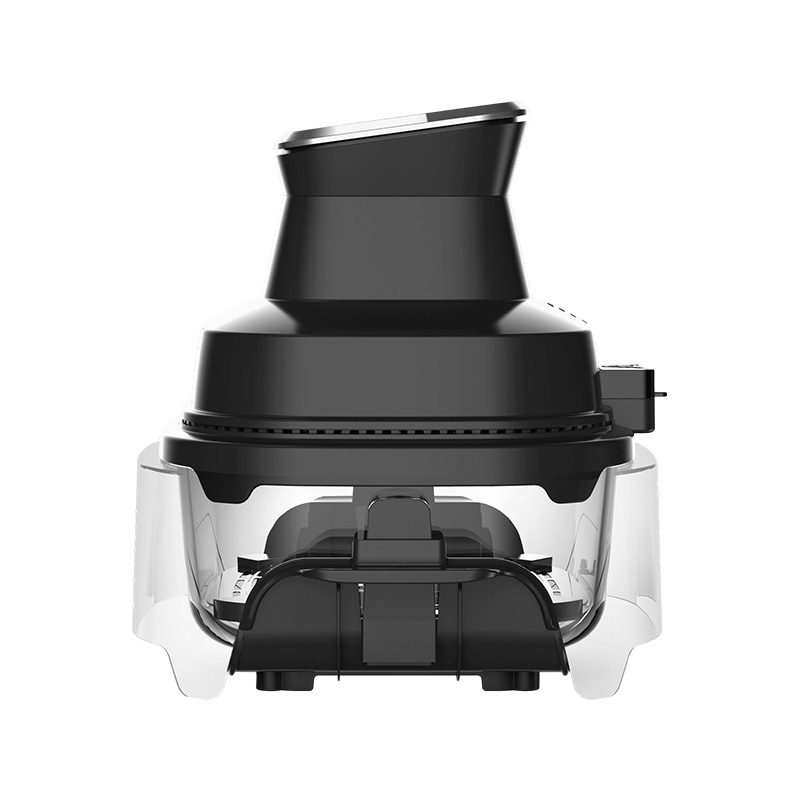
In the Air Oven, the fan is typically positioned at the rear of the unit and draws air across the heating coil before distributing it in a circular motion throughout the chamber. This continuous airflow keeps food surfaces exposed to moving heat, which is why the Air Oven can achieve crispy exteriors at lower temperatures and in shorter time frames than conventional ovens.
Most Air Oven models operate at fan speeds sufficient to cycle the internal air multiple times per minute, producing a relatively uniform temperature environment. Independent tests on comparable air oven units have shown that the internal temperature variation across the chamber typically falls within a ±10°F (±5.5°C) range under steady-state conditions — a performance level that outperforms many traditional radiant ovens.
Where Hot Spots Are Most Likely to Occur
Despite the Air Oven's efficient airflow design, certain zones within the cooking chamber tend to run hotter than others. Being aware of these areas allows you to position food more strategically.
- Rear of the chamber: Closest to the fan and heating element, this area receives the most direct blast of hot air and can run 10–15°F hotter than the front of the cooking basket or tray.
- Upper-center zone: In Air Oven models with top-mounted heating coils, the upper-center area tends to accumulate more radiant heat, particularly during broiling or high-temperature roasting cycles.
- Corners of flat trays: When using a baking tray or sheet pan inside the Air Oven, the corners may receive slightly less airflow compared to the center, resulting in marginally slower browning at the edges.
- Overcrowded areas: When food items are stacked or placed too close together, they block airflow and create localized cooler zones, while exposed surfaces near the element overheat comparatively.
It is worth noting that the severity of hot spots in the Air Oven is considerably lower than in a standard radiant oven, where temperature differentials of 25–50°F across different rack positions are common. The Air Oven's forced-air design inherently reduces — but does not eliminate — this problem.
Air Oven vs. Conventional Oven: Temperature Uniformity Compared
To put the Air Oven's temperature consistency into perspective, the table below compares key heat distribution characteristics between the Air Oven and a conventional radiant oven.
| Feature | Air Oven | Conventional Radiant Oven |
|---|---|---|
| Heat Distribution Method | Forced-air convection | Radiant heat (static air) |
| Typical Temp Variance | ±10°F (±5.5°C) | ±25–50°F (±14–28°C) |
| Preheat Time to 375°F | 3–5 minutes | 10–15 minutes |
| Hot Spot Severity | Low to moderate | Moderate to high |
| Browning Uniformity | High (with proper loading) | Moderate (requires rotation) |
| Need to Rotate Food | Occasionally | Frequently |
How Cooking Load Affects Heat Distribution in the Air Oven
One of the most overlooked factors affecting temperature consistency in the Air Oven is how food is loaded into the chamber. The Air Oven's performance is closely tied to unrestricted airflow, and any obstruction directly impacts how evenly heat is distributed.
Single-Layer vs. Multi-Layer Loading
When food is arranged in a single layer with adequate spacing, the Air Oven delivers its best and most consistent results. Hot air can circulate around each piece of food freely, leading to even browning and thorough cooking. In contrast, multi-layer loading — even with perforated racks — introduces significant airflow restrictions that can result in uneven doneness between layers.
Food Density and Moisture Content
High-moisture foods like fresh vegetables or marinated proteins release steam during cooking. This steam can temporarily lower the effective temperature in localized areas of the Air Oven's chamber, particularly around the food itself. This is why the Air Oven may produce less crispy results when cooking wet or heavily sauced items unless moisture is managed — for example, by patting food dry before cooking or using a perforated basket to allow steam to escape downward.
Practical Tips to Maximize Temperature Uniformity in the Air Oven
While the Air Oven is designed for even heat delivery, the following best practices will help you consistently achieve uniform cooking results:
- Preheat the Air Oven fully before inserting food. Placing food into a cold or partially heated chamber exposes it to uneven early-stage temperatures as the unit ramps up.
- Avoid overcrowding the basket or tray. As a rule of thumb, leave at least half an inch of space between individual food items to allow hot air to circulate freely on all sides.
- Shake or flip food at the halfway point. For items like fries, wings, or vegetables, pausing to toss or flip the food mid-cook compensates for any rear-zone heat bias and ensures all surfaces are evenly exposed.
- Use the correct rack position. For most cooking tasks in the Air Oven, the center rack position offers the most balanced exposure to both the heating element and the fan's airflow. Reserve the top position for browning or finishing only.
- Calibrate with an oven thermometer. If you suspect temperature inaccuracy, place a reliable oven thermometer inside the Air Oven and compare the reading to the set temperature. Many units run 5–15°F above or below their displayed setting, which can be compensated for by adjusting your target temperature accordingly.
- Cut food into uniform sizes. Pieces of varying thickness cook at different rates regardless of how consistent the oven's temperature is. Uniform cuts ensure every piece reaches doneness at the same time.
Does the Air Oven's Temperature Consistency Vary by Model?
Yes — and this is an important distinction. Not all Air Oven units are built to the same performance standard. Entry-level models with smaller fan motors and single heating elements tend to exhibit more pronounced hot spots than premium models equipped with dual heating elements (top and bottom) and variable fan speeds.
Higher-capacity Air Oven models — particularly those with internal volumes above 20 liters — may also show more temperature variation simply because the chamber is larger and harder to heat uniformly with a single fan. When purchasing an Air Oven specifically for even baking or precision cooking, it is advisable to prioritize models with dual heating elements, variable fan speed controls, and rotating basket accessories, all of which contribute meaningfully to temperature uniformity.
Reading third-party reviews and independent lab comparisons before purchase can also reveal real-world performance data that manufacturer specifications may not fully disclose.
Final Verdict on Air Oven Temperature Consistency
The Air Oven delivers significantly more consistent temperatures than a traditional radiant oven, with typical chamber variance staying within ±10°F under normal operating conditions. Hot spots do exist — primarily near the rear fan zone and upper-center area — but their impact on cooking outcomes is manageable with straightforward techniques such as food rotation, proper loading, and preheating.
For everyday cooking tasks — including frying, roasting, baking, and reheating — the Air Oven's heat distribution is more than adequate. For precision baking applications that demand very tight temperature tolerances, users should consider investing in a higher-end Air Oven model with dual heating elements and take the time to calibrate the unit with a thermometer before critical cooking sessions.
In short, the Air Oven is one of the most thermally consistent countertop cooking appliances available today — provided it is used correctly and loaded thoughtfully.