
 English
 中文简体
中文简体 Español
 English
 中文简体
中文简体 Español
Introduction
Modern beverage service is no longer limited to a basic jug and a separate container of ice. Consumers, retailers, hospitality businesses, and foodservice operators increasingly look for products that make cold drinks more attractive, convenient, and adaptable. A pitcher with an integrated ice tube and infuser responds to these needs by combining several useful functions in one practical serving product.
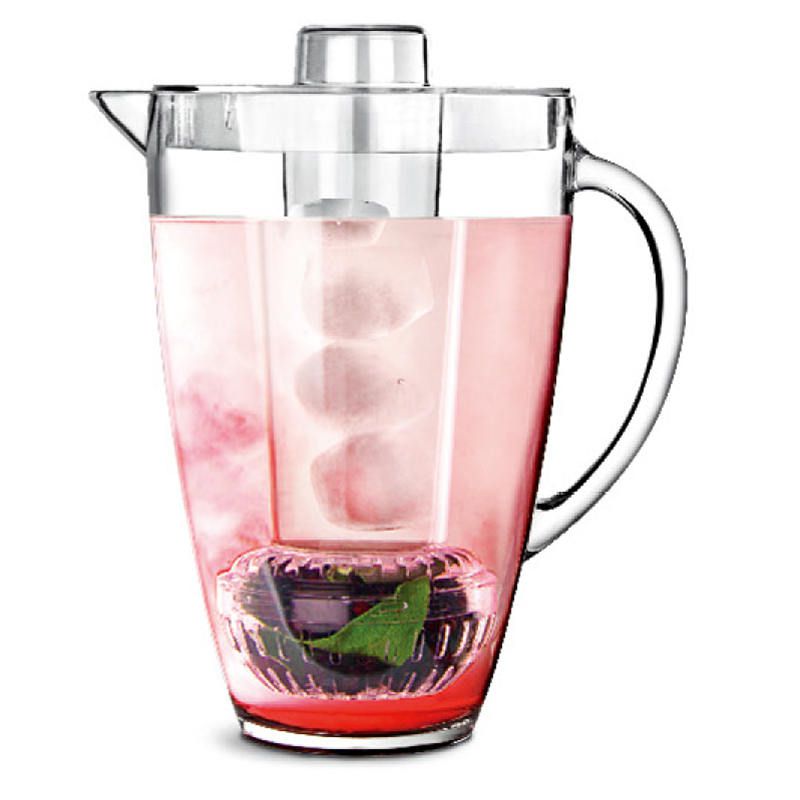
The GS018 Pitcher With Ice Tube and Infuser is designed for preparing, chilling, flavoring, and serving beverages in a single container. Its structure supports everyday drinks such as water, iced tea, fruit beverages, juice-based refreshments, and infused drinks. The ice tube helps cool beverages while reducing direct contact between loose ice and the liquid. The infuser provides a dedicated area for fruit, herbs, spices, tea leaves, or other flavoring ingredients.
This multifunctional design gives the product a clear position within the drink and beverage dispenser category. Instead of requiring a pitcher, a separate ice bucket, and a loose strainer, users can manage several beverage preparation steps with one coordinated product. This helps reduce clutter, simplify service, and improve the presentation of refreshments at home, in offices, at events, and in hospitality environments.
Manufactured by CIXI GSTAR ELECTRIC APPLIANCE CO., LTD., the product reflects the company’s broader experience in developing household products, hospitality accessories, and innovative kitchen solutions. Although the company also manufactures small electrical kitchen appliances, the GS018 is a non-electric product that focuses on functional design, ease of use, and efficient beverage preparation.
Pitcher With Ice Tube&Infuser
Product Overview
The GS018 is a pitcher equipped with both an ice tube and an infuser. These two internal features address two common challenges in beverage service: keeping drinks chilled and adding natural flavor without allowing solid ingredients to spread throughout the pitcher.
The ice tube is intended to hold ice separately from the main beverage area. This arrangement can help maintain a clean and attractive presentation. It also avoids the rapid dilution that may occur when a large amount of ice is placed directly into a drink. As the ice melts, the cooling effect remains useful while the beverage itself can retain a more consistent taste.
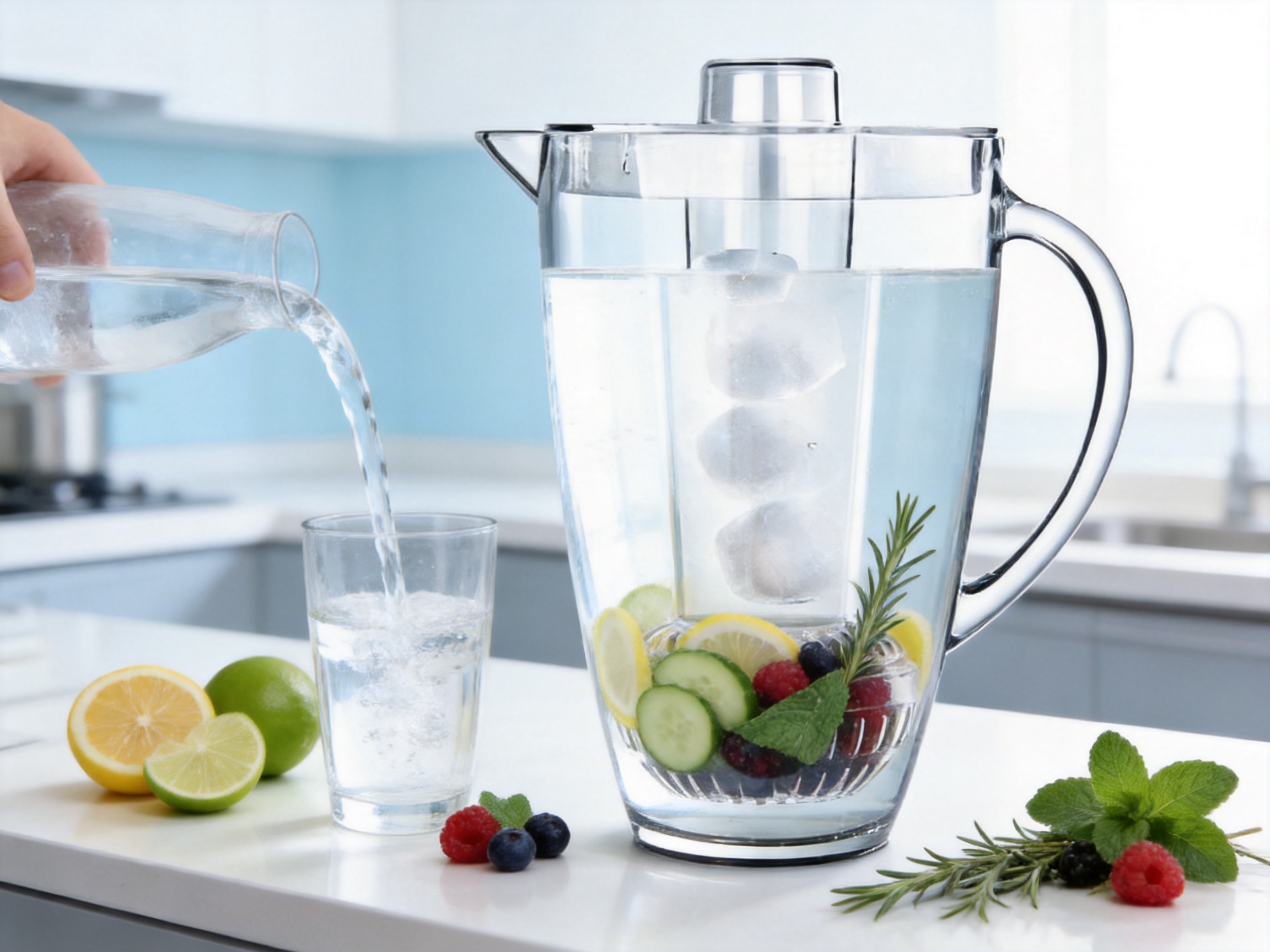
The infuser provides a controlled space for ingredients used to create flavored beverages. Sliced lemon, lime, orange, cucumber, berries, mint, rosemary, ginger, tea, and similar ingredients can be placed inside the infusing section according to the intended recipe. This makes it easier to prepare flavored water and other drinks without pouring loose ingredients into every glass.
The pitcher is made from PS, or polystyrene. This material is widely used in household and foodservice products because it can support lightweight product construction and practical everyday handling. The use of PS allows the pitcher to be easier to lift and move than many heavier glass alternatives, which can be valuable in busy service environments and for users who prefer lightweight kitchenware.
With 12 pieces packed per carton, the GS018 is also suitable for wholesale distribution. The stated carton measurement is 51.5 x 34.5 x 55 centimeters, with a net weight of 9 kilograms and a gross weight of 10 kilograms. The standard minimum order quantity is 2,000 pieces, and the stated delivery time is 30 days.
| Product Attribute | Specification |
| Item Number | GS018 |
| Product Name | Pitcher With Ice Tube and Infuser |
| Category | Drink and Beverage Dispenser |
| Material | PS |
| Packaging Quantity | 12 pieces per carton |
| Carton Measurement | 51.5 x 34.5 x 55 cm |
| Net Weight | 9 kg per carton |
| Gross Weight | 10 kg per carton |
| 20-Foot Container Loading | 3,600 pieces |
| 40-Foot High-Cube Container Loading | 8,280 pieces |
| Minimum Order Quantity | 2,000 pieces |
| Stated Delivery Time | 30 days |
How the Ice Tube and Infuser Improve Beverage Preparation
Controlled Cooling
One of the most useful functions of the product is the separate ice tube. In a conventional pitcher, ice cubes are usually added directly to the drink. This approach is simple, but it can create several disadvantages. Ice may float around the pitcher, block the flow of liquid, strike the sides during pouring, or melt into the drink and gradually dilute its flavor.
A dedicated ice tube creates a more organized cooling arrangement. Users can place ice in the tube before adding the tube to the pitcher or before serving the beverage. The chilled section remains integrated into the pitcher while the beverage occupies its own area. This can make the drink easier to pour and more visually appealing.
For commercial users, controlled cooling may also simplify preparation. Staff members can prepare a pitcher of iced tea, fruit water, or another beverage and then add the ice tube as part of the final service process. This helps separate the cooling step from the beverage recipe and gives operators greater control over taste consistency.
Natural Flavor Infusion
The infuser adds a second level of functionality. Flavored water has become popular in homes, offices, wellness centers, hotels, restaurants, and event venues. However, loose fruit and herbs can make the drink difficult to serve. Ingredients may fall into glasses, block the pitcher opening, or create a messy appearance after repeated pouring.
By placing ingredients inside the infuser, the user can create a more organized preparation method. Water can gradually absorb the flavor of citrus, berries, herbs, or other ingredients while the solids remain contained. The result is a cleaner serving process and a more professional presentation.
The infuser can also support a variety of beverage styles. For example, lemon and mint can produce a refreshing water combination, while cucumber and lime can create a light summer beverage. Orange and rosemary can provide a more aromatic profile. Tea leaves, ginger, and fruit can be used to create customized cold drinks for different occasions.
One Product Instead of Several Accessories
A conventional beverage service setup may require a pitcher, a separate strainer, an ice container, and additional serving tools. Each item takes up storage space and must be cleaned, transported, and managed separately. The GS018 combines the primary functions of these accessories into a single product concept.
This integrated format can be particularly valuable in compact kitchens, hotel rooms, office pantries, buffet areas, and outdoor serving locations. Fewer separate components can make preparation more efficient and reduce the likelihood of losing small accessories. The unified design also supports a more consistent product presentation for retailers and hospitality operators.
Advantages Over Conventional Pitchers
More Functional Than a Basic Jug
A standard pitcher is primarily designed to hold and pour liquid. While this function remains important, today’s consumers often expect additional convenience. The GS018 extends the role of the traditional pitcher by supporting cooling and infusion within the same product.
This added functionality can make the product more attractive to customers who want to prepare beverages with minimal equipment. Rather than purchasing a separate infuser or improvising a cooling solution, users can select a purpose-designed pitcher with dedicated internal components.
Less Dilution Than Direct-Ice Cooling
Directly adding ice to a beverage can dilute the drink as the ice melts. This may be acceptable for some recipes, but it is less desirable when users want to preserve a carefully balanced flavor. The ice tube offers an alternative arrangement in which the ice is separated from the main beverage area.
The precise cooling result will depend on the amount of ice used, the starting temperature of the beverage, room conditions, and the length of service. Nevertheless, the separate ice compartment provides a more controlled approach than placing loose ice throughout the drink.
Cleaner Infusion Than Loose Ingredients
Loose fruit, herbs, and tea ingredients may be attractive in some beverages, but they can also create practical problems. They can enter drinking glasses, interfere with pouring, and make cleaning more complicated. An infuser offers a dedicated location for these ingredients and can help keep the main beverage area more orderly.
This is an important advantage for businesses that serve drinks to multiple customers. A cleaner presentation can contribute to the perceived quality of the beverage and reduce the need for staff to remove ingredients manually during service.
Suitable for Multiple Environments
The product is not restricted to one type of user. At home, it can be used for family meals, parties, outdoor gatherings, and daily hydration. In offices, it can support flavored water stations and shared refreshments. In restaurants, it can be used for table service or self-service beverage displays. Hotels and event organizers can use it for buffet areas, conference refreshments, and welcome drinks.
This broad application range is a competitive advantage for distributors and retailers. A product that can appeal to several market segments may provide more opportunities than a highly specialized accessory with only one use.
Lightweight Product Positioning
Because the pitcher is made from PS, it can be positioned as a lightweight alternative to heavier glass pitchers. This may benefit users who frequently move beverage containers from a kitchen to a dining area, terrace, buffet station, or outdoor table.
Lightweight construction can also reduce handling difficulty in commercial settings. Staff may need to carry several pitchers during service, and a lower product weight can help make routine handling more manageable. At the same time, purchasers should follow suitable operating, cleaning, and temperature guidelines for the material and product design.
Application Scenarios
Home Kitchens
In a home kitchen, the GS018 can support daily beverage preparation without requiring complex equipment. Users can prepare plain chilled water, flavored water, iced tea, fruit drinks, or other non-carbonated beverages. The infuser makes it easy to change recipes according to seasonal ingredients and personal preferences.
For family use, the pitcher can be prepared in advance and placed on a dining table or in a refrigerator if the dimensions and storage conditions are suitable. For parties, the product can serve as part of a self-service beverage station. Guests can pour their own drinks while the ice tube and infuser help maintain the intended presentation.
Restaurants and Cafés
Restaurants and cafés often need beverage containers that are attractive, practical, and easy for staff to manage. The GS018 can be used for house water, lemon water, fruit-infused water, cold tea, and seasonal refreshments. A clearly visible infuser can also communicate the beverage’s ingredients and reinforce a fresh, natural image.
For table service, the pitcher can be prepared before customers arrive or before a meal begins. For counter service, it may be used as part of a display, provided that the business follows appropriate food safety and hygiene procedures. The product can also help foodservice operators introduce rotating beverage recipes without investing in specialized equipment.
Hotels and Hospitality Venues
Hotels, resorts, conference centers, and banquet venues regularly serve beverages to groups of people. A pitcher with integrated chilling and infusion functions can support welcome drinks, breakfast service, meeting refreshments, spa beverages, and outdoor hospitality areas.
Hospitality operators often value products that provide a balance between appearance and operational simplicity. The GS018 can help create a consistent service style across different rooms and events. The ability to use fruit or herbs in the infuser also gives venues a way to customize refreshments for weddings, conferences, health-focused programs, and seasonal promotions.
Offices and Shared Facilities
Many offices provide drinking water or refreshments in shared kitchens and meeting rooms. A flavored water pitcher can make hydration stations more appealing while offering an alternative to individually packaged drinks. Lemon, cucumber, mint, or fruit-infused water can be prepared for employees and visitors without the need for an elaborate beverage system.
The integrated structure may also make storage more convenient. Instead of keeping several separate serving tools in a cabinet, the office can maintain one coordinated pitcher system. Cleaning responsibilities should still be clearly assigned, particularly when the product is used by many people.
Outdoor Events and Catering
Outdoor events require products that are easy to transport, arrange, and operate. The GS018 can be suitable for picnics, garden parties, catering stations, community events, and informal celebrations. Its lightweight positioning may be helpful when beverage service areas are located away from the main kitchen.
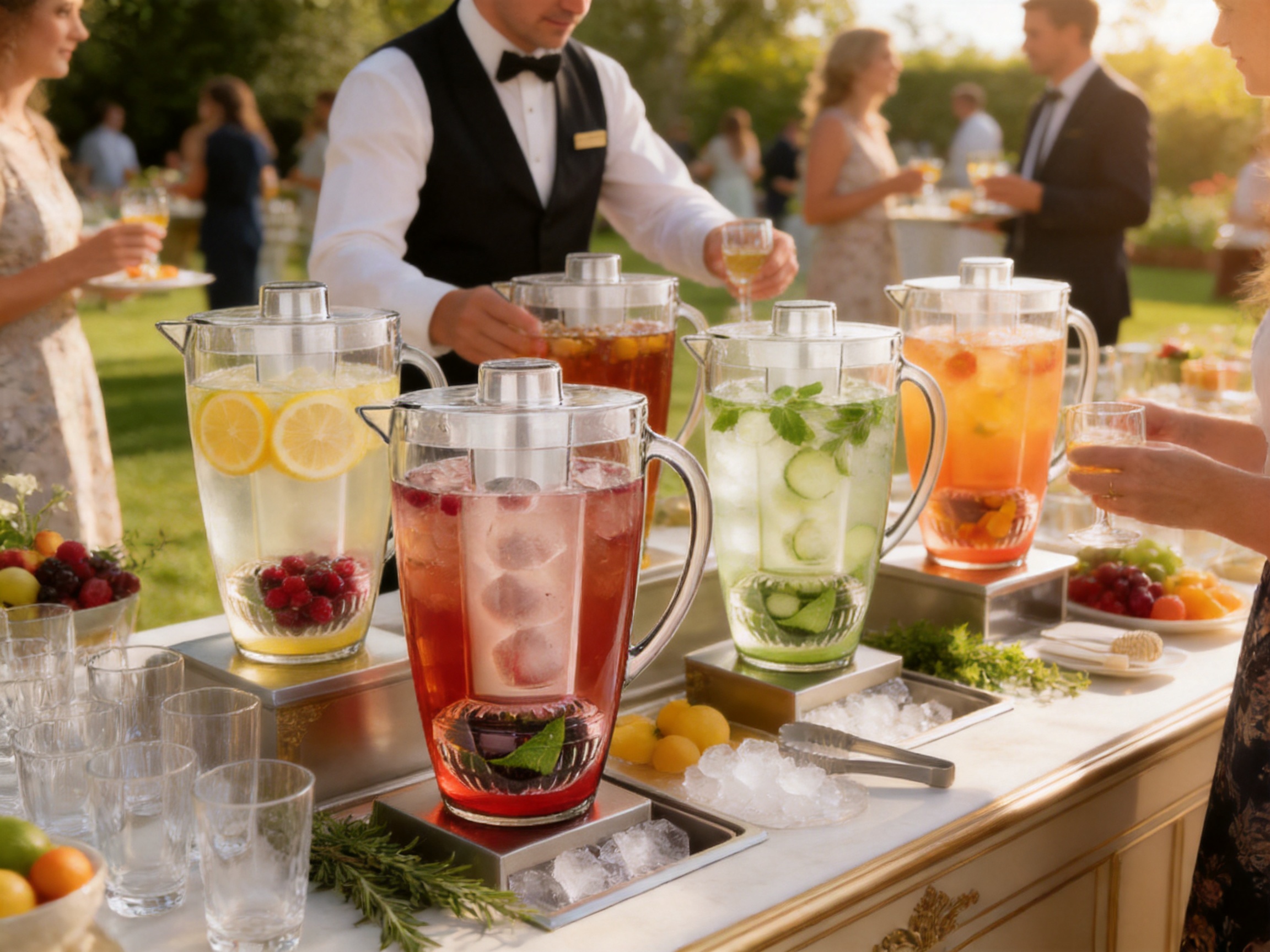
Event organizers can prepare different pitchers for different flavors. For example, one pitcher may contain citrus water, another may contain berry water, and a third may contain iced tea. This approach creates visual variety without requiring a complex dispensing installation.
Product Design and User Experience
The value of a beverage pitcher is determined not only by its appearance but also by how easily people can understand and use it. A product with clearly defined functions can reduce preparation time and make the beverage service process more intuitive.
The GS018 communicates its purpose through the combination of a pitcher body, an ice tube, and an infuser. These components organize the preparation process into logical stages. First, the user selects and prepares the beverage ingredients. Next, the ingredients can be placed in the infuser. Ice can be added to the dedicated tube. Finally, the assembled product can be used for chilling and serving.
This sequence makes the pitcher suitable for both individual consumers and professional users. Home users can experiment with recipes, while commercial operators can establish repeatable preparation procedures. A repeatable process is particularly useful in foodservice because it helps staff maintain consistency during busy periods.
The product also supports visual merchandising. Retailers can present it as a multifunctional lifestyle item rather than only as a conventional water jug. Packaging, product photography, and in-store displays can highlight the three main benefits: beverage storage, ice-assisted cooling, and natural infusion.
Material Considerations
The GS018 uses PS as its stated material. Product material influences weight, handling, manufacturing, appearance, and intended use. PS can support the creation of lightweight household items and is commonly associated with practical, economical product construction.
For distributors and buyers, the material specification is important when preparing product descriptions, packaging instructions, and market documentation. Buyers should review the final product’s applicable food-contact requirements, temperature limitations, cleaning instructions, and regional compliance requirements before placing it on the market.
Users should follow the manufacturer’s care guidance. Appropriate cleaning methods can help preserve the product’s appearance and support hygienic use. Abrasive tools, unsuitable chemicals, excessive heat, and improper storage may affect the material or surface. Commercial operators should establish cleaning routines that match their local food safety procedures.
The lightweight nature associated with PS can be useful in high-frequency handling environments. A pitcher that is easier to lift and carry may improve convenience for staff and reduce the physical effort involved in repeated beverage service. However, lightweight construction should not be interpreted as permission for careless handling. Products should be protected from impacts, excessive pressure, and unsuitable operating conditions.
Manufacturing Strengths of CIXI GSTAR ELECTRIC APPLIANCE CO., LTD.
The GS018 is supported by the manufacturing background of CIXI GSTAR ELECTRIC APPLIANCE CO., LTD., a Chinese company based in Cixi, Ningbo. The company’s stated product range includes small electric kitchen appliances as well as non-electric kitchen, bar, restaurant, and hotel products.
Its experience covers blenders, slicers, choppers, food processors, smokeless grills, hot pots, air fryers, air ovens, ice buckets, beverage dispensers, pitchers, slicers, and graters. This combination of electrical and non-electrical product experience is relevant to the GS018 because it demonstrates familiarity with both appliance manufacturing and practical kitchenware development.
Experience in Product Development
The company’s history shows a progression from trading and sourcing activities toward independent product design and manufacturing. According to the supplied company information, the business began developing its own innovative products in connection with TV shopping and international retail opportunities. This background helped establish an understanding of consumer needs, market presentation, product differentiation, and large-scale distribution.
The company later developed non-electric products with its own design and patent-oriented development approach, including iced pitchers and iced bowls. This experience is directly relevant to the GS018 because the product belongs to the same general field of innovative beverage and household accessories.
Factory and Production Resources
The supplied information states that the company operates a wholly owned plant with a production area of approximately 15,000 square meters and more than 200 experienced workers. Earlier company information also describes a factory occupying approximately 10,000 square meters, with a building area of 18,000 square meters, as well as a workforce of approximately 150 workers at that stage.
These figures indicate continued development of the company’s manufacturing base and organizational capacity. A dedicated factory can give a manufacturer greater control over production scheduling, assembly coordination, quality procedures, packaging, and communication between engineering and manufacturing teams.
Engineering and Research Capability
The company reports a research and development department with 10 engineers, together with a quality control department staffed by 10 people in the earlier company profile. An engineering team can contribute to product structure, function integration, mold development, material selection, appearance, packaging requirements, and production optimization.
For a product such as the GS018, engineering coordination is particularly important. The pitcher, ice tube, and infuser must work together as a unified system. The components need to fit properly, remain practical for repeated use, and support efficient assembly and packing. A manufacturer with experience in product development can evaluate these details before mass production.
Quality Control Orientation
Quality control is important for beverage products because the item is used in contact with drinks and is handled frequently. Quality checks may cover material consistency, surface appearance, component fit, dimensional accuracy, packaging protection, and finished-product functionality.
The company’s stated quality control resources support a structured approach to production supervision. Buyers can also cooperate with the manufacturer on inspection standards, sample approval, packaging specifications, labeling requirements, and pre-shipment checks. These activities are useful for reducing misunderstandings in international wholesale transactions.
International Market Experience
The company reports that its products have been sold to international supermarkets and retailers, including major names in Europe, North America, and other markets. This stated experience suggests familiarity with the expectations of international buyers, such as stable quality, coordinated packaging, delivery planning, product documentation, and commercial communication.
International market experience can be a valuable advantage when introducing the GS018 to distributors. Retailers often require consistent carton packing, clear product specifications, dependable lead times, and the ability to support repeat orders. The company’s export-oriented history may help it understand these requirements.
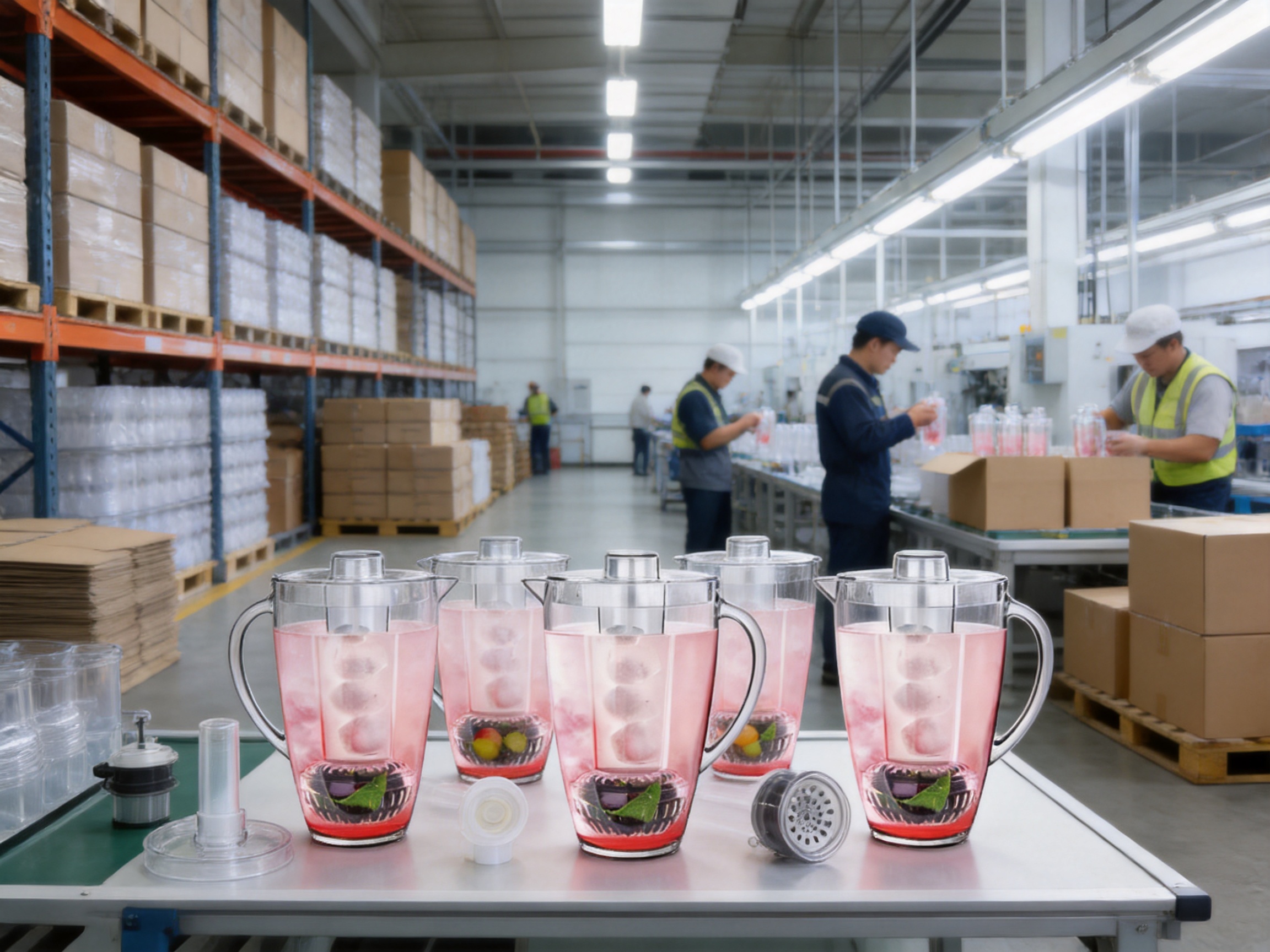
Manufacturing Process Considerations
Although the specific production sequence for the GS018 is not provided in the product data, a professional manufacturing program for a PS pitcher with internal accessories generally requires coordination across design, tooling, molding, component finishing, assembly, inspection, and packaging.
Design and Engineering Review
The process begins with product design and engineering review. At this stage, the manufacturer evaluates the pitcher shape, handle position, opening structure, pouring area, internal component arrangement, and packaging dimensions. The ice tube and infuser must be considered as part of the complete product rather than as unrelated accessories.
Engineering review can identify potential issues before production tooling is finalized. These may include interference between components, difficult assembly points, unstable placement, insufficient clearance, or packaging stress. Early evaluation helps reduce later modifications and supports smoother production.
Mold and Tooling Preparation
Plastic products generally require carefully prepared molds to achieve consistent dimensions and surface quality. Tooling design can influence production efficiency, appearance, material distribution, part strength, and ease of demolding. For a pitcher, the mold must support the intended shape while maintaining a stable production cycle.
Internal accessories such as an ice tube and infuser may require additional molds or forming processes. These components need to match the main pitcher and should be checked for fit during sample development. Tooling coordination is therefore a significant part of delivering a reliable multifunctional product.
Plastic Forming and Component Production
Once the tooling is prepared and approved, PS material can be processed into the pitcher body and related components according to the manufacturer’s production system. Production controls may include material handling, machine settings, cycle monitoring, visual checks, and dimensional verification.
Consistent processing is important because variations in temperature, pressure, cooling, or material flow may affect the final appearance and fit. A well-organized factory can monitor these factors and adjust production procedures when necessary.
Finishing and Assembly
After forming, parts may require finishing operations such as removal of excess material, edge inspection, surface checking, cleaning, or identification. The pitcher body, ice tube, and infuser can then be checked and assembled or packed according to the product configuration.
Assembly inspection should confirm that the internal components are positioned correctly and that the product can be handled in the intended manner. Buyers may request sample demonstrations or assembly instructions before confirming a large order.
Final Inspection and Packing
Final inspection can include appearance checks, component verification, carton quantity checks, and packaging review. The stated packing arrangement is 12 pieces per carton, which provides a defined basis for warehouse planning and shipping calculations.
Proper packing is important because pitchers can be vulnerable to scratching, impact, compression, or deformation during transportation. Carton design, internal protection, stacking arrangement, and labeling should be reviewed with the buyer according to the shipping route and distribution environment.
Wholesale and Distribution Advantages
The GS018 has several commercial characteristics that may appeal to wholesalers, importers, retailers, and hospitality suppliers. Its multifunctional design creates a clear selling point, while its application range allows it to be promoted to different customer groups.
Clear Product Differentiation
Many pitchers compete primarily on shape, color, price, or capacity. The GS018 can be differentiated through its integrated ice tube and infuser. These features give buyers a simple explanation of why the product offers more than a standard pitcher.
For retail packaging, the product benefits can be communicated through concise messages such as chilled serving, controlled infusion, and multifunctional beverage preparation. For business-to-business sales, the product can be presented as a practical tool for hotels, restaurants, offices, and event service.
Efficient Carton Planning
The product is packed at 12 pieces per carton, with stated carton dimensions and weights. These specifications assist importers in estimating warehouse space, freight requirements, container utilization, and landed cost. The stated loading quantities of 3,600 pieces in a 20-foot container and 8,280 pieces in a 40-foot high-cube container also provide a starting point for logistics planning.
Actual shipping arrangements may vary depending on packaging updates, container loading methods, and final order requirements. Buyers should confirm all logistics details with the supplier before shipment.
Large-Order Capability
The minimum order quantity is listed as 2,000 pieces. This quantity is suitable for distributors and retailers that plan a regional launch, promotional campaign, private-label program, or multi-store rollout. It may also support hospitality projects that require consistent products across multiple locations.
Large-order buyers can discuss sample approval, color options, packaging design, labeling, inspection arrangements, and production scheduling with the manufacturer. A clear specification process helps ensure that the final shipment matches the commercial requirements.
Stated Delivery Schedule
The stated delivery time is 30 days. A defined lead time can help buyers coordinate purchasing plans and seasonal promotions. Beverage products may be especially suitable for spring and summer campaigns, outdoor events, hospitality programs, and wellness-related retail promotions.
Delivery timing can depend on order confirmation, design approval, raw material availability, production capacity, inspection, packaging, and shipping arrangements. Buyers should establish the exact delivery basis during order negotiation.
Recommended Beverage Uses
Fruit-Infused Water
Fruit-infused water is one of the most straightforward applications for the GS018. Citrus slices, berries, apples, melon, pineapple, or other suitable fruits can be placed in the infuser. The ice tube can be prepared separately to support chilled service.
This type of beverage can be offered in homes, offices, spas, gyms, restaurants, hotels, and event venues. It provides a visually appealing alternative to plain water while allowing users to create different combinations without adding complex equipment.
Herbal and Botanical Drinks
Mint, basil, rosemary, thyme, ginger, and similar ingredients can be used to create aromatic cold beverages. The infuser makes it easier to manage these ingredients and remove them when the desired flavor has been reached.
Botanical drinks can be especially suitable for wellness-oriented venues and hospitality businesses seeking an elegant but simple refreshment option. The product can support changing recipes according to customer preferences or seasonal availability.
Iced Tea
Iced tea can be prepared using tea leaves or tea ingredients in the infuser, followed by cooling with the ice tube. The method can be adapted for black tea, green tea, herbal tea, or fruit tea, depending on the recipe and intended serving style.
Commercial users should establish preparation procedures that address brewing temperature, cooling time, ingredient removal, storage, and serving hygiene. The pitcher itself is a serving tool and should be used within the product’s appropriate care and temperature guidelines.
Party and Buffet Drinks
For parties and buffets, the pitcher can be used to prepare visually attractive drinks that are easy for guests to serve. Different pitchers can represent different flavors, making the beverage station more organized and inviting.
Operators can also use labels or menu cards to identify ingredients and provide information for guests who may have allergies or dietary restrictions. Ingredient communication is especially important when fruit, herbs, tea, or flavored additions are used.
Care, Cleaning, and Safe Use
Proper care is essential for maintaining a clean and attractive beverage product. The pitcher, ice tube, and infuser should be cleaned after use according to the supplier’s instructions. Residual fruit, tea, herbs, and sugar can affect hygiene and may create odors if left inside the product for extended periods.
Users should disassemble removable components where applicable and rinse away beverage residue before washing. The infuser should receive particular attention because small particles may remain inside its openings or corners. After cleaning, components should be allowed to dry thoroughly before storage.
Buyers should confirm whether the product is suitable for dishwasher use, hot liquids, freezing, or particular cleaning agents. The supplied product information identifies PS as the material but does not specify all operating limitations. Such details should be confirmed before publication of consumer instructions.
Foodservice operators should follow local food safety procedures. This may include scheduled cleaning, separation of clean and used products, inspection for damage, and replacement of items that show cracks, excessive wear, or other defects.
Why Choose an Experienced Product Partner?
Choosing a supplier for a household or hospitality product involves more than comparing the unit price. Buyers also need to consider design experience, quality management, production resources, packaging support, delivery performance, communication, and the ability to handle future product development.
CIXI GSTAR ELECTRIC APPLIANCE CO., LTD. presents itself as a manufacturer with experience in both innovative non-electric products and small kitchen appliances. This combination can be useful for buyers who want to source multiple categories from one supplier or develop coordinated product lines.
The company’s stated experience with international supermarkets and large retail customers indicates familiarity with organized supply chains. Its reported engineering and QC teams provide additional support for product development and manufacturing supervision. Its own factory resources can also help improve coordination between design, production, inspection, and packing.
For buyers of the GS018, the relationship can extend beyond a single order. A distributor may wish to discuss packaging localization, color development, retail presentation, related beverage products, or complementary kitchen accessories. A manufacturer with experience across several product categories may be able to support these broader requirements.
Comparison with Alternative Beverage Solutions
| Feature | Basic Pitcher | Pitcher with Separate Strainer | GS018 Pitcher with Ice Tube and Infuser |
| Holds and pours beverages | Yes | Yes | Yes |
| Dedicated infusion function | Usually no | Partial or external | Yes |
| Separate ice-control function | Usually no | Usually no | Yes |
| Loose ingredients remain organized | Limited | Generally yes | Yes |
| Requires several accessories | Often | Sometimes | Fewer accessories required |
| Suitable for flavored water | Yes, with loose ingredients | Yes | Yes, with integrated infuser |
| Suitable for hospitality service | Yes | Yes | Yes |
This comparison demonstrates the product’s main competitive position. The GS018 does not simply replace a pitcher; it combines functions that are commonly handled by separate products. Its principal advantage is convenience through integration.
Ordering and Buyer Considerations
Before placing an order, buyers should confirm the complete product specification, including dimensions, component configuration, packaging, colors, labeling, available customization, material compliance, and care instructions. A production sample should be reviewed before mass manufacturing whenever possible.
Importers should also confirm the final carton measurement, gross weight, loading quantity, shipping marks, and documentation. These details support accurate logistics planning and help prevent problems during warehouse receiving.
Retail buyers should consider the intended customer and sales channel. For household retail, packaging should explain the ice tube and infuser in simple language. For hospitality distribution, sales materials can emphasize service efficiency, beverage presentation, and recipe flexibility. For promotional programs, the product may be positioned as a useful lifestyle accessory associated with hydration, entertaining, or seasonal refreshment.
Buyers may also request product photographs, instruction sheets, carton artwork, and sample packaging. Clear communication between the buyer and manufacturer can help ensure that the final product meets both technical and commercial expectations.
Q&A
What is the GS018 pitcher used for?
The GS018 is used to prepare, chill, flavor, and serve beverages. It can be used for water, infused water, iced tea, fruit drinks, and other suitable non-carbonated refreshments.
What makes this pitcher different from a standard pitcher?
It includes both an ice tube and an infuser. These features allow users to organize ice and flavoring ingredients inside the product instead of relying on separate accessories.
How does the ice tube work?
Ice is placed in the dedicated ice tube, which is positioned within or as part of the pitcher system. The ice helps cool the beverage while remaining separated from the main liquid area, which may help reduce direct dilution.
What can be placed in the infuser?
Suitable ingredients may include lemon, lime, orange, berries, cucumber, mint, rosemary, ginger, tea, and other ingredients appropriate for cold beverage preparation. Users should follow suitable food safety and care practices.
What material is used for the product?
The stated material is PS, or polystyrene. Buyers should confirm the final product’s food-contact standards, care instructions, and temperature limitations for their target market.
Is the product electric?
No. The GS018 is a non-electric pitcher. Its cooling function relies on ice rather than an electrical refrigeration system.
Where can the product be used?
It can be used in homes, offices, restaurants, cafés, hotels, catering operations, conference facilities, buffet areas, outdoor events, and other beverage service environments.
How many pieces are packed in one carton?
The stated packing quantity is 12 pieces per carton.
What are the carton dimensions and weights?
The stated carton measurement is 51.5 x 34.5 x 55 centimeters. The net weight is 9 kilograms and the gross weight is 10 kilograms per carton.
What is the minimum order quantity?
The stated minimum order quantity is 2,000 pieces.
What is the stated delivery time?
The stated delivery time is 30 days. The final schedule should be confirmed according to order details, production planning, inspection, and shipping arrangements.
Can the product support private-label sales?
Private-label or customized requirements should be discussed directly with the manufacturer. Buyers can ask about packaging, labels, colors, product markings, and other commercial requirements before ordering.
Why is the manufacturer suitable for international buyers?
The company reports experience in product design, manufacturing, quality control, international retail supply, small kitchen appliances, and hospitality products. It also reports its own factory, engineering resources, QC personnel, and a history of serving overseas markets.
What should users consider when cleaning the pitcher?
The pitcher and internal components should be cleaned after use, particularly when fruit, herbs, tea, or sweetened drinks are used. Buyers should confirm the recommended washing method, dishwasher suitability, and restrictions on hot liquids or harsh cleaning products.
Conclusion
The GS018 Pitcher With Ice Tube and Infuser is a practical multifunctional product for modern beverage preparation. Its integrated ice tube supports organized chilling, while its infuser allows users to prepare flavored drinks with greater control over loose ingredients. Together, these features provide a clear advantage over a basic pitcher and reduce the need for separate beverage accessories.
The product can serve a wide range of markets, including household retail, restaurants, cafés, hotels, offices, catering companies, event organizers, and hospitality suppliers. Its PS construction supports a lightweight product position, and its stated packing and logistics information provides a useful foundation for wholesale planning.
The product is further supported by the manufacturing capabilities of CIXI GSTAR ELECTRIC APPLIANCE CO., LTD. The company reports experience in innovative kitchen products, beverage accessories, small electrical appliances, international retail supply, engineering development, quality control, and factory production. These strengths can help buyers evaluate the GS018 not only as an individual product but also as part of a broader sourcing and product-development partnership.
For distributors and retailers seeking a beverage accessory with a straightforward value proposition, the GS018 offers a combination of chilling, infusion, serving convenience, and commercial versatility. With appropriate product verification, packaging coordination, and market-specific compliance review, it can be developed for a wide variety of beverage service applications.
References
1. Product specification sheet for GS018 Pitcher With Ice Tube and Infuser, including material, packing, carton dimensions, weights, container loading information, minimum order quantity, and delivery time.
2. Company profile and manufacturing background supplied by CIXI GSTAR ELECTRIC APPLIANCE CO., LTD.
3. General foodservice guidance concerning beverage preparation, cleaning routines, ingredient handling, and service hygiene.
4. General plastic product development principles relating to design review, tooling, forming, assembly, inspection, and packaging.
5. General retail and hospitality merchandising practices for beverage dispensers, infused drinks, and reusable serving products.